
Young Girl Weaving Willow Branches — History & Facts
What draws the eye first is the hush of concentration, the way the young girl’s profile glows against the muted wall, her world narrowed to the slender willow branch she weaves. The painter, Theodoros Ralli, chooses not a moment of drama but of absorption: her hands, sturdy and sure, coax the pale strips into delicate loops, while her gaze never wavers from the task. The blue jacket, worn at the elbows, and the simple kerchief speak of rural work and everyday ritual, but the light—soft, almost pearly—lends an unexpected dignity.
The entire scene is pared down, the background nearly bare, so that every brushstroke serves to heighten the intimacy between maker and material. Painted sometime between 1873 and 1909, this work belongs to a world where genre painting flourished across Europe, especially among artists drawn to scenes of daily labor and quiet tradition. In the late nineteenth century, such images were prized by collectors eager for glimpses of rural life, often idealized yet rooted in real craft and custom. Ralli, a Greek artist who spent much of his career in Paris, was known for his sensitive portrayals of Eastern Mediterranean subjects, and here he distills that sensibility into a single, concentrated study.
History has kept few traces of this particular painting’s journey, but its presence in the collection today invites us to linger over the small acts that tie generations together—inviting the viewer to watch the girl’s hands as if time itself has slowed.
More Artworks by Theodoros Ralli

The Sleeping Concubine
Theodoros Ralli
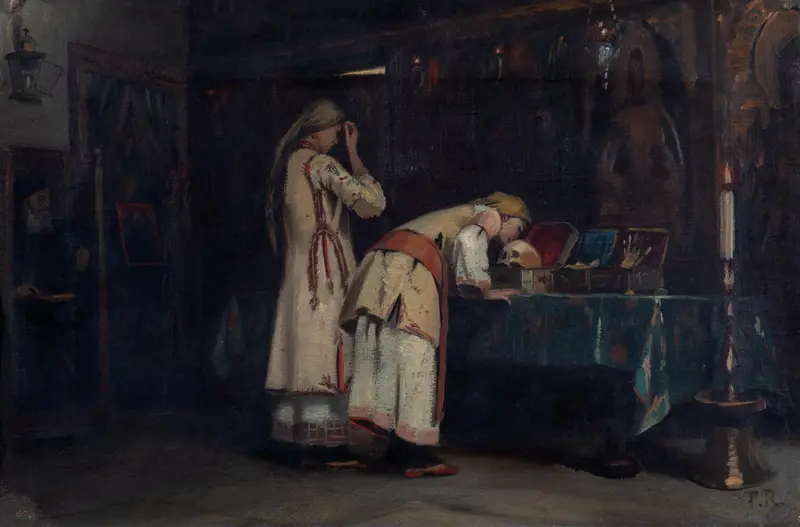
Holy Relics
Theodoros Ralli
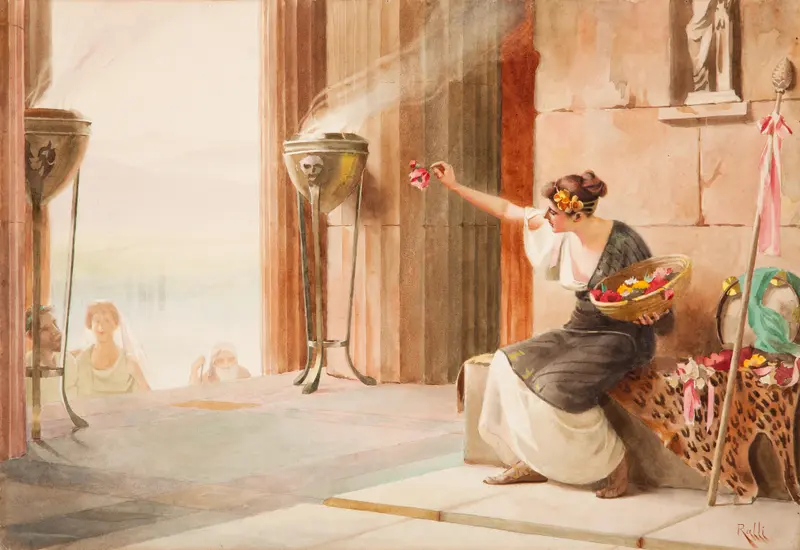
Flower Seller at the Parthenon
Theodoros Ralli
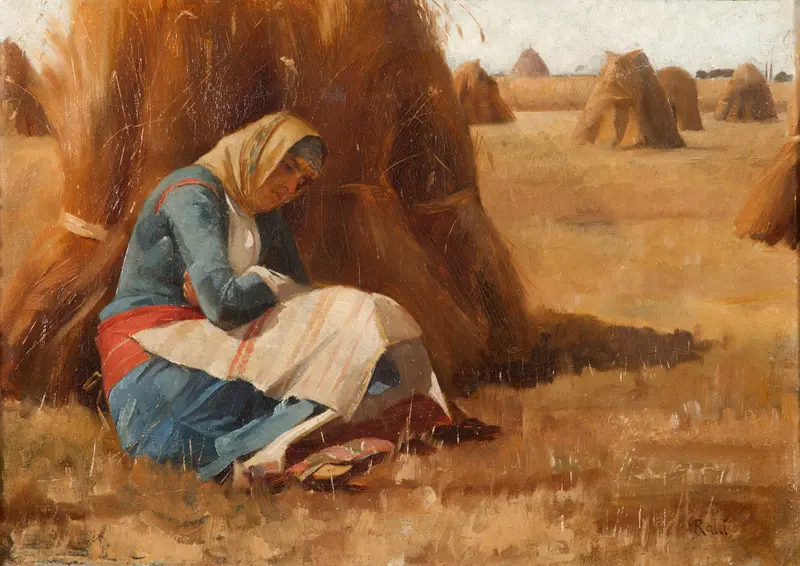
Resting by a Haystack
Theodoros Ralli
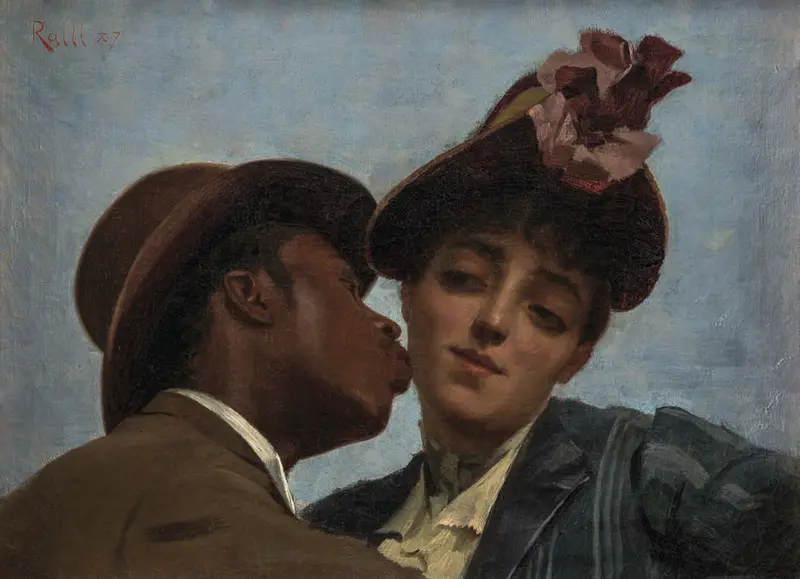
The Kiss (Ralli)
Theodoros Ralli
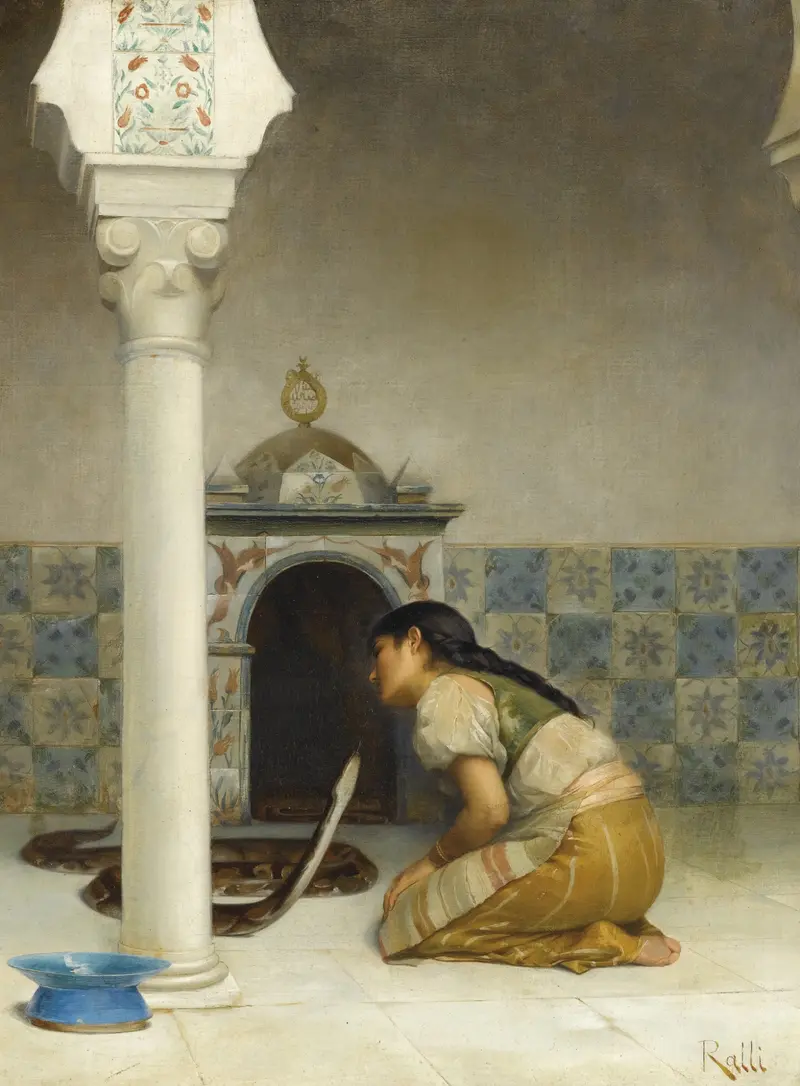
The Sacred Serpent
Theodoros Ralli
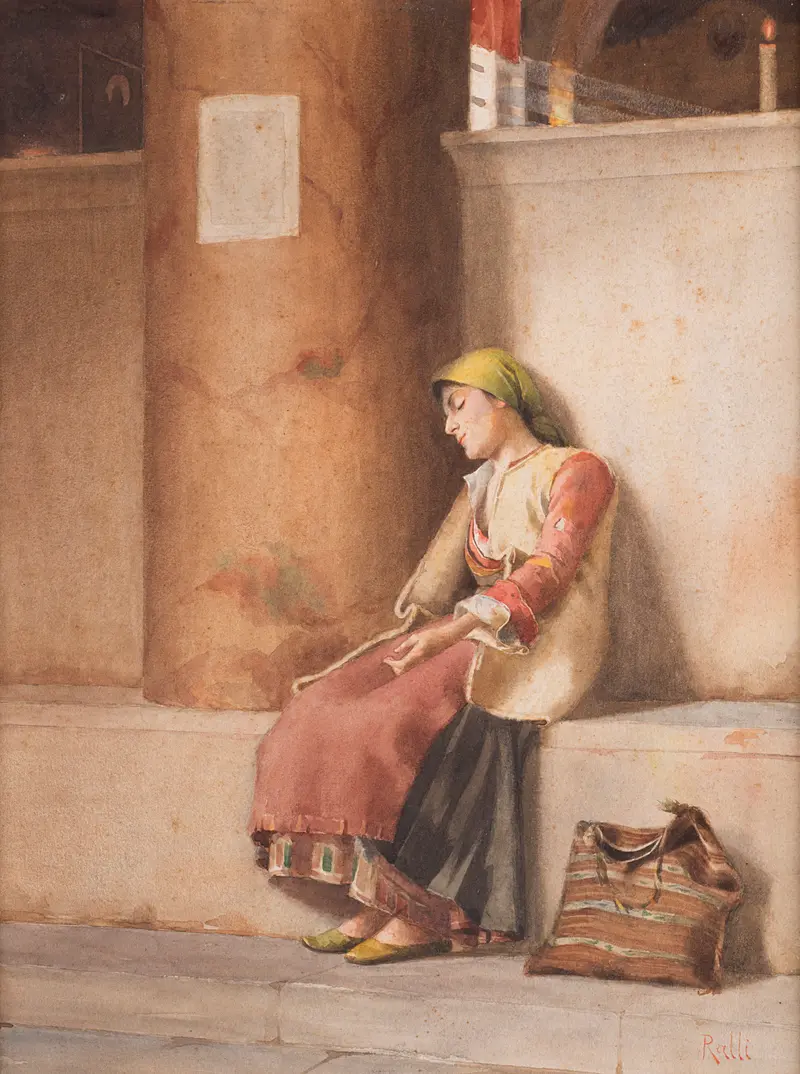
A Moment of Reflection
Theodoros Ralli
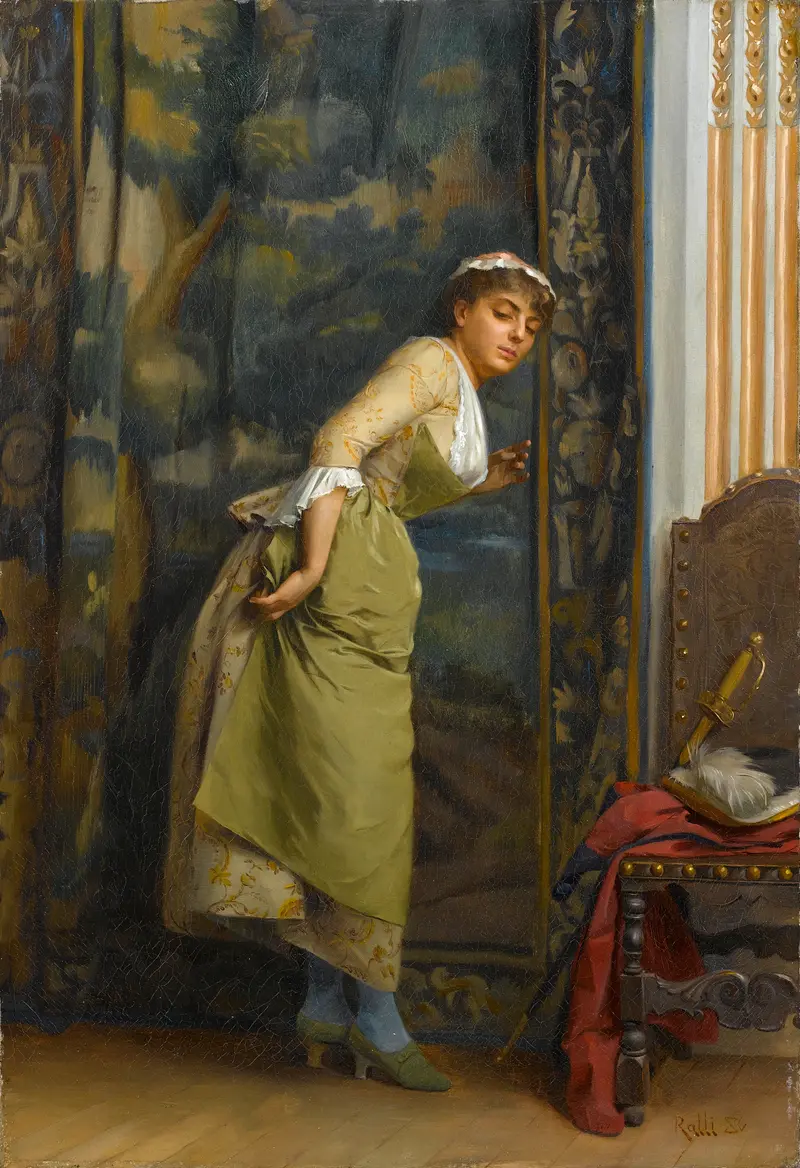
Eavesdropping (Ralli)
Theodoros Ralli
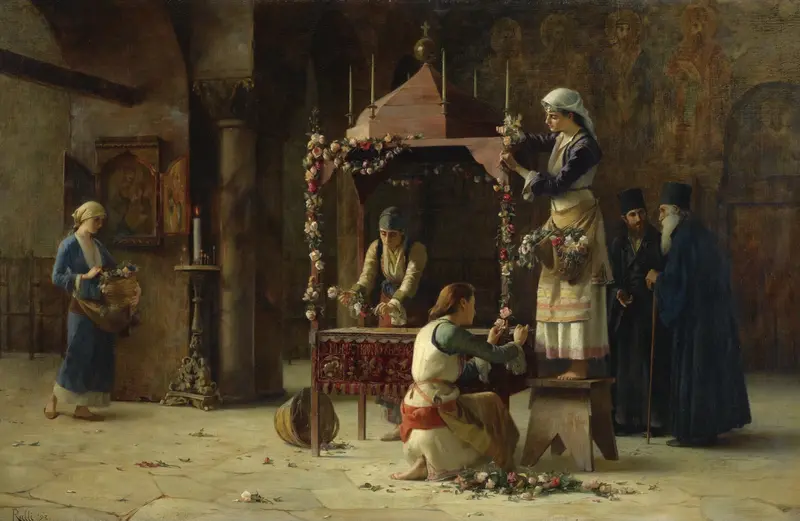
Holy Friday, Greece
Theodoros Ralli
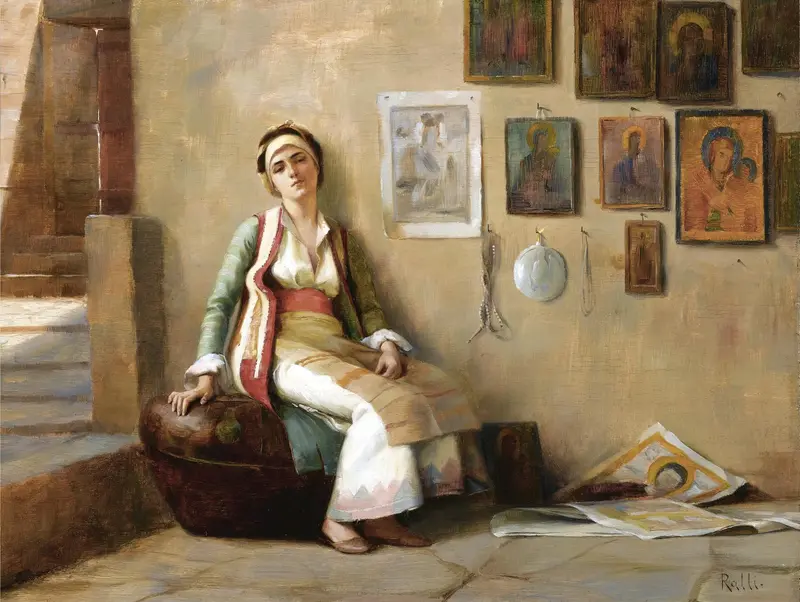
A Moment's Rest
Theodoros Ralli
More Genre Scene Art

Banquet of the Officers of the St George Civic Guard
Frans Hals

Rembrandt and Saskia in the Scene of the Prodigal Son
Rembrandt van Rijn

Bal du moulin de la Galette
Pierre-Auguste Renoir

Quadrille at the Moulin Rouge
Henri de Toulouse-Lautrec

A Burial at Ornans
Gustave Courbet

When Will You Marry?
Paul Gauguin