
Young Peasant Girl with a Hoe — History & Facts
When Jules Breton exhibited Young Peasant Girl with a Hoe in 1882, critics immediately recognized it as a defining image of rural France, capturing the dignity of the working class at a time when industrialization was rapidly changing the countryside. Breton, himself the son of a rural landowner, was celebrated for his sympathetic portrayals of peasant life, and this painting quickly became one of his most reproduced works. Its widespread acclaim helped cement Breton’s reputation as a leading figure of the Realist movement, and reproductions of the image circulated widely in both France and the United States in the late nineteenth century.
The painting’s popularity even inspired several contemporary writers to comment on the “quiet heroism” of its subject. A young woman stands alone in a sunlit field, her hands resting on the handle of a hoe, pausing in her labor. Her gaze, direct and unflinching, meets the viewer’s, inviting us into her world of toil and resilience. The crisp light illuminates her face and simple clothing, emphasizing the honesty and strength of her features, while the muted earth tones of the landscape reinforce the connection between the figure and the land she works.
Unlike Jean-François Millet’s The Gleaners, which depicts a group of women bent over in communal labor, Breton isolates his subject, granting her an individual presence and a sense of quiet resolve. The hoe, both tool and symbol, marks her status as a laborer, but her upright stance and steady gaze suggest pride and agency rather than submission. The exact early history of Young Peasant Girl with a Hoe is not fully documented, but it is known that Breton painted several variations on this theme during the 1880s, responding to popular demand from collectors in Europe and America. The painting’s enduring appeal lies in its blend of realism and idealization, a hallmark of Breton’s mature style.
Today, examples of his peasant portraits can be found in major museums such as the Musée d’Orsay and the Metropolitan Museum of Art, though the precise location of this particular version is not always clear in public records. Young Peasant Girl with a Hoe stands as a testament to Breton’s lifelong commitment to honoring rural laborers, and remains a touchstone for understanding the social and artistic currents of late nineteenth-century France.
More Artworks by Jules Breton

The Song of the Lark
Jules Breton
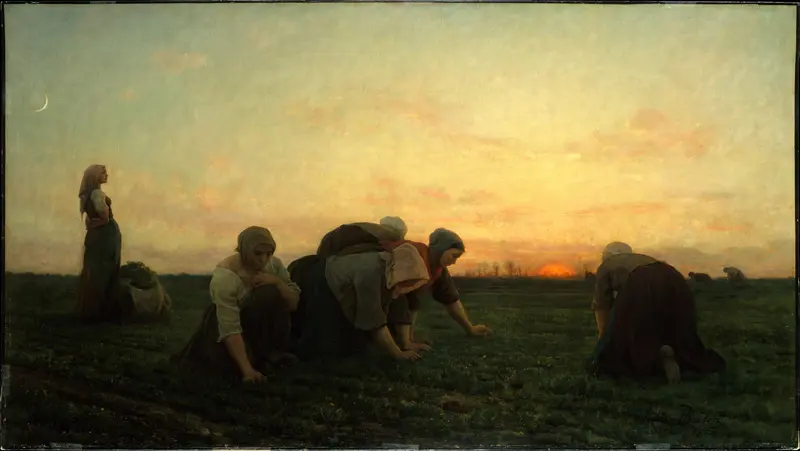
The Weeders
Jules Breton
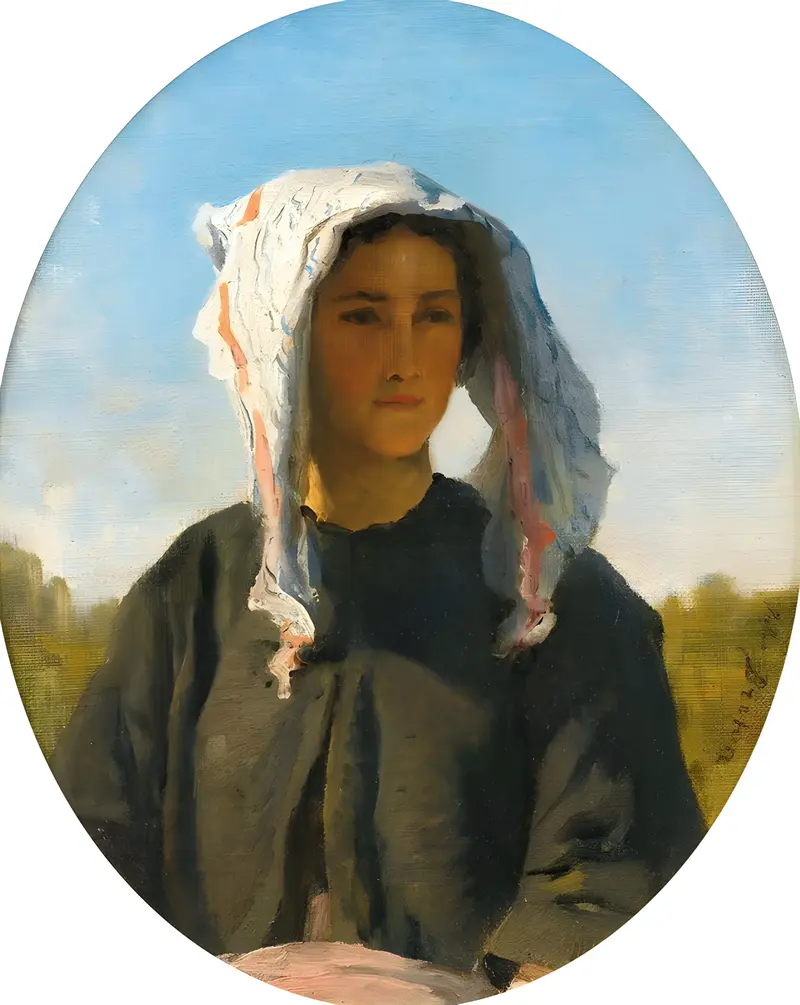
Portrait de jeune Paysanne Bordelaise
Jules Breton
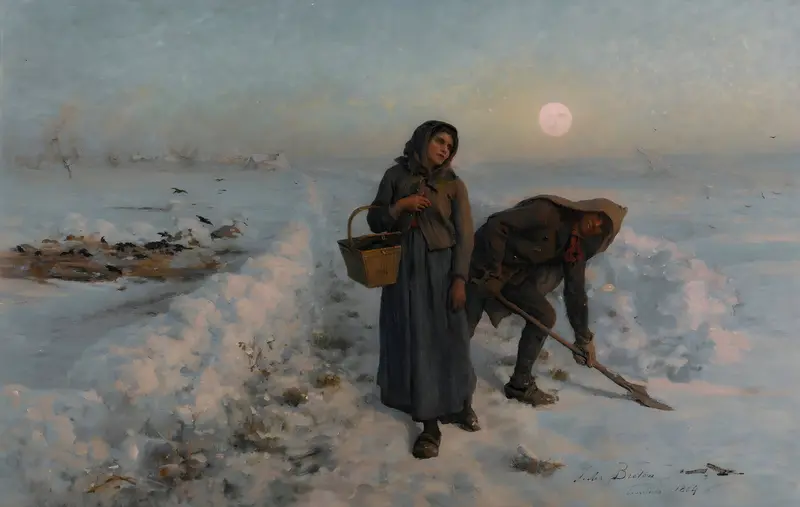
Sur la route en hiver; artois
Jules Breton
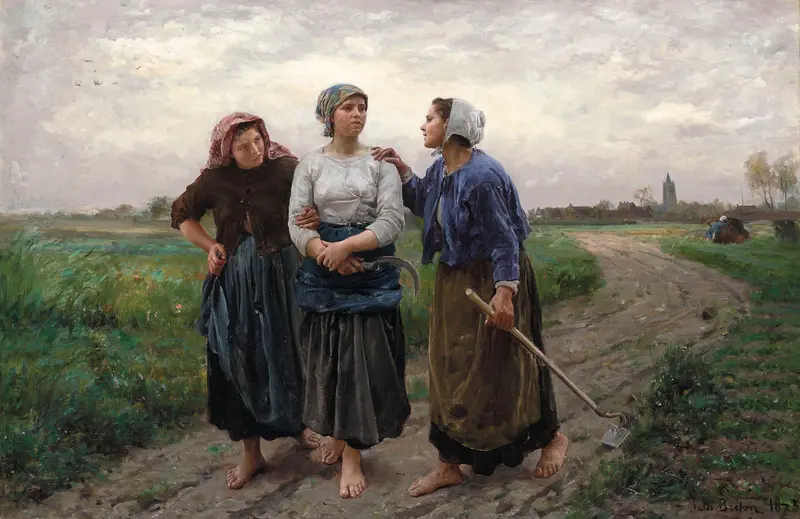
Les amies
Jules Breton
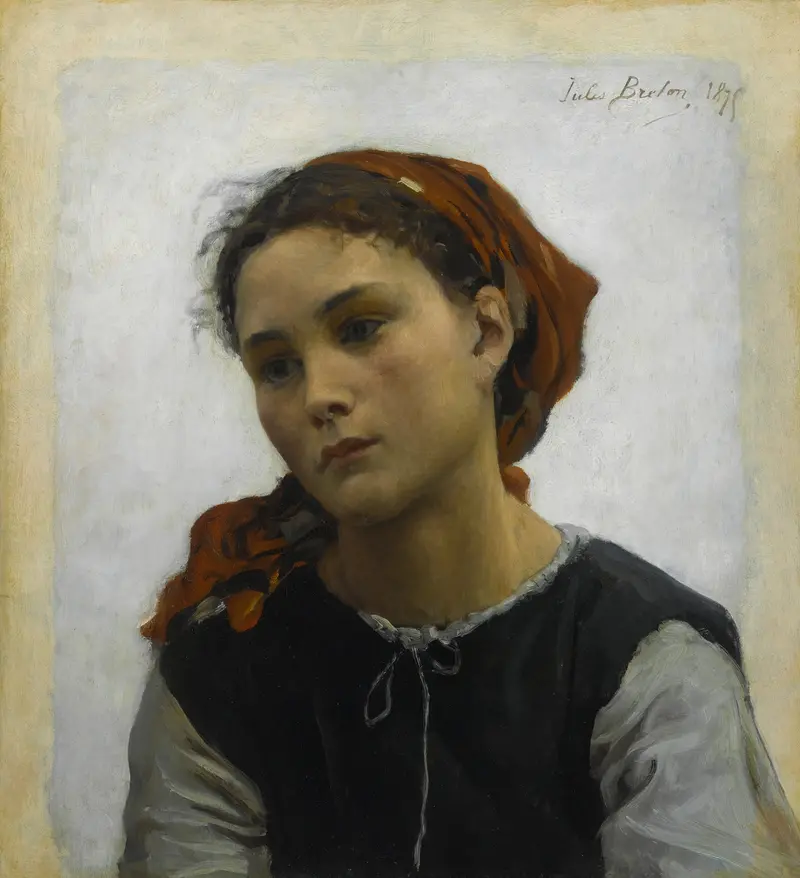
Innocente
Jules Breton
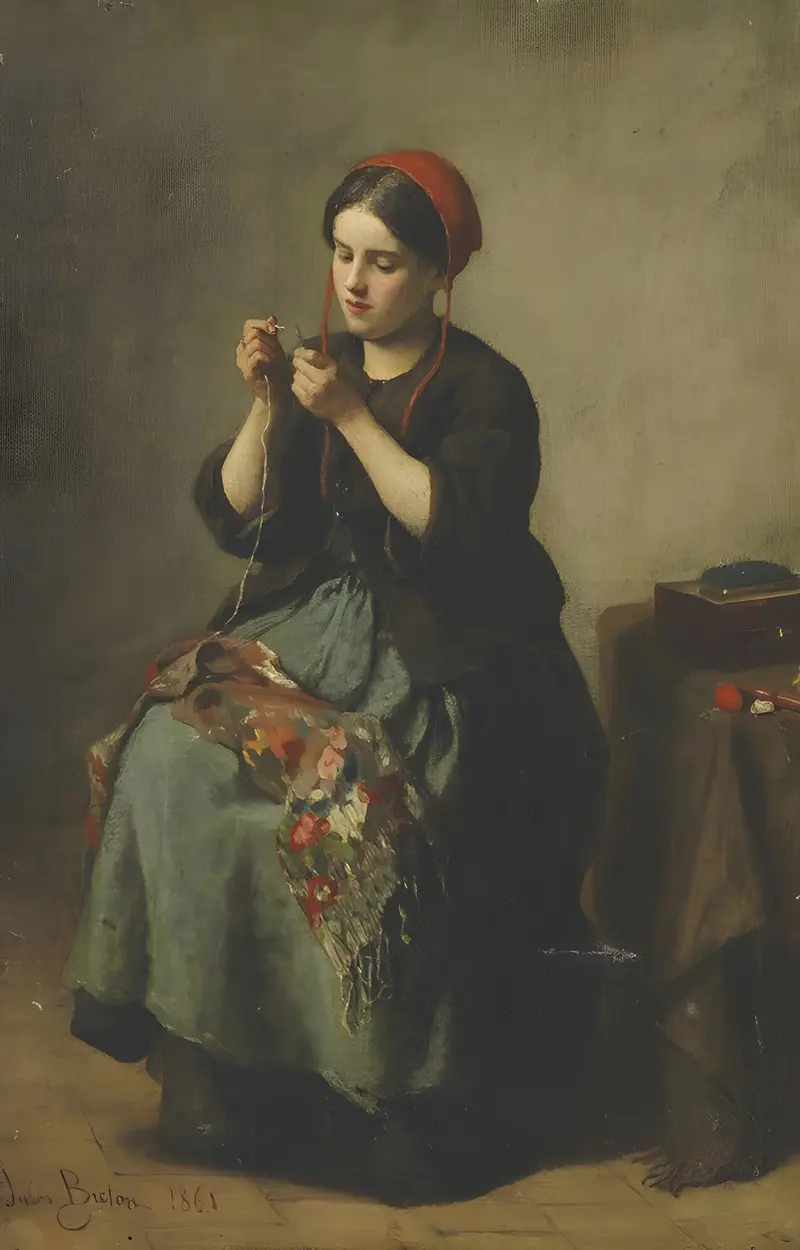
Peasant woman threading a needle
Jules Breton
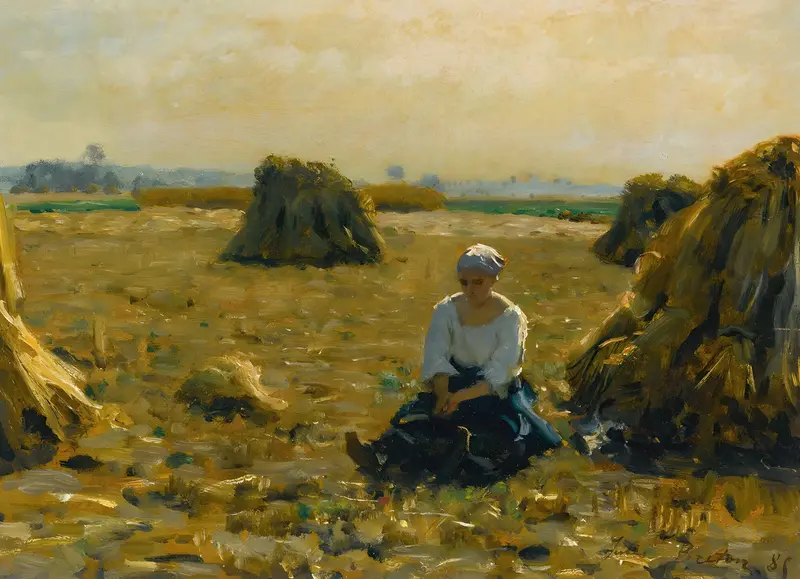
Jeune femme dans les champs
Jules Breton
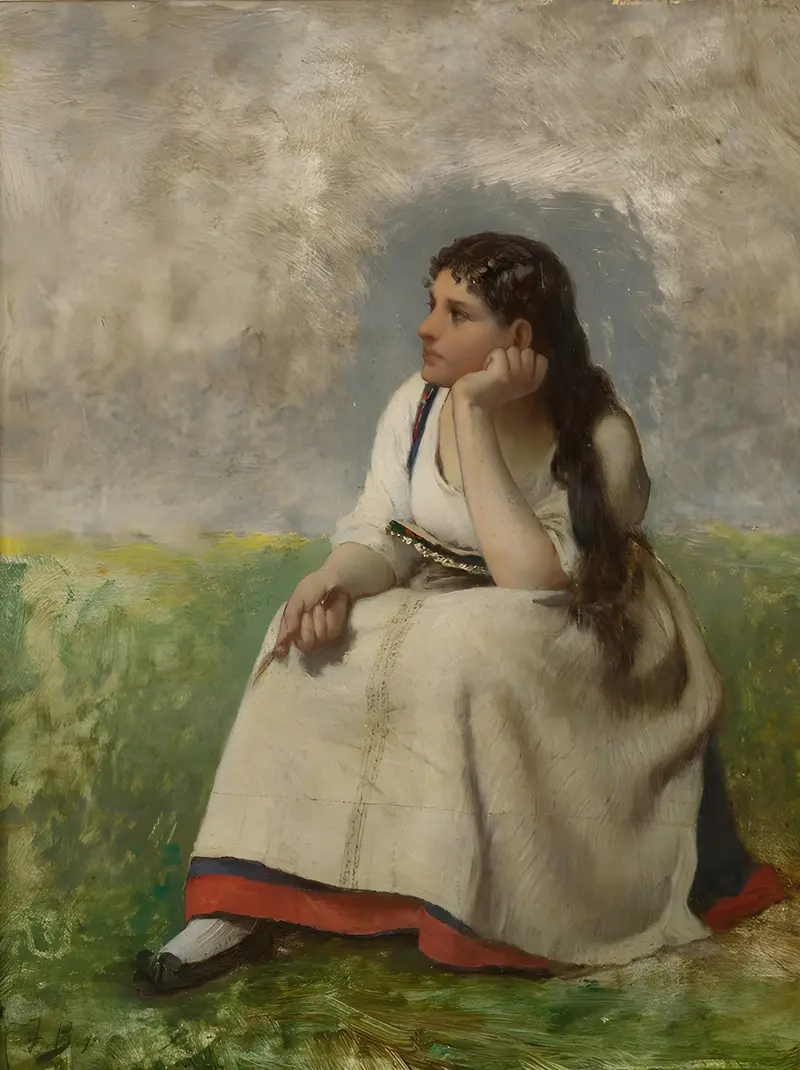
Jeune Fille Pensive
Jules Breton
Returning from the Fields
Jules Breton
More Genre Scene Art

Banquet of the Officers of the St George Civic Guard
Frans Hals

Rembrandt and Saskia in the Scene of the Prodigal Son
Rembrandt van Rijn

Bal du moulin de la Galette
Pierre-Auguste Renoir

Quadrille at the Moulin Rouge
Henri de Toulouse-Lautrec

A Burial at Ornans
Gustave Courbet

When Will You Marry?
Paul Gauguin