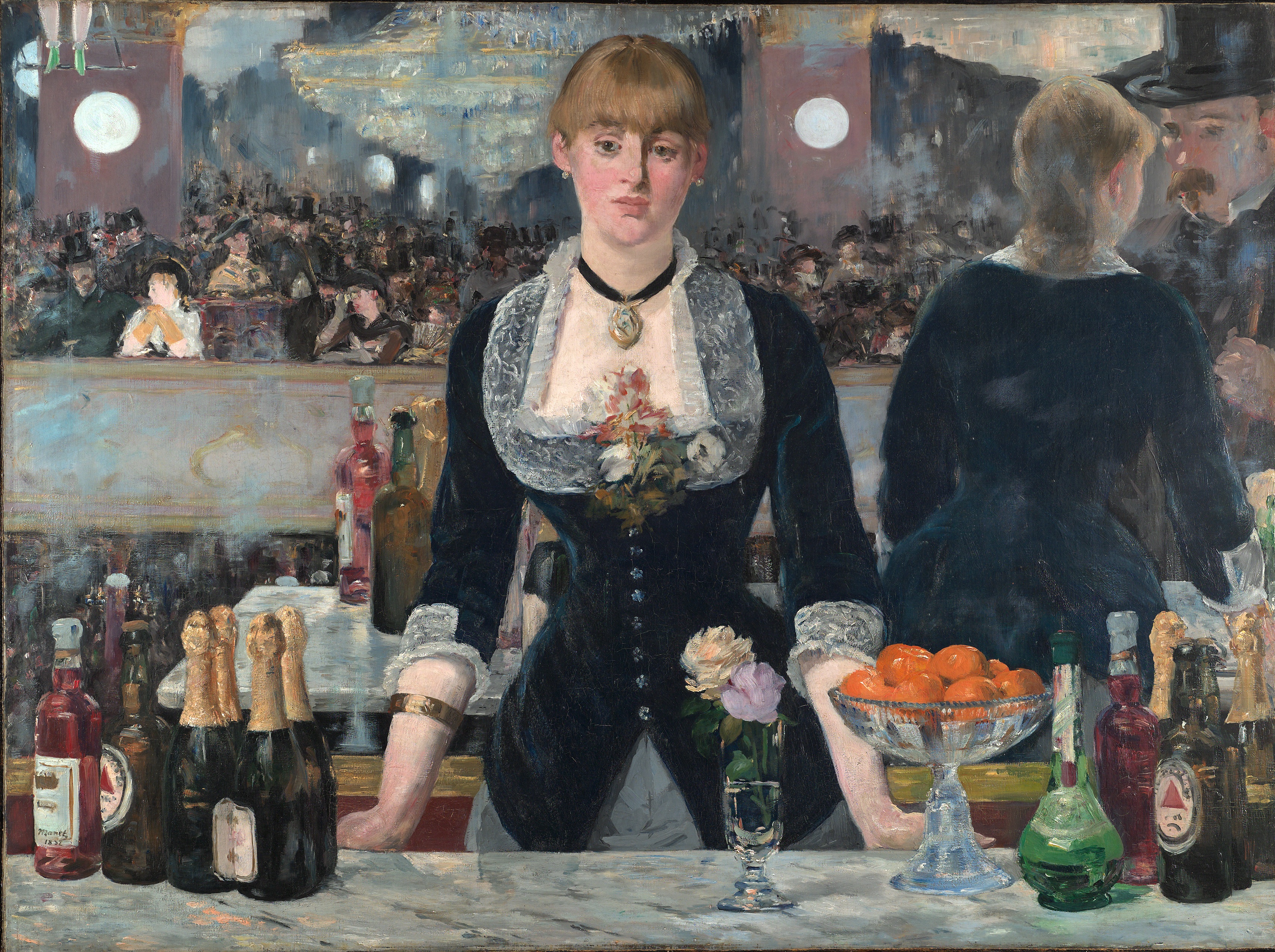
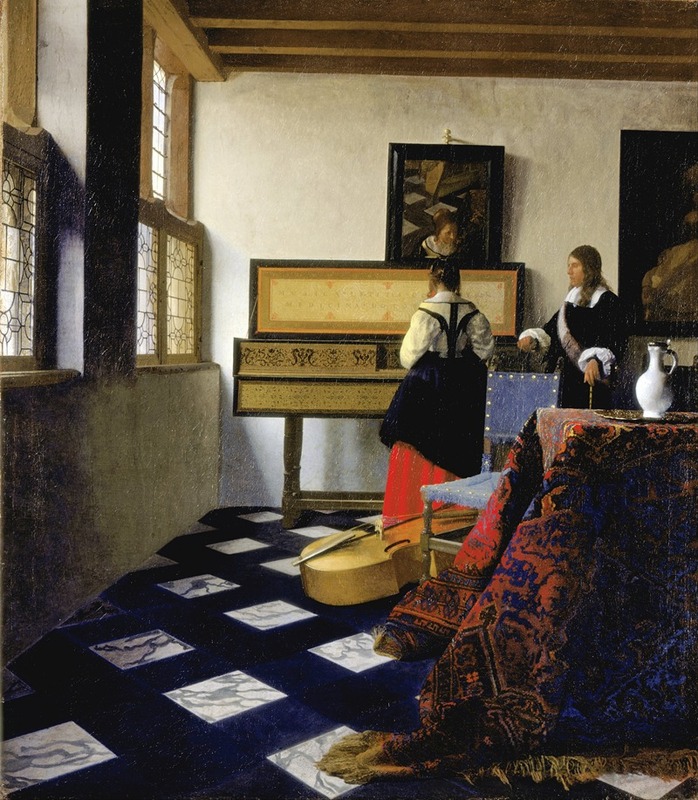
Zestiende eeuws venster, langs binnen gezien — History & Facts
Is this a mirror — or a memory? In Zestiende eeuws venster, langs binnen gezien, the boundaries between reflection and nostalgia blur, inviting the viewer to ponder the essence of perception itself. Look to the left at the intricately framed window, a portal that beckons the outside world into the intimate space of the room. The light streaming through filters softly, casting delicate shadows that dance across the textured walls. Notice how the warm hues of ochre and muted greens create a comforting atmosphere, drawing the eye toward the delicate interplay of light and architecture.
Dujardin's meticulous brushwork invites an exploration of every detail, from the ornamental carvings of the window frame to the gentle sway of fabric that hints at the presence of someone just out of sight. A deeper inspection of this serene composition reveals conflicting sentiments. The window serves not only as a literal passage but also as a symbolic threshold—between the past and present, reality and imagination. The reflective surface seems to hold whispers of the outside, contrasting with the stillness within.
This duality reflects the artist's engagement with themes of time and memory, where the viewer is left questioning what is truly seen and what lies beyond the surface. Dujardin painted this work in 1837 during a period marked by a growing interest in realism and the exploration of light. Living in the Netherlands, he was part of an artistic community that pushed against the boundaries of romanticism. This painting emerged during an era of social change, mirroring the artist's own search for identity amidst evolving cultural landscapes, allowing him to capture not just a scene, but a moment of revelation.
More Artworks by Edward Dujardin
Browse all →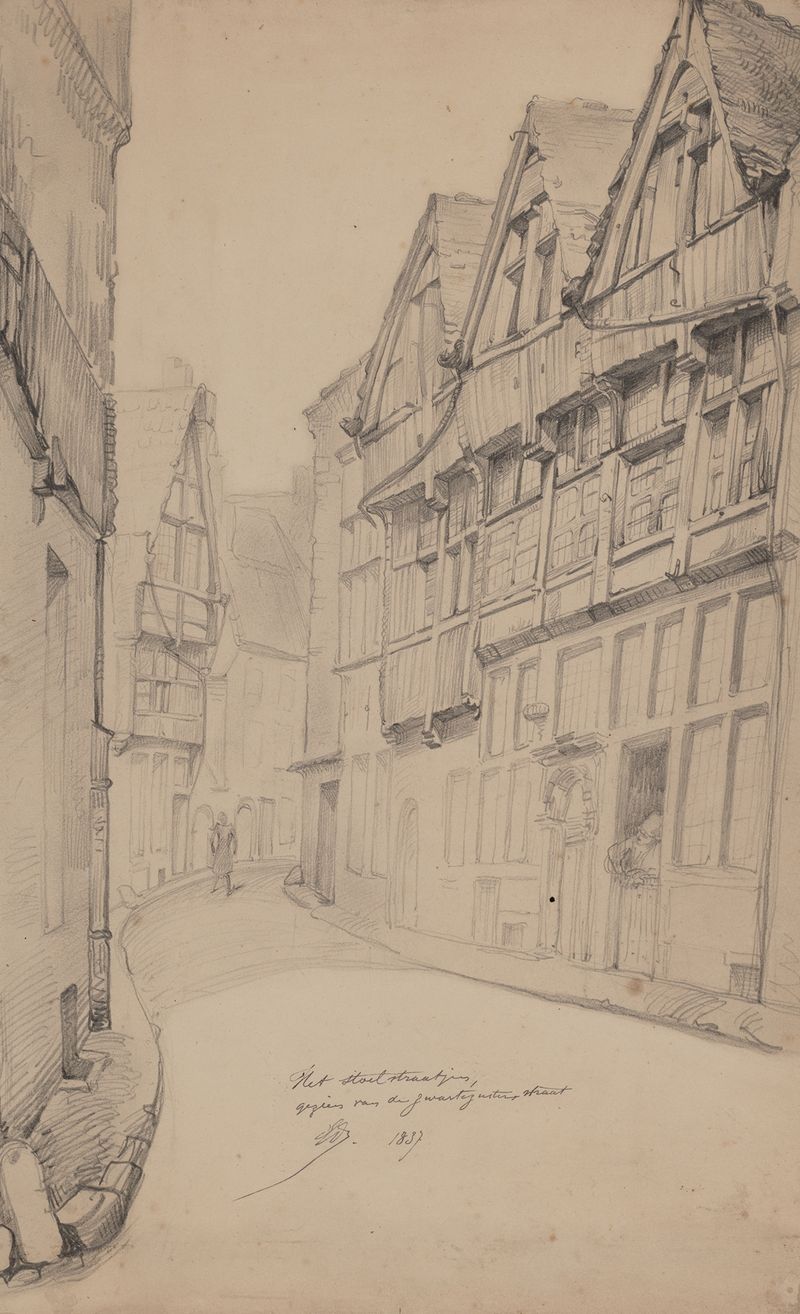
De Stoelstraat, gezien vanuit de Zwarte Zusterstraat
Edward Dujardin
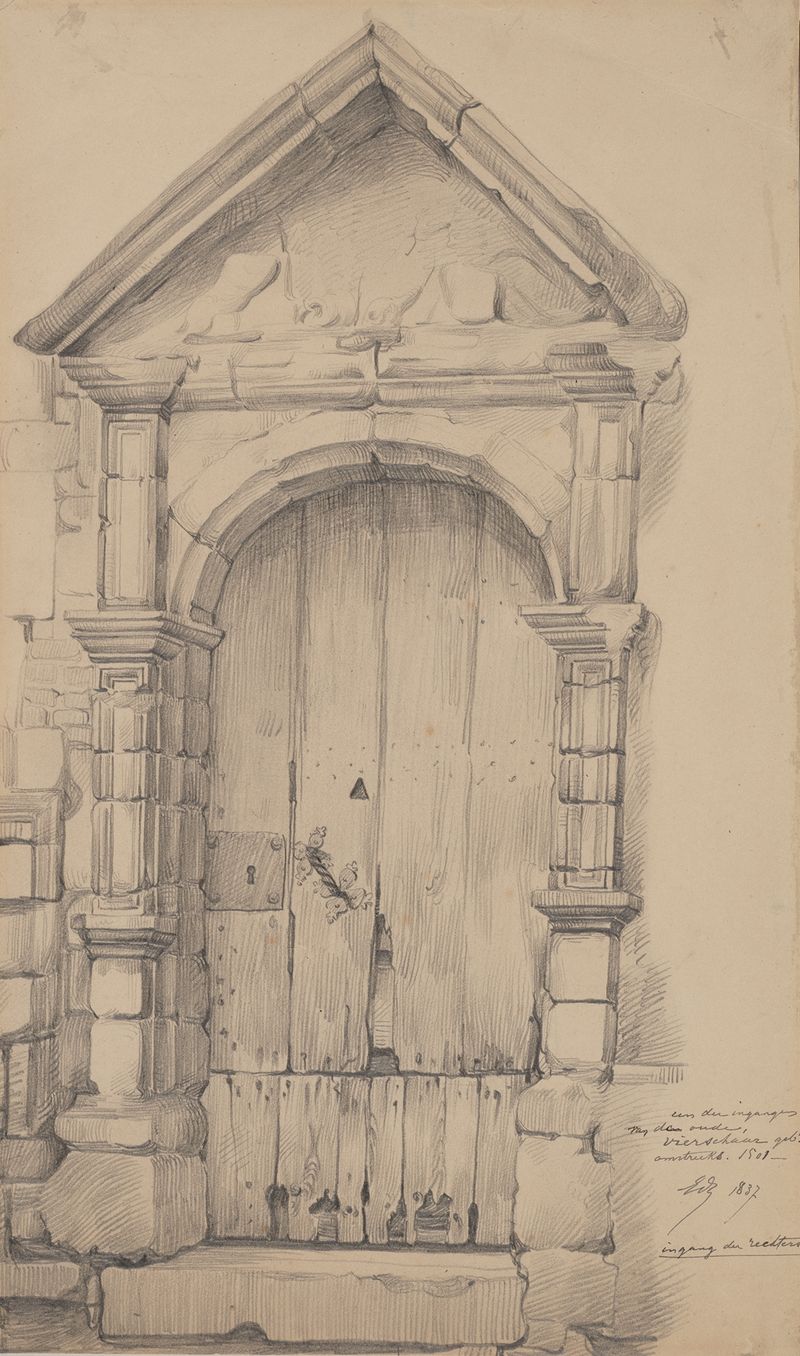
De ingang der rechters van de oude Vierschaar
Edward Dujardin
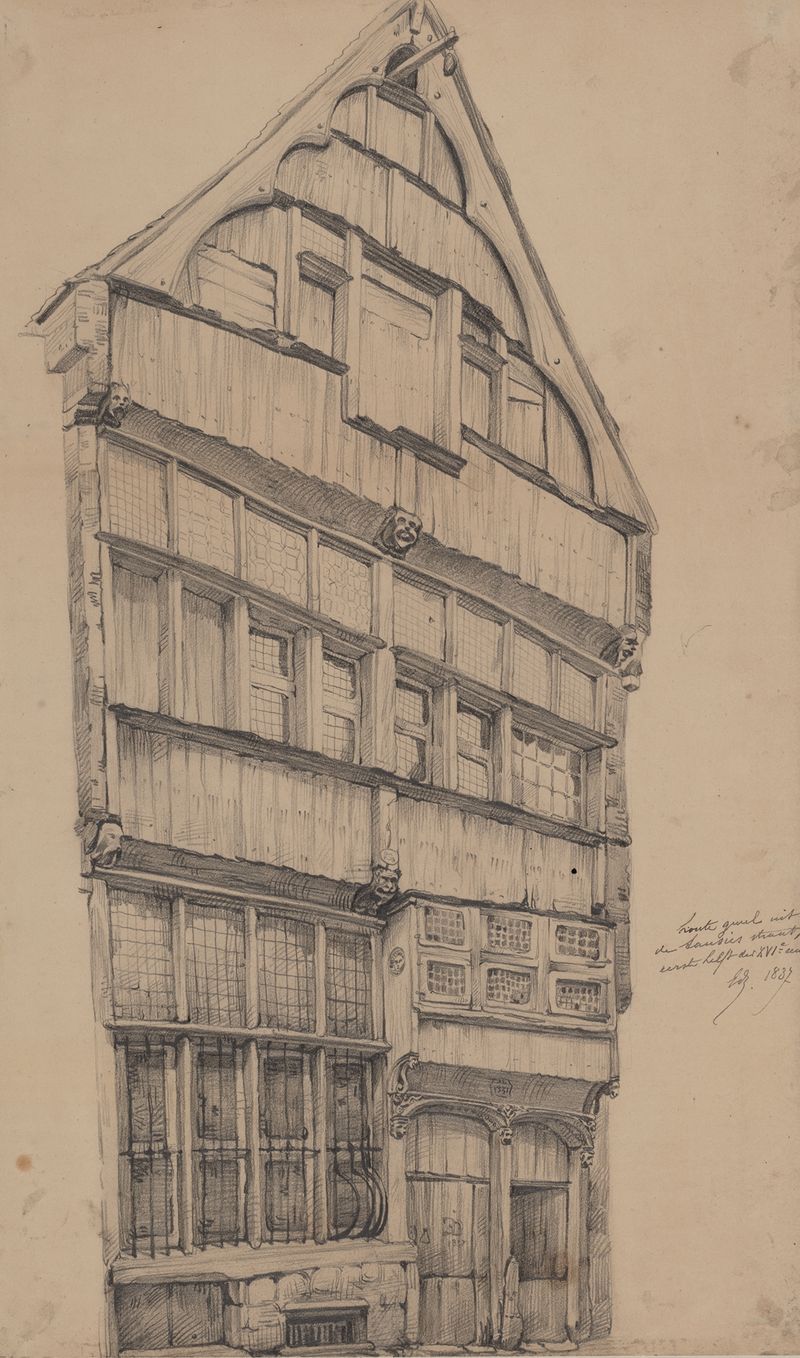
Houten gevel in de Saucierstraat.
Edward Dujardin
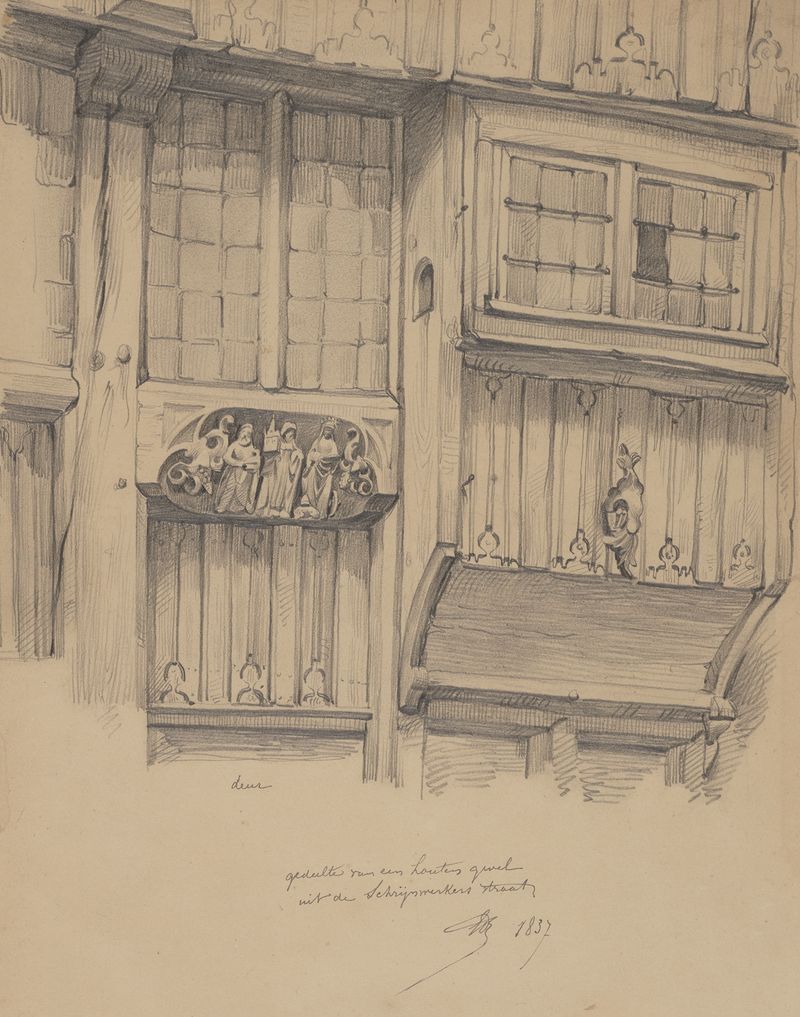
Gedeelte van een houten gevel uit de Schrijnwerkersstraat
Edward Dujardin
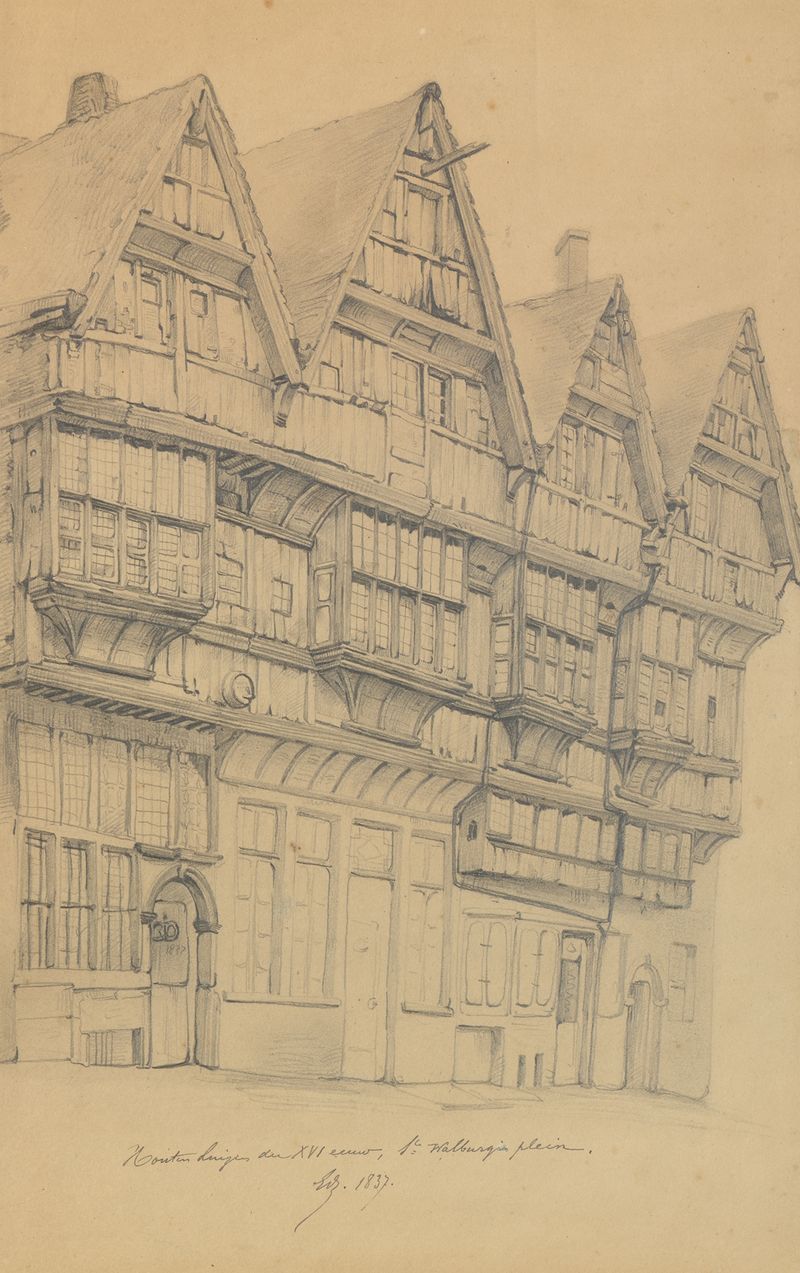
Houten huizen der XVI eeuw, Sint-Walburgisplein
Edward Dujardin
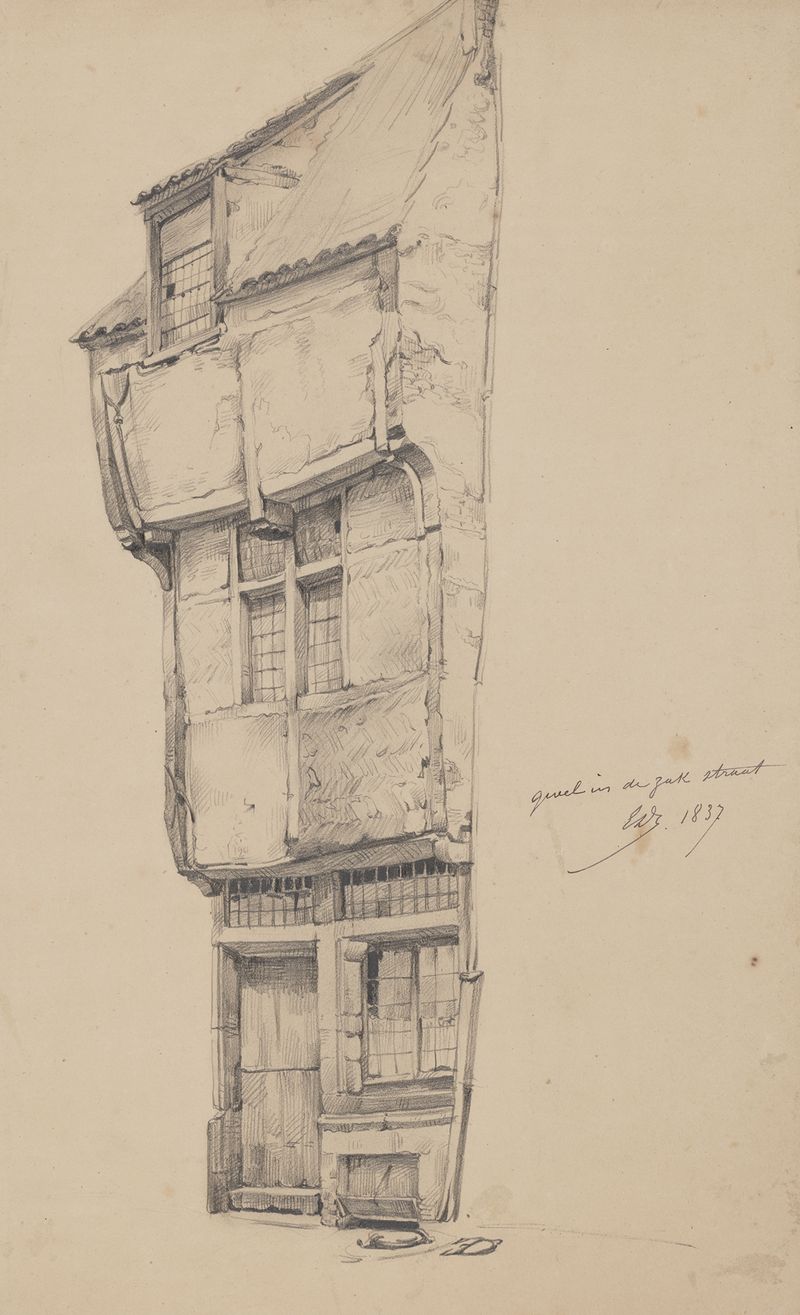
Gevel in de Zakstraat
Edward Dujardin
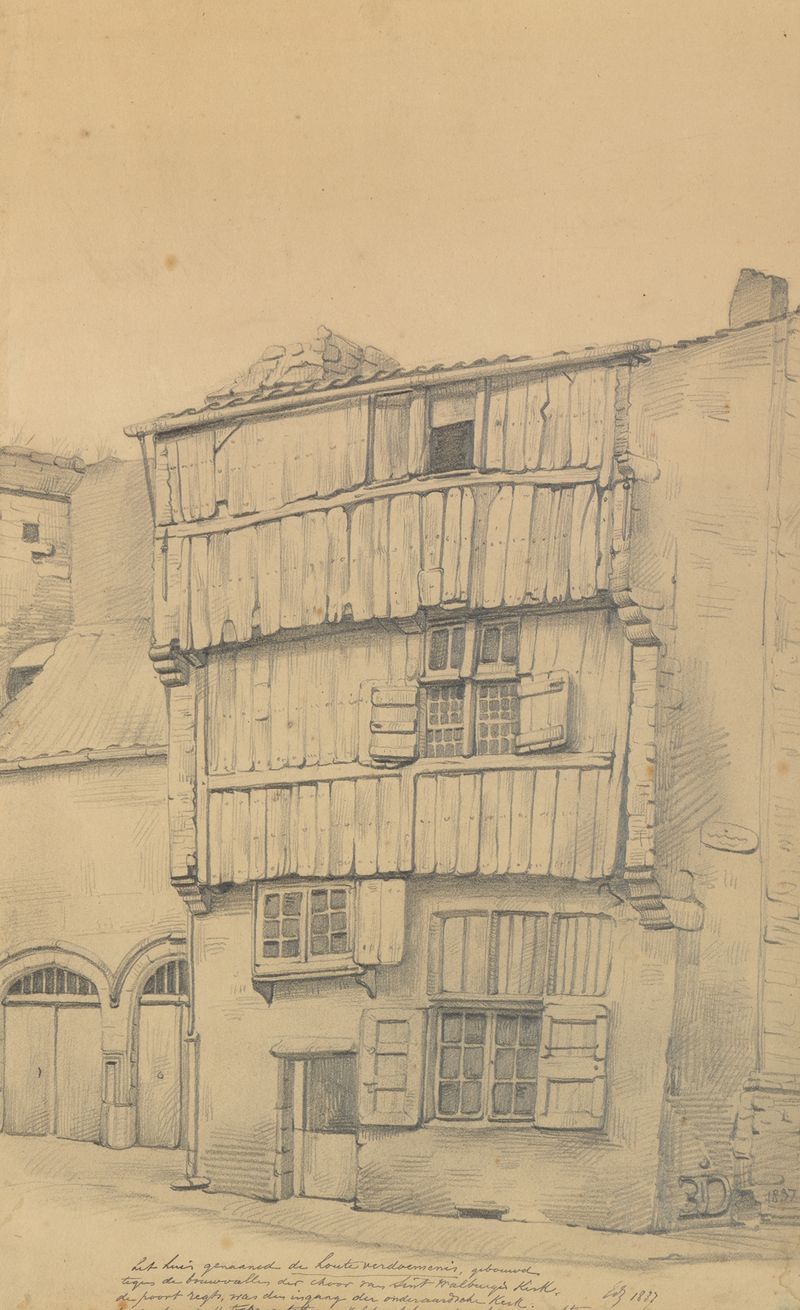
Het huis ‘De Houte Verdoemenis’, gebouwd tegen het koor van de Sint-Walburgiskerk
Edward Dujardin
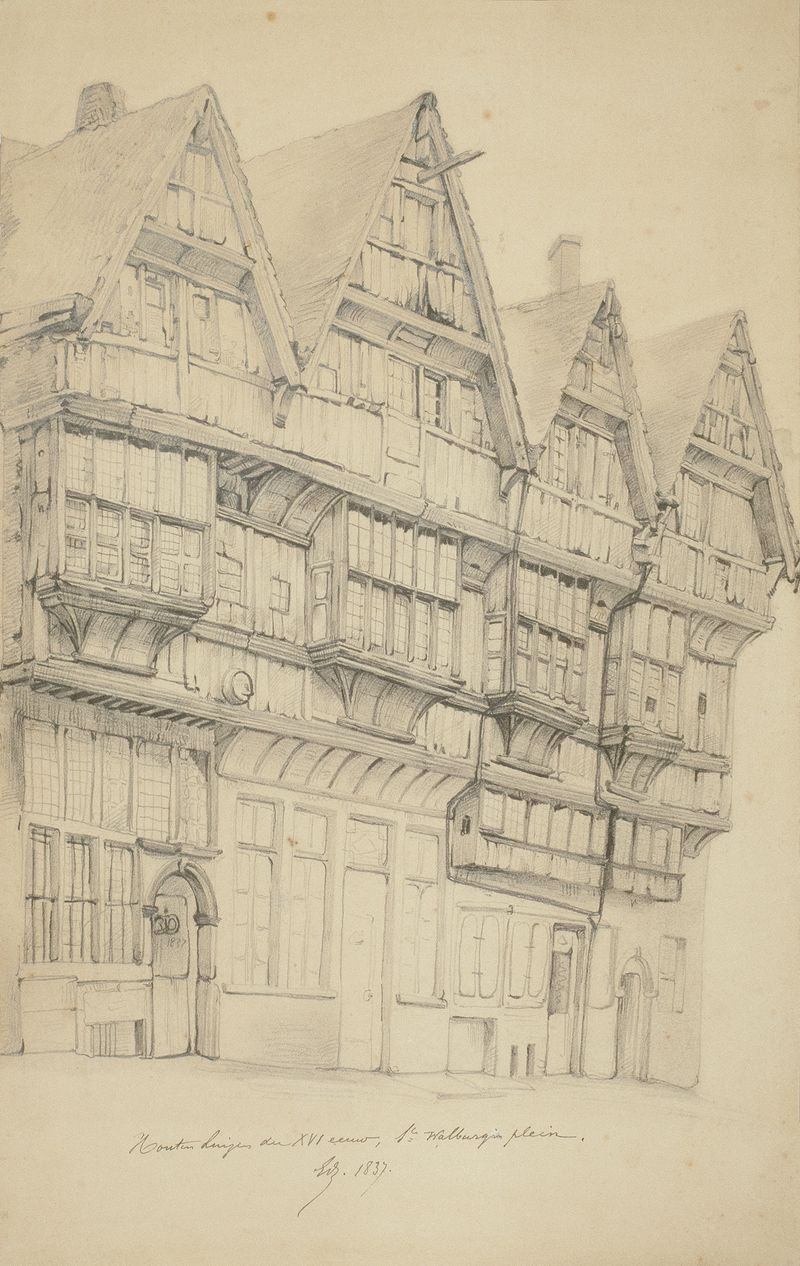
Houten huizen der XVI eeuw, Sint-Walburgisplein
Edward Dujardin

Ingangspoort van het Sint-Julianusgodshuis
Edward Dujardin
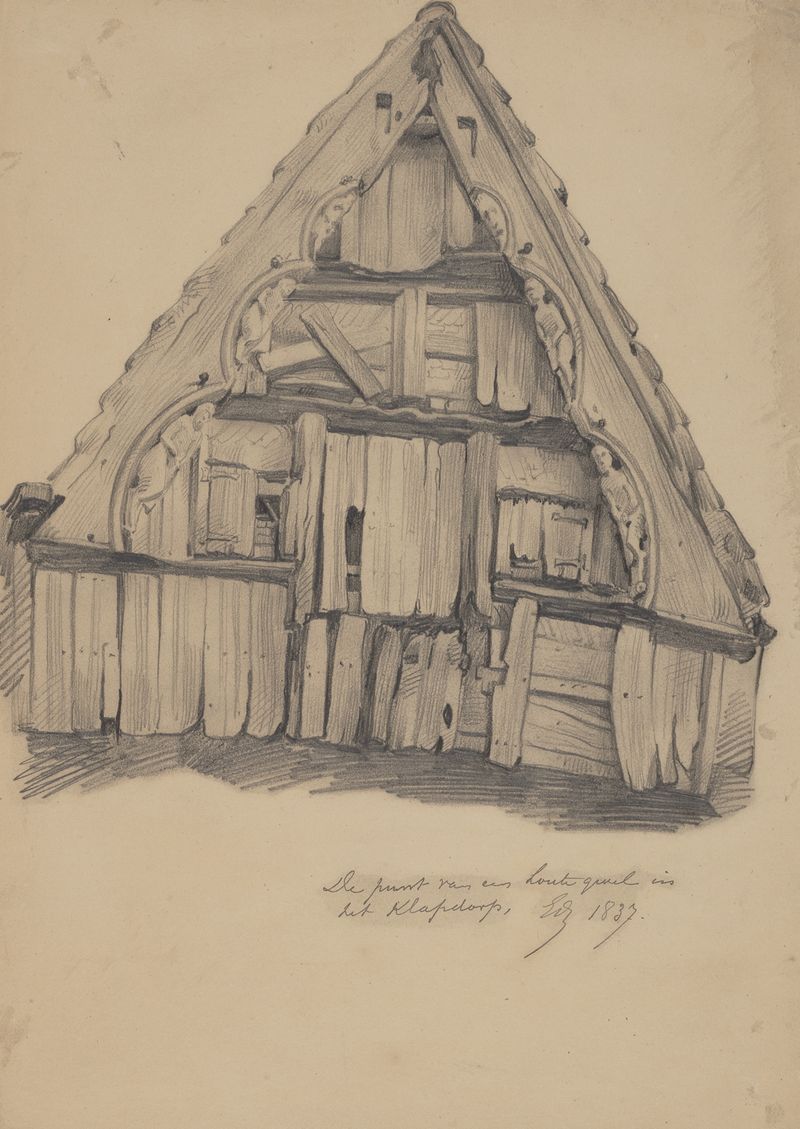
De punt van een houten gevel in het Klapdorp
Edward Dujardin