
Zittende man met hoed in hand, kruik op de grond — History & Facts
What secret hides in the quiet of the canvas? Beneath the surface of stillness lies a world where time decays and existence lingers. Look to the left at the man, his posture relaxed yet contemplative, a hat cradled in his hand. The muted palette of earth tones envelops the scene, with gentle shadows softly defining his form against a backdrop of indistinct hues. Notice how the brushstrokes reveal the texture of his clothing, the rough fabric contrasting with the smoothness of the earthen jug beside him.
This juxtaposition of textures invites the viewer into a moment suspended in time, drawing attention to the intimate relationship between man and object. As you explore further, consider the play of light and shadow that creates an air of melancholy. The jug on the ground, heavy with unseen history, hints at the weight of forgotten stories. The man’s gaze, slightly averted, suggests a deeper contemplation, perhaps reflecting on the transient nature of life itself.
What has he left behind? What awaits him beyond this moment? The scene unfolds as an invitation to ponder our own narratives, evoking feelings of nostalgia and the inevitability of decay. Painted between 1642 and 1664, this work emerges from a time when Bega was establishing himself in the Dutch art scene. The post-Reformation milieu was rich with introspection, where everyday life and its subtle complexities became worthy subjects. The artist captured fleeting moments with a keen eye, reflecting both personal and societal themes, embracing stillness as a canvas for deeper reflection.
More Artworks by Cornelis Pietersz. Bega
Browse all →
Mannen en jonge vrouw in herberg
Cornelis Pietersz. Bega

Twee mannen en vrouw met kind zittend in herberg
Cornelis Pietersz. Bega
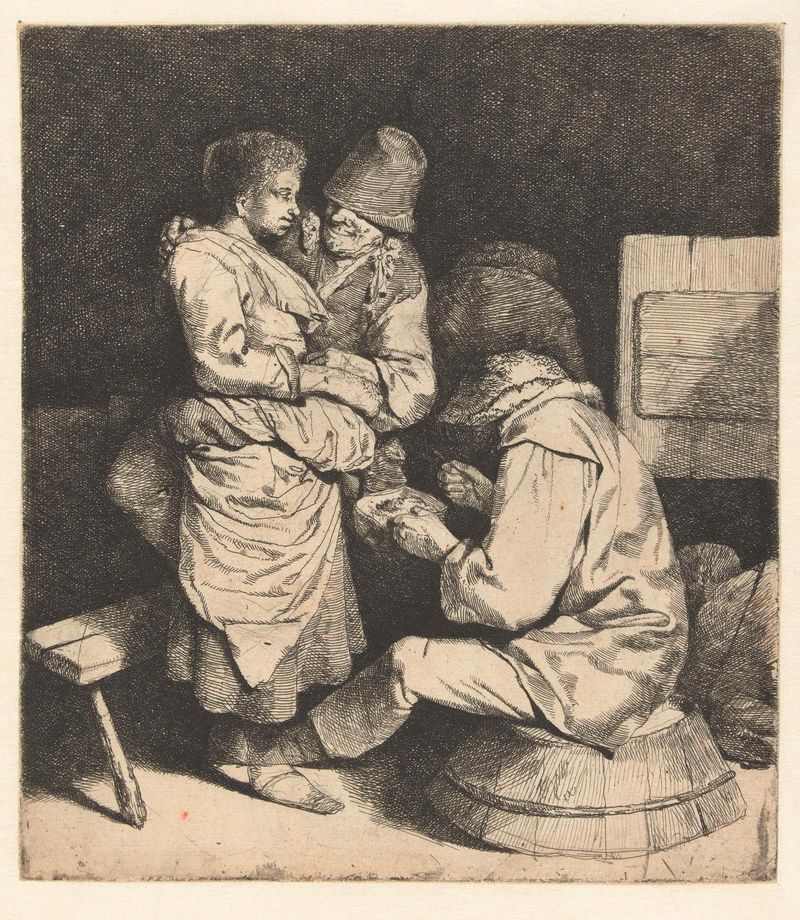
Vrouw vastgepakt door man, andere man zit te eten in herberg
Cornelis Pietersz. Bega

Jonge vrouw zittend met een pijp
Cornelis Pietersz. Bega

Staande vrouw vastgepakt door man, andere man kijkt toe in herberg
Cornelis Pietersz. Bega
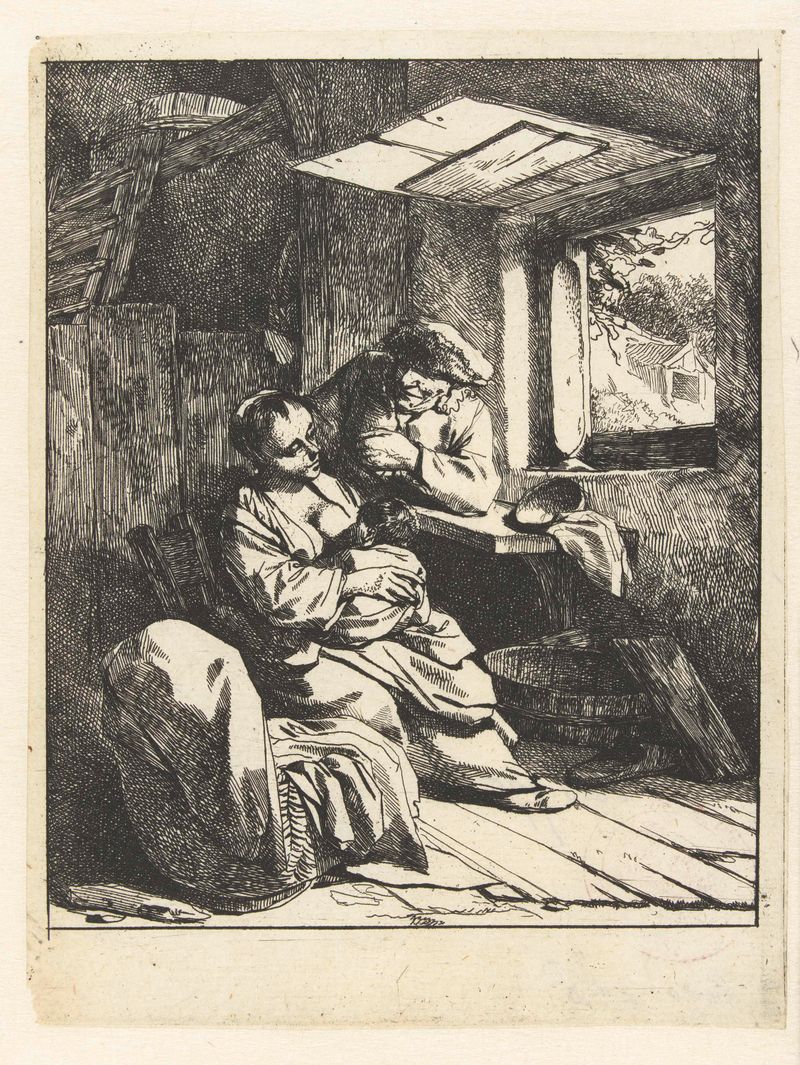
Vrouw met kind en man bij wieg in interieur met open raam
Cornelis Pietersz. Bega
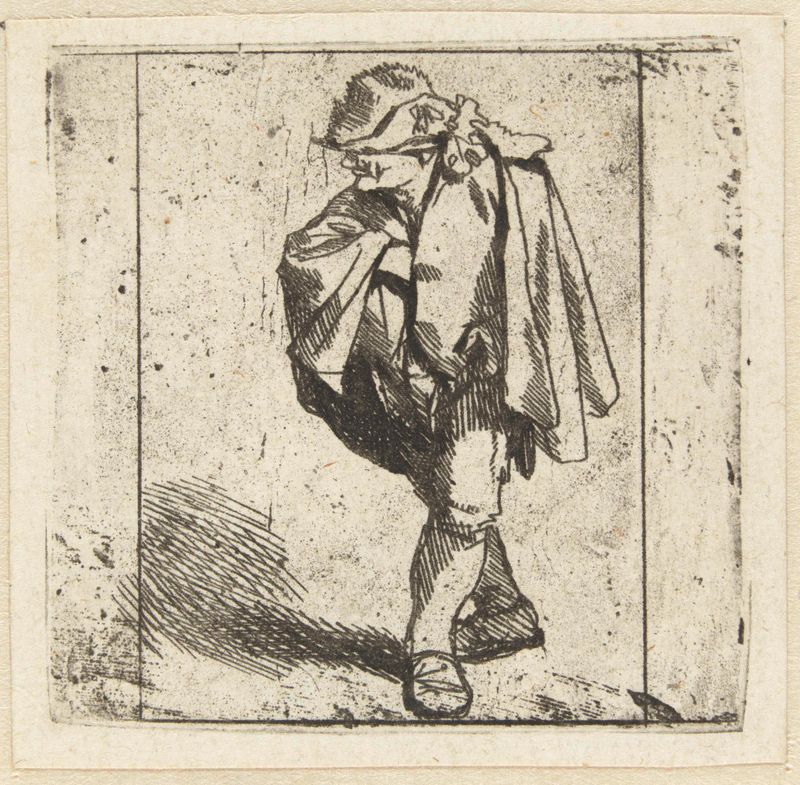
Staande man met de rechterhand op de borst in zijn mantel gestoken
Cornelis Pietersz. Bega
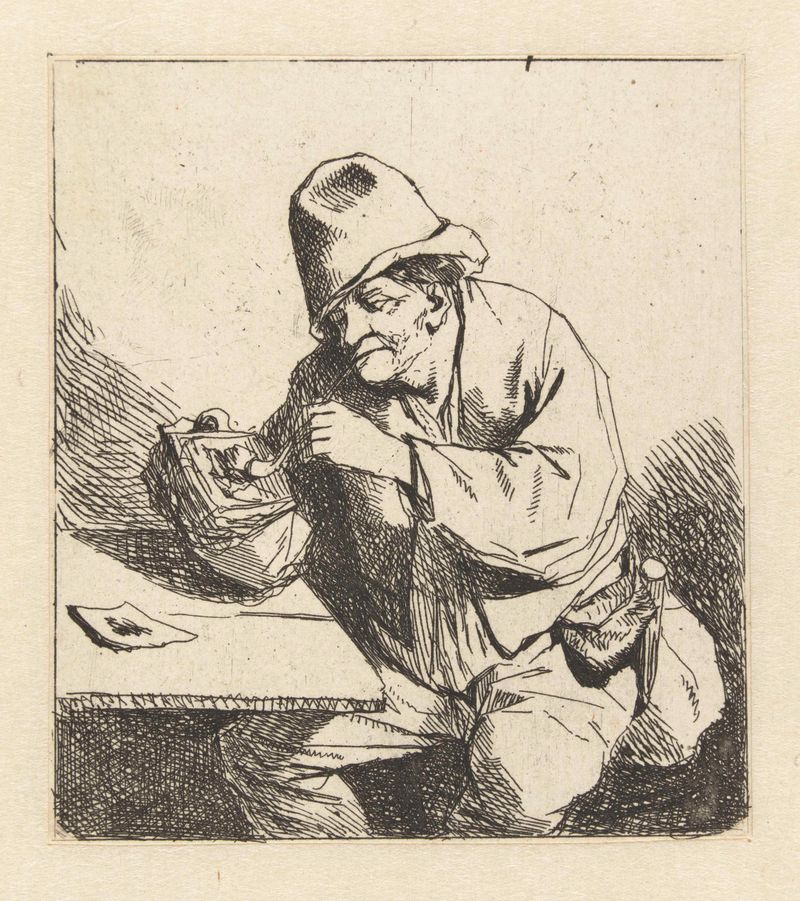
Zittende man steekt pijp aan
Cornelis Pietersz. Bega

Man zittend op ton met kruik in handen
Cornelis Pietersz. Bega

Liefdespaar
Cornelis Pietersz. Bega
More Portrait Art
Browse all →
Las meninas
Diego Velázquez

Self-portrait with a Bandaged Ear and Pipe
Unidentified artist

Girl with a Pearl Earring
Johannes Vermeer

The Sampling Officials of the Amsterdam Drapers’ Guild, Known as ‘The Syndics’
Rembrandt van Rijn

The Hundred Guilder Print: the man seen on the back in the lower left corner
Rembrandt van Rijn

Portrait of Dr Gachet
Vincent van Gogh