
A Banquet in the Ruins of a Temple — History & Facts
In the fading light of dusk, a gathering unfolds amid the remnants of ancient grandeur. Shadows dance across broken columns as figures in elegant attire enjoy a lavish feast, their laughter mingling with the whisper of the wind. The ruins, once a sanctuary of worship, now cradle a moment of revelry and reflection, each gesture infused with an air of bittersweet nostalgia. Look to the left at the fragmented stonework, where ivy clings with tenacity, a symbol of nature reclaiming its territory.
The warm glow of candlelight flickers across the table, illuminating goblets and plates filled with sumptuous food, creating a contrast between the opulence of the banquet and the desolation of the surroundings. Robert’s deft brushstrokes capture the play of light and shadow, inviting the viewer to explore the juxtaposition between the decadence of life and the decay of history. Delving deeper, one may notice the expressions of the guests, ranging from joy to contemplation, suggesting a moment suspended in time. The ruins serve not only as a backdrop but as a reminder of impermanence, echoing the beauty found in transience.
Further, the harmony between the festive spirit and the architectural decay speaks to the balance between celebration and mourning, a poignant commentary on the passage of time and the duality of human experience. Hubert Robert created A Banquet in the Ruins of a Temple in 1795, during a period marked by political upheaval and artistic exploration in France. Having been influenced by both neoclassical ideals and the emerging romantic sensibilities, he sought to capture the interplay between nature and civilization. This work reflects his fascination with ruins, both as a subject of beauty and a testament to the impermanence that defines human existence.
More Artworks by Hubert Robert
Browse all →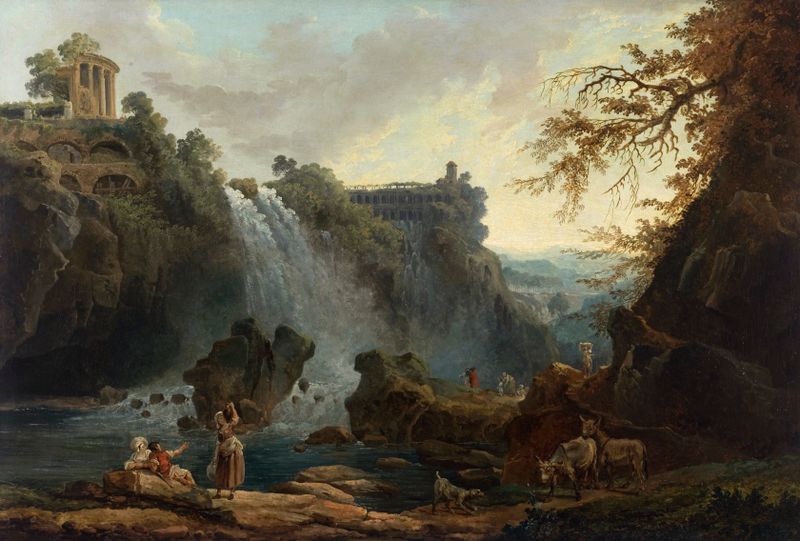
Les Cascatelles de Tivoli
Hubert Robert
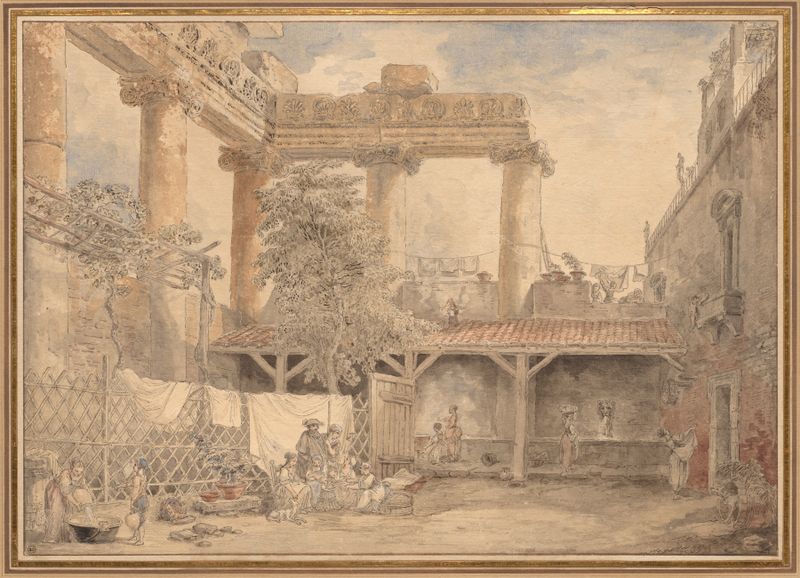
Roman Ruins, Villa Pamfili
Hubert Robert

The Rustic Bridge, Château de Méréville, France
Hubert Robert

The Portico of a Country Mansion
Hubert Robert

Architectural Capriccio
Hubert Robert

The Obelisk
Hubert Robert
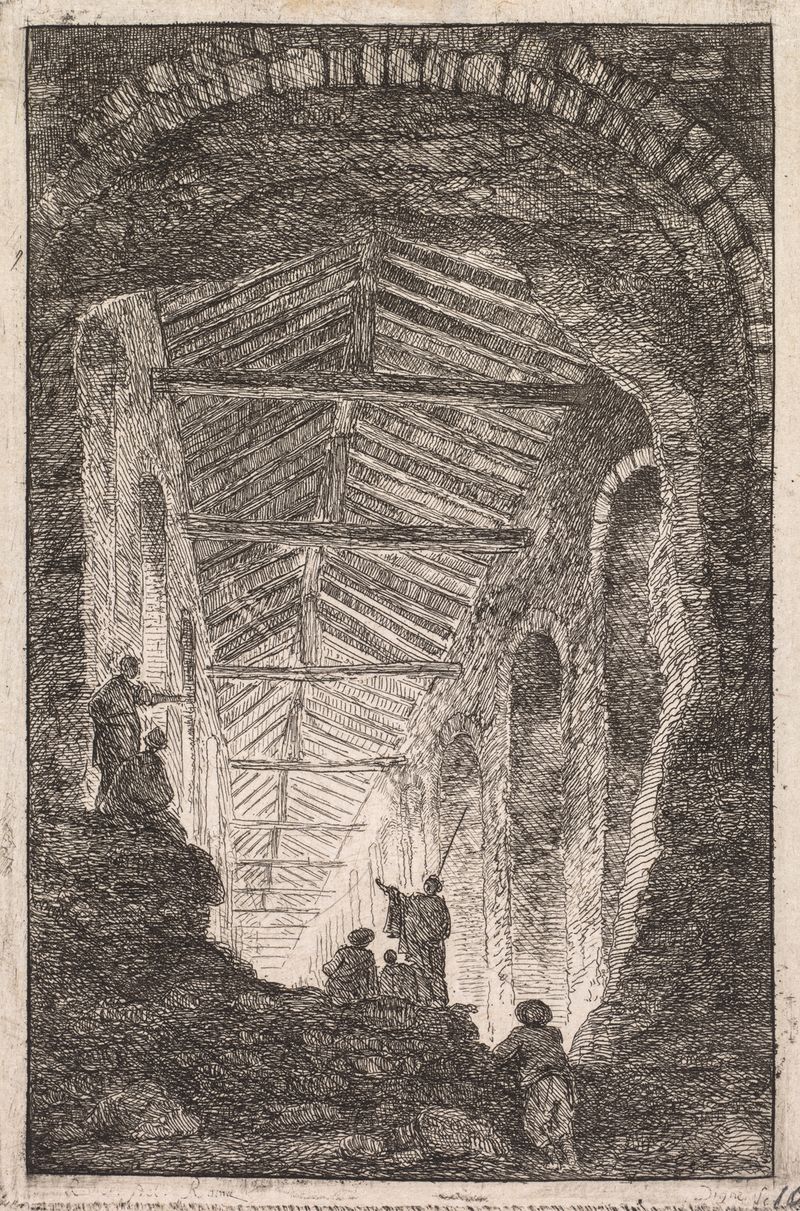
The Antique Gallery
Hubert Robert

L’incendie de l’Opéra, vu des jardins du Palais-Royal, le 8 juin 1781
Hubert Robert
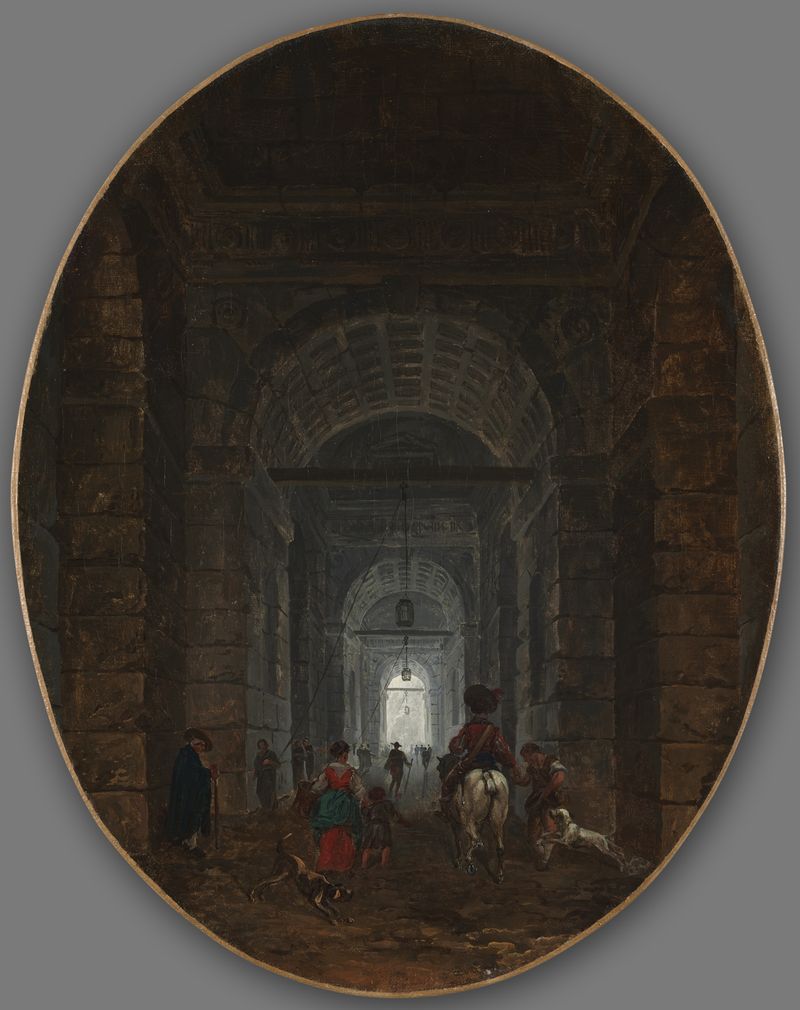
The Grotto of Posillipo
Hubert Robert

Architectural Capriccio with ruins of the Temple of Saturn and the Colosseum in the background
Hubert Robert





