
A Glass of Flowers and an Orange Twig — History & Facts
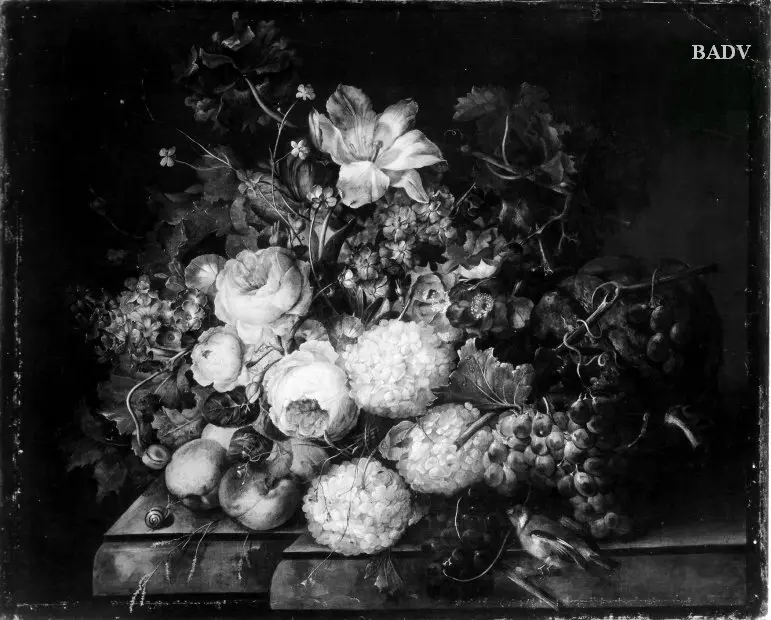
What first arrests the eye in A Glass of Flowers and an Orange Twig is the wild, almost theatrical energy of the bouquet itself. The flowers spill and twist in every direction, their stems arching and curling as if caught in a gust of wind. Every petal and leaf seems to have its own story, from the lush, heavy roses to the delicate, almost translucent poppies.
The orange, hanging improbably from its twig amid the blooms, draws the gaze to the heart of the arrangement, while the glass vessel below anchors the composition in the real world. The light, falling from the left, picks out the satiny textures and the dew-like highlights, making the colors pulse against the deep shadow behind. This painting belongs to the world of the Dutch Golden Age, when still lifes like this were both a celebration of nature’s abundance and a quiet meditation on its fragility. In the 1660s, artists such as Abraham Mignon were admired for their technical brilliance and their ability to conjure entire gardens on a single canvas.
These works were often commissioned by prosperous burghers eager to display their taste and wealth, but they also carried a whisper of warning—flowers wilt, fruit decays, and beauty is fleeting. The Web Gallery of Art preserves this piece, a testament to the era’s fascination with both the splendor and the impermanence of the natural world. Look closely, and you may find the story of a vanished summer, caught forever in paint.
More Artworks by Abraham Mignon

Still Life with Flowers and a Watch
Abraham Mignon
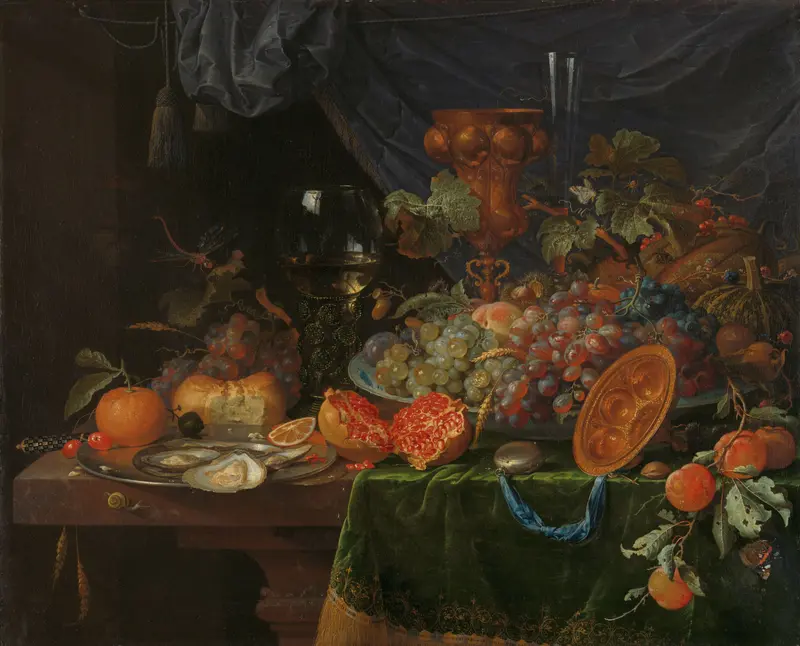
Still Life with Fruit and Oysters
Abraham Mignon
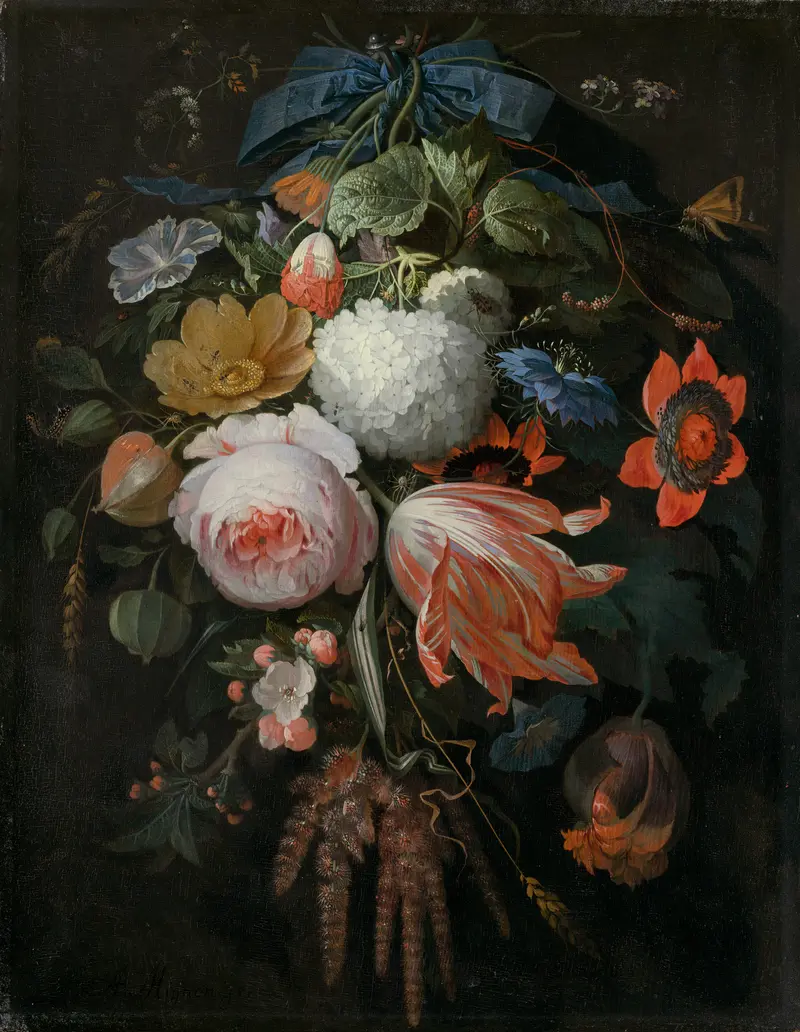
A Hanging Bouquet of Flowers
Abraham Mignon
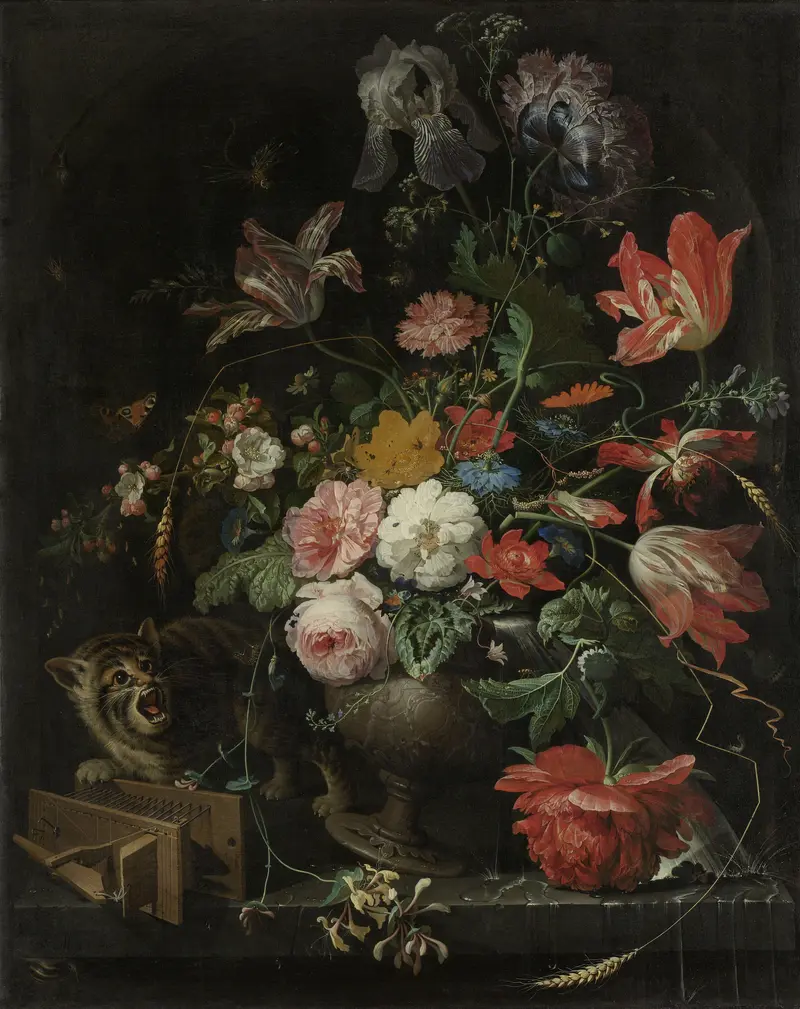
Bouquet with cat and mousetrap
Abraham Mignon
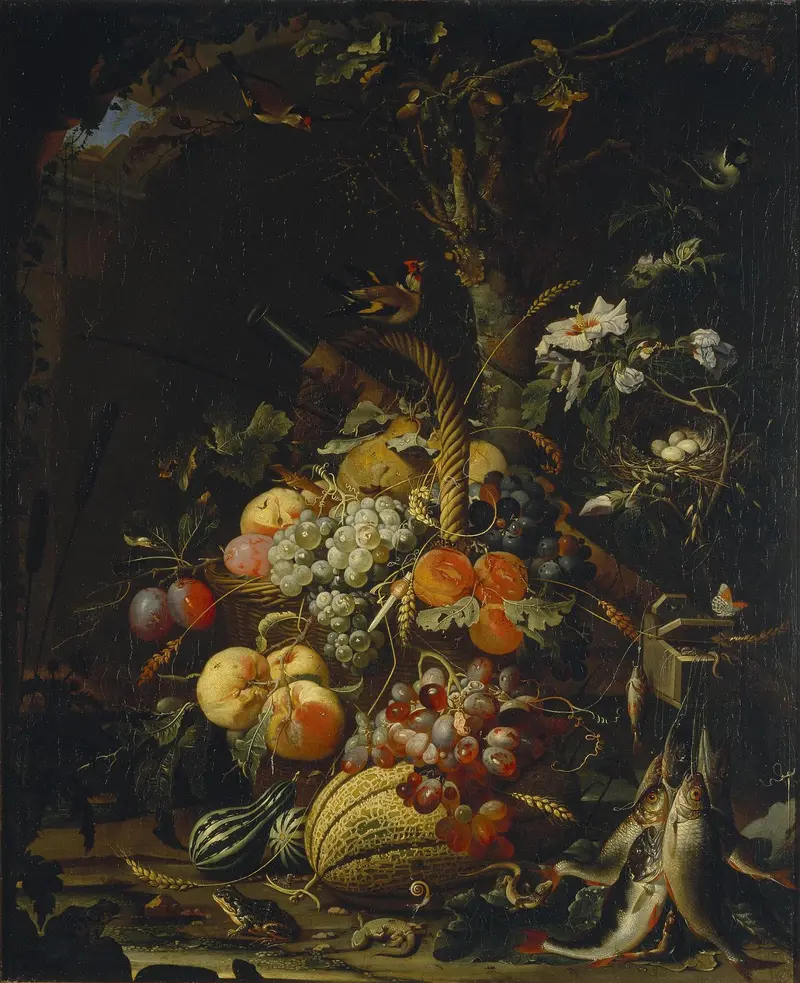
Forest floor still life with fruit, fish and a bird's nest
Abraham Mignon
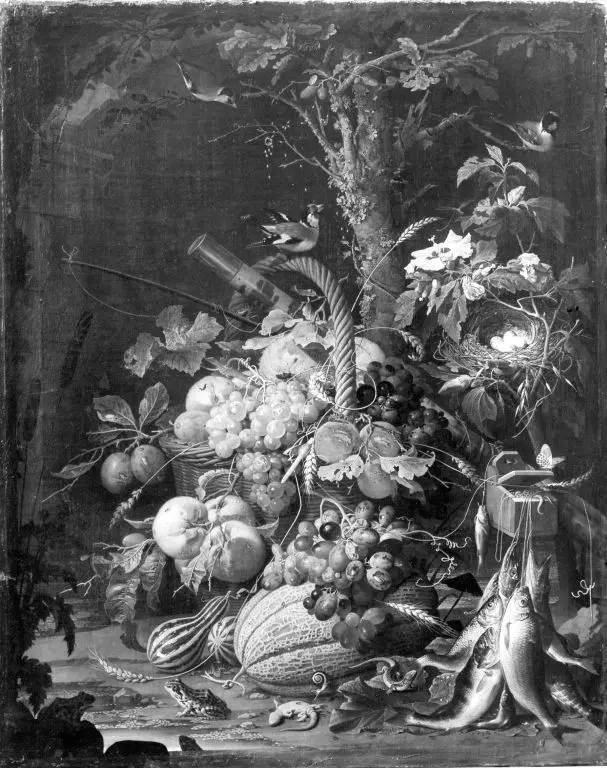
Still life with fruit, fish and a bird's nest
Abraham Mignon
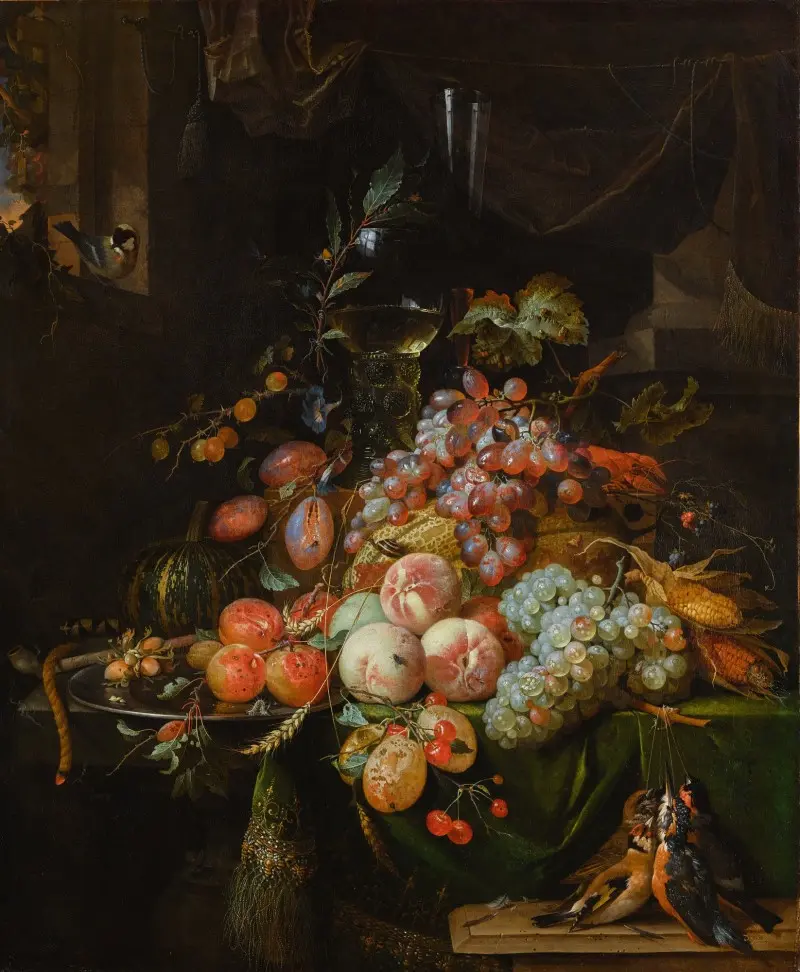
Still Life with Plums, Peaches, Apricots, Grapes and a Melon
Abraham Mignon
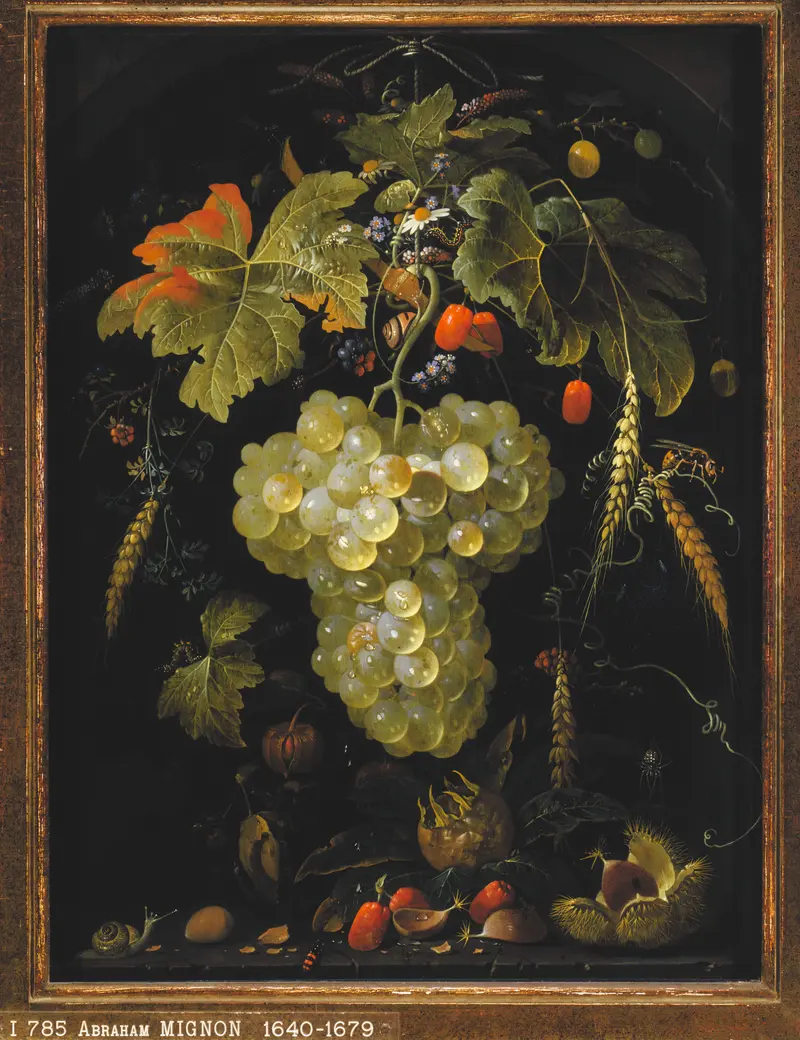
Festoon of fruit suspended from a rope, in a niche
Abraham Mignon
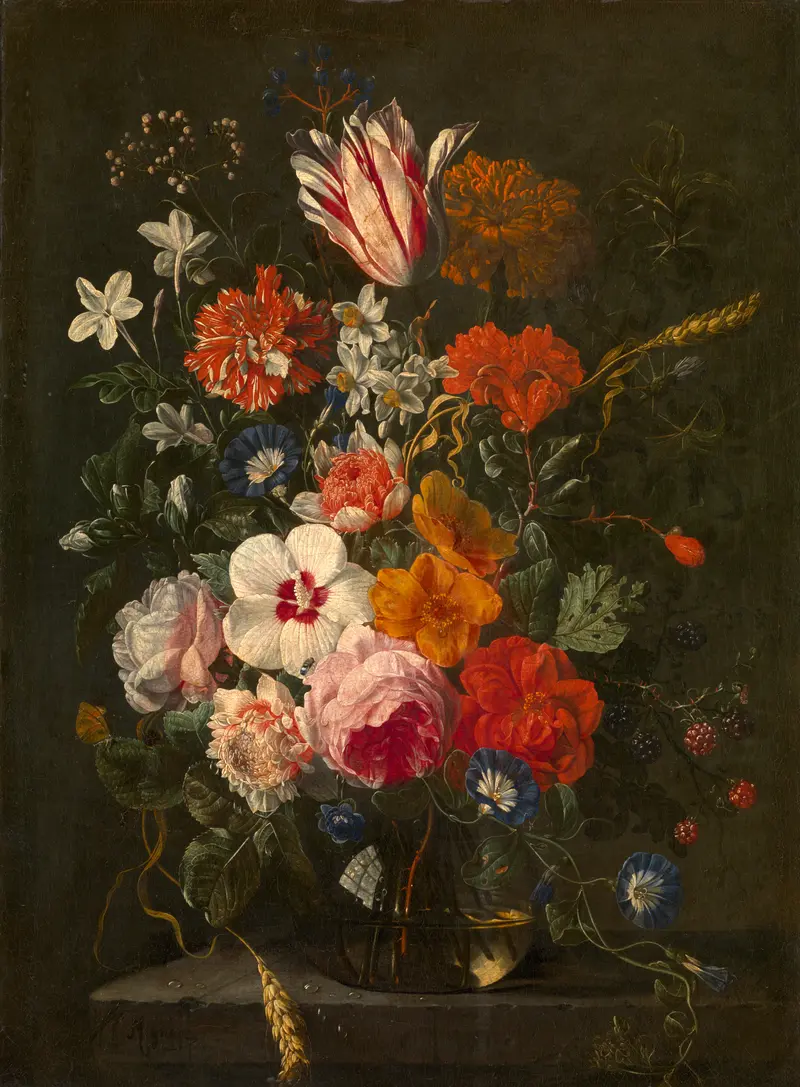
Flowers and a branch of berries in a glass vase on a stone ledge
Abraham Mignon
Flowers and fruit on a plinth
Abraham Mignon





