
A Gypsy Woman — History & Facts
A flicker of firelight catches the viewer’s eye before anything else, but it is the young woman’s gaze—direct, unguarded, almost conspiratorial—that holds it. She sits close to the ground, knees drawn up, arms wrapped loosely around her legs, surrounded by the remains of a meal: watermelon rinds, a knife, scattered fruit. The warmth of the fire glows on her skin, echoed in the earthy reds and browns of the blanket and her patterned shawl.
Her necklace and the red ribbon in her hair add a note of individuality, suggesting both pride and resilience. The wide, open landscape behind her, with its muted horizon and distant river, places her at the edge of settled society—she is both at home and apart. Painted in 1909, A Gypsy Woman by Antoni Kozakiewicz belongs to a tradition of late nineteenth- and early twentieth-century European art that turned its attention to the lives of marginalized peoples, often with a mixture of fascination and romantic distance. By this time, artists across Central and Eastern Europe were documenting rural and itinerant communities, sometimes for ethnographic reasons, sometimes as a counterpoint to urban modernity.
This work, now held in The National Museum in Kraków, is a product of its era’s curiosity about the “other” within national borders—a curiosity that could be both sympathetic and objectifying. History has kept few traces of this sitter’s name or story, but her presence, as captured by Kozakiewicz, invites us to look closer and wonder what she might have told us herself.
More Artworks by Antoni Kozakiewicz

Gypsies
Antoni Kozakiewicz
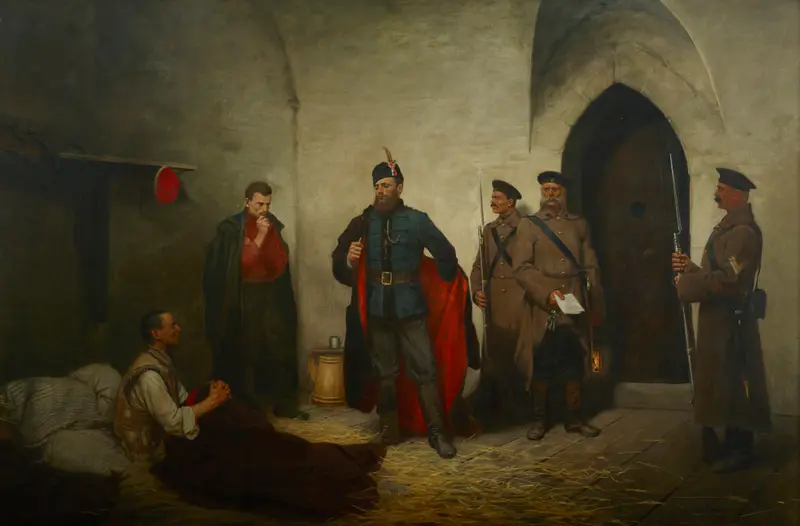
"I Don't Care What the Punishment Will Be"
Antoni Kozakiewicz
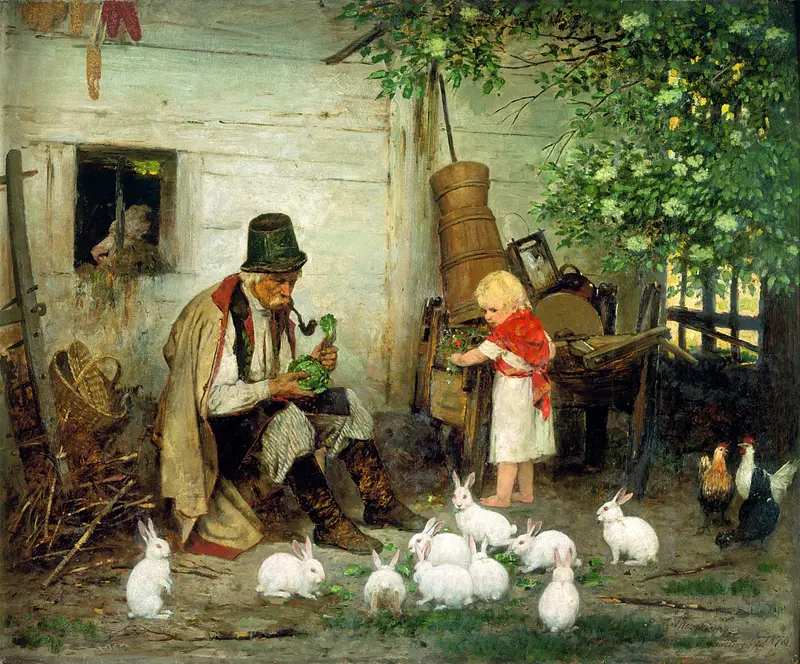
Maciej, król nad króle ("Pan Tadeusz", Księga VI)
Antoni Kozakiewicz
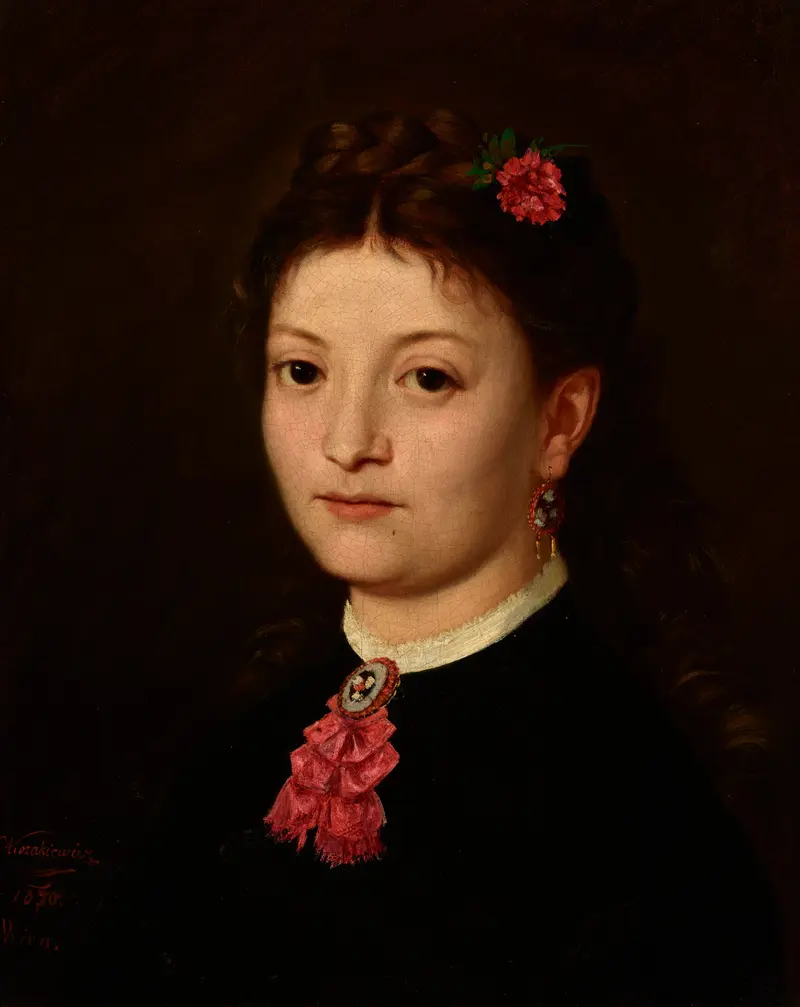
Portrait of a Young Woman
Antoni Kozakiewicz
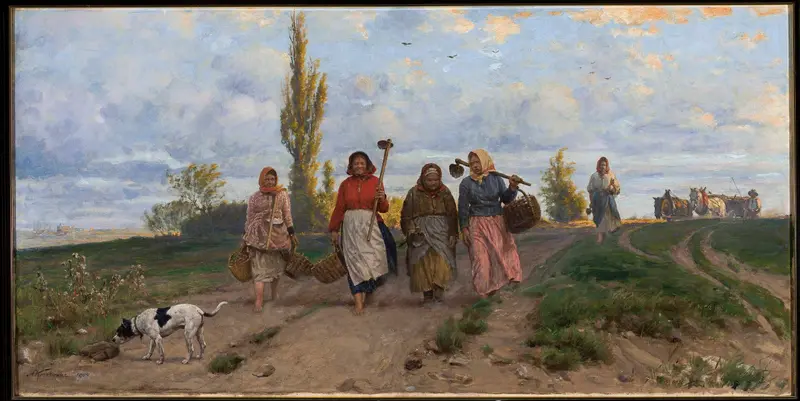
Women returning from the fields
Antoni Kozakiewicz
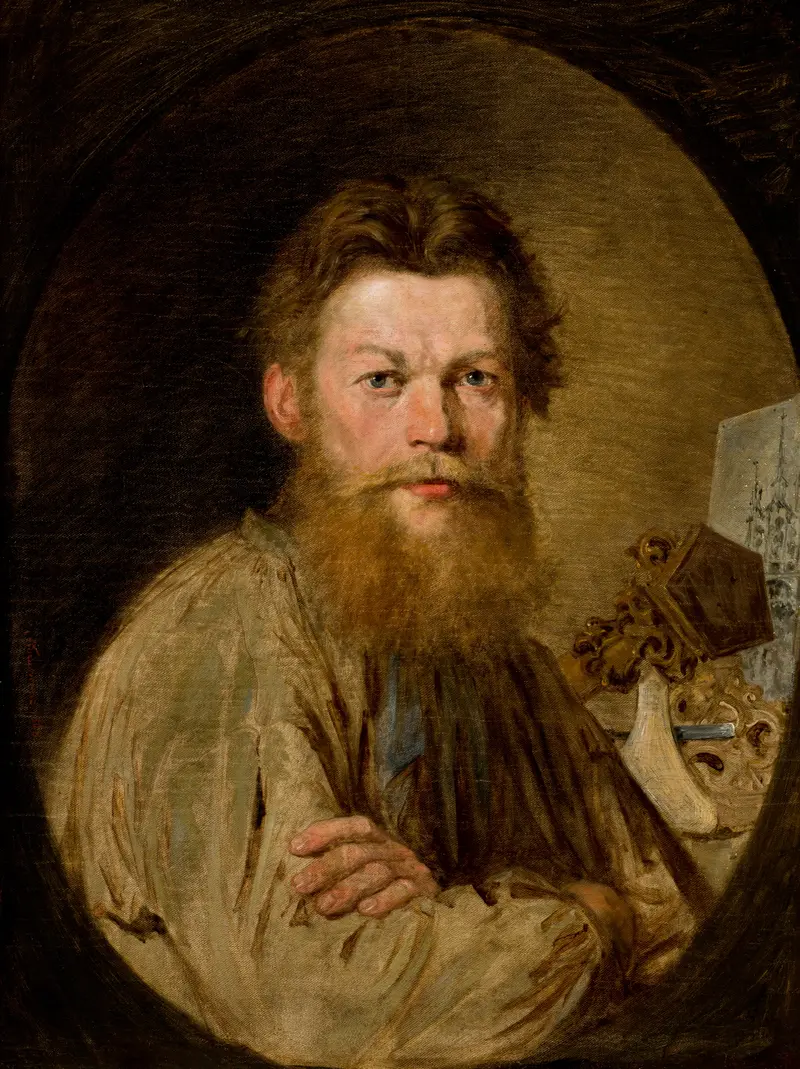
Portrait of Sculptor Kazimierz Wakulski
Antoni Kozakiewicz
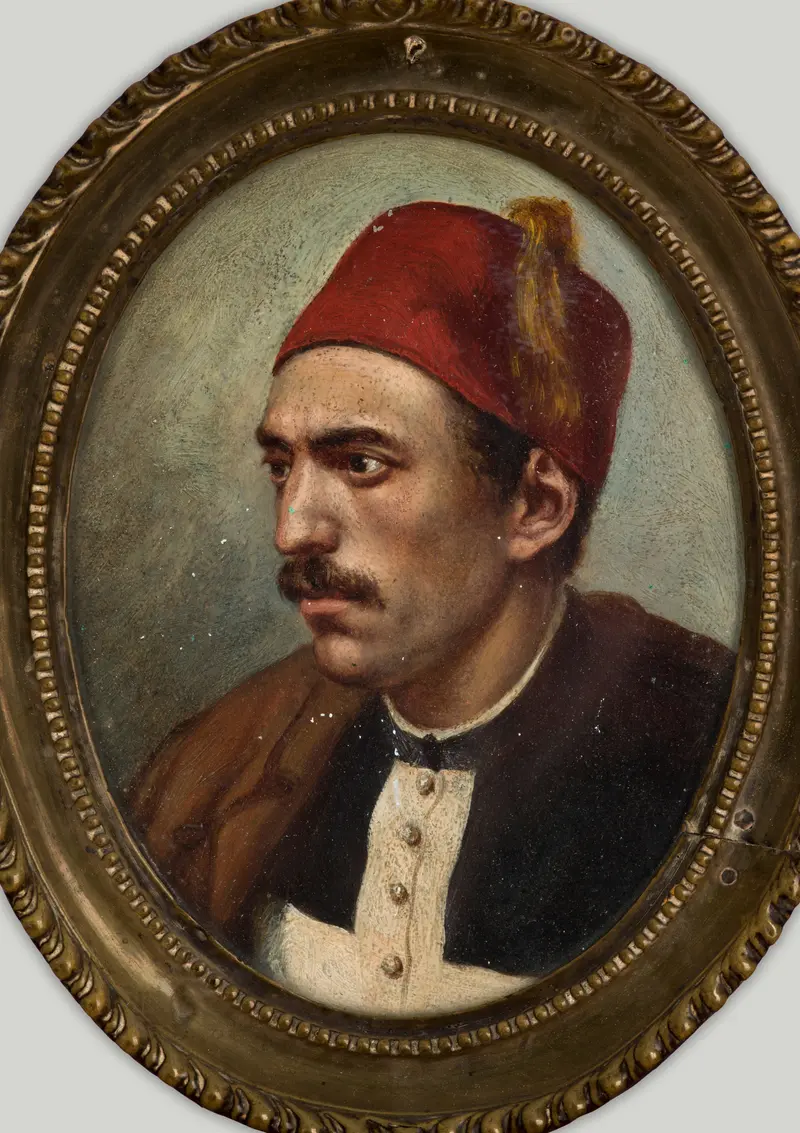
Portrait of General François de Rochebrune
Antoni Kozakiewicz
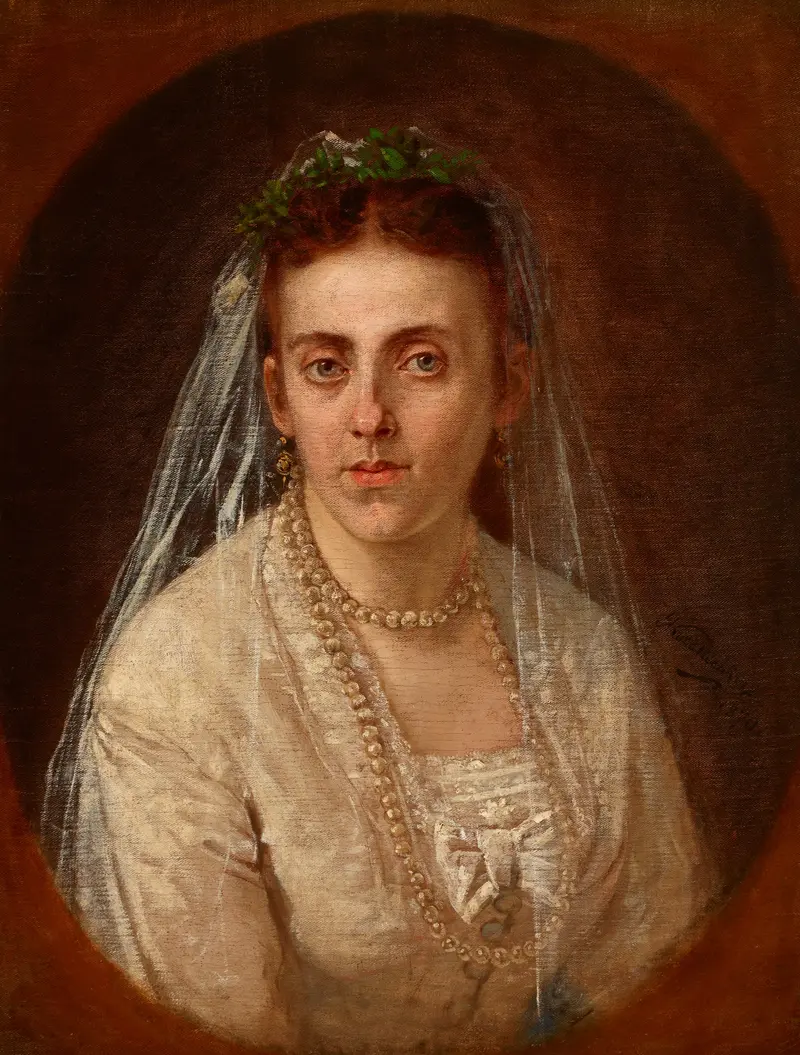
Portrait of Sydonia Wakulska
Antoni Kozakiewicz
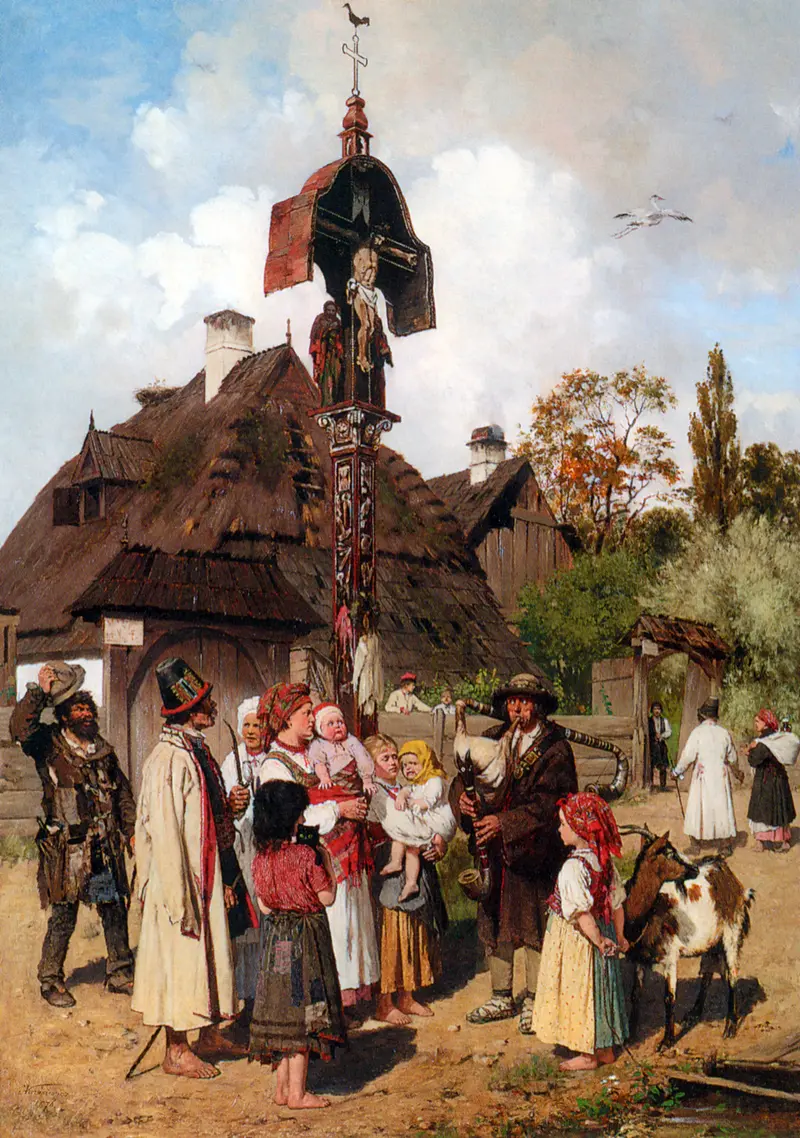
Koncert Kobziarza
Antoni Kozakiewicz
Bad omen
Antoni Kozakiewicz
More Genre Scene Art

Banquet of the Officers of the St George Civic Guard
Frans Hals

Rembrandt and Saskia in the Scene of the Prodigal Son
Rembrandt van Rijn

Bal du moulin de la Galette
Pierre-Auguste Renoir

Quadrille at the Moulin Rouge
Henri de Toulouse-Lautrec

A Burial at Ornans
Gustave Courbet

When Will You Marry?
Paul Gauguin