
A Herdsman with Five Cows by a River — History & Facts
The first thing to arrest the eye in A Herdsman with Five Cows by a River is the sweep of sky—a vast, cloud-laden expanse that seems to dwarf both man and beast. Light filters through the clouds in a gentle wash, guiding the gaze from the golden horizon at left, past the sails of distant boats, to the quiet congregation of cattle at the water’s edge. The herdsman, small against the bulk of his charges, anchors the scene in daily labor, while the cows stand half-reflected in the shallows, their calm presence echoing the stillness of the river.
Every detail seems calibrated to draw the viewer into a moment of tranquil coexistence, where the bustle of boats and the patience of pastoral life meet under a sky that promises both rain and sun. Painted around 1660, this work belongs to the Dutch Golden Age, a period when scenes of rural life and luminous landscapes found eager patrons among the prosperous merchant class. Artists like Aelbert Cuyp became celebrated for their ability to capture not just the look of the countryside, but its mood—its sense of space, weather, and time. Works such as this, now preserved in collections like The Yorck Project’s archive, remind us that history has kept few traces of their original owners, but the vision endures: the low horizon, the mingling of commerce and country, the light that makes the ordinary glow.
Look again at the sky, and you may sense why such paintings were prized not only as records of land and labor, but as windows onto a wider world.
More Artworks by Aelbert Cuyp

The Maas at Dordrecht
Aelbert Cuyp
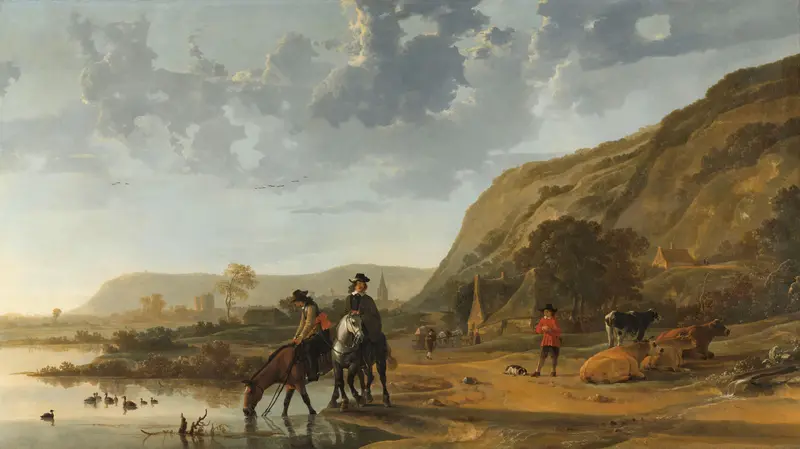
River Landscape with Riders
Aelbert Cuyp

The Maas at Dordrecht
Aelbert Cuyp
Gezicht op Dordrecht
Aelbert Cuyp
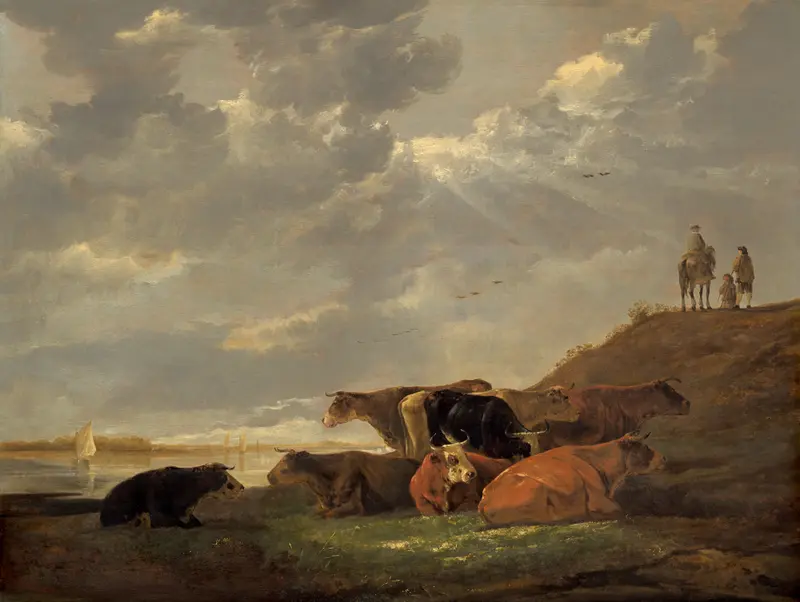
River Landscape with Cows
Aelbert Cuyp
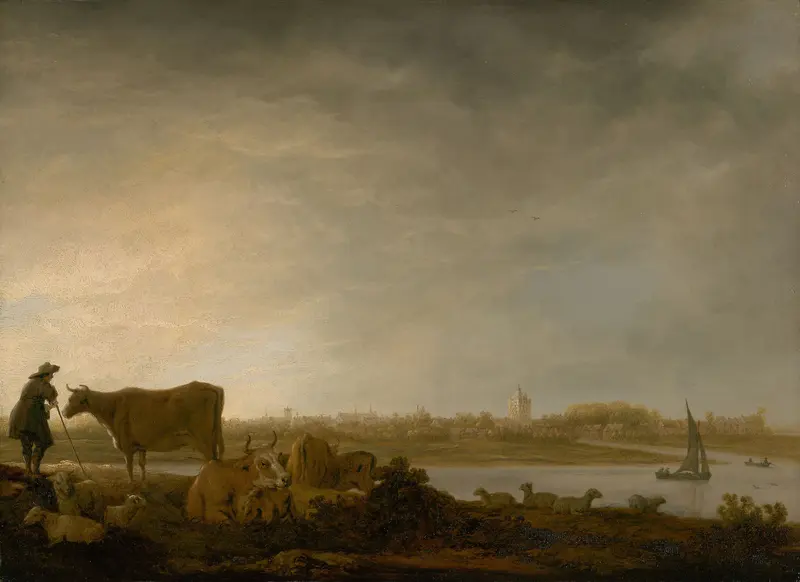
A View of Vianen with a Herdsman and Cattle by a River
Aelbert Cuyp
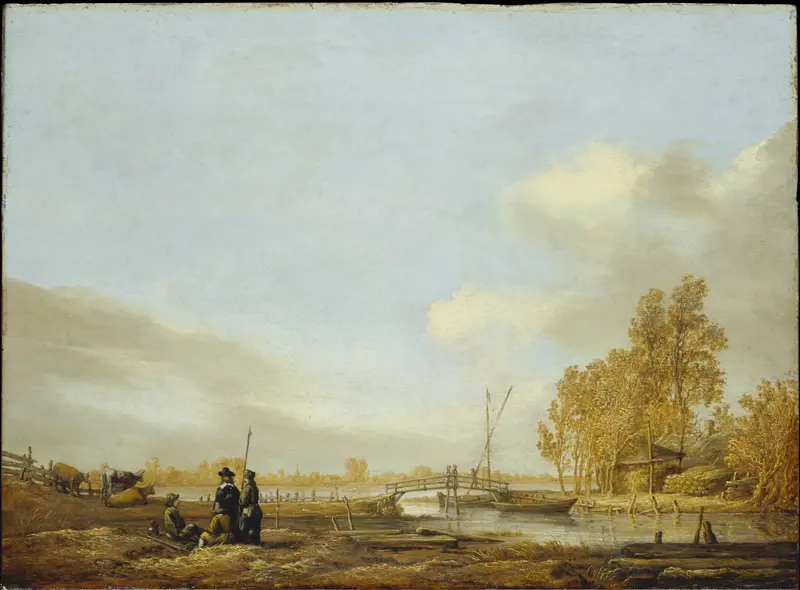
River Landscape with Footbridge
Aelbert Cuyp
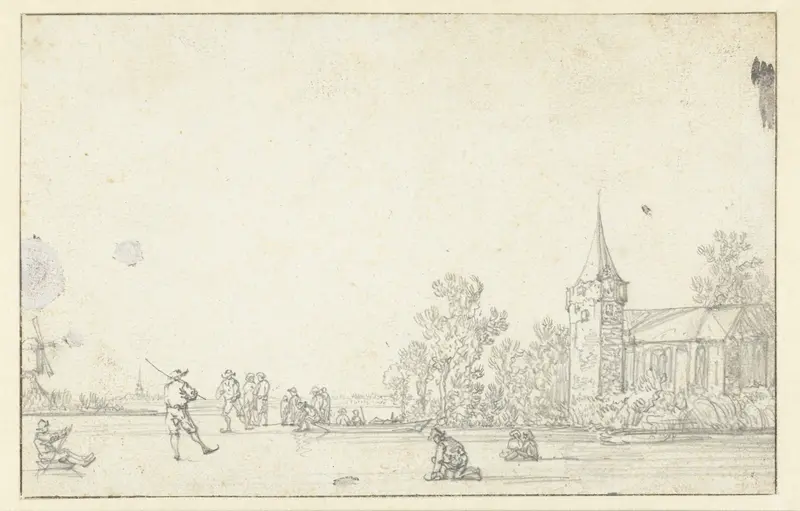
Bevroren rivier met schaatsers bij een kerk
Aelbert Cuyp

Cattle near a River
Aelbert Cuyp
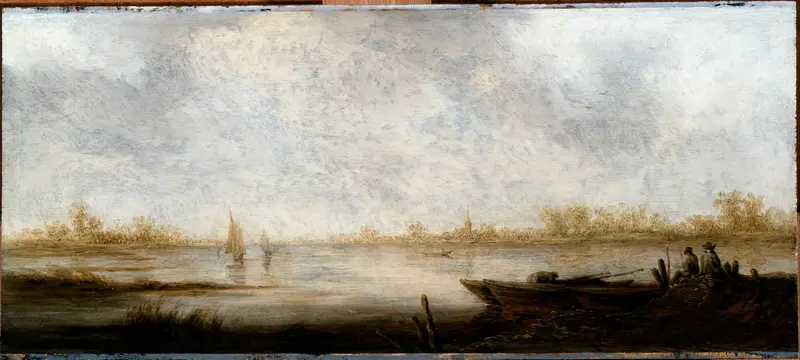
River Landscape
Aelbert Cuyp
More Landscape Art

The Starry Night
Vincent van Gogh

View of Delft
Johannes Vermeer

Water Lilies
Claude Monet

The Grand Canal, Venice, looking north-west from the Ca' Corner to the Ca' Contarini degli Scrigni, with the campanile of Santa Maria della Carità
Canaletto

Windsor Castle
Canaletto

The Grand Canal looking North-East from the Palazzo Dolfin-Manin to the Rialto Bridge
Canaletto