
A milkmaid amongst ruins — History & Facts
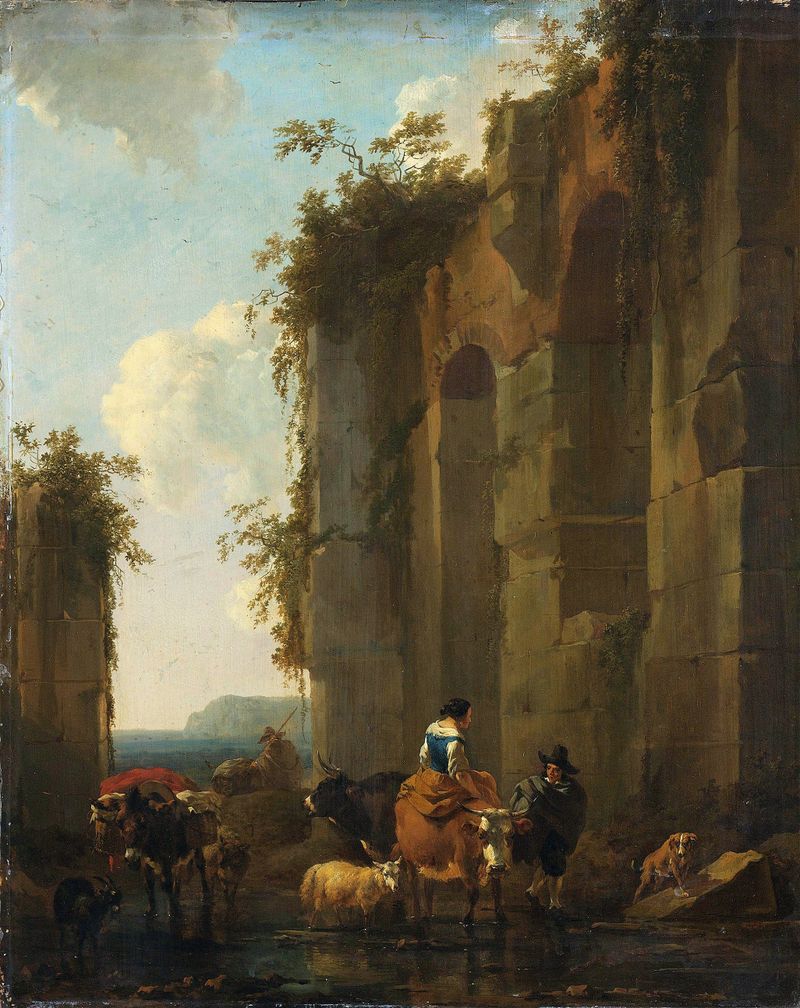
Is this a mirror — or a memory? In A milkmaid amongst ruins, nostalgia whispers through the canvas, beckoning us to reflect on the past with a bittersweet yearning. Focus on the figure in the foreground, the milkmaid, whose gentle presence contrasts sharply with the crumbling architecture behind her. Notice how the light bathes her in warmth, illuminating her simple attire while casting long shadows that echo the ravages of time. The ruins, laden with history, frame her figure, suggesting a delicate balance between daily toil and the remnants of a grander past.
Berchem’s meticulous brushwork brings the scene to life, drawing the eye between the vibrant greens of nature and the muted grays of stone. Yet, beyond the surface, deeper truths emerge. The juxtaposition of the milkmaid's serene task against the backdrop of decay evokes themes of resilience and transience. The milkmaid’s act of nurturing juxtaposes the lifelessness of the ruins, hinting at a world where simple joys persist despite the passage of time.
This tension between vitality and decay resonates throughout the composition, inviting contemplation on what endures and what is lost. Created during the Dutch Golden Age, Berchem painted A milkmaid amongst ruins at a time when the art world was flourishing with a focus on both realism and allegory. His works often reflected the interplay of light and life within pastoral settings, a popular theme of the era. The artist’s keen eye for detail and his ability to evoke emotion through the juxtaposition of nature and human presence speak to the rich cultural tapestry of 17th-century Holland.
More Artworks by Nicolaes Pietersz Berchem
Browse all →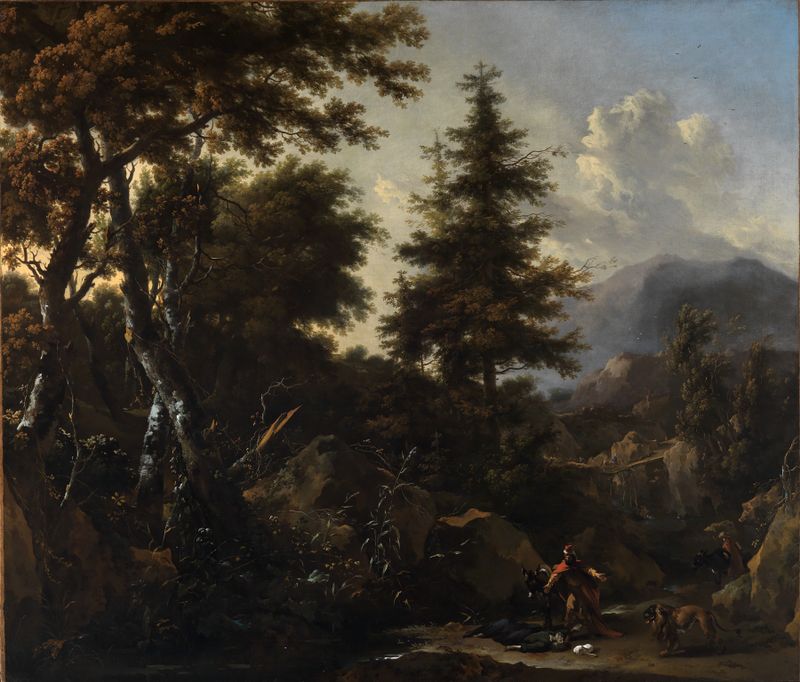
Schlucht im Bergwald mit alttestamentlicher Staffage
Nicolaes Pietersz Berchem
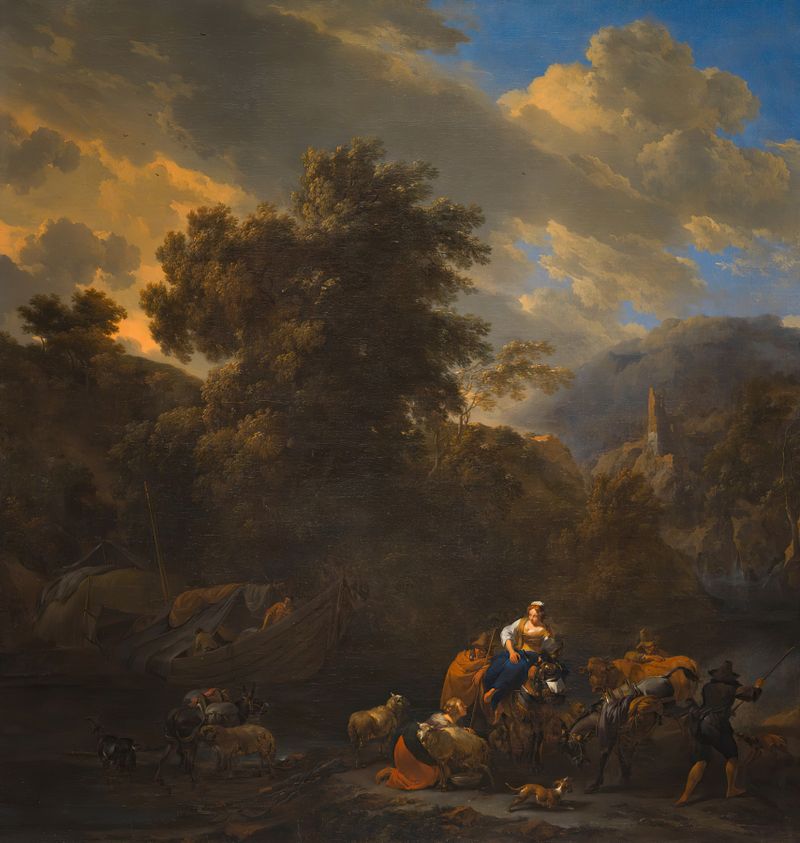
Italianate Landscape with Figures and Pack Animals on the Banks of a River
Nicolaes Pietersz Berchem
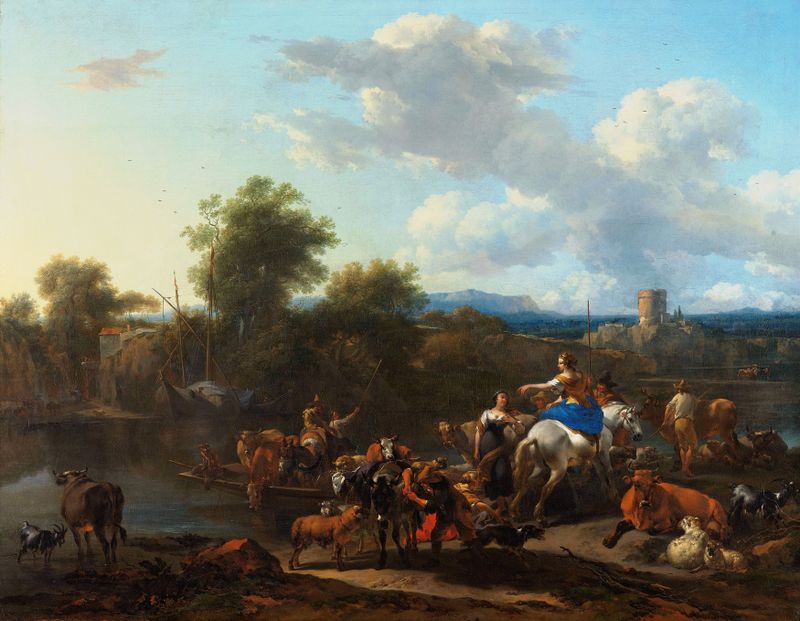
The Cattle Ferry
Nicolaes Pietersz Berchem
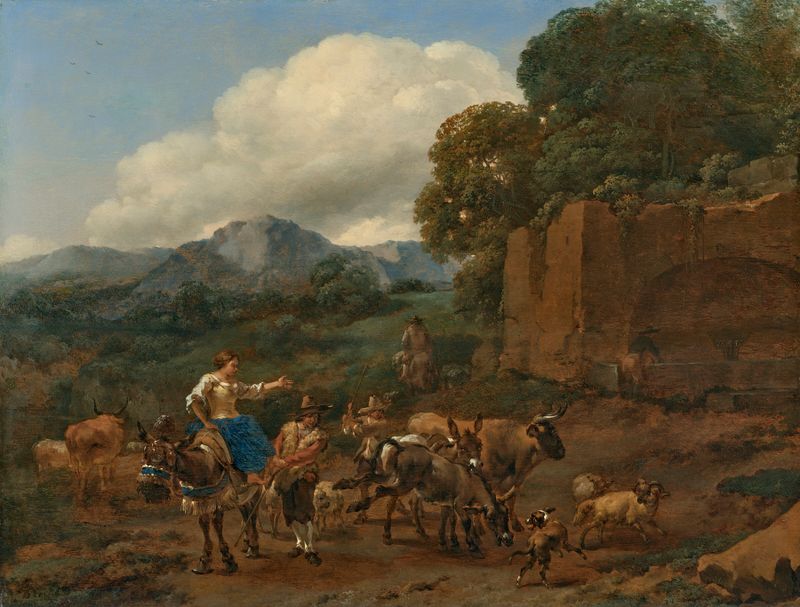
An Italianate landscape with a shepherdess on a mule and a shepherd, herding cattle, sheep, donkeys and dogs on a mountain track next to ruins
Nicolaes Pietersz Berchem
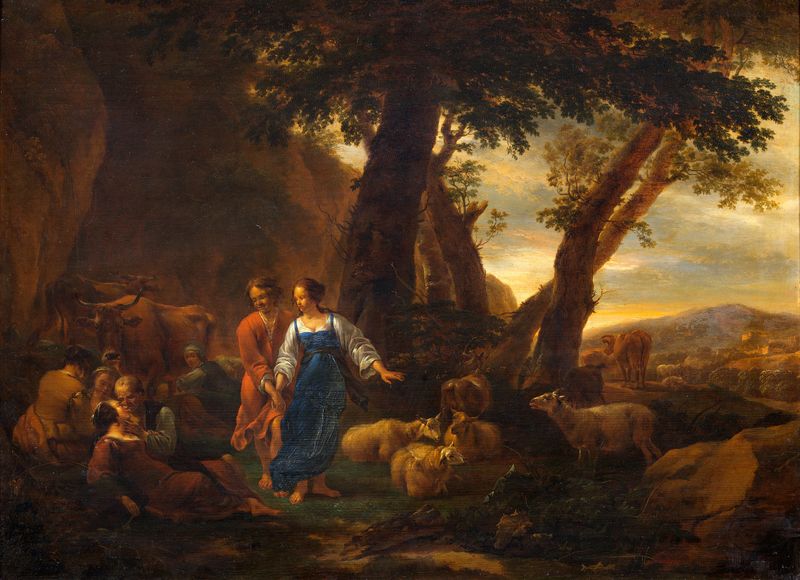
Landscape with Peasants and Cattle
Nicolaes Pietersz Berchem
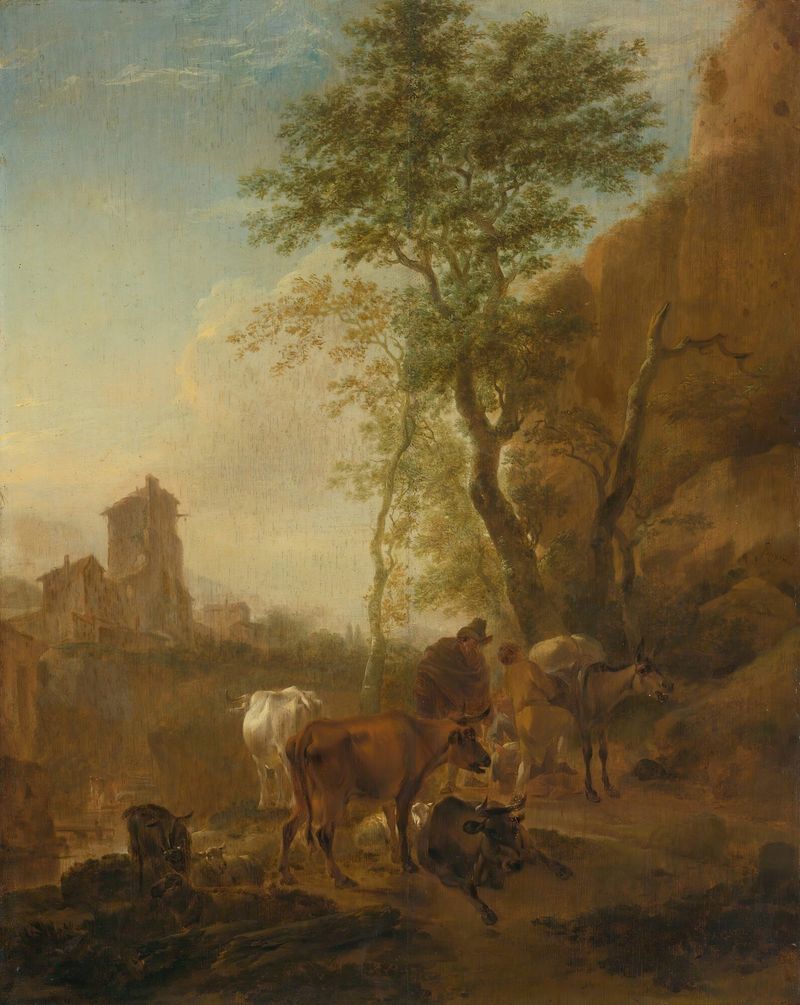
Italianate Landscape With Cows
Nicolaes Pietersz Berchem
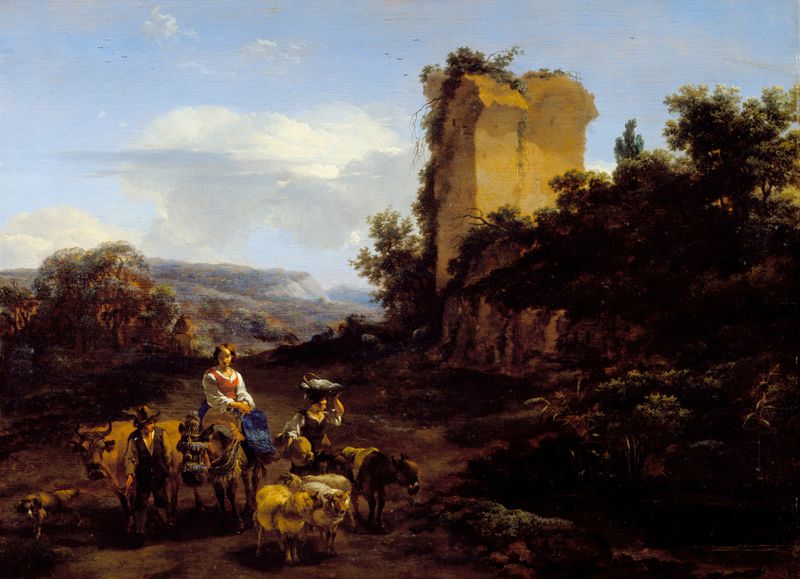
Landscape with Ruins and Travelers
Nicolaes Pietersz Berchem
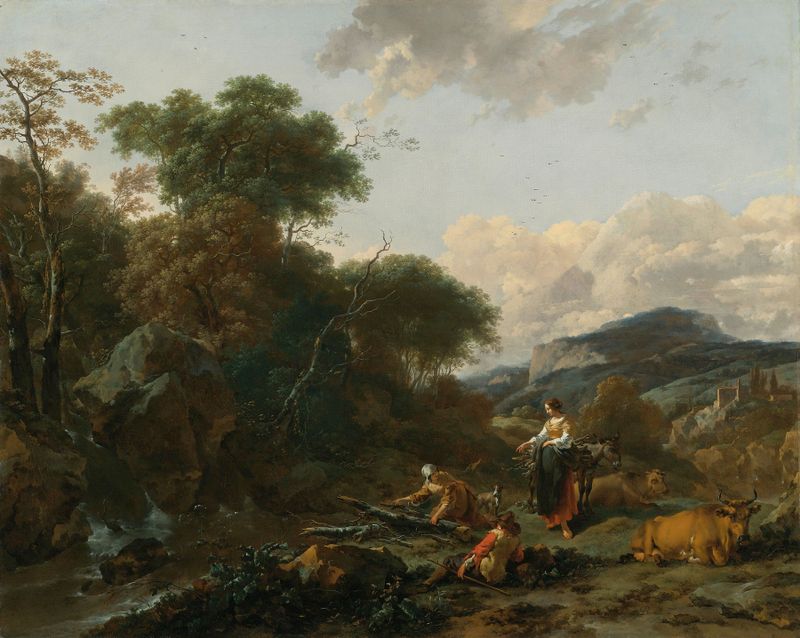
A Landscape With Figures
Nicolaes Pietersz Berchem
Slapende herdersfamilie en rustend vee
Nicolaes Pietersz Berchem
Ruins in Italy
Nicolaes Pietersz Berchem





