
A Pier Overlooking Dordrecht — History & Facts
What first draws the eye in A Pier Overlooking Dordrecht is not the bustling activity of the pier or the sails catching the wind, but the sheer expanse of sky, heavy with clouds, that dominates the scene. The figures—clustered on the pier, waiting or watching, and scattered across small boats—become almost incidental, dwarfed by the vastness above and the luminous water below. The painter leads us from the dense, textured foreground of weathered wood and bundled nets, across the glimmering river, and into the soft, distant cityscape, where Dordrecht’s windmill and rooftops emerge beneath a shifting sky.
Every gesture and placement feels purposeful: the way the boats angle toward the city, the way the light catches the sails, the way the horizon sits low to give the sky its drama. This is a vision shaped by the early 1640s, when Dutch artists like Aelbert Cuyp turned their gaze to the everyday landscapes and waterways that defined their world. Such paintings were prized by a new class of collectors—merchants, shipowners, and city burghers—who sought images that celebrated both local pride and the rhythms of trade and travel. The careful observation of weather, water, and work in this painting speaks to a culture attuned to the sea and sky, where fortunes rose and fell with the tides.
Now in the collection of the National Gallery of Art, this quiet scene invites us to linger, to follow the play of light and shadow, and to imagine the stories unfolding beneath that vast Dutch sky.
More Artworks by Aelbert Cuyp

The Maas at Dordrecht
Aelbert Cuyp
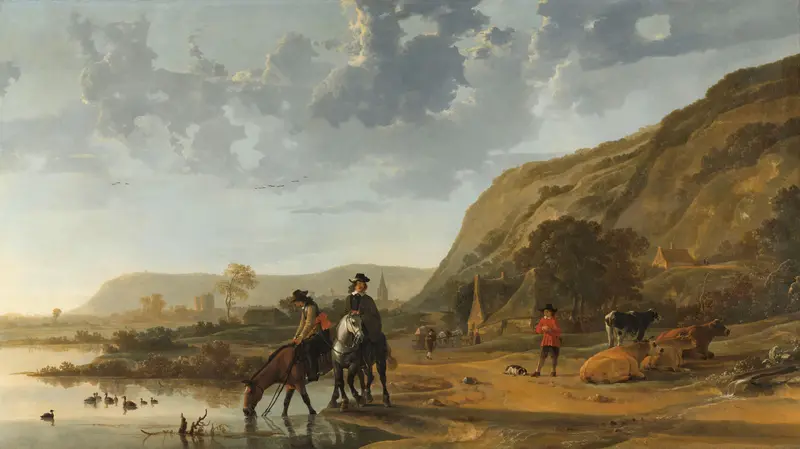
River Landscape with Riders
Aelbert Cuyp

The Maas at Dordrecht
Aelbert Cuyp
Gezicht op Dordrecht
Aelbert Cuyp
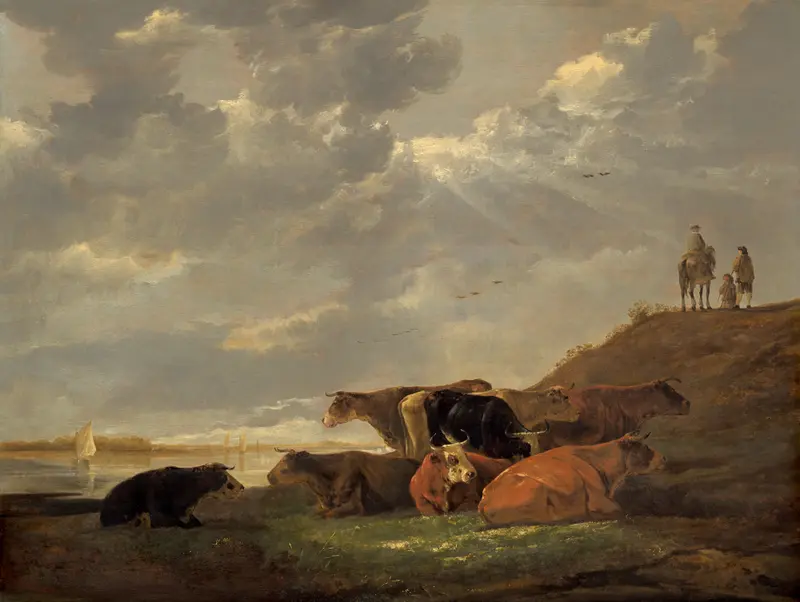
River Landscape with Cows
Aelbert Cuyp
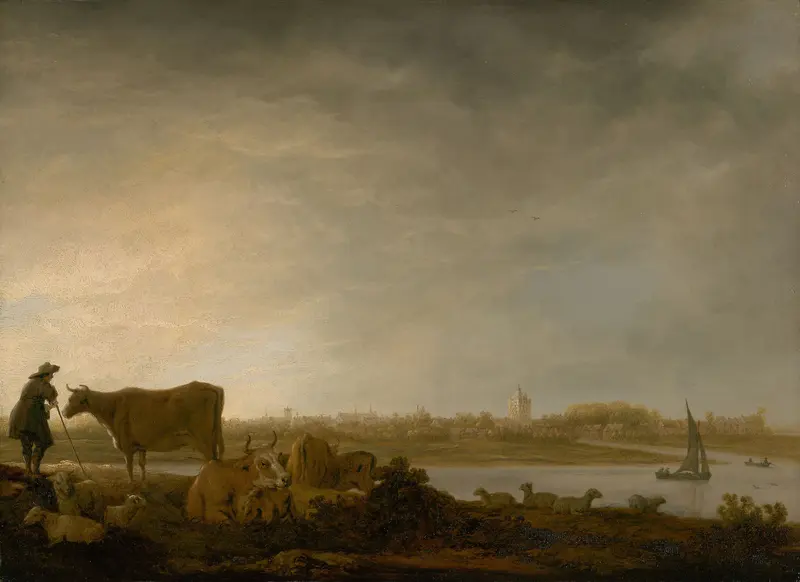
A View of Vianen with a Herdsman and Cattle by a River
Aelbert Cuyp
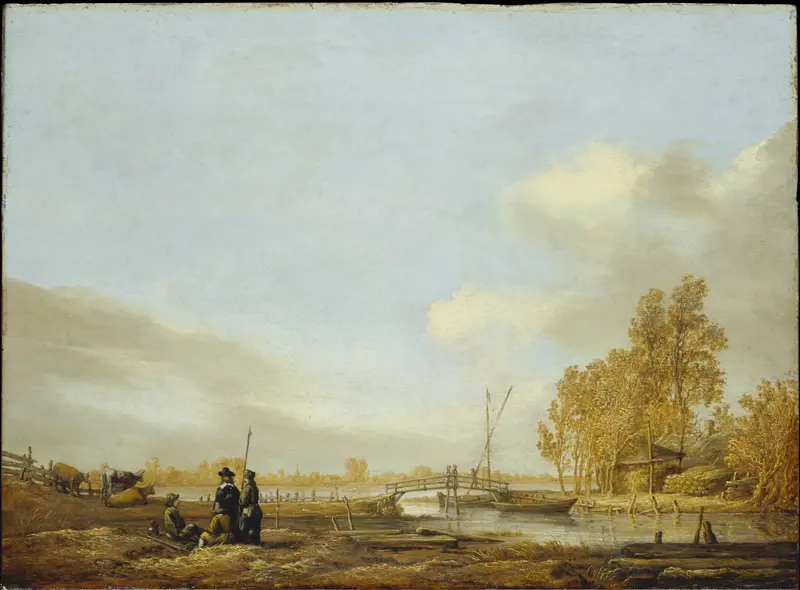
River Landscape with Footbridge
Aelbert Cuyp
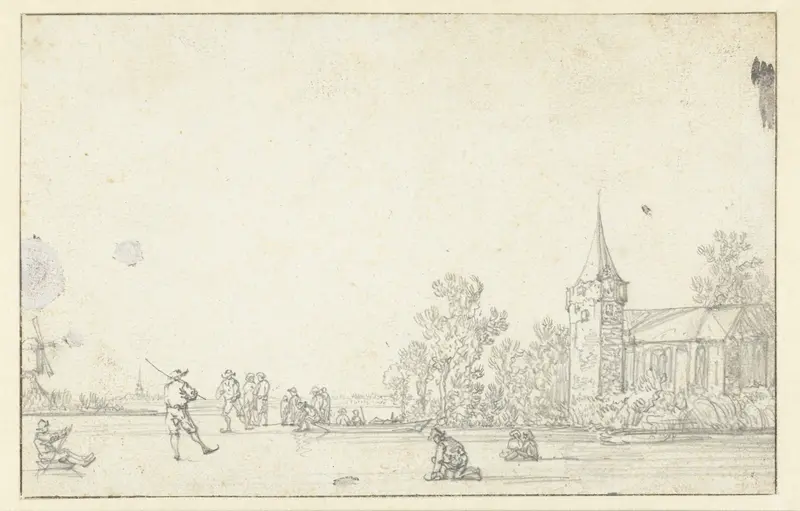
Bevroren rivier met schaatsers bij een kerk
Aelbert Cuyp

Cattle near a River
Aelbert Cuyp
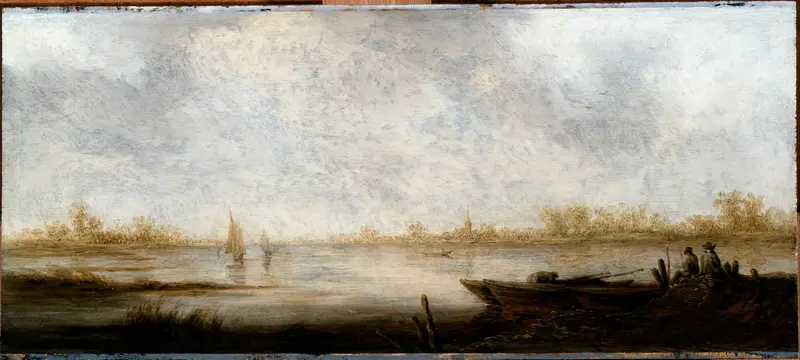
River Landscape
Aelbert Cuyp
More Landscape Art

The Starry Night
Vincent van Gogh

View of Delft
Johannes Vermeer

Water Lilies
Claude Monet

The Grand Canal, Venice, looking north-west from the Ca' Corner to the Ca' Contarini degli Scrigni, with the campanile of Santa Maria della Carità
Canaletto

Windsor Castle
Canaletto

The Grand Canal looking North-East from the Palazzo Dolfin-Manin to the Rialto Bridge
Canaletto