
A Priestess — History & Facts
The eye is caught first by the quiet authority of the figure: a young woman stands upright, her gaze steady, her right arm raised to hold a tall staff crowned with a pinecone. The marble wall behind her, cool and veined, frames her as if she were a living statue—her skin luminous against the stone, her presence both commanding and serene. Draped in a sheer, violet-pink fabric that barely conceals her form, she is crowned with gold leaves, each detail inviting the viewer to imagine her role and ritual.
The staff and crown, along with her exposed stance, signal a ceremonial function—she is not simply a model, but an emblem of sacred office, poised between the human and the divine. The soft play of light across her body and the marble creates a sense of stillness, as if time itself has paused for this moment of ancient rite. A Priestess was painted in 1893 by John William Godward, at the height of the Victorian fascination with the classical world. In this period, artists like Godward looked back to ancient Greece and Rome for inspiration, crafting images that were both escapist fantasies and technical showpieces.
Such works were often collected by the wealthy as tokens of cultural aspiration, their cool surfaces and idealized forms offering a counterpoint to the industrial realities of the age. The Art Renewal Center, which now holds this painting, preserves it as part of a broader movement to celebrate academic art of the nineteenth century. History has kept few traces of the specific stories behind many of these works, but in this priestess’s silent watch, the ideals and longings of her era remain vividly present—inviting us to look again, and wonder.
More Artworks by John William Godward

Eighty and eighteen
John William Godward
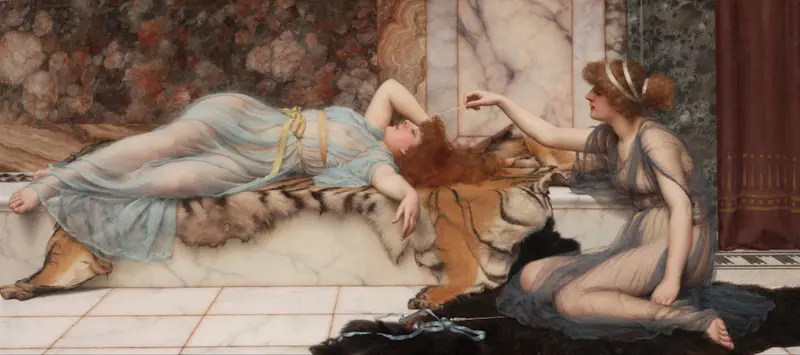
Mischief and Repose
John William Godward
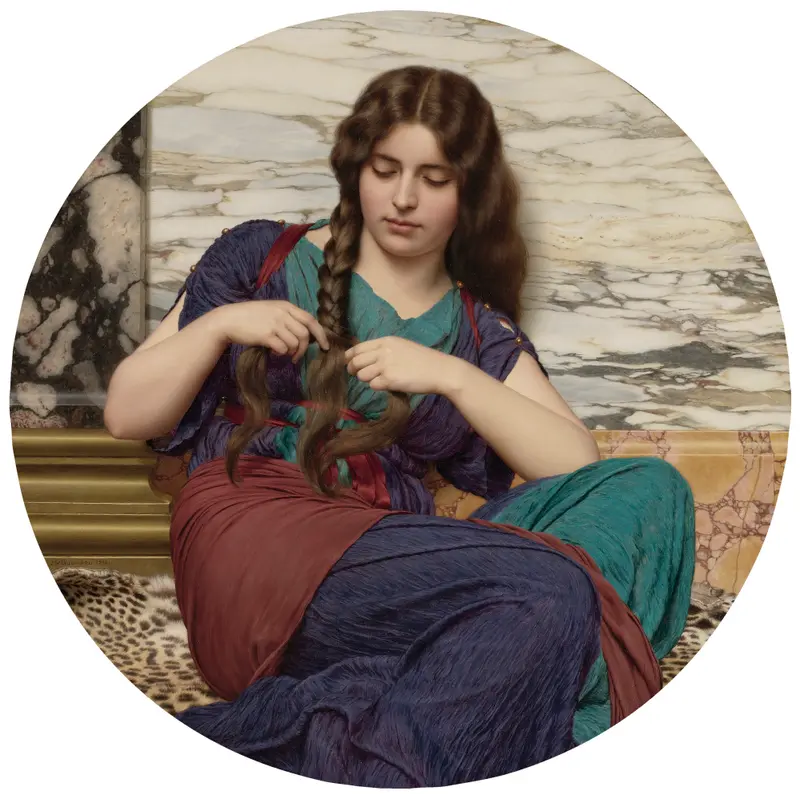
A Congenial Task
John William Godward
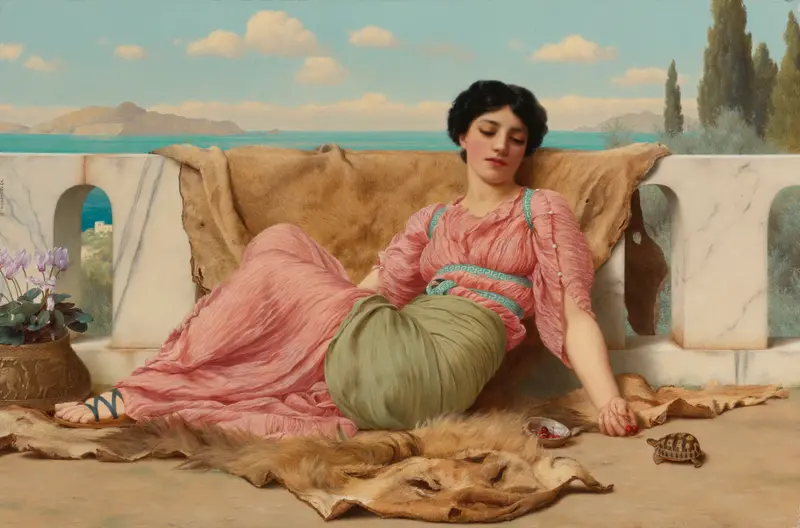
The Quiet Pet
John William Godward
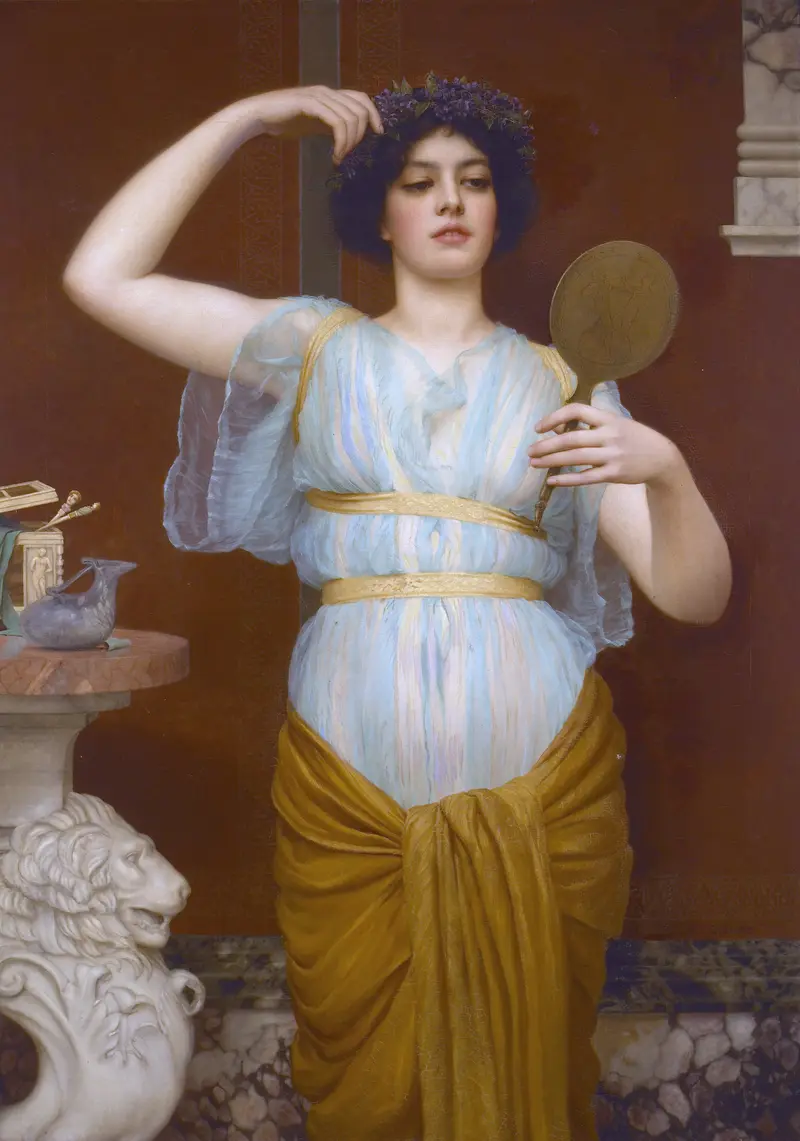
Ione
John William Godward
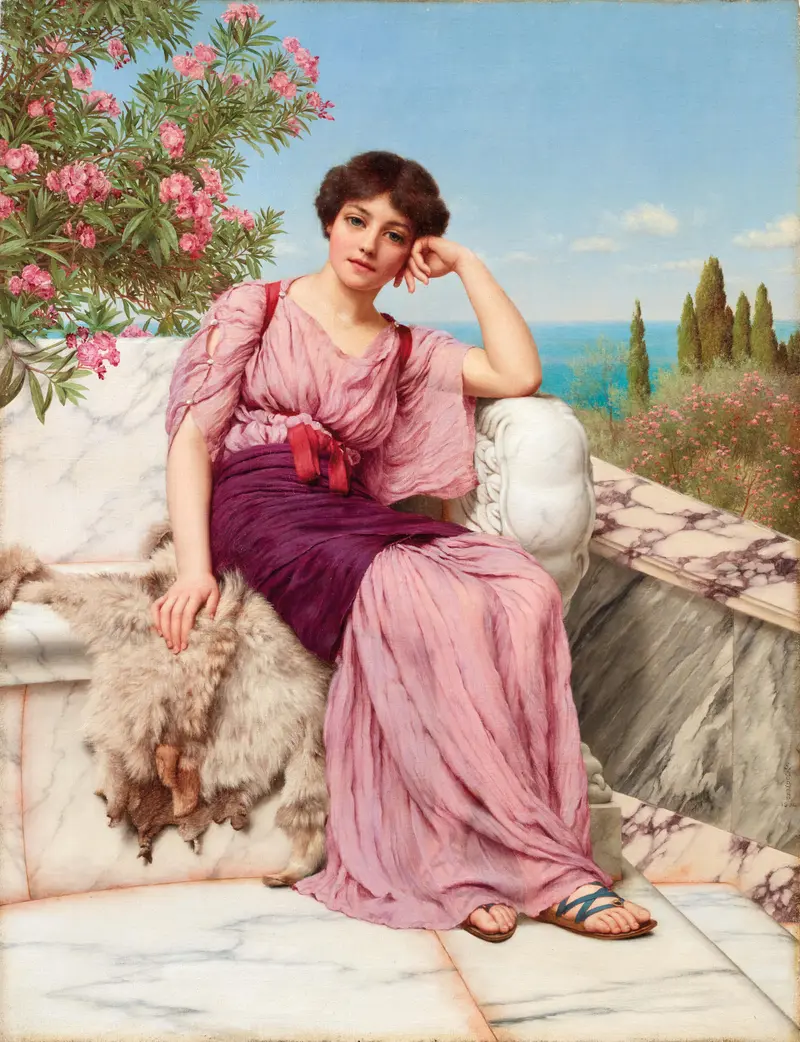
Sweet Dreams
John William Godward
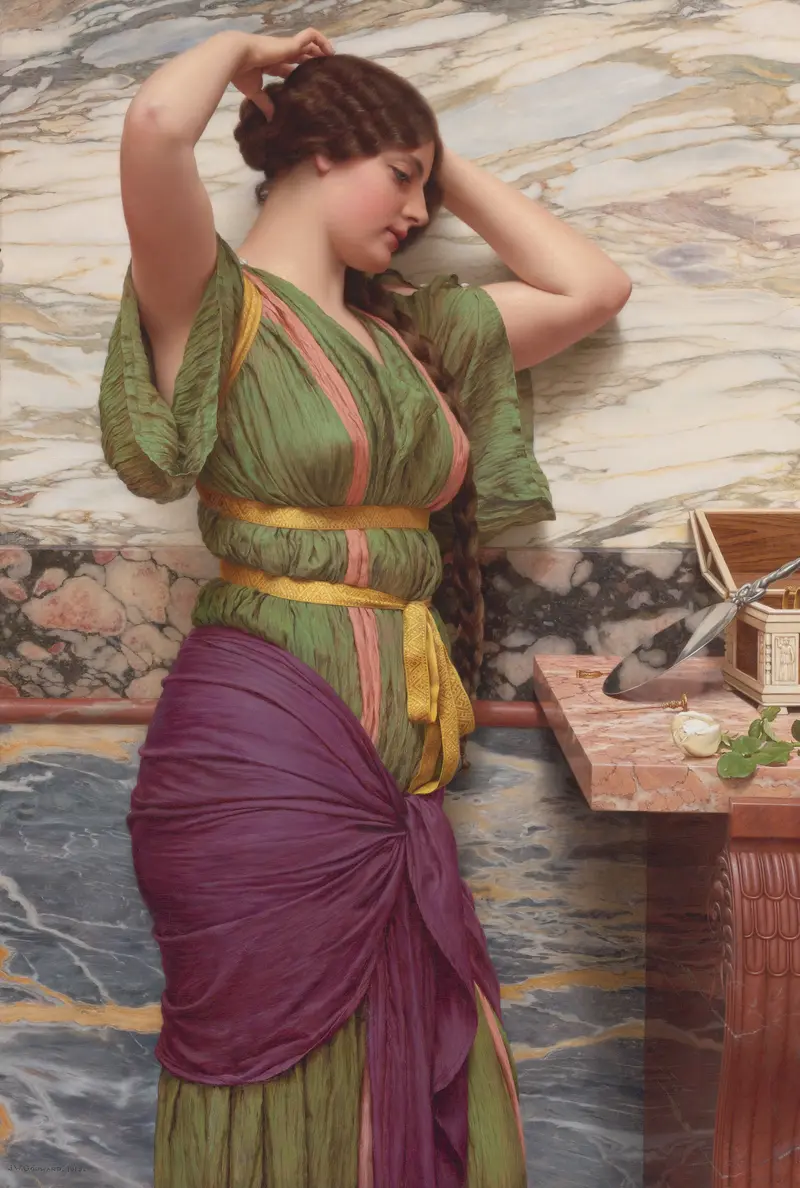
A Fair Reflection
John William Godward
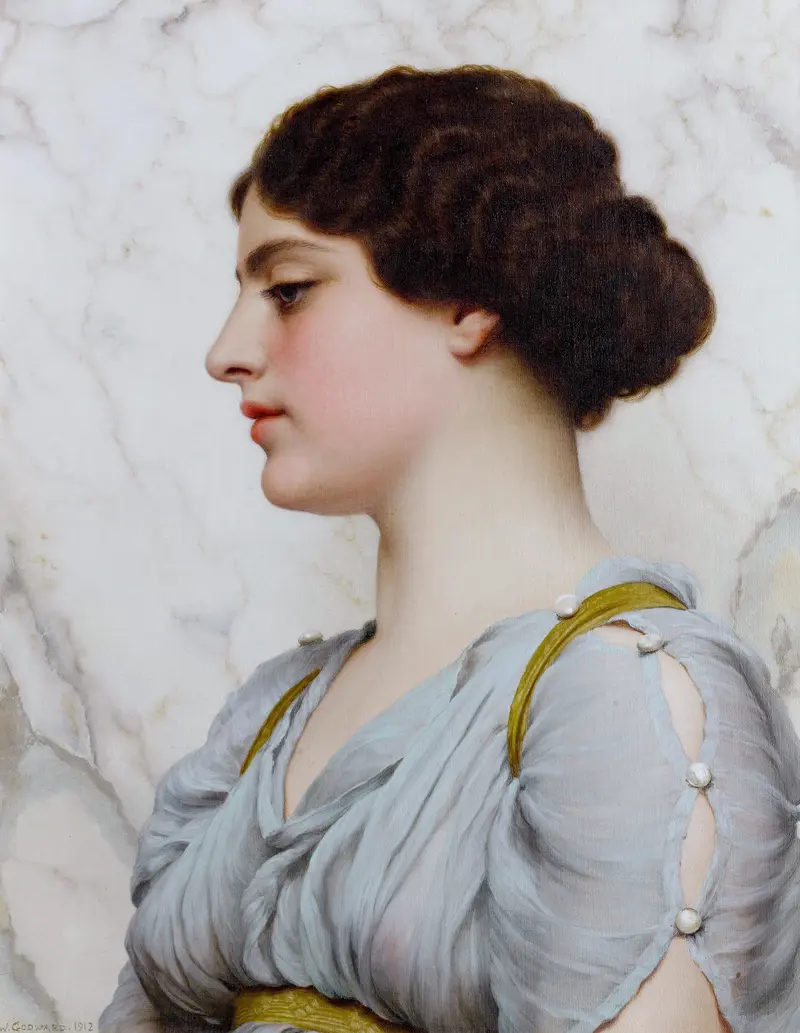
A Roman Beauty
John William Godward
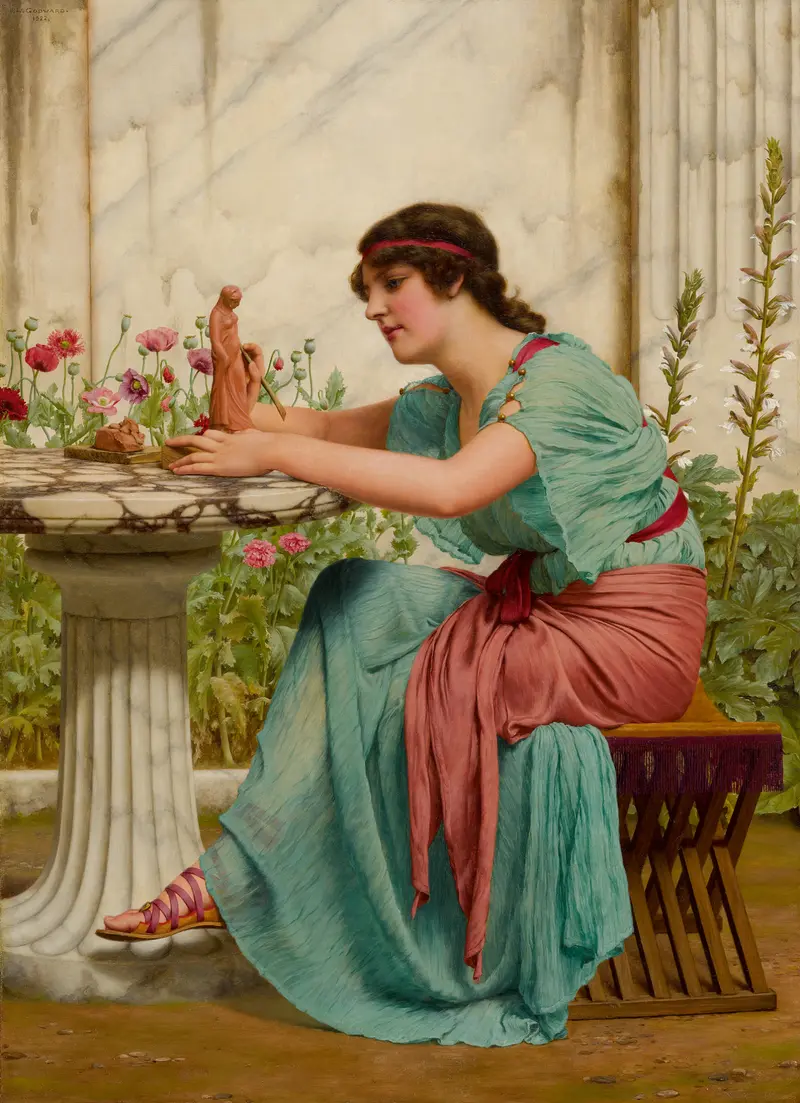
A Dilettante
John William Godward
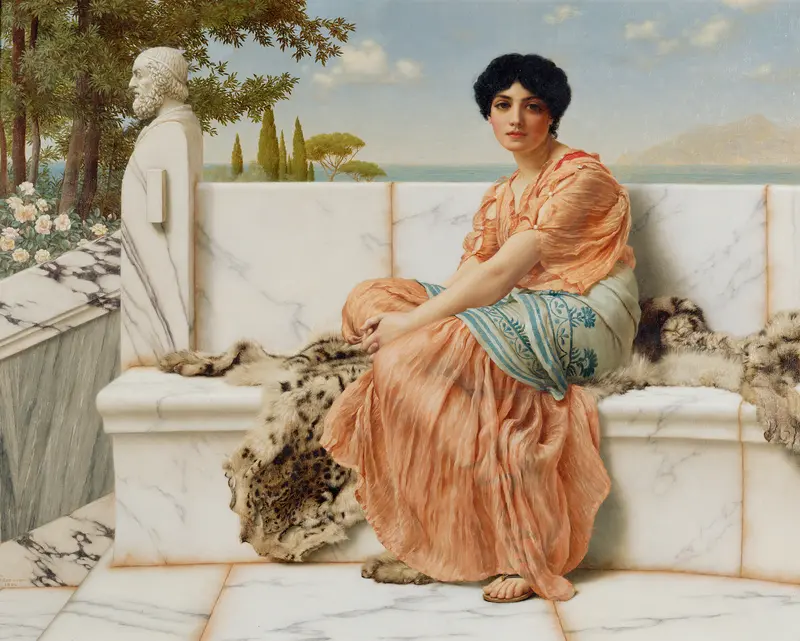
Reverie
John William Godward



