
Sweet Dreams — History & Facts
The first thing that catches the eye is the languid pose of the woman, her gaze neither quite here nor entirely lost to reverie. Draped in a cascade of rose and violet fabric, she reclines on a marble bench, her elbow propped against a sculpted armrest, her fingers trailing absentmindedly over a fur pelt. The marble’s cool, veined surface and the lush oleander blossoms to her left create a world that is both sensuous and still.
Light pours in from the right, sharpening the folds of her dress and the crispness of her sandal straps, then softens as it meets her face, lending her expression a quiet, contemplative warmth. Everything in the scene invites the viewer to linger, to wonder what thoughts drift behind those steady eyes. Painted in 1904, Sweet Dreams belongs to the world of John William Godward, a painter whose career flourished in the late Victorian and Edwardian fascination with antiquity. Pictures like this—idealized visions of classical leisure—were sought after by collectors eager to bring a touch of ancient elegance into their homes.
Godward’s meticulous attention to marble, textiles, and Mediterranean flora reflects the era’s hunger for beauty and escape, even as modern life pressed in on all sides. Now in the Dorotheum collection, this work stands as a testament to an age that looked backward for its dreams, inviting us to pause and imagine the hush of a distant afternoon.
More Artworks by John William Godward

Eighty and eighteen
John William Godward
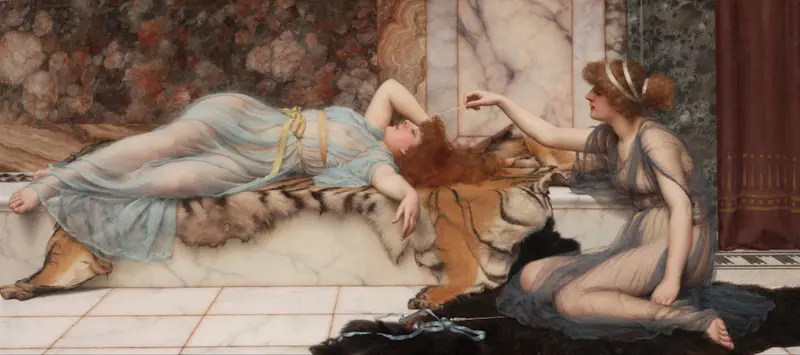
Mischief and Repose
John William Godward
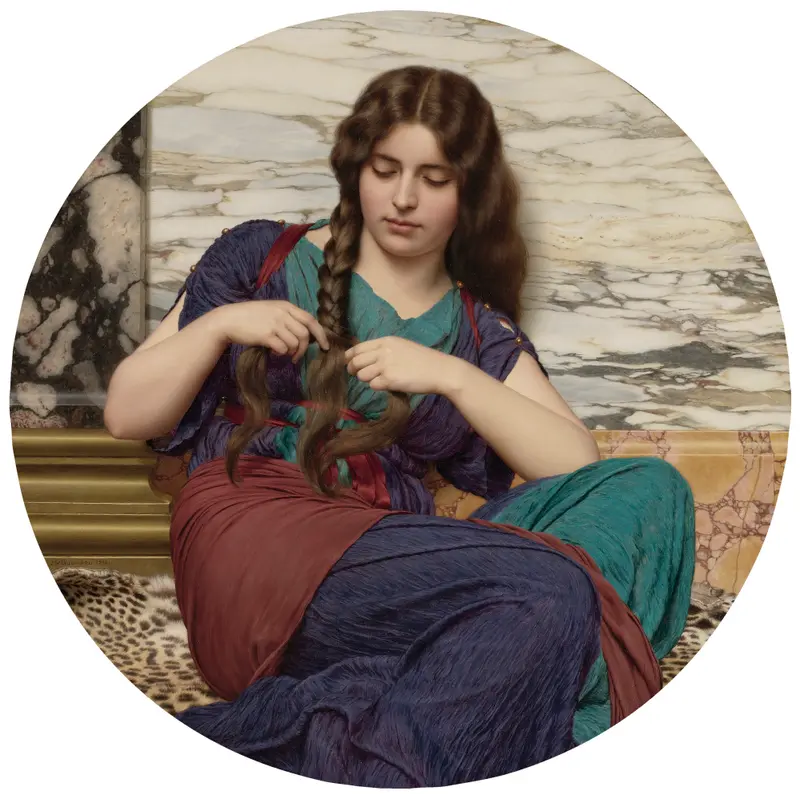
A Congenial Task
John William Godward
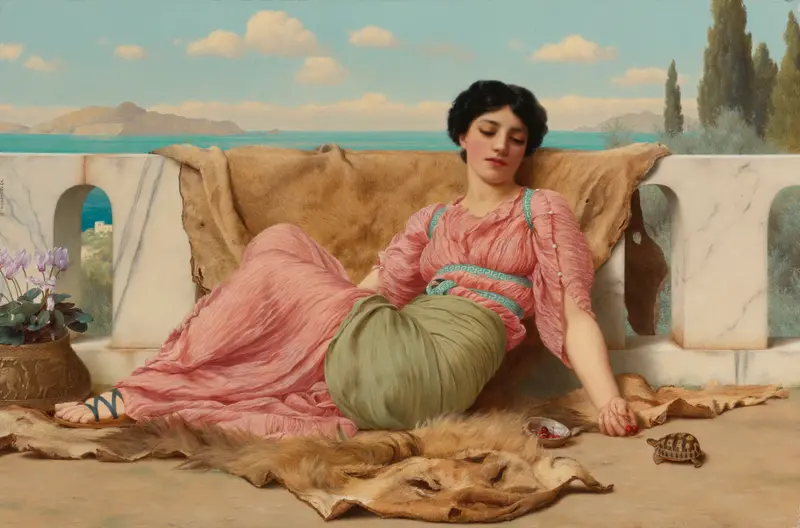
The Quiet Pet
John William Godward
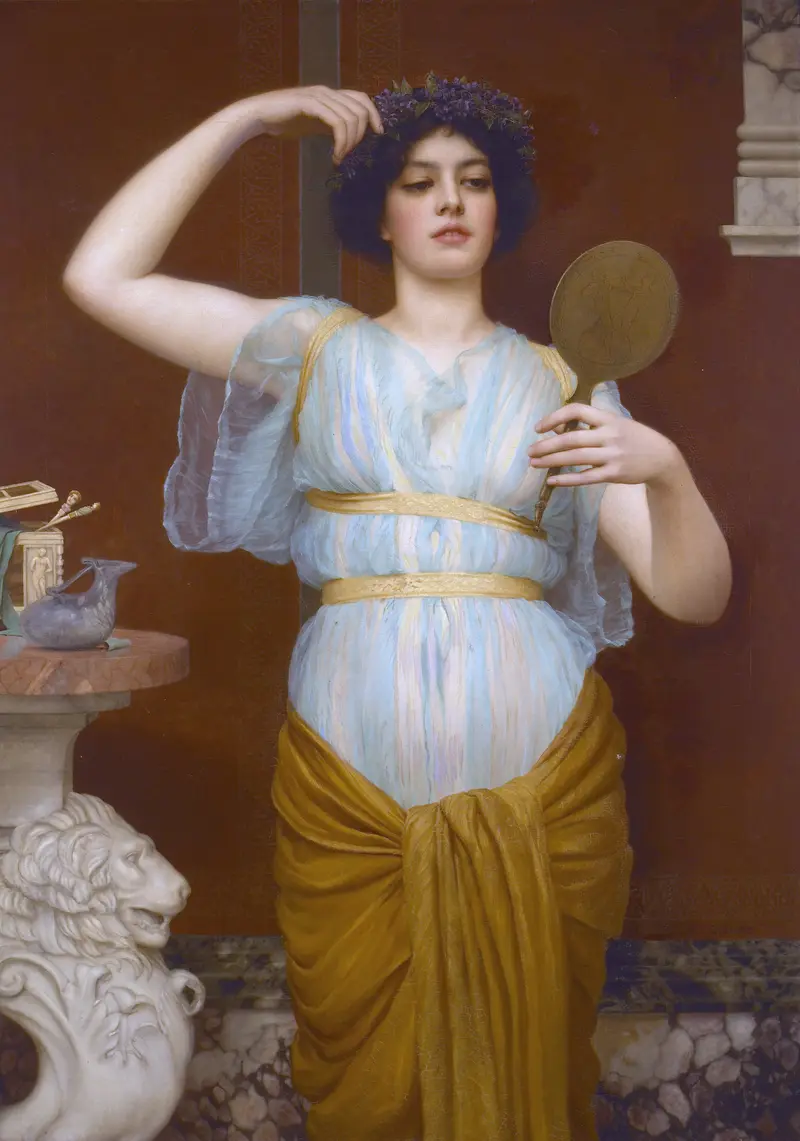
Ione
John William Godward
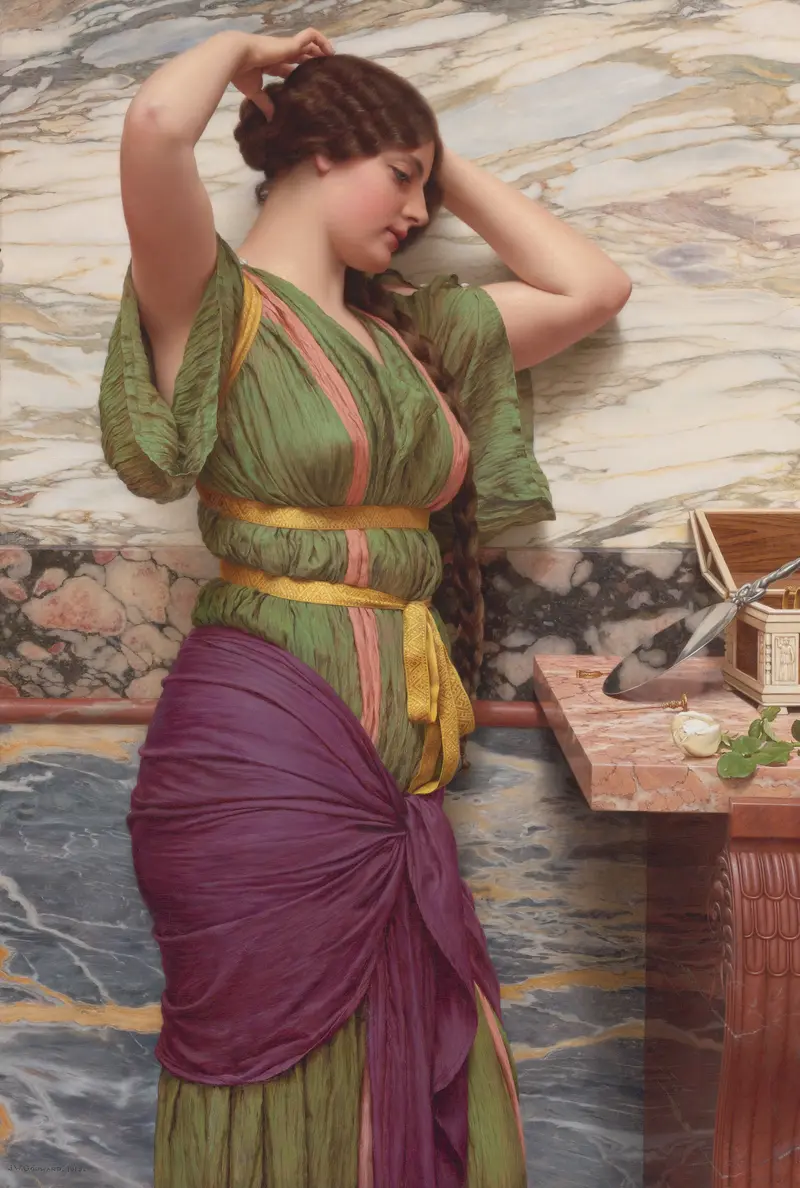
A Fair Reflection
John William Godward
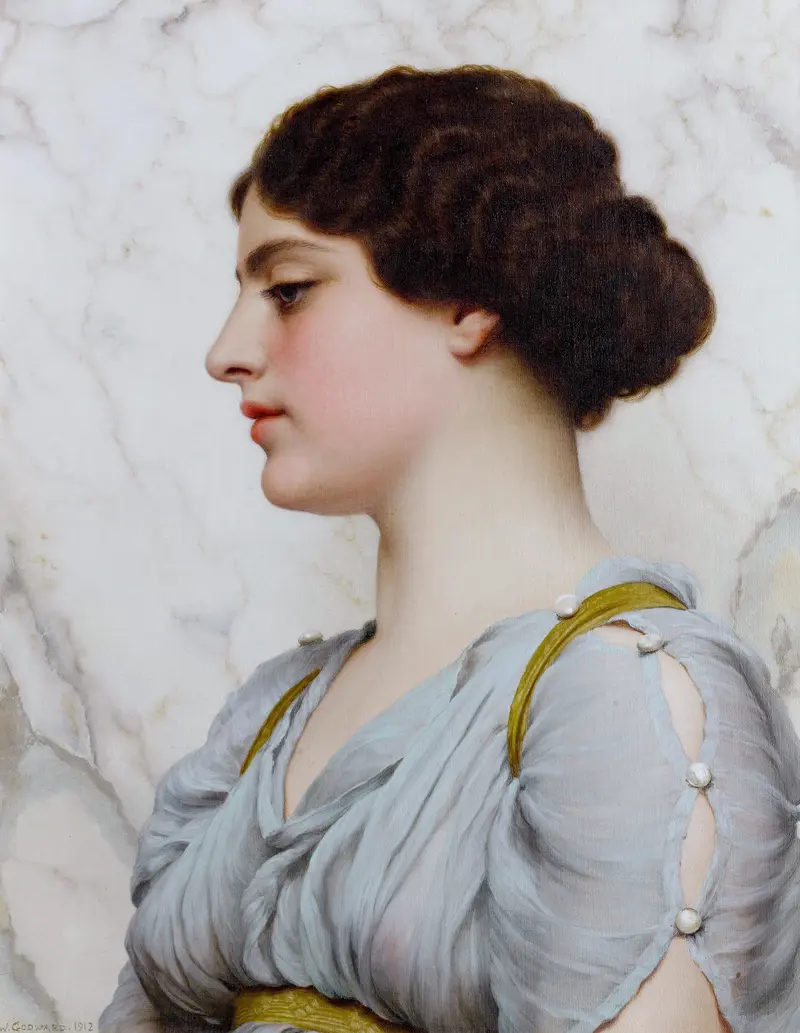
A Roman Beauty
John William Godward
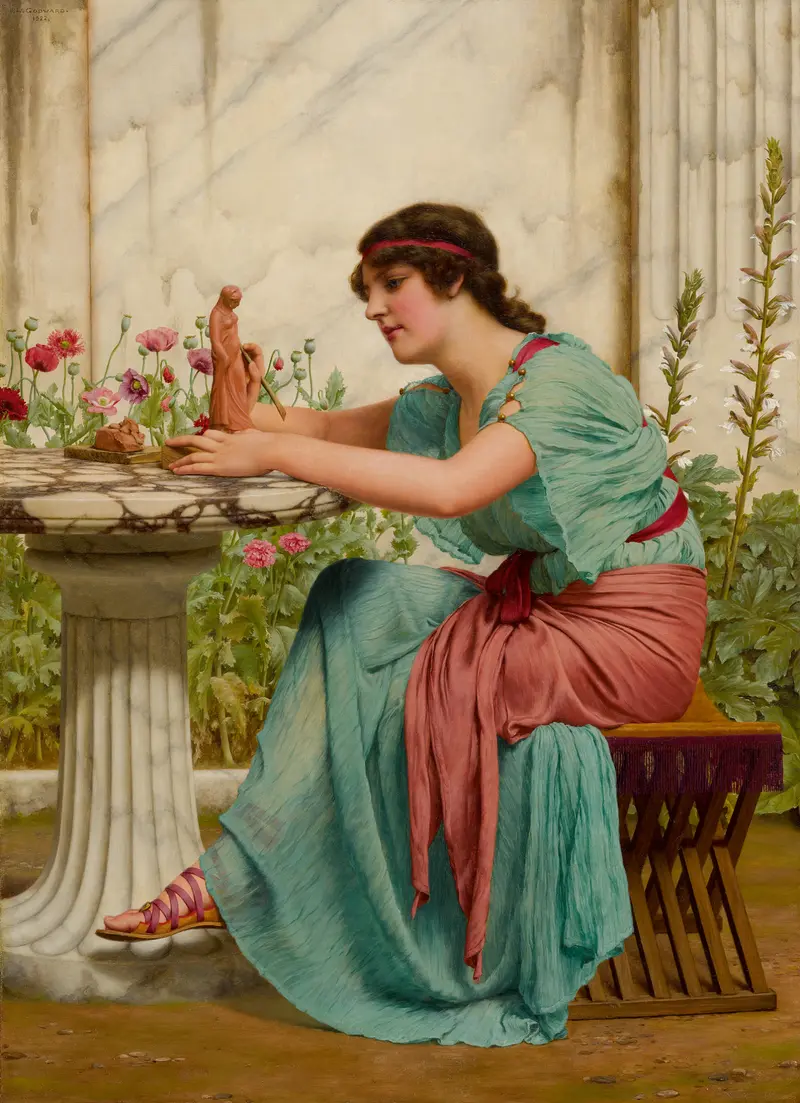
A Dilettante
John William Godward
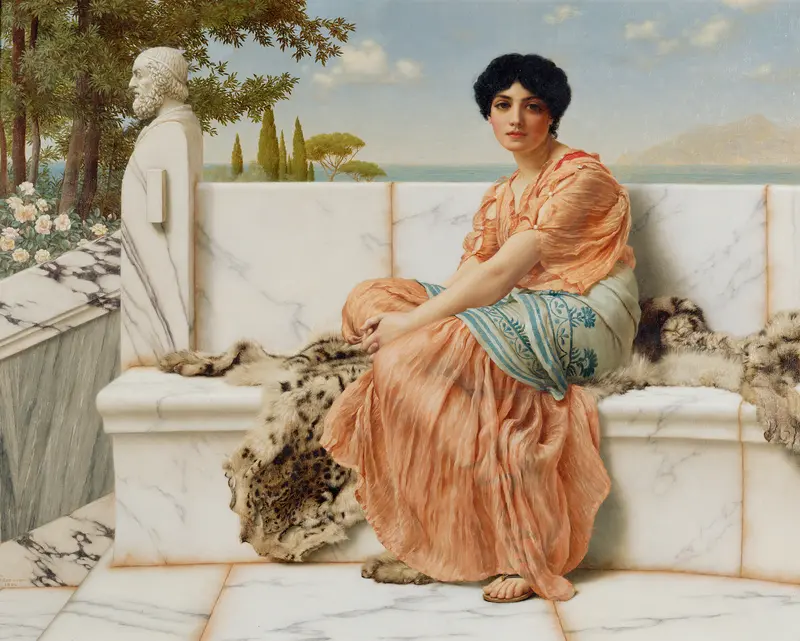
Reverie
John William Godward
The Signal
John William Godward



