
A Roman Beauty — History & Facts
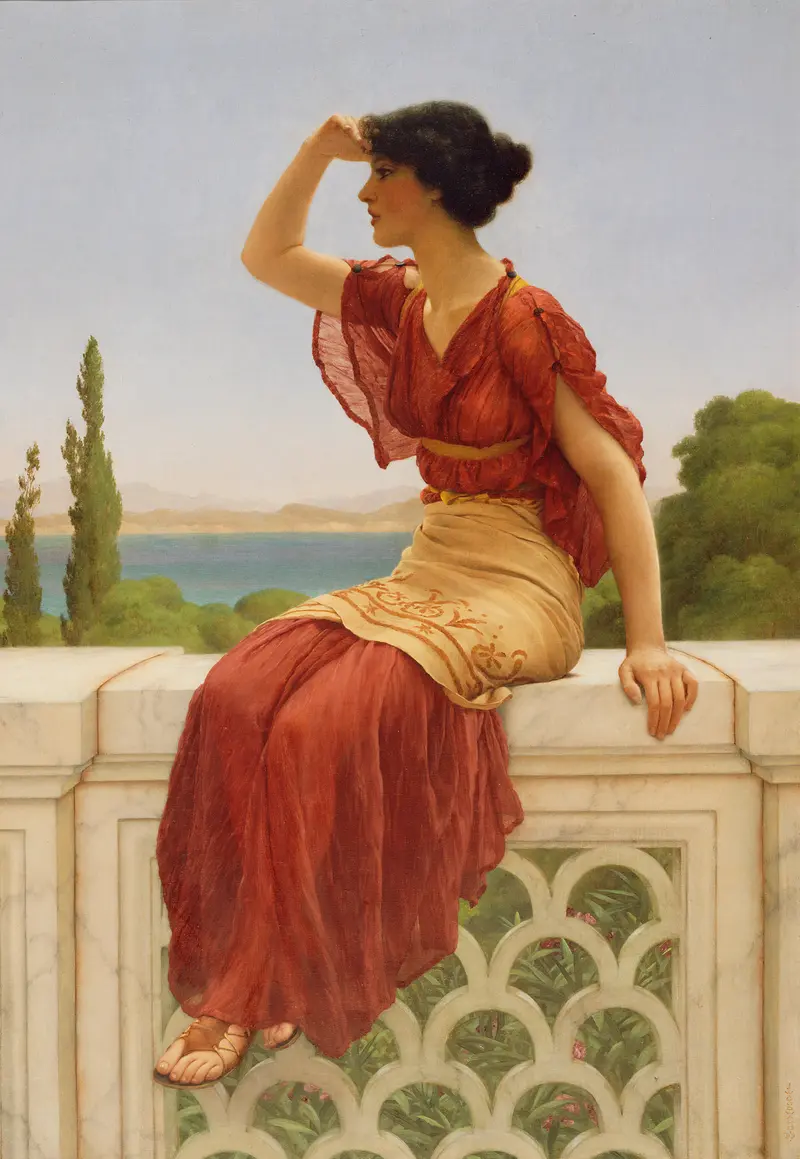
The first thing that catches the eye in A Roman Beauty is the serene, almost sculptural profile of the sitter, set against a coolly luminous marble backdrop. Every detail, from the gentle blush on her cheek to the pearlescent buttons fastening her gossamer gown, is rendered with a precision that feels both intimate and idealized. The artist draws the viewer’s gaze along the graceful line of her neck and the soft folds of her dress, inviting us to linger on the interplay of textures—skin, fabric, stone.
The palette is restrained, dominated by pale blues and creamy whites, but the effect is quietly sumptuous, evoking a sense of calm and self-possession in the figure. Painted in 1912 by John William Godward, this work belongs to a late flowering of the Neoclassical tradition in British art, when painters looked to ancient Rome and Greece for subjects and ideals of beauty. Such portraits were rarely of historical individuals; instead, they conjured an imagined antiquity, catering to collectors who prized a vision of the ancient world as refined, orderly, and sensuous. By the early twentieth century, this style was already passing out of fashion, overshadowed by modernism’s bold experiments.
Yet the cool perfection of A Roman Beauty stands as a testament to the enduring allure of the classical past, inviting us to contemplate not just the sitter, but the ideals she was meant to embody.
More Artworks by John William Godward

Eighty and eighteen
John William Godward
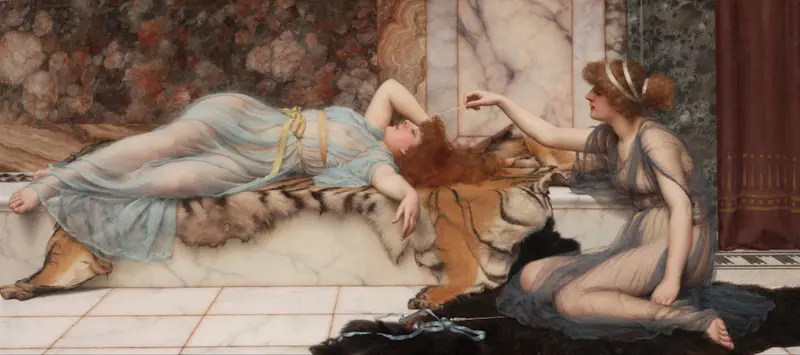
Mischief and Repose
John William Godward
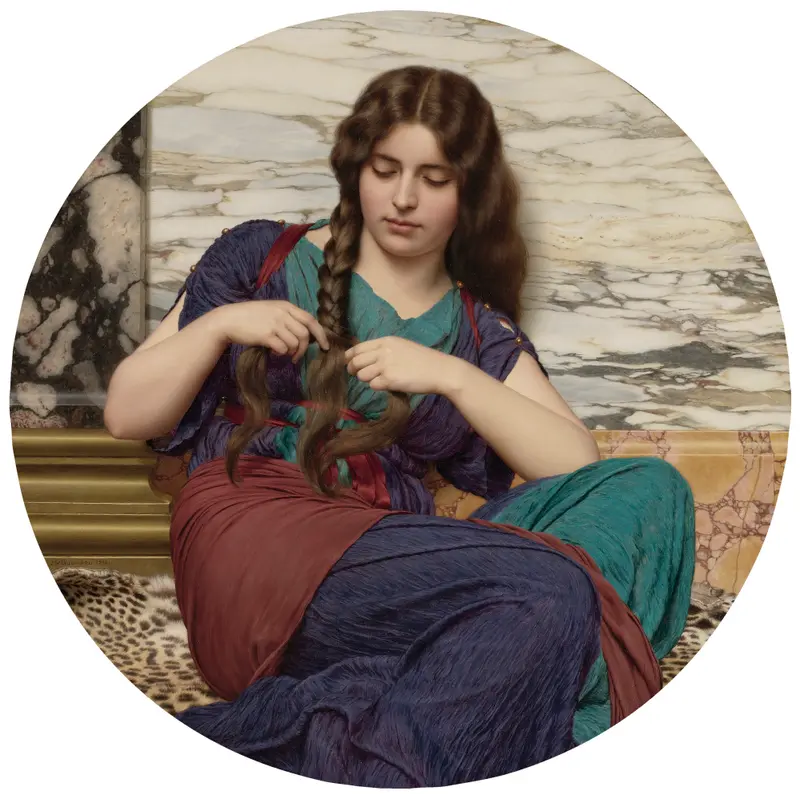
A Congenial Task
John William Godward
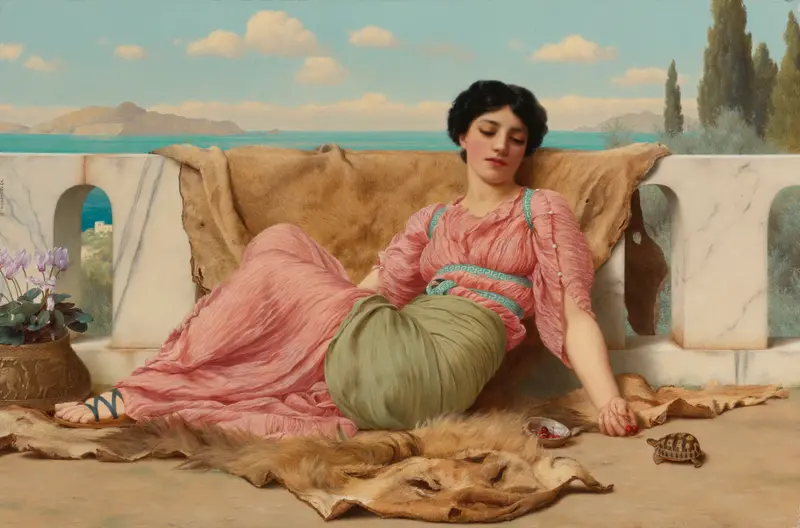
The Quiet Pet
John William Godward
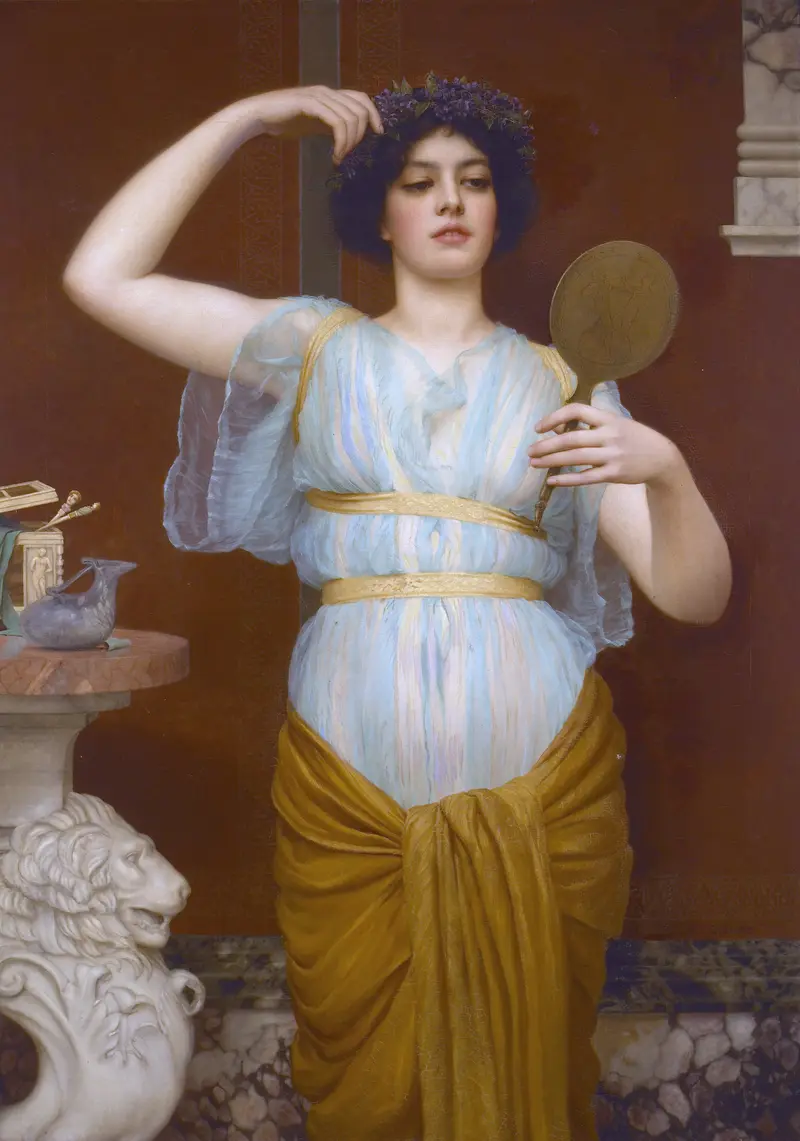
Ione
John William Godward
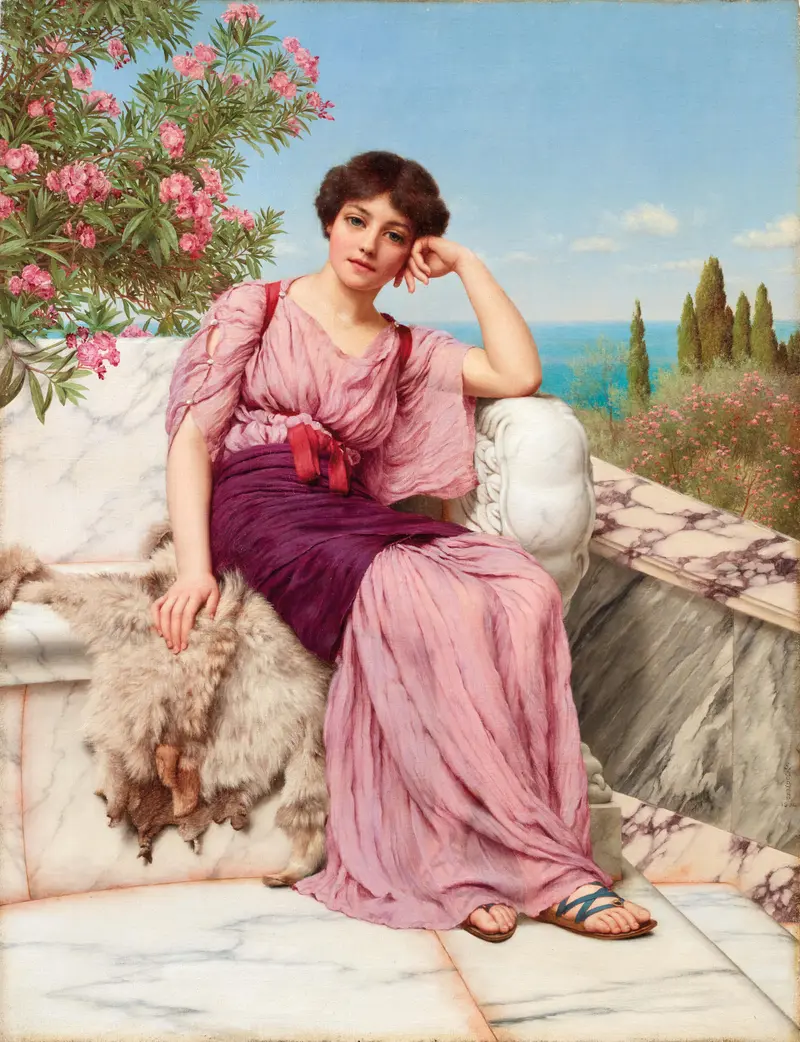
Sweet Dreams
John William Godward
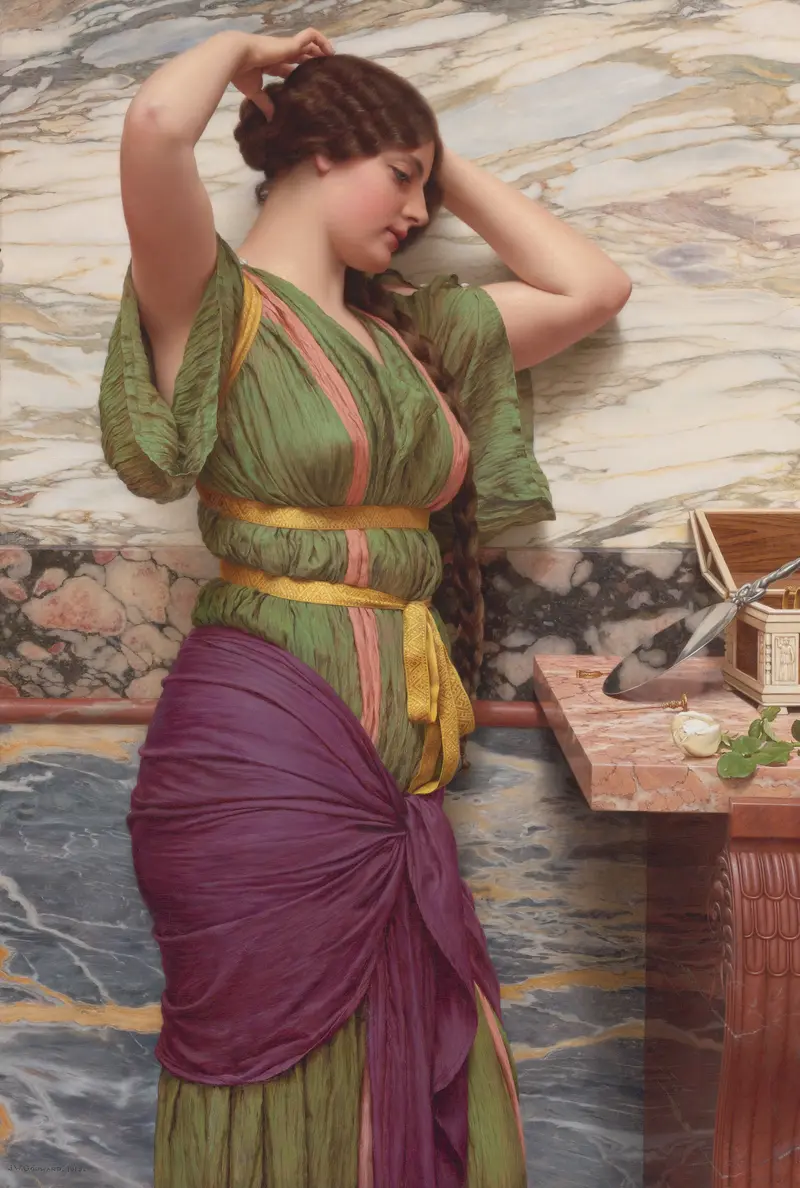
A Fair Reflection
John William Godward
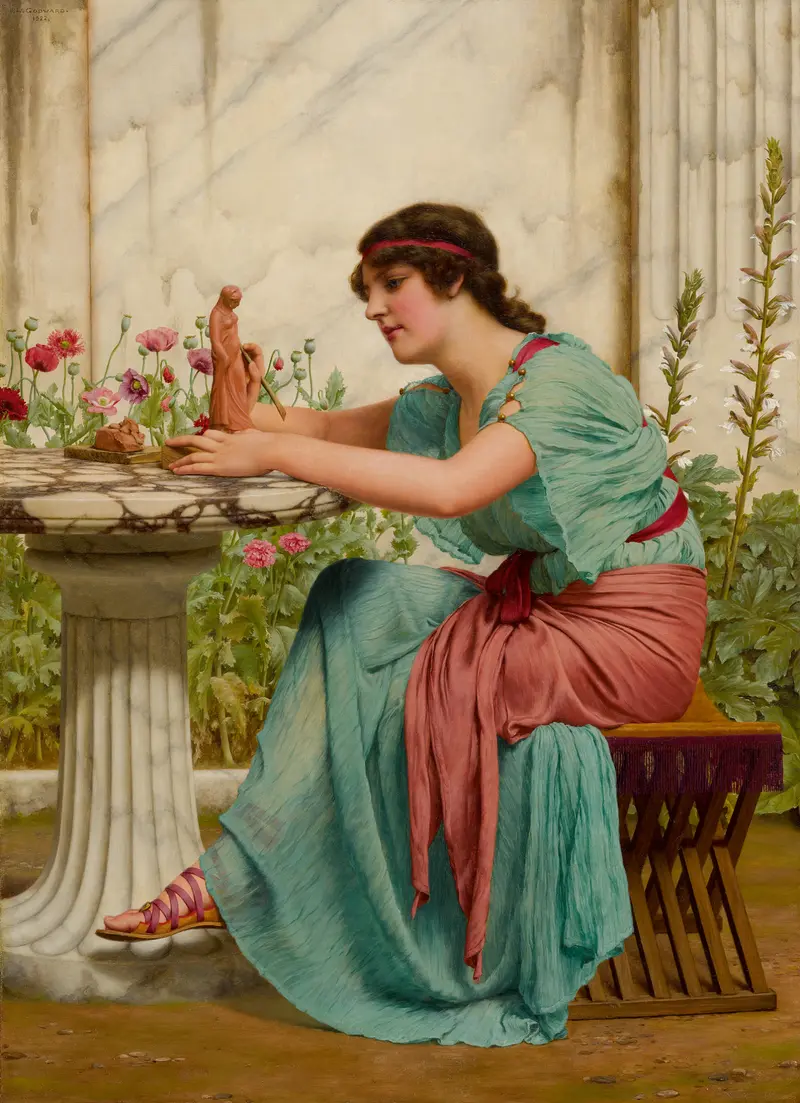
A Dilettante
John William Godward
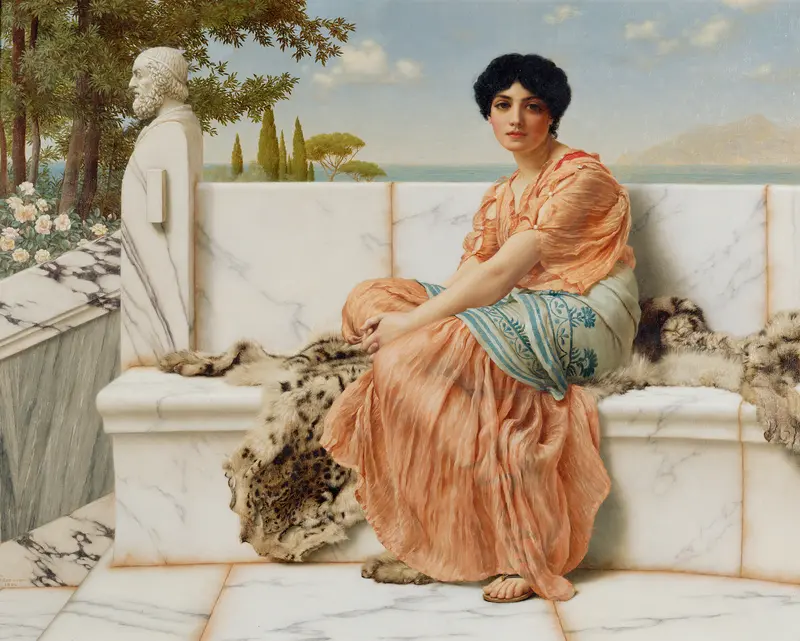
Reverie
John William Godward
The Signal
John William Godward





