
A Dilettante — History & Facts
The hush of concentration is almost audible in A Dilettante by John William Godward, painted in 1922. The viewer is drawn instantly to the young woman’s absorption as she shapes a clay figure, her hands steady and her gaze unwavering. The marble tabletop gleams beneath her arms, its cool surface contrasting with the vibrant poppies blooming behind her—flowers that seem to echo the flush in her cheeks and the rose-colored sash at her waist.
Every fold of her turquoise gown is rendered with a loving precision, the fabric pooling around her as if time itself has paused for this moment of creative solitude. The play of light on her skin and the soft shadows beneath the table suggest a warm, sheltered courtyard, a private world set apart for the pleasures of making. Painted at the tail end of the neoclassical revival, this work belongs to an era when artists like Godward found inspiration in the imagined tranquility of ancient Greece and Rome. These paintings were often commissioned by collectors who sought an escape from modernity, favoring scenes of idealized leisure and beauty.
By 1922, such visions were already growing rare, as the art world moved toward abstraction and modernism, leaving behind the marble columns and lush gardens of the past. A Dilettante survives as a late echo of this tradition, its delicate attention to costume, architecture, and botany a testament to the painter’s devotion to detail. The painting’s presence at Sotheby’s today is a reminder that, even as fashions change, the quiet act of creation still invites us to linger.
More Artworks by John William Godward

Eighty and eighteen
John William Godward
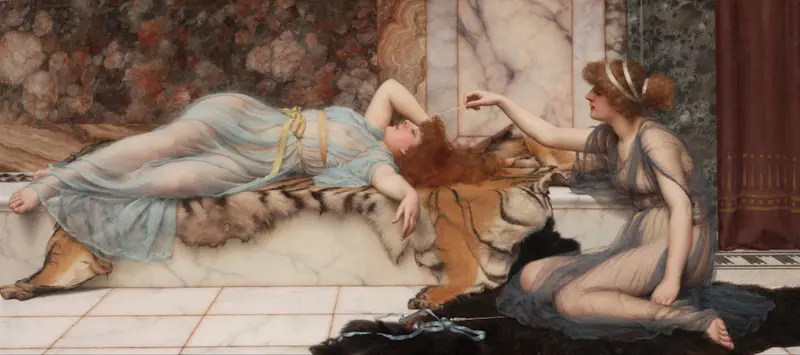
Mischief and Repose
John William Godward
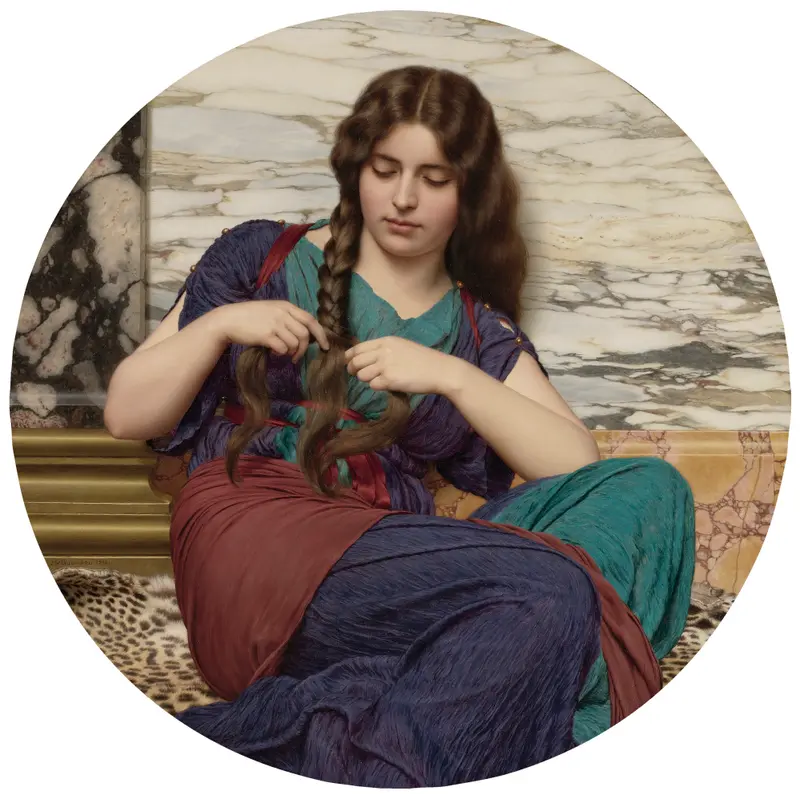
A Congenial Task
John William Godward
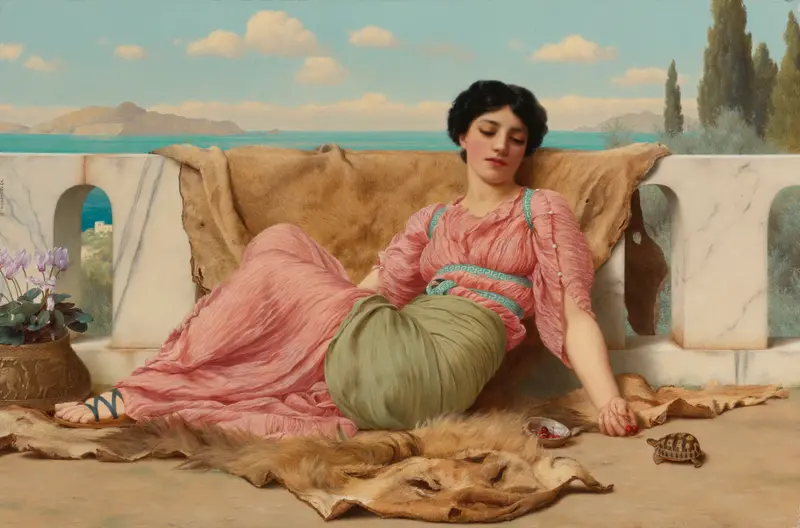
The Quiet Pet
John William Godward
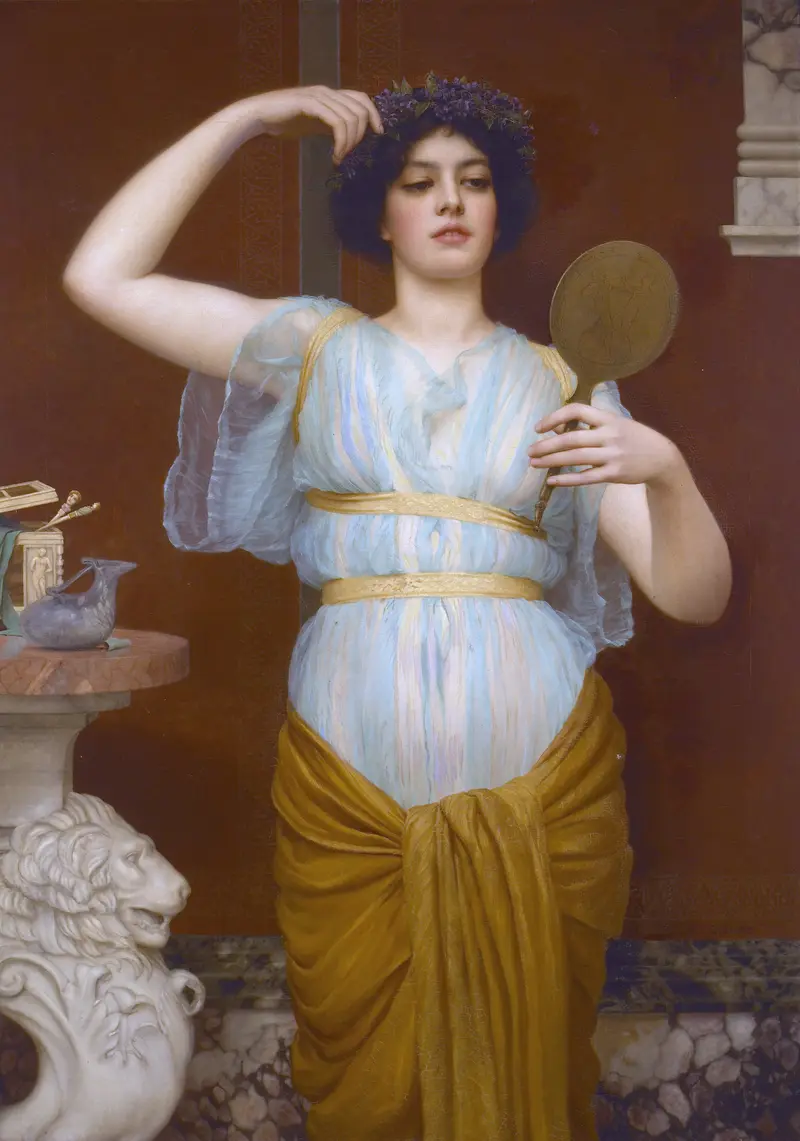
Ione
John William Godward
Sweet Dreams
John William Godward
A Fair Reflection
John William Godward
A Roman Beauty
John William Godward
Reverie
John William Godward
The Signal
John William Godward
More Genre Scene Art

Banquet of the Officers of the St George Civic Guard
Frans Hals

Rembrandt and Saskia in the Scene of the Prodigal Son
Rembrandt van Rijn

Bal du moulin de la Galette
Pierre-Auguste Renoir

Quadrille at the Moulin Rouge
Henri de Toulouse-Lautrec

A Burial at Ornans
Gustave Courbet

When Will You Marry?
Paul Gauguin