
Reverie — History & Facts
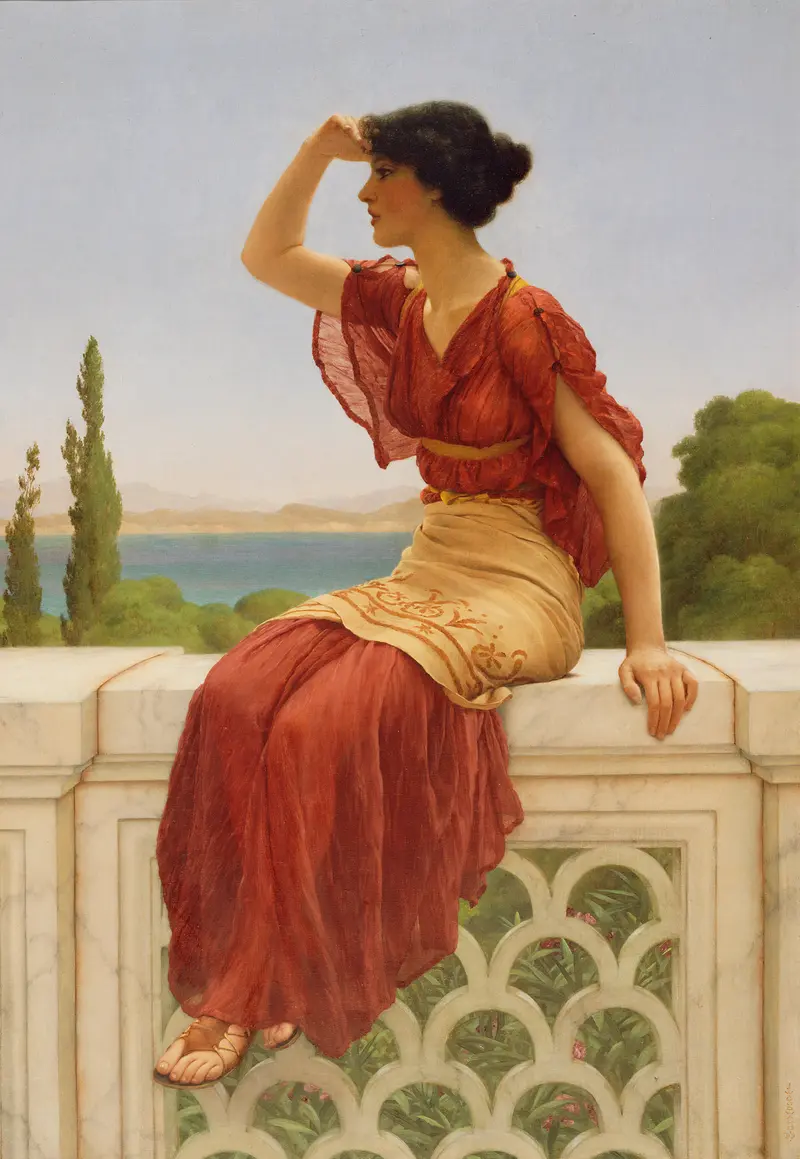
A young woman leans in profile against a marble ledge, her gaze cast downward, lost in thought. The cool, pale stone behind her frames a world of stillness, while her delicate features and the gentle fall of her auburn hair draw the viewer into her private reverie. The painter lingers over the contrast between the softness of her skin and the polished hardness of the marble, letting the light caress her bare shoulder and the folds of her classical drapery.
Every detail, from the laurel-green sash at her waist to the distant blue of the sea glimpsed beyond, is chosen to heighten the sense of quiet introspection. The scene feels suspended in time, as if the air itself has paused to listen to her thoughts. Painted in 1904, this work belongs to a world that looked backward for inspiration, finding beauty in the imagined grace of ancient Greece. Artists like John William Godward specialized in such scenes, catering to collectors who craved an escape from the industrial modernity of their own era.
These paintings, often called "Victorian classicism," were prized for their technical polish and their promise of an idealized past. Today, Reverie resides at the Getty Center, its origins largely unrecorded, but its mood as immediate as ever. The longer you look, the more you sense the hush of antiquity settling around her, inviting you to wonder what thoughts might have filled her silence.
More Artworks by John William Godward

Eighty and eighteen
John William Godward
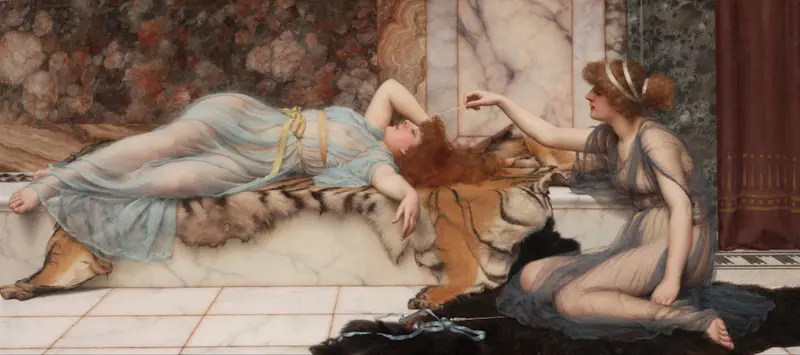
Mischief and Repose
John William Godward
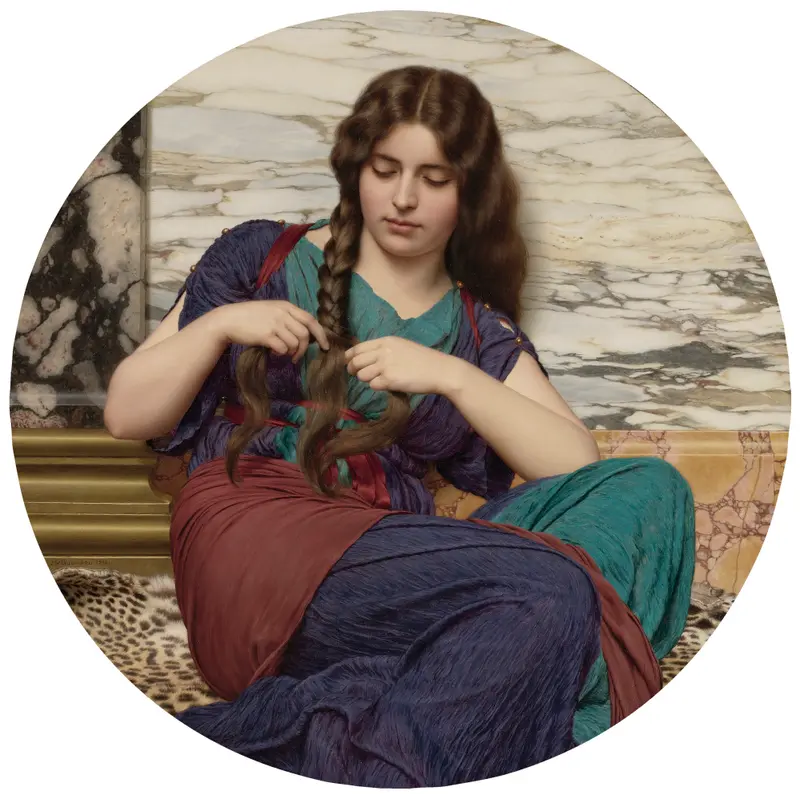
A Congenial Task
John William Godward
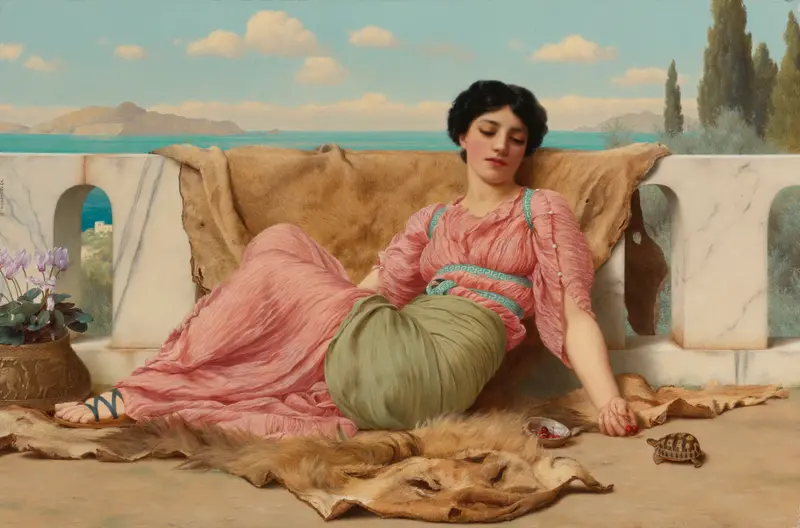
The Quiet Pet
John William Godward
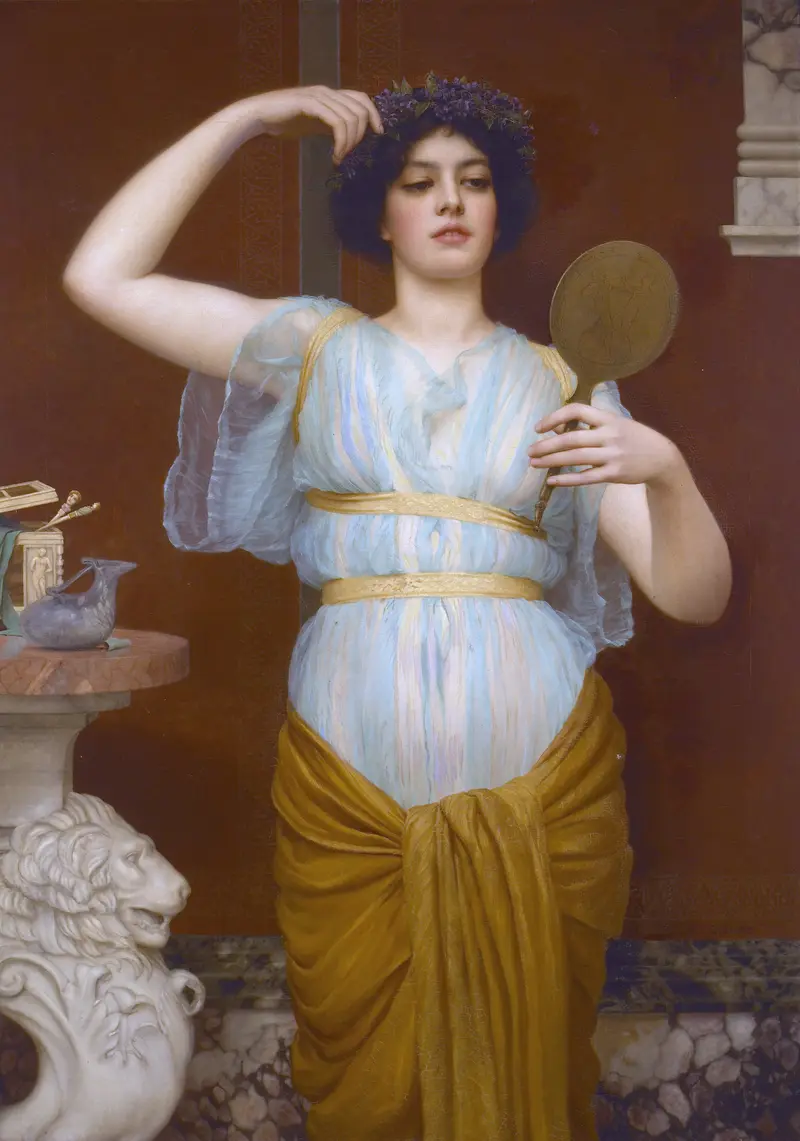
Ione
John William Godward
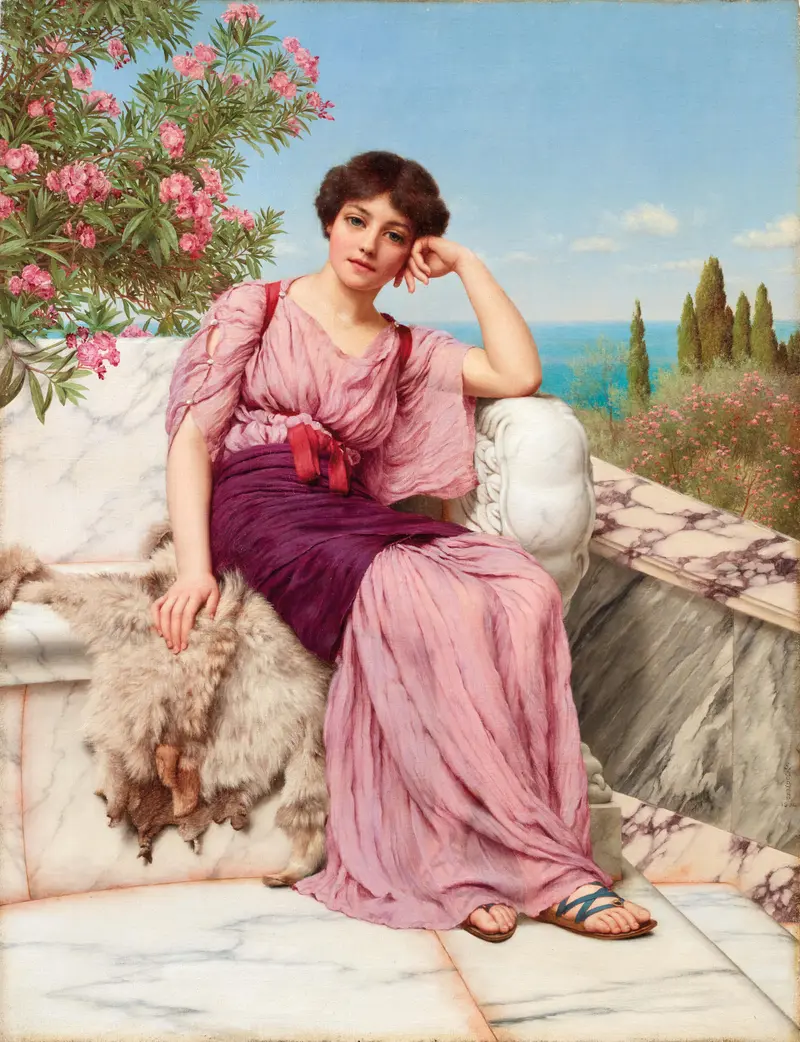
Sweet Dreams
John William Godward
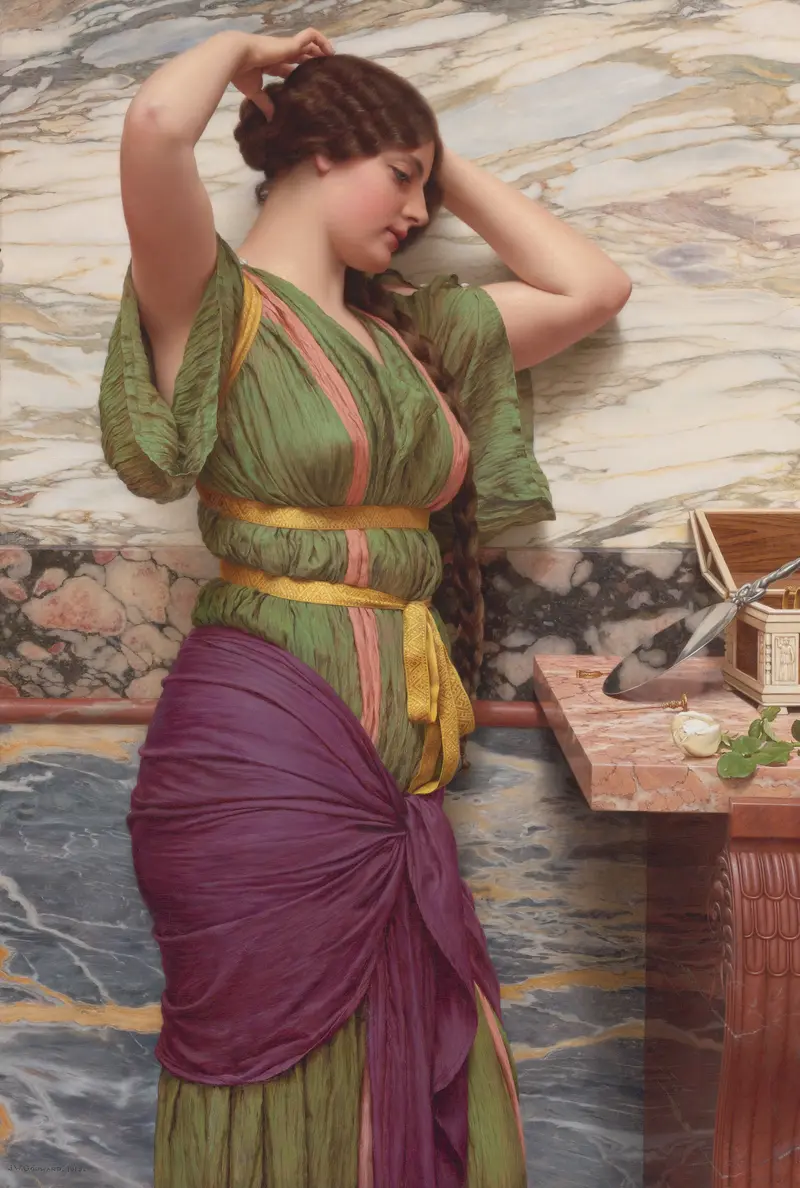
A Fair Reflection
John William Godward
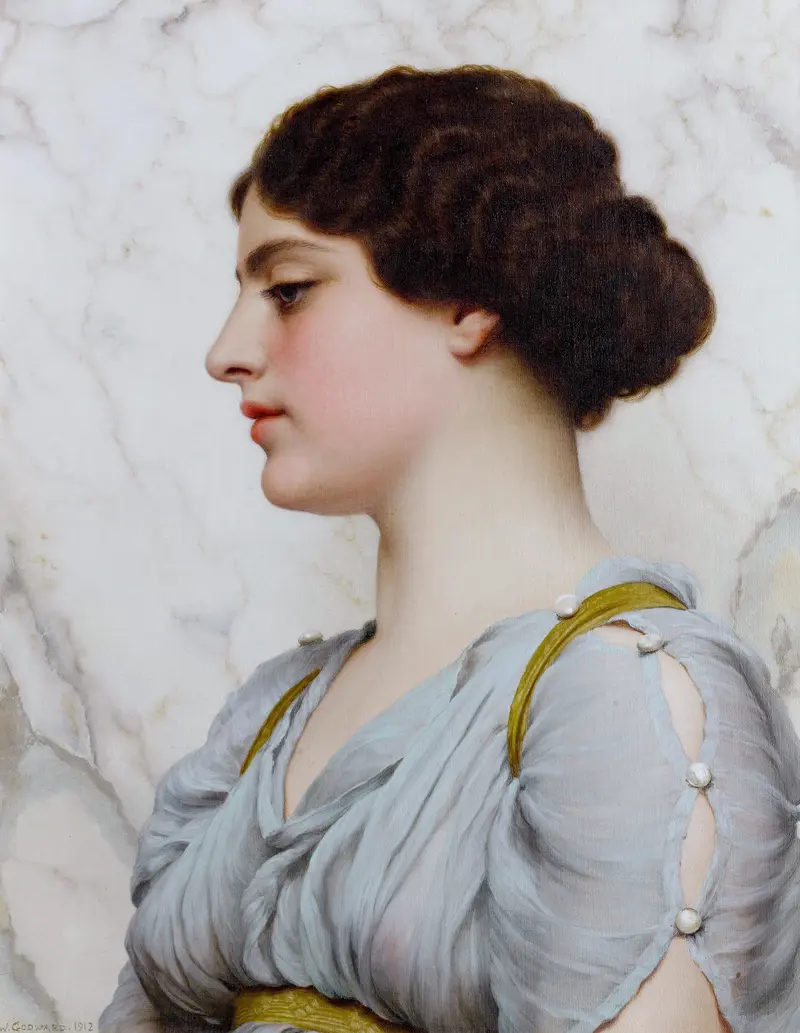
A Roman Beauty
John William Godward
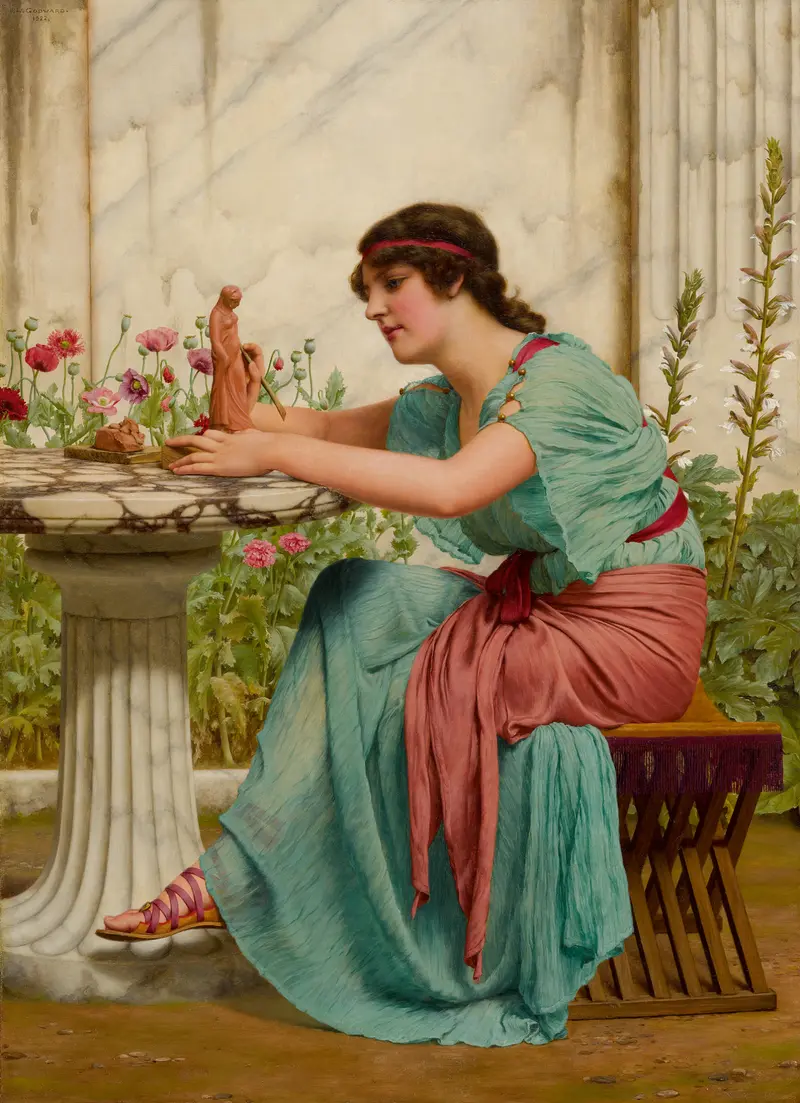
A Dilettante
John William Godward
The Signal
John William Godward





