
Mischief and Repose — History & Facts
What first holds the eye is the languid choreography of two figures, separated by a marble bench but joined by a single, playful gesture. One woman reclines in utter abandon, her body draped across a tiger skin, her arm trailing loosely to the floor—she is the very image of repose, lost in a private world. The other, upright and alert, leans forward with a mischievous glint, holding a slender stick that teases at her companion’s mass of red hair.
The light, filtered and soft, caresses the sheer fabrics and the marble’s cool surface, heightening the sense of suspended time. Every detail, from the delicate transparency of the gowns to the careful rendering of fur and stone, serves to heighten the contrast between stillness and gentle provocation. Painted in 1895, Mischief and Repose by John William Godward belongs to a world that delighted in the imagined leisure of classical antiquity—a favorite playground for late Victorian artists. Godward, a devotee of the so-called Victorian Neoclassicism movement, specialized in scenes where ancient marble, luxurious textiles, and idealized beauty offered a retreat from the industrial modern world.
Such works were often commissioned for private enjoyment, their air of innocent sensuality and technical polish appealing to collectors who sought both escapism and refinement. Though little is recorded about the specific journey of this painting, its presence in the Google Cultural Institute’s digital collection today lets us linger over every brushstroke, inviting us to weigh the balance between idleness and play for ourselves.
More Artworks by John William Godward

Eighty and eighteen
John William Godward
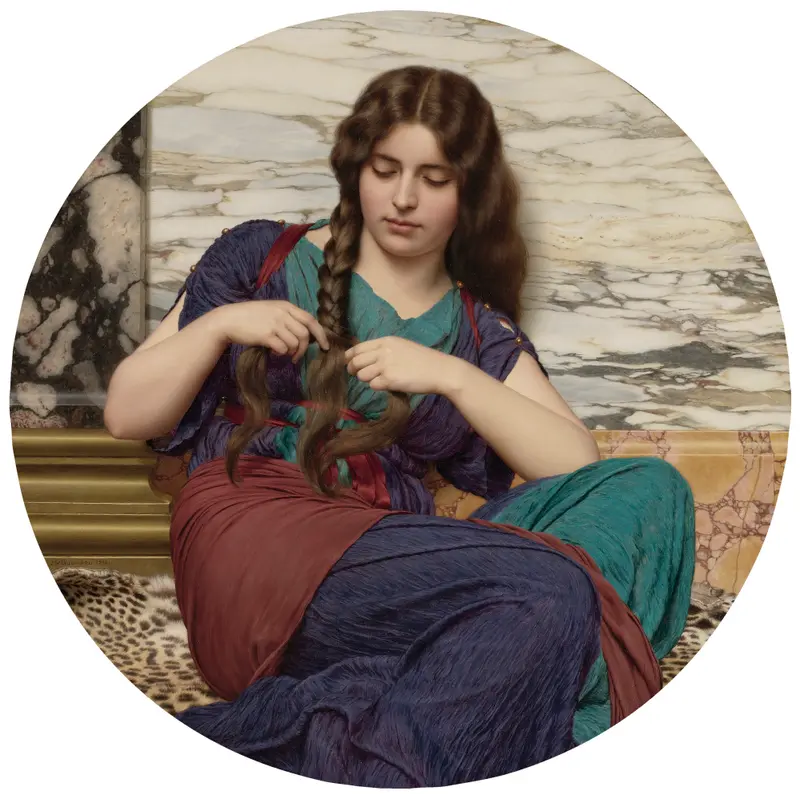
A Congenial Task
John William Godward
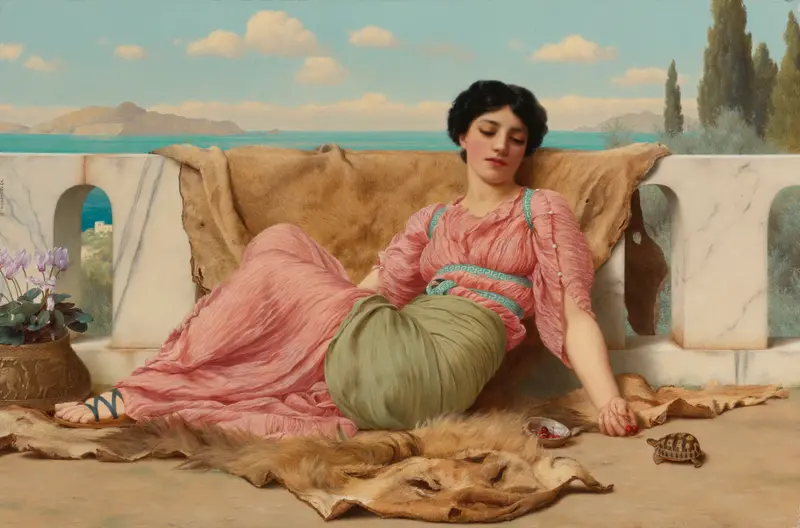
The Quiet Pet
John William Godward
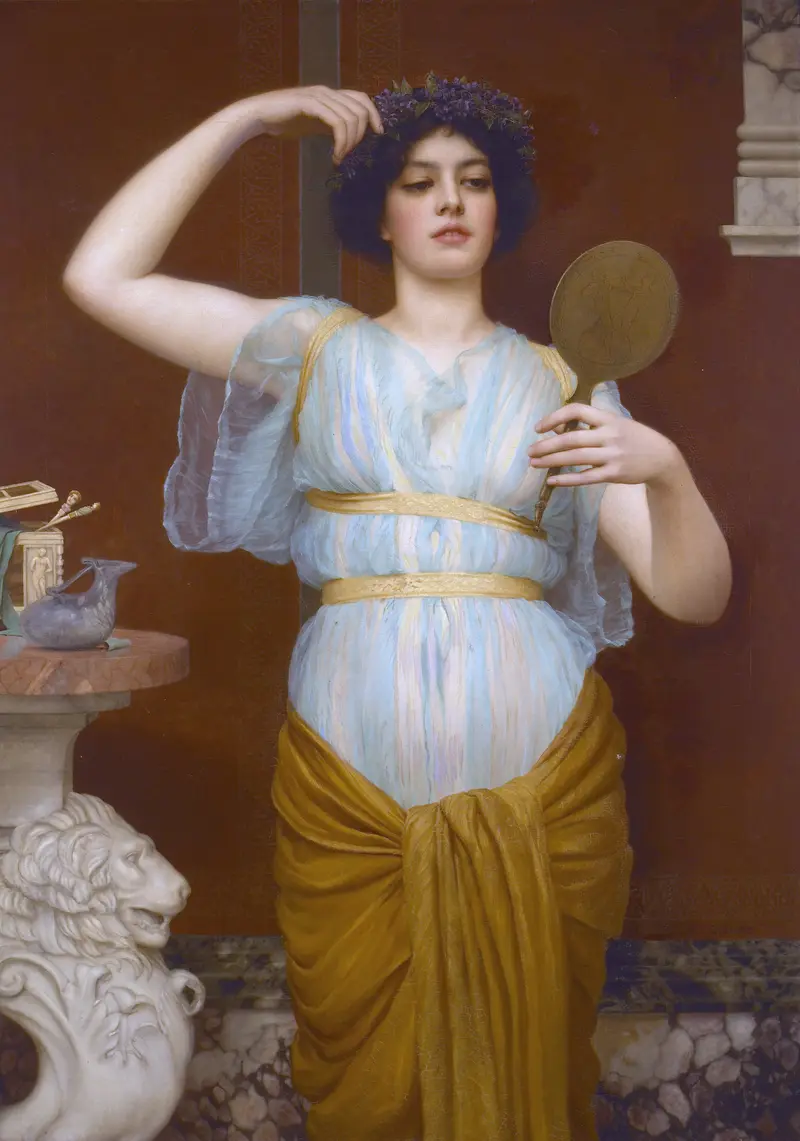
Ione
John William Godward
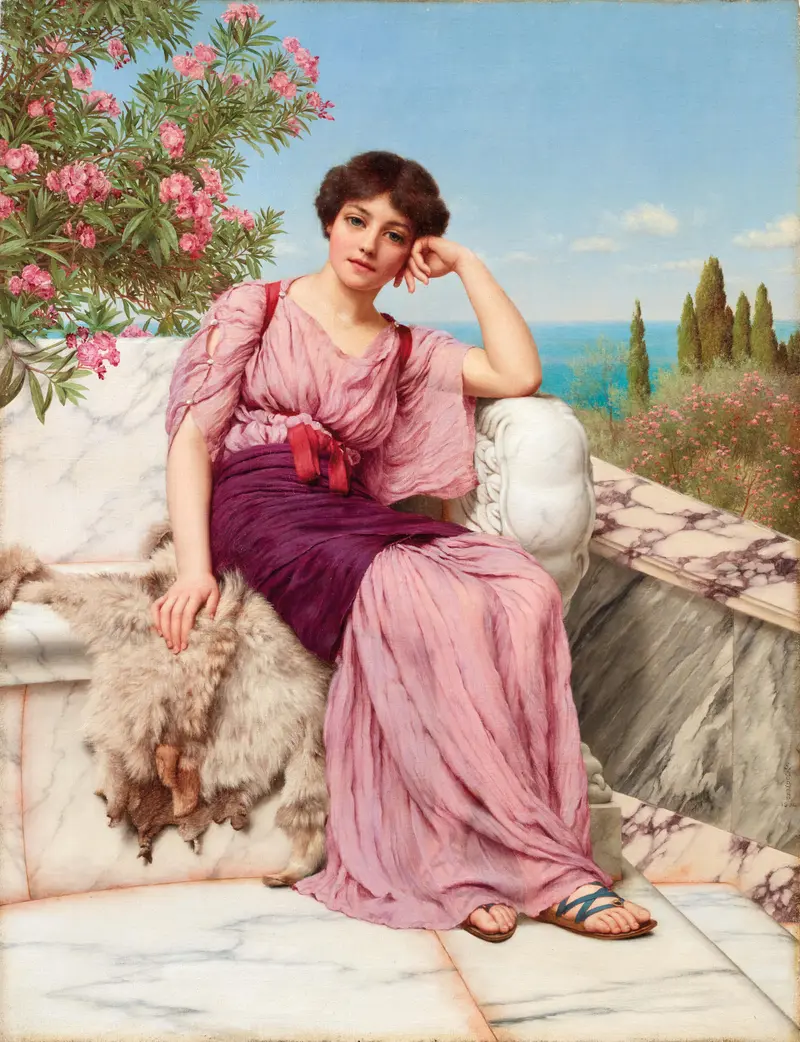
Sweet Dreams
John William Godward
A Fair Reflection
John William Godward
A Roman Beauty
John William Godward
A Dilettante
John William Godward
Reverie
John William Godward
The Signal
John William Godward



