
A Congenial Task — History & Facts
What first draws the eye in A Congenial Task is the quiet absorption of the young woman, her fingers deftly weaving a braid as if the world beyond her lap has faded away. The marble wall behind her, cool and veined, sets off the warmth of her skin and the deep, rippling folds of her garments—indigo, teal, and russet, layered with a care that echoes the care she gives her hair. Every surface is a study in texture: the soft weight of her dress, the sleek pelt beneath her, the hard, polished stone.
Light falls gently across her face and hands, inviting the viewer to linger on the concentration in her downcast eyes and the subtle play of shadow along her arms. This is not a scene of grand drama, but of intimate ritual, where the act of braiding becomes a moment of self-possession and calm. Painted in 1915, A Congenial Task belongs to the final flowering of the classical revival in British art, a movement that looked back to antiquity for its ideals of beauty and tranquility even as the modern world pressed in. Artists like John William Godward specialized in these imagined scenes of ancient leisure, often for collectors who craved escape from the industrial present.
The work’s round format and meticulous finish speak to the tastes of an era entranced by the illusion of timeless serenity, even as Europe was in turmoil. Now held in a private collection and once offered as Lot 66 at Sotheby’s, this painting is a reminder that history has kept few traces of the everyday lives it imagines—leaving us to return, again and again, to the silent poetry of a single, congenial task.
More Artworks by John William Godward

Eighty and eighteen
John William Godward
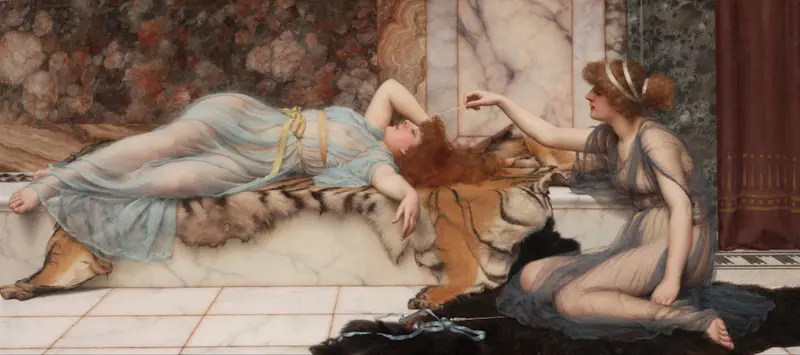
Mischief and Repose
John William Godward
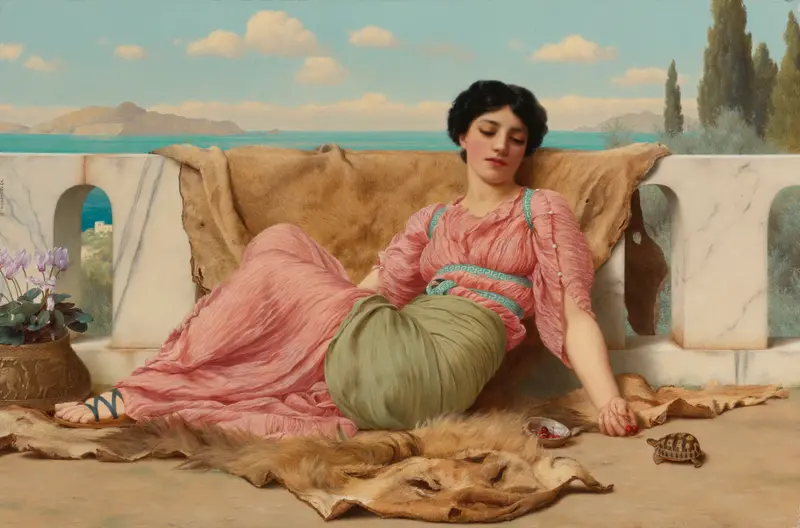
The Quiet Pet
John William Godward
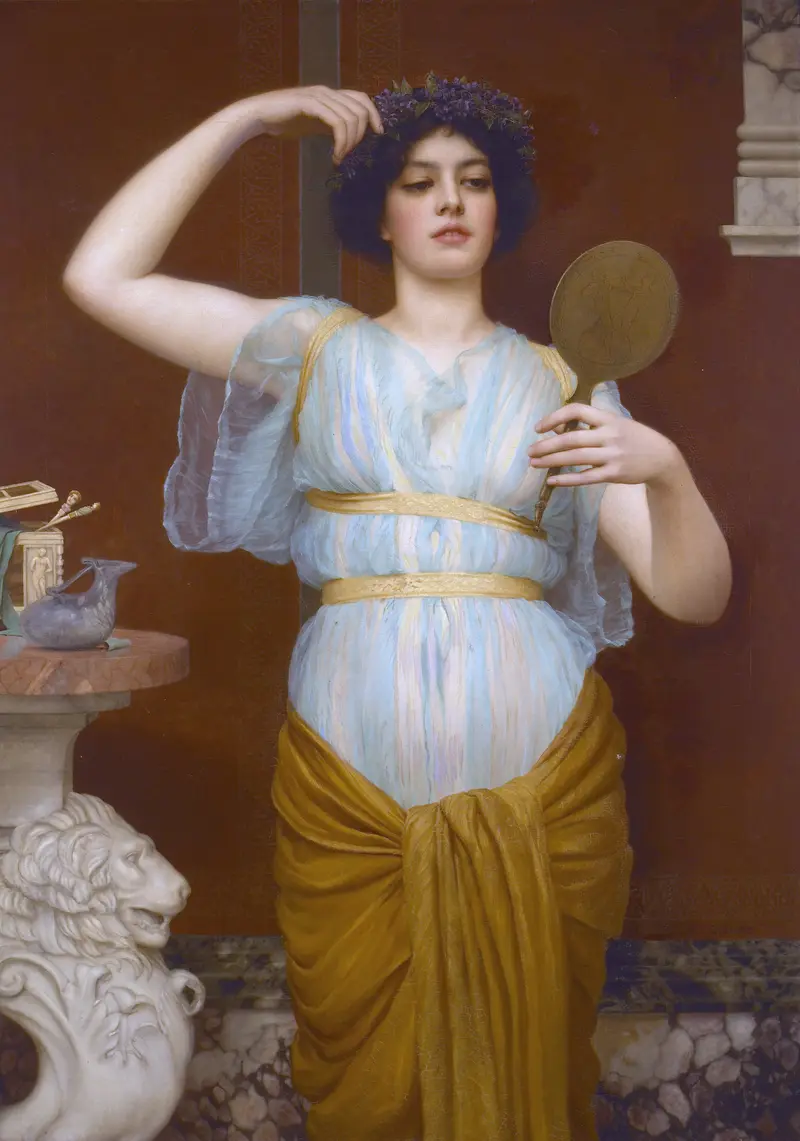
Ione
John William Godward
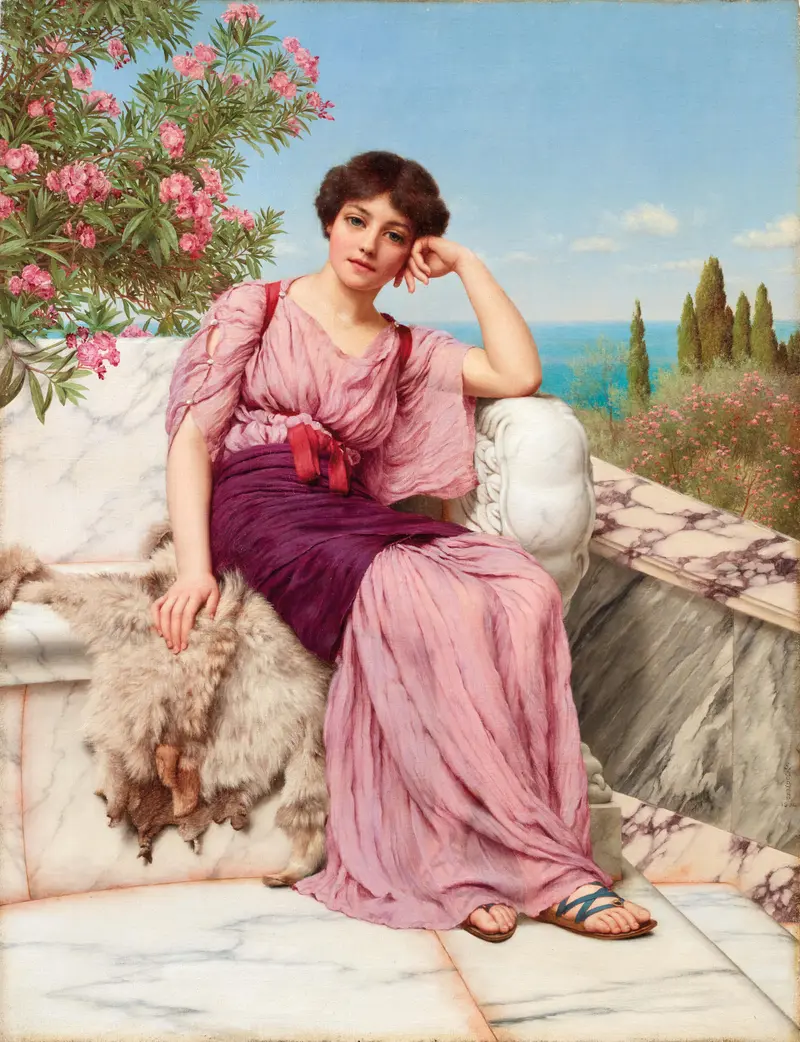
Sweet Dreams
John William Godward
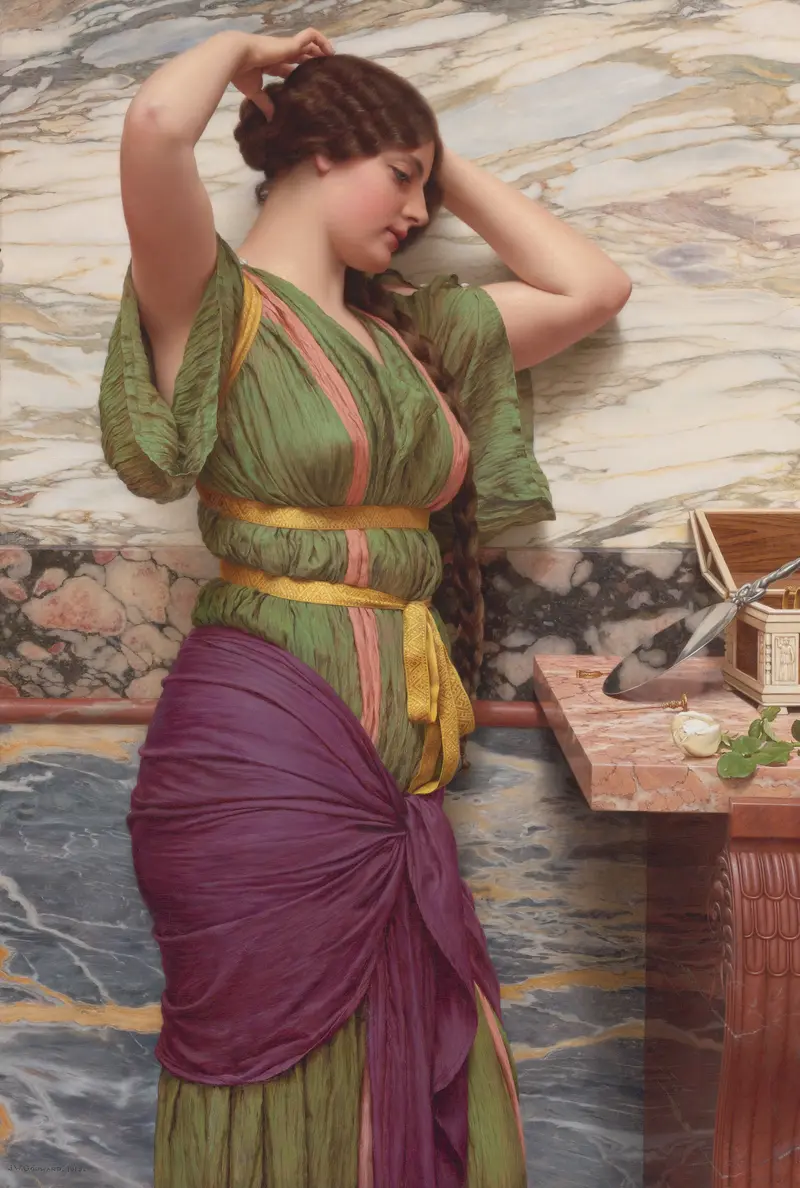
A Fair Reflection
John William Godward
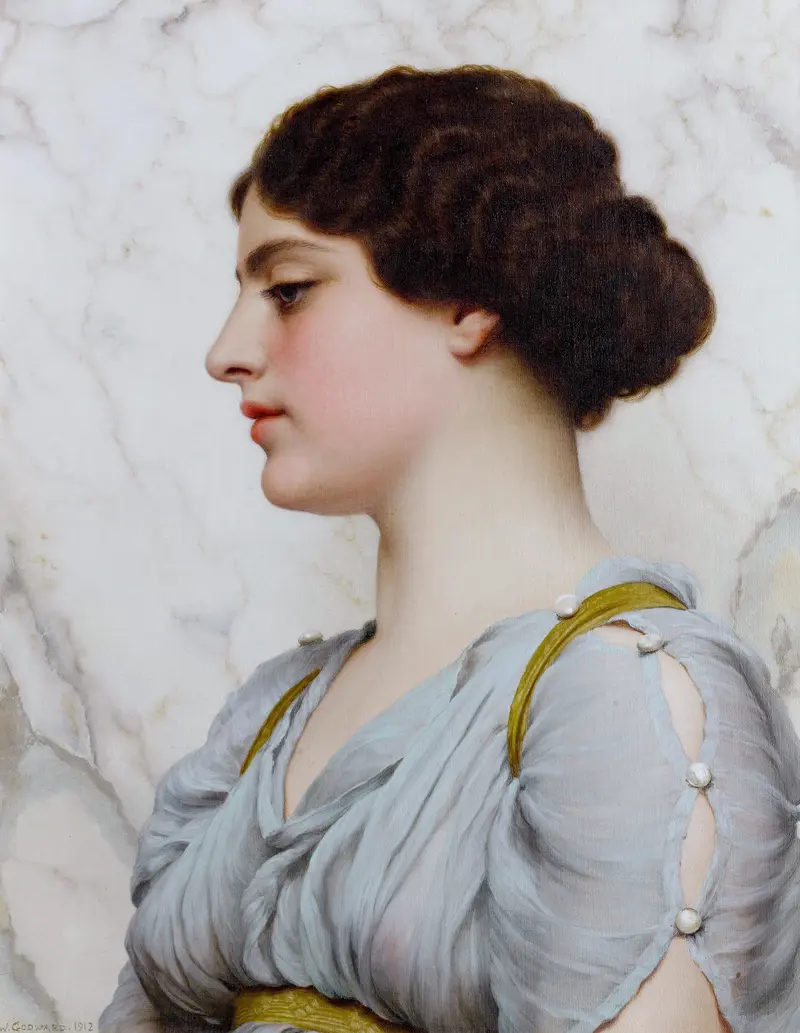
A Roman Beauty
John William Godward
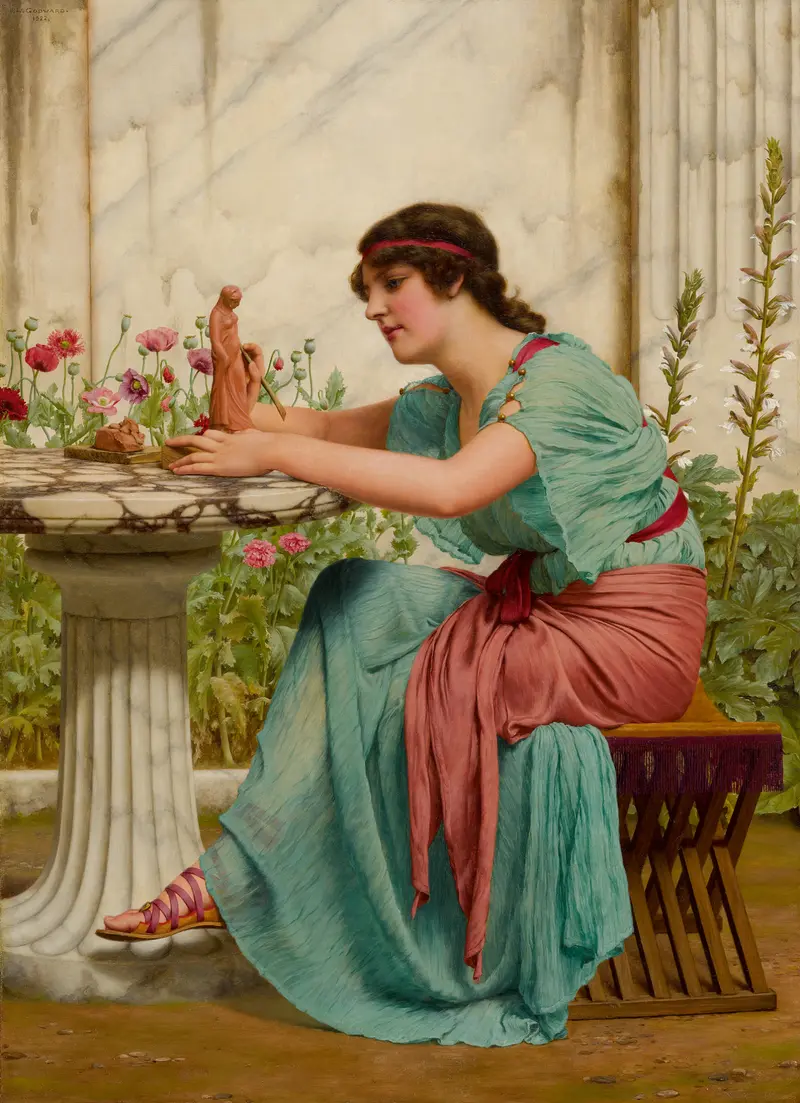
A Dilettante
John William Godward
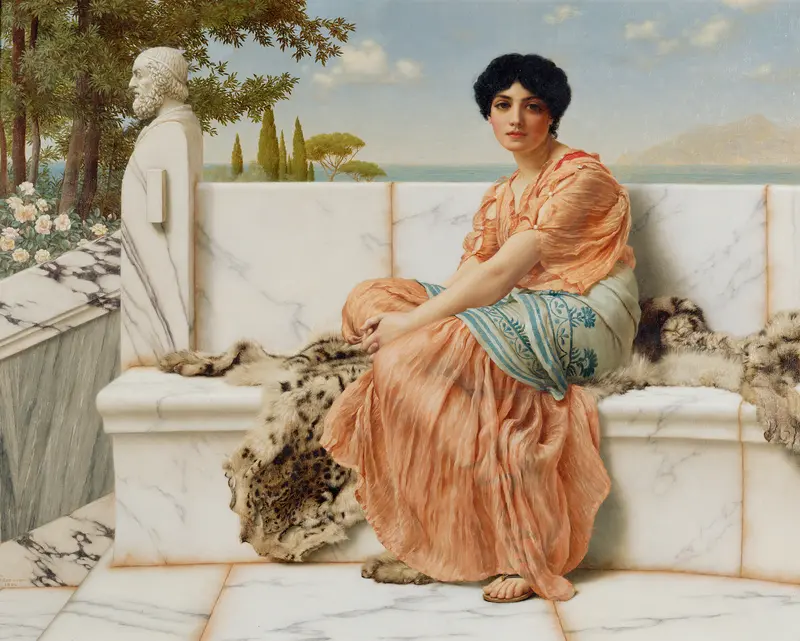
Reverie
John William Godward
The Signal
John William Godward
More Genre Scene Art

Banquet of the Officers of the St George Civic Guard
Frans Hals

Rembrandt and Saskia in the Scene of the Prodigal Son
Rembrandt van Rijn

Bal du moulin de la Galette
Pierre-Auguste Renoir

Quadrille at the Moulin Rouge
Henri de Toulouse-Lautrec

A Burial at Ornans
Gustave Courbet

When Will You Marry?
Paul Gauguin