
A Roemer with Grapes, a Pewter Plate and a Roll — History & Facts
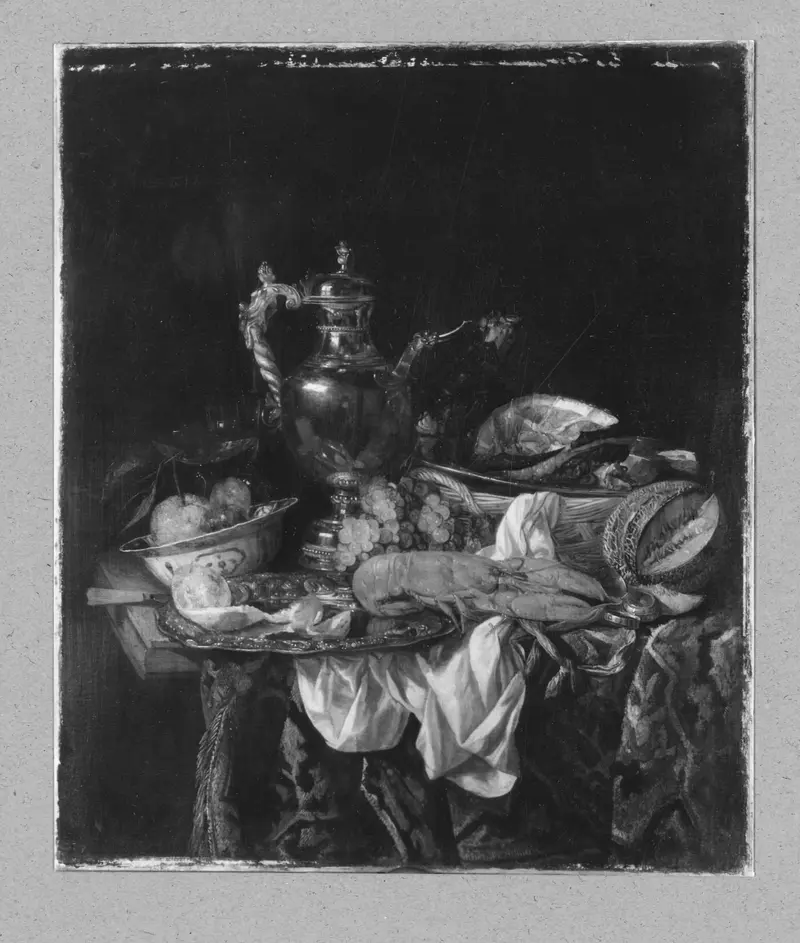
A single glint of light on the roemer glass draws the viewer’s gaze immediately to the heart of the table, where the world of A Roemer with Grapes, a Pewter Plate and a Roll quietly unfolds. The glass, filled just so, stands as a testament to the painter’s fascination with reflection and transparency, its surface capturing the room’s glow and the promise of refreshment. Below, a cluster of golden grapes tumbles across a pewter plate, their skins rendered with such care that one can almost sense their coolness and weight.
The bread roll, torn rather than sliced, hints at a meal interrupted, while the knife’s ivory handle points outward, inviting the viewer to step closer. Every object seems poised between abundance and restraint, the tablecloth’s heavy folds echoing the gravity of the composition. Painted in 1690, this still life belongs to the world of late seventeenth-century Dutch painting, a time when artists like Abraham van Beyeren elevated the everyday into quiet drama. Such works were prized by prosperous merchants and burghers who sought reminders of both their success and the fleeting nature of pleasure.
The meticulous rendering of glass, metal, and fruit was not merely a display of technical skill, but a meditation on the senses and the passage of time—grapes soon to be eaten, bread soon to be gone, a glass soon to be emptied. Though the specific journey of this painting is little recorded, its survival speaks to the enduring appeal of such scenes, inviting us to linger over the details and imagine the vanished hands that once reached for this meal.
More Artworks by Abraham van Beyeren

Still Life
Abraham van Beyeren
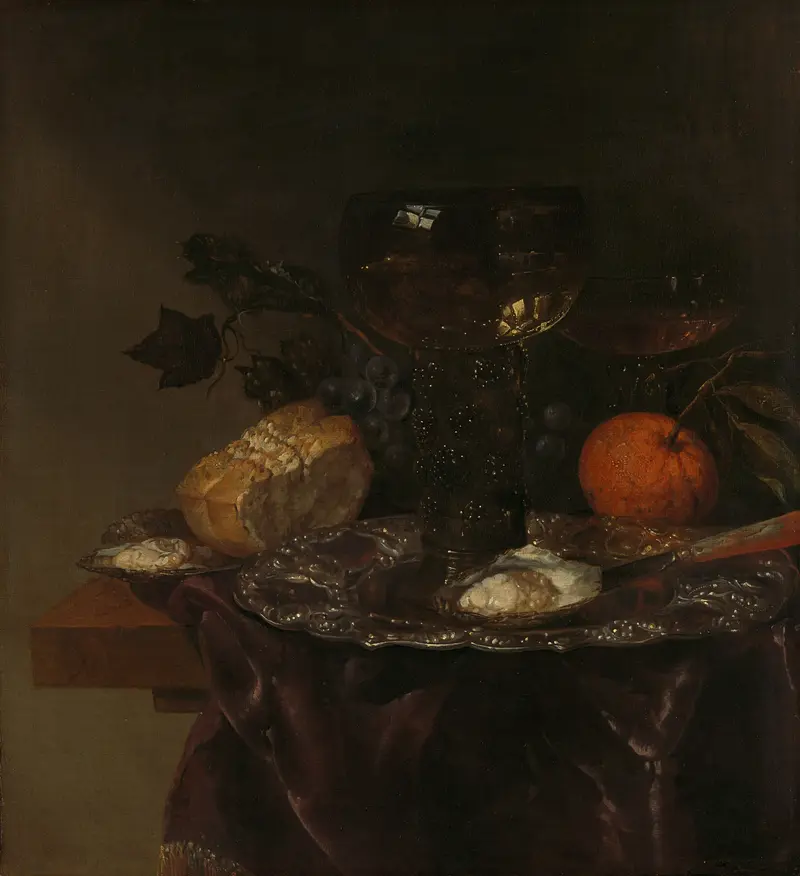
Still Life
Abraham van Beyeren
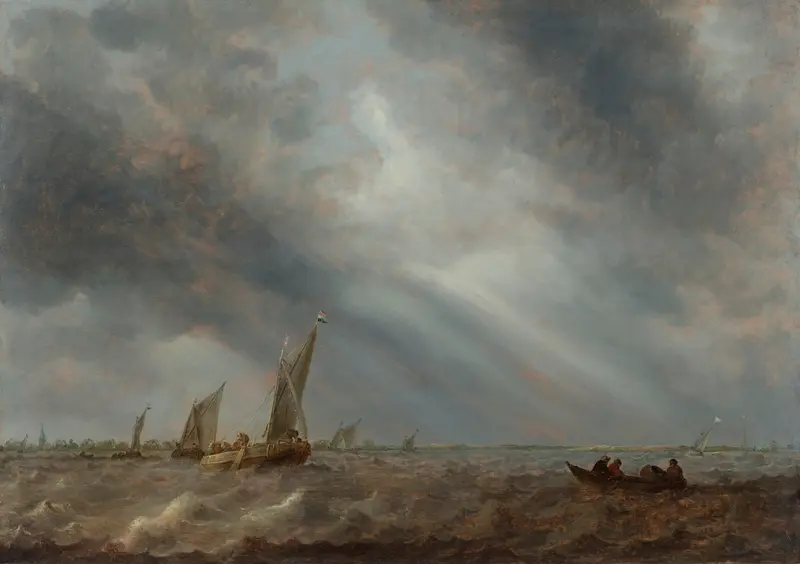
Various sailing vessels and a rowing boat with fishermen on choppy waters under a stormy sky
Abraham van Beyeren
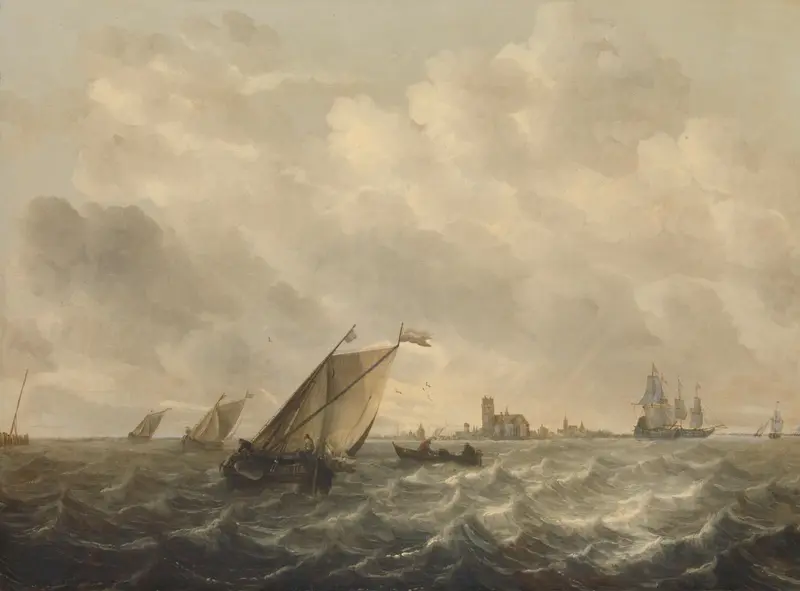
River View
Abraham van Beyeren
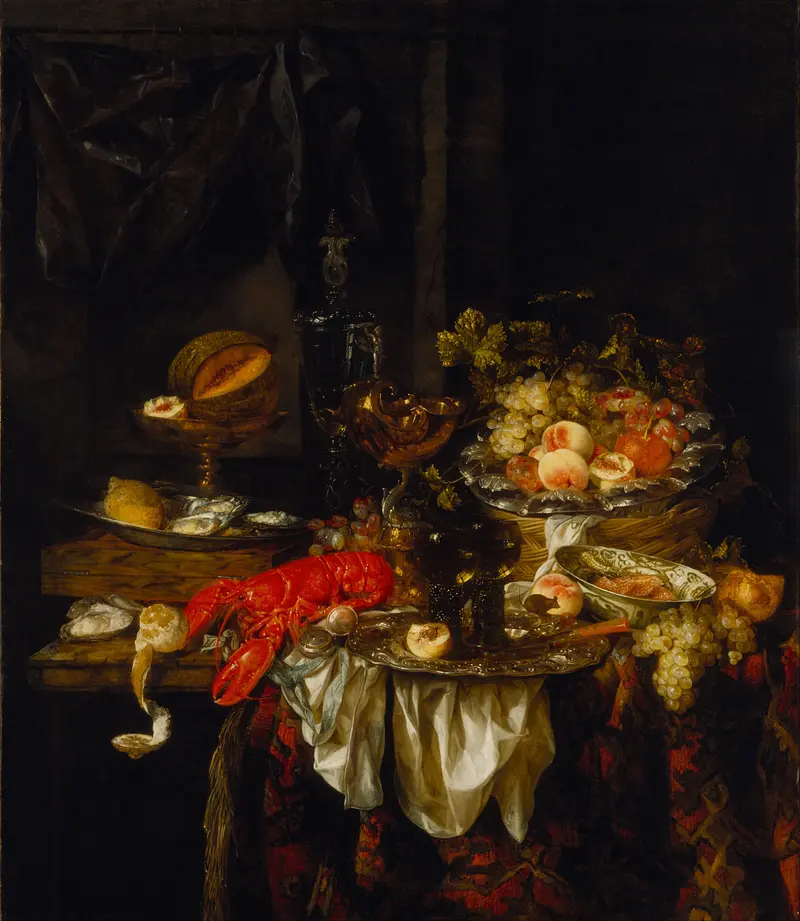
Banquet Still Life
Abraham van Beyeren
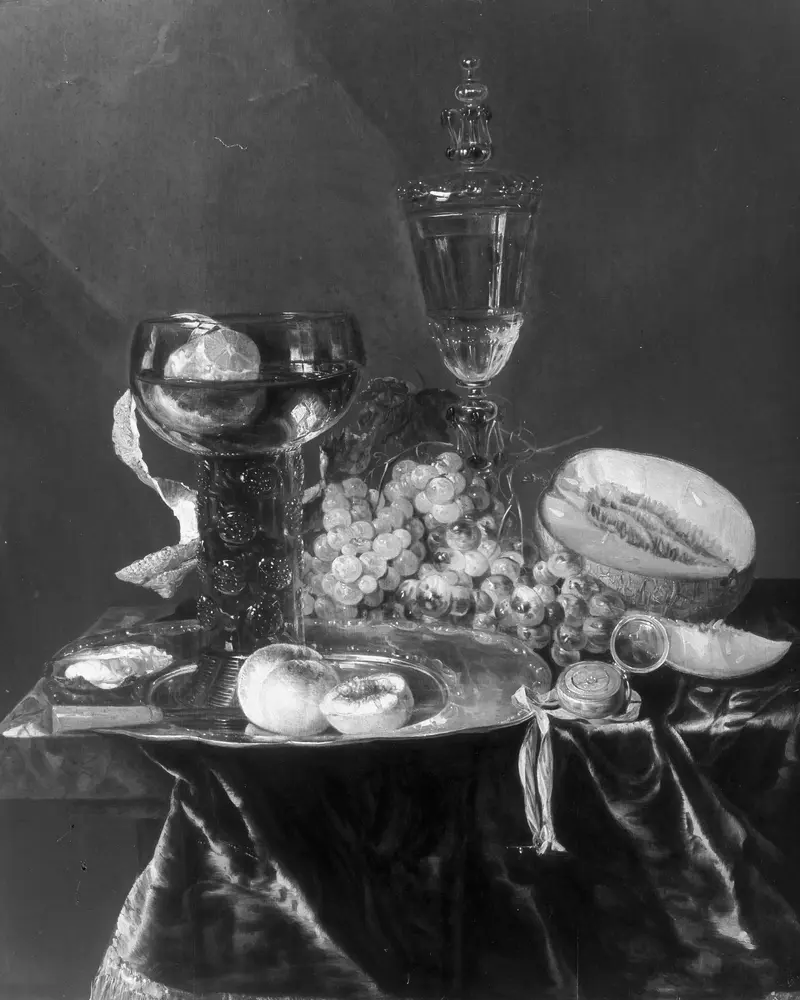
Still life with a glass lid goblet
Abraham van Beyeren
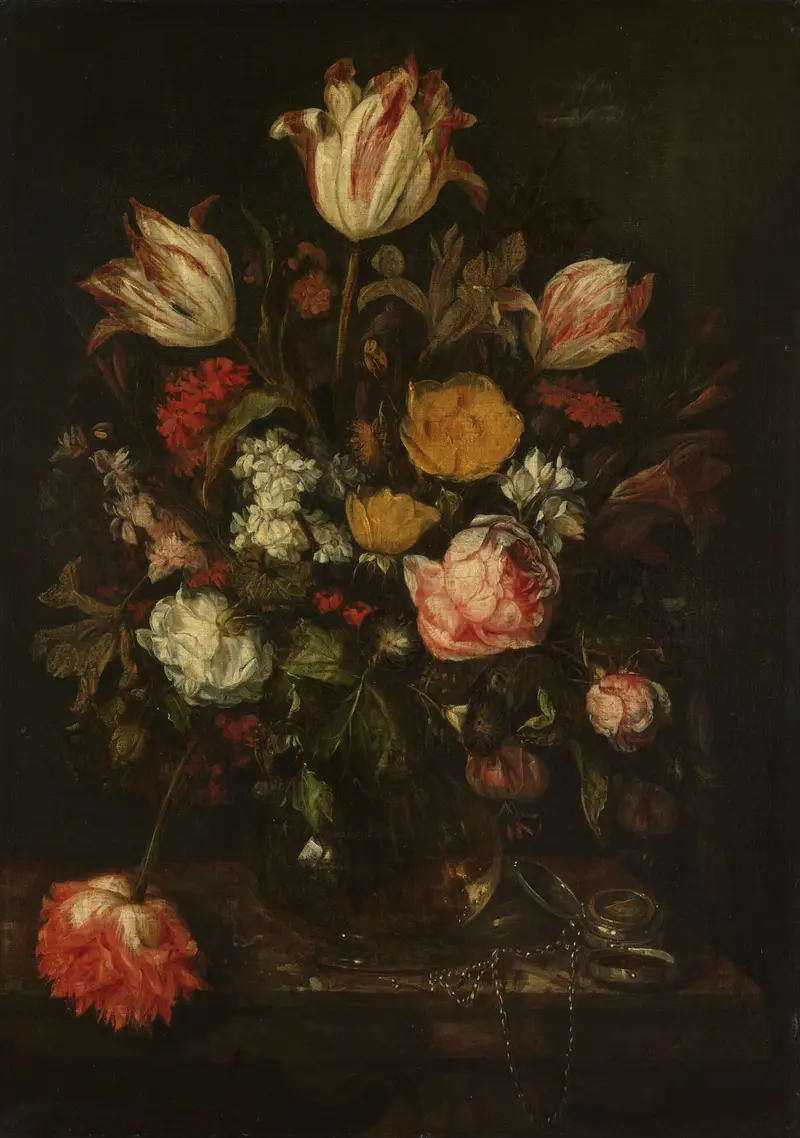
Still life with flowers
Abraham van Beyeren
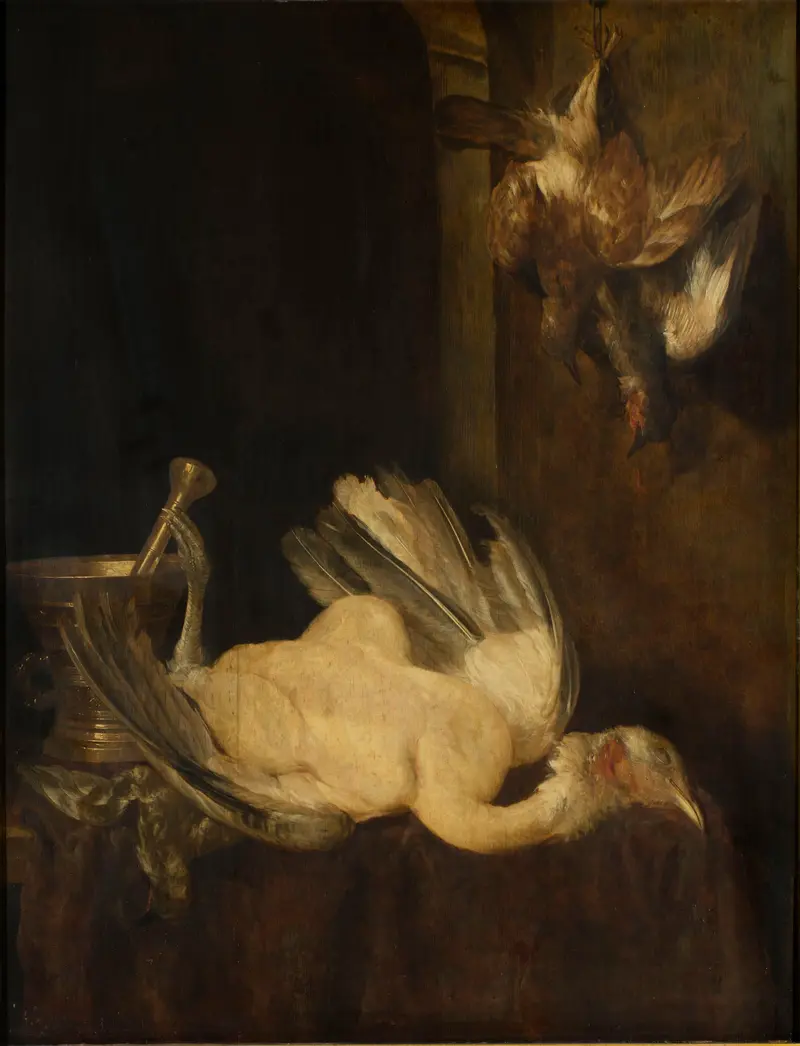
Still life with dead birds
Abraham van Beyeren
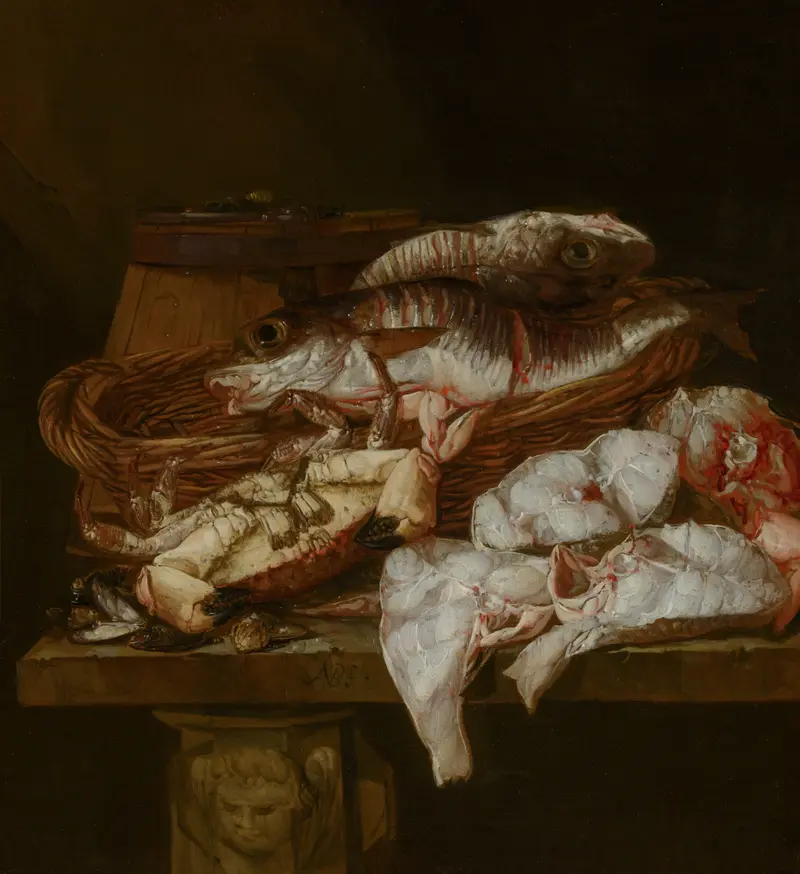
Still Life with Seafood
Abraham van Beyeren
stillife
Abraham van Beyeren





