
Banquet Still Life — History & Facts
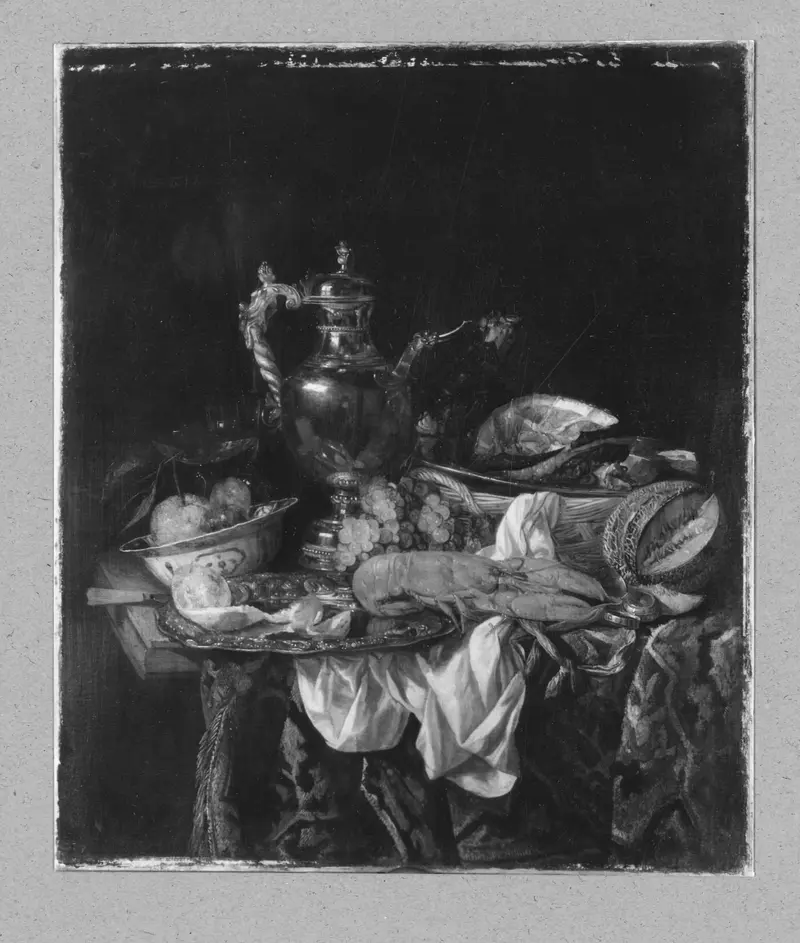
A single curl of lemon peel glows at the edge of the table, its spiral a quiet marvel of painterly illusion. The eye is drawn first to this flourish, then swept across a lavish spread: lobster, peaches, grapes, and silver gleaming in the low light. Each object is rendered with such care that you can almost feel the coolness of the metal and the sticky sweetness of the fruit.
The velvet darkness behind intensifies the drama, while a white napkin tumbles over the table’s edge, its folds catching the light like ripples on water. This is not a scene of quiet domesticity, but a stage set for abundance verging on excess—every surface crowded, every detail calculated to seduce the senses. Painted in 1667, Banquet Still Life belongs to the Dutch Golden Age, when the art of still life reached new heights of technical bravura and symbolic complexity. Such paintings were prized by wealthy merchants eager to display their prosperity and taste, and artists like Abraham van Beyeren specialized in turning the pleasures of the table into meditations on luxury and transience.
The genre’s popularity speaks to a world in flux: trade, science, and global exploration were reshaping daily life and fueling a hunger for both knowledge and display. History has kept few traces of this specific canvas beyond its date and its current home in the digital collection, but the image itself remains a testament to a culture that found meaning—and warning—in the shimmer of a silver platter and the fragile beauty of ripe fruit. Look again at the glint of a half-peeled lemon or the precarious balance of a goblet, and you may sense the quiet tension beneath the feast.
More Artworks by Abraham van Beyeren

Still Life
Abraham van Beyeren
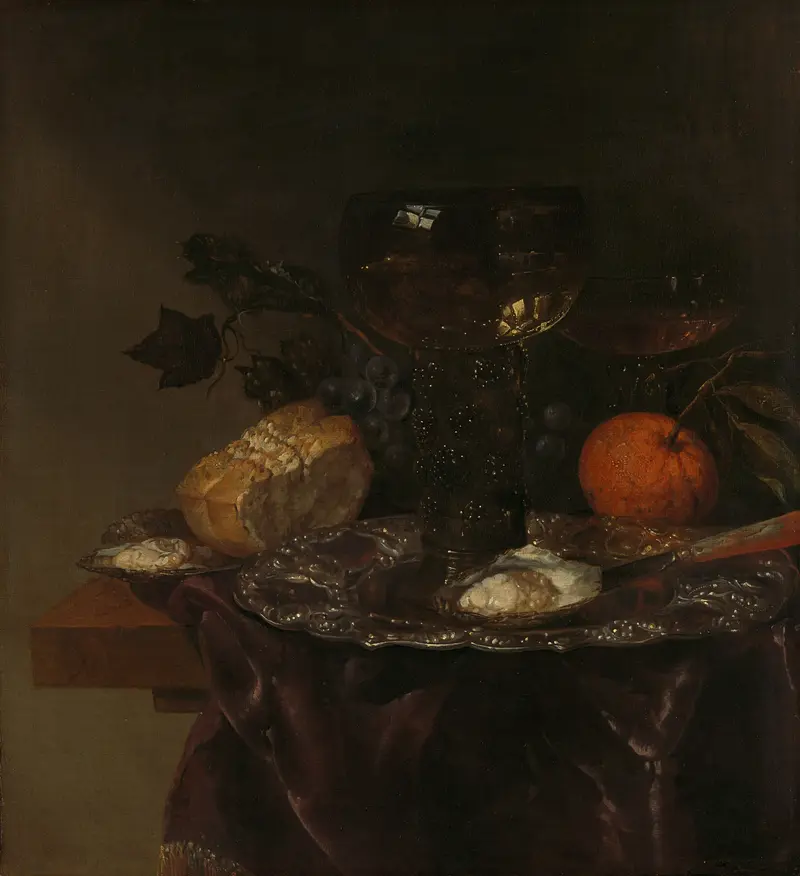
Still Life
Abraham van Beyeren
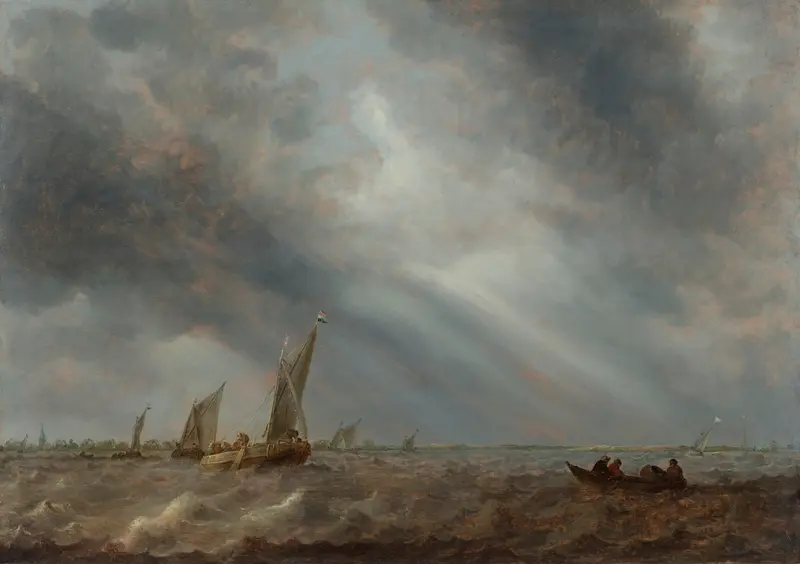
Various sailing vessels and a rowing boat with fishermen on choppy waters under a stormy sky
Abraham van Beyeren
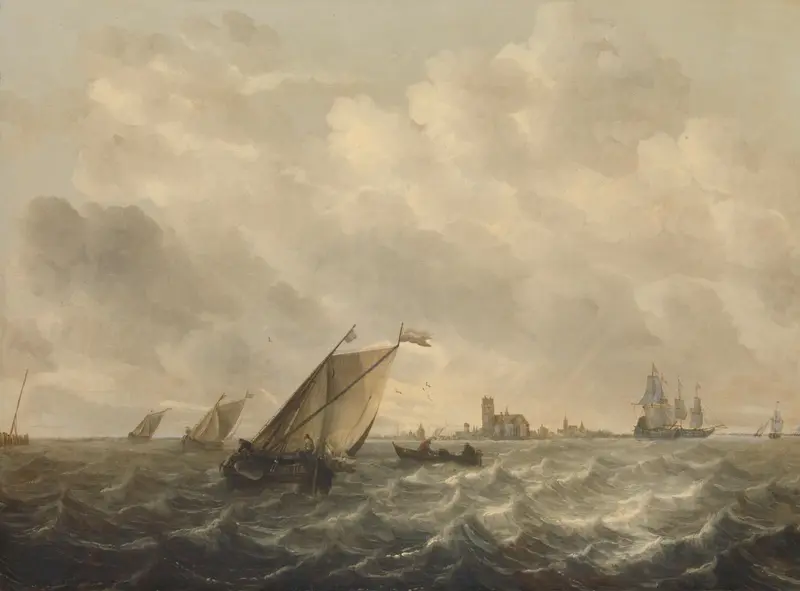
River View
Abraham van Beyeren
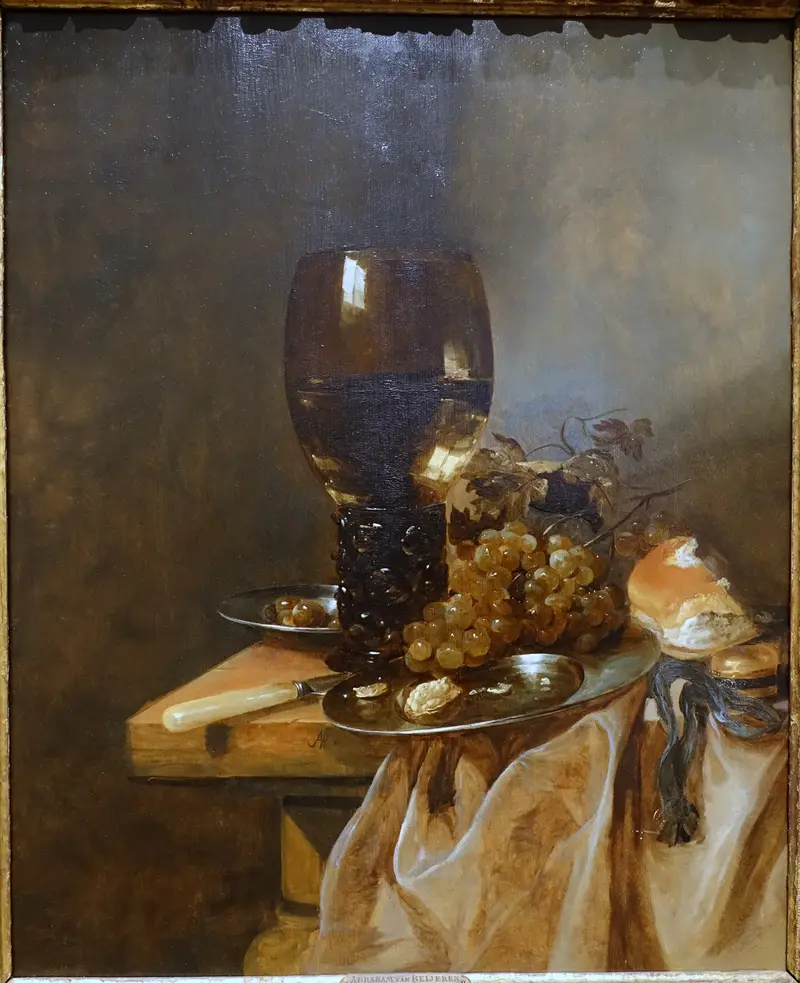
A Roemer with Grapes, a Pewter Plate and a Roll
Abraham van Beyeren
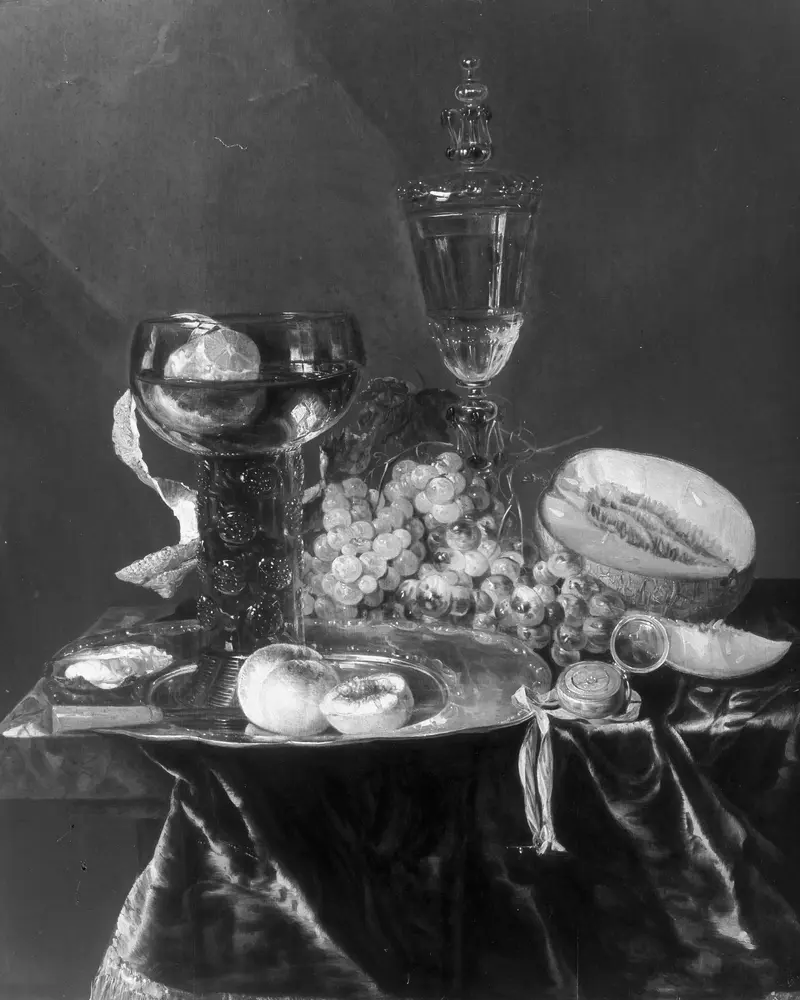
Still life with a glass lid goblet
Abraham van Beyeren
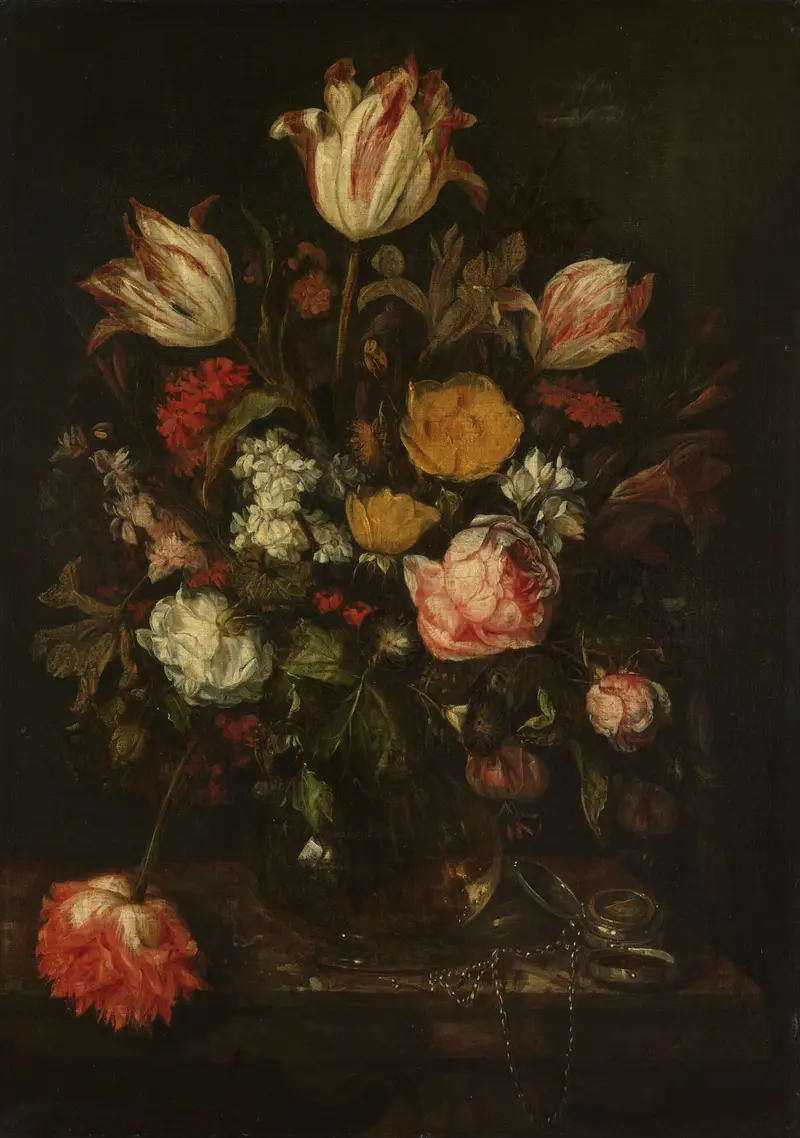
Still life with flowers
Abraham van Beyeren
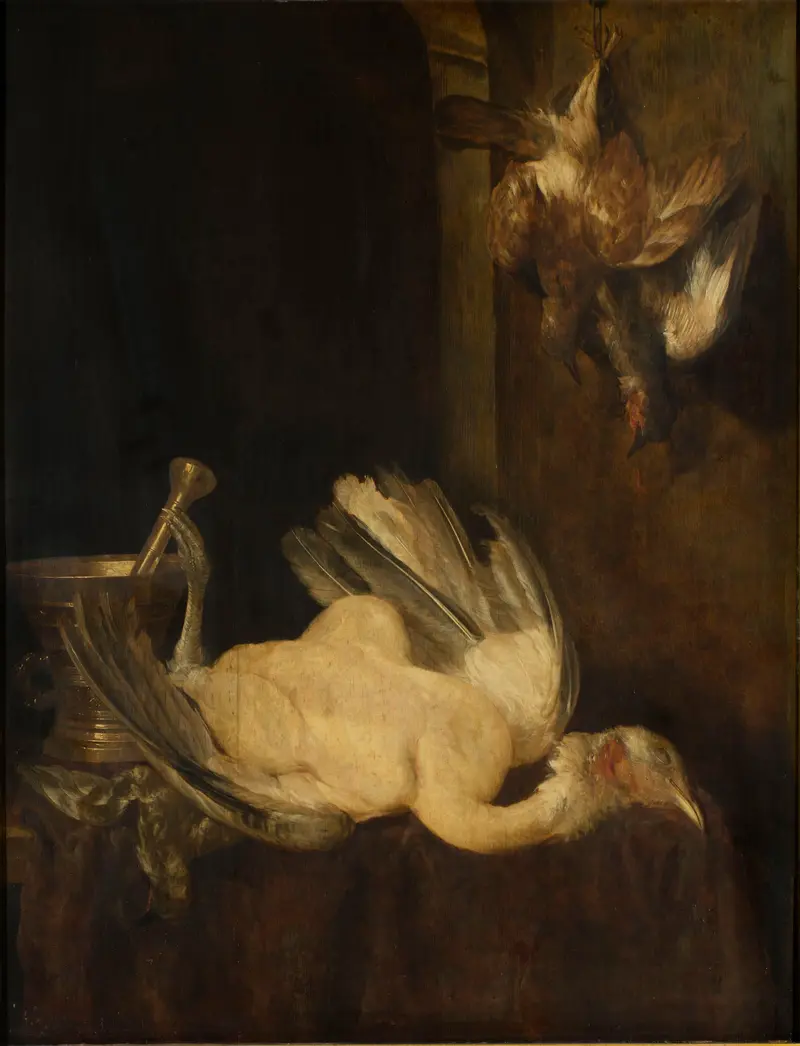
Still life with dead birds
Abraham van Beyeren
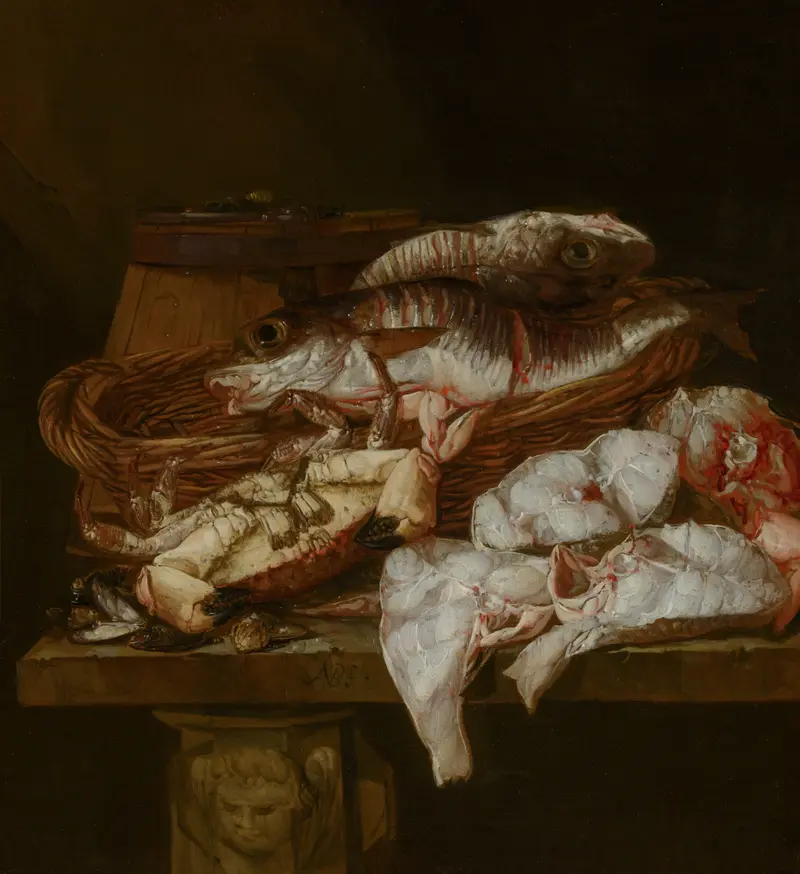
Still Life with Seafood
Abraham van Beyeren
stillife
Abraham van Beyeren





