
Still life with flowers — History & Facts
A heavy tulip leans out of the bouquet, its petals almost brushing the table, as if caught in the act of falling. The eye is drawn first to this flower—its drooping form a silent reminder of time passing—then to the glass vase that anchors the arrangement in the dim light. Each bloom, from the blushing rose to the crisp yellow and white blossoms, is painted with a care that makes their fragility almost palpable.
On the table, a pocket watch lies open, its chain spilling across the wood: a subtle but unmistakable signal that this beauty is fleeting, and that every moment is counted. The darkness behind the bouquet presses the flowers forward, their colors glowing all the more for the shadows that surround them. Works like this one, painted by Abraham van Beyeren between 1650 and 1670, belong to a world where still lifes were more than decoration—they were meditations on wealth, mortality, and the senses. In the Dutch Republic, such paintings graced the homes of prosperous merchants and burghers who delighted in both the painter’s technical skill and the coded messages these objects carried.
The inclusion of a watch is no accident: in the age of tulip mania and global trade, time and fortune could vanish as quickly as a petal falls. Today, this piece is held in the Rijksmuseum, a quiet witness to a time when everyday objects were painted with the gravity of a moral lesson. Let your gaze linger on the watch and the wilting flower, and consider what the artist asks us to remember.
More Artworks by Abraham van Beyeren

Still Life
Abraham van Beyeren
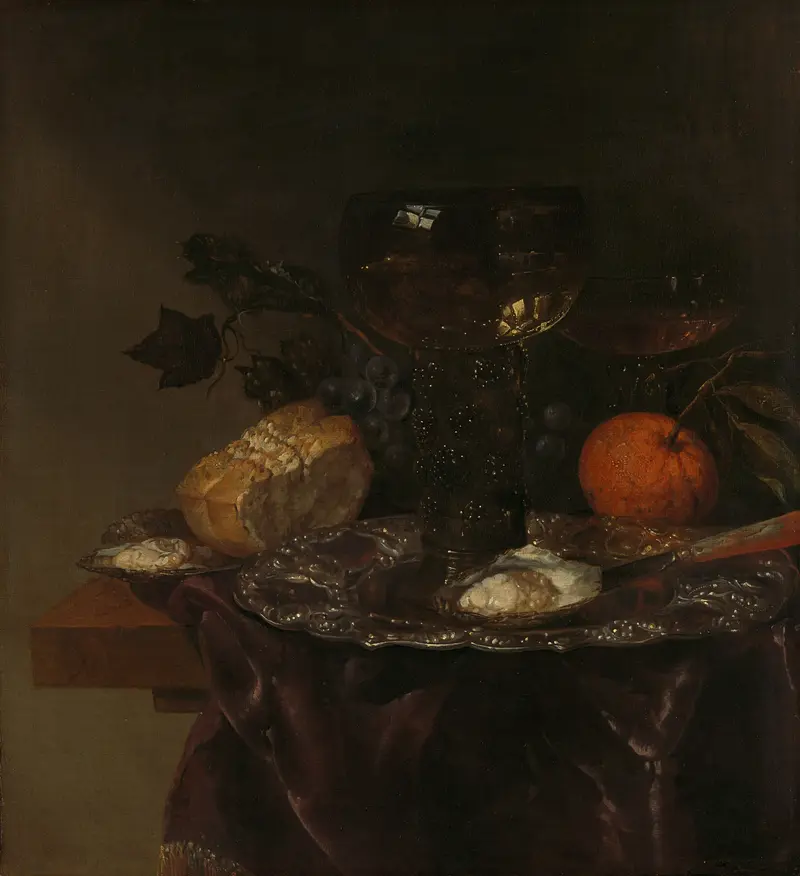
Still Life
Abraham van Beyeren
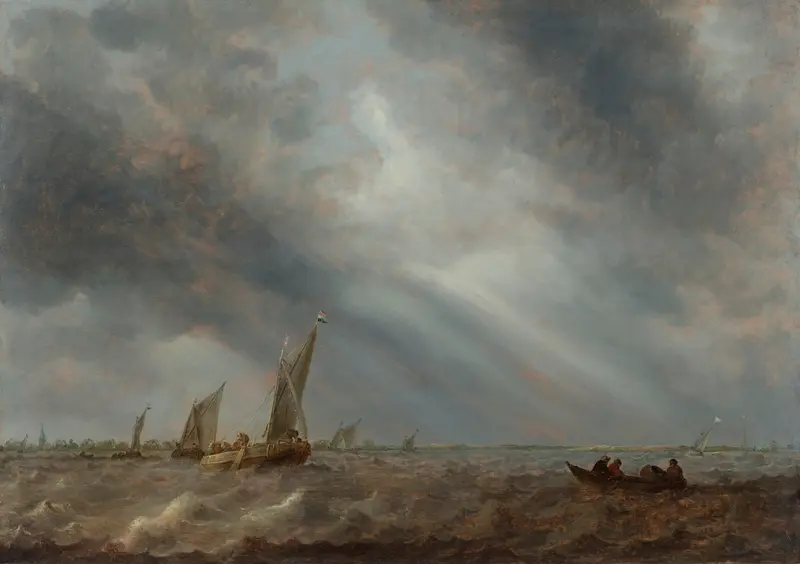
Various sailing vessels and a rowing boat with fishermen on choppy waters under a stormy sky
Abraham van Beyeren
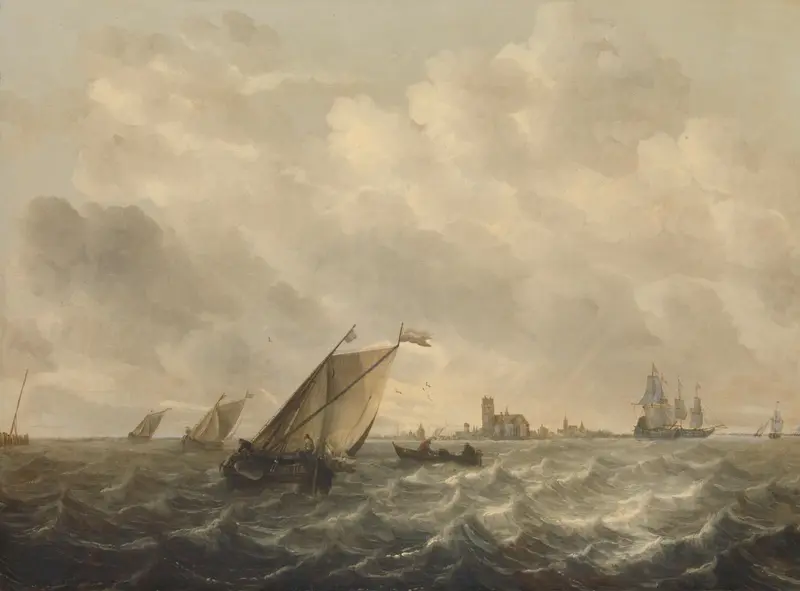
River View
Abraham van Beyeren
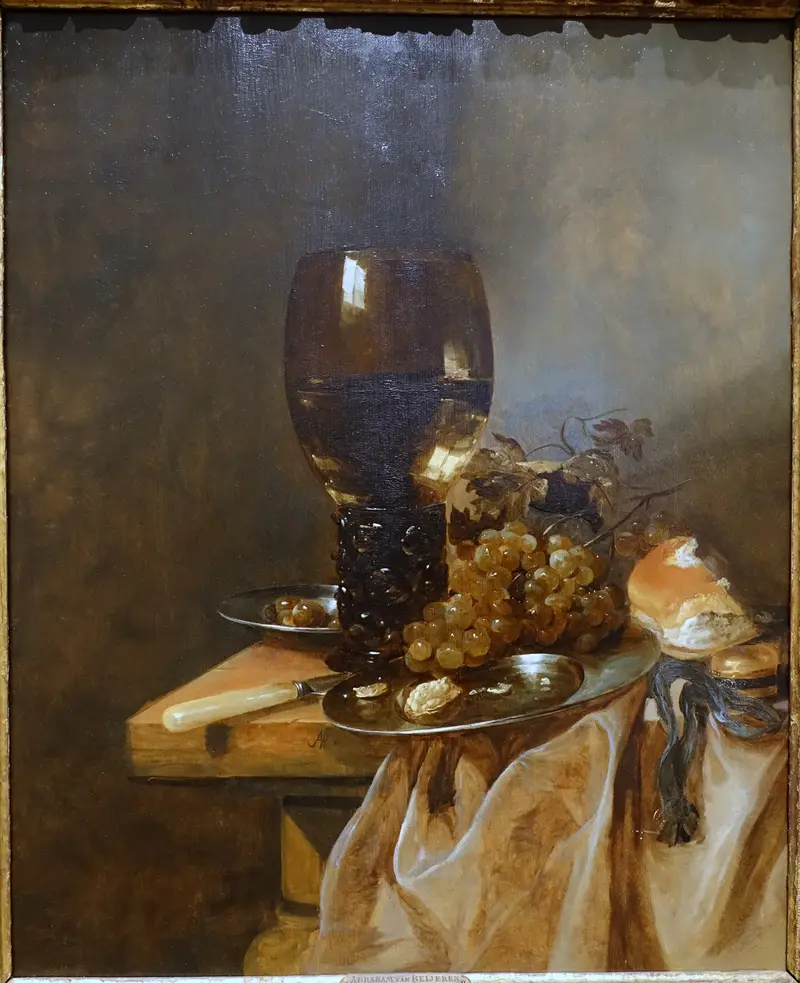
A Roemer with Grapes, a Pewter Plate and a Roll
Abraham van Beyeren
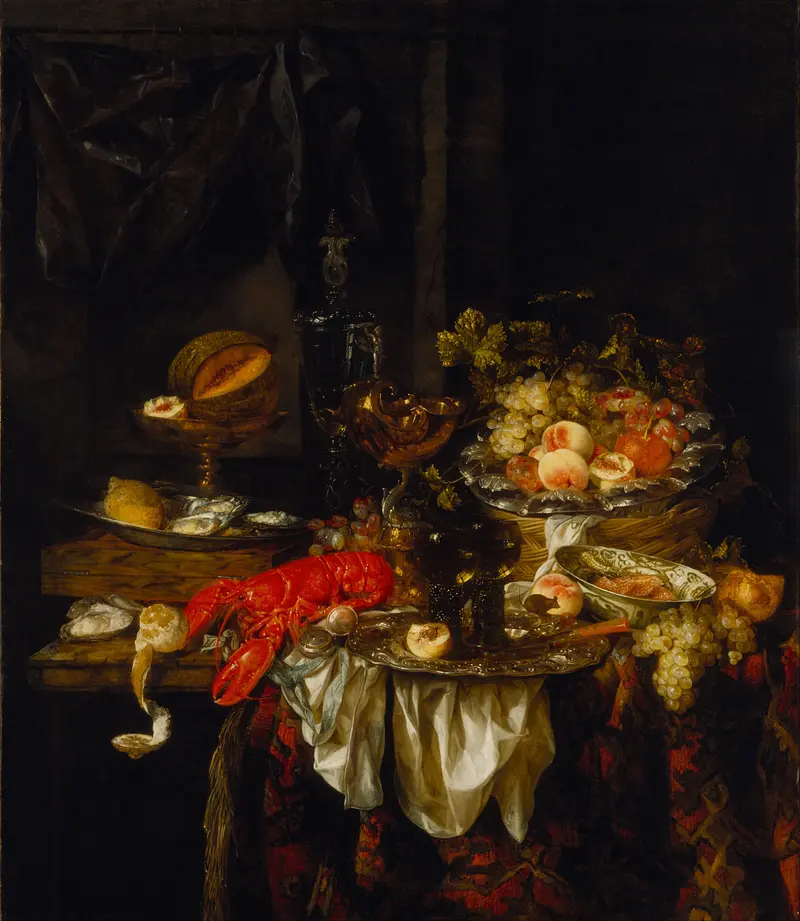
Banquet Still Life
Abraham van Beyeren
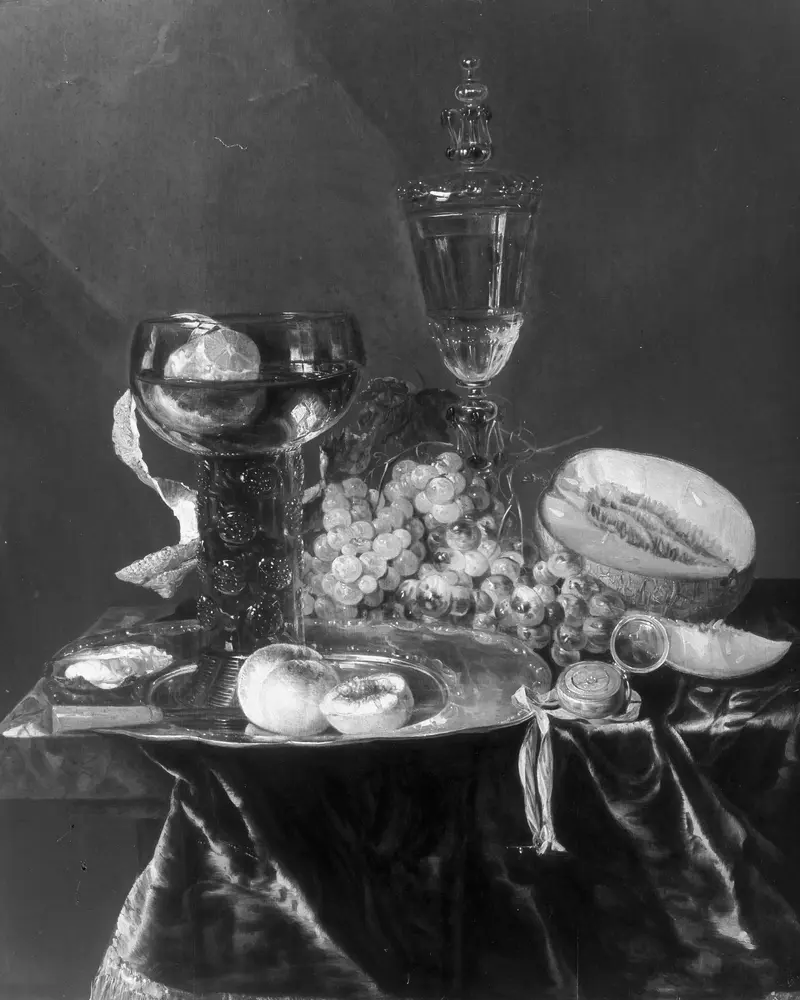
Still life with a glass lid goblet
Abraham van Beyeren
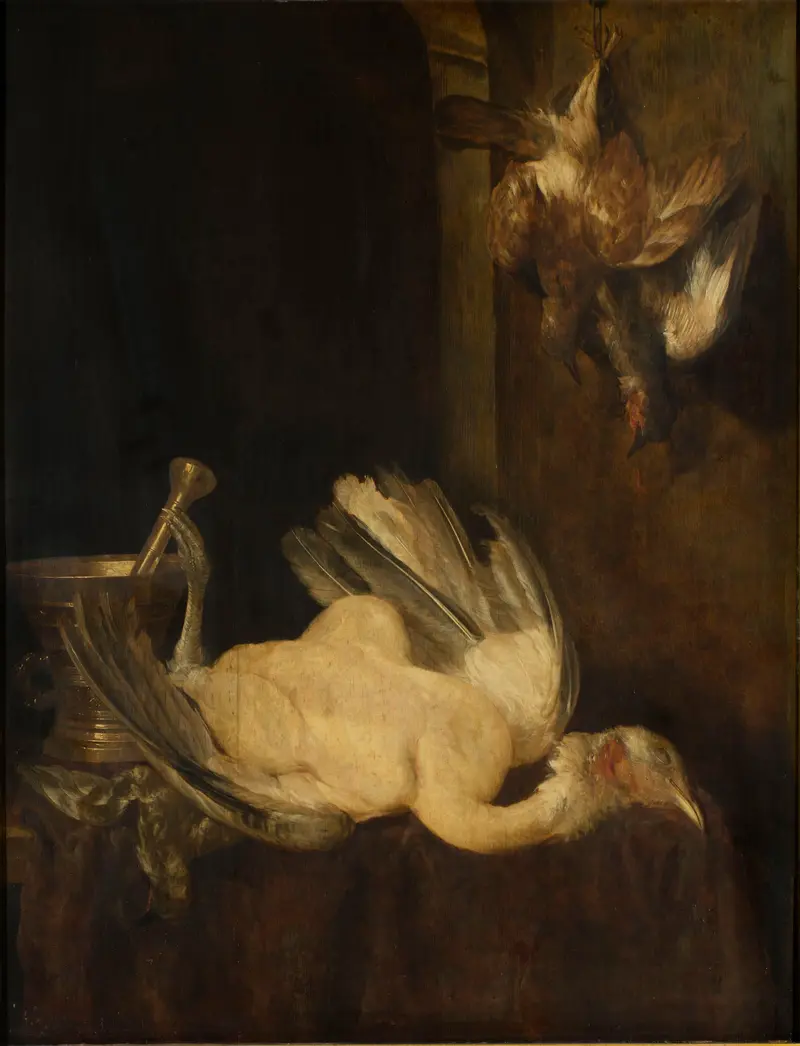
Still life with dead birds
Abraham van Beyeren
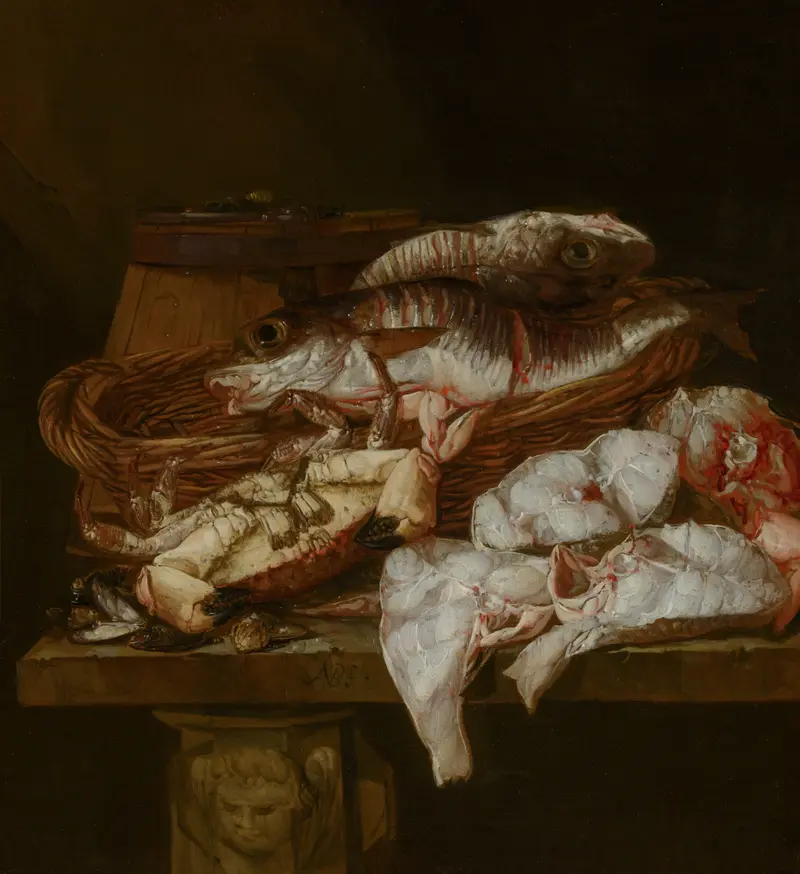
Still Life with Seafood
Abraham van Beyeren
stillife
Abraham van Beyeren





