
The Signal — History & Facts
What first catches the eye in The Signal is the poised expectancy of the figure, her gaze fixed on the horizon as if she alone knows what is about to arrive. The artist, John William Godward, has chosen a moment of anticipation rather than arrival, inviting us to share in the suspense. The woman’s raised arm shields her eyes from the Mediterranean sun, but also transforms her into a silent sentinel—her gesture is both practical and symbolic, a signal in itself.
The marble balustrade beneath her, rendered with cool precision, contrasts with the warmth of her red drapery, which glows against the pale sky. Every fold of her garment and every shadow on the stone is a deliberate invitation to linger, to wonder what she waits for. Painted in 1899, this work belongs to a world fascinated by the imagined elegance of antiquity. In the late Victorian era, artists like Godward specialized in scenes set in a dreamy, idealized ancient past, catering to collectors who longed for beauty and escape from the industrial present.
These paintings, often commissioned for private homes, were meant to conjure not history but a mood—a tranquil, ordered paradise where time stands still. Now in the J. Paul Getty Museum, The Signal stands as a testament to this genre’s enduring allure.
The figure’s silent watchfulness offers no answers, only the pleasure of looking—and looking again.
More Artworks by John William Godward

Eighty and eighteen
John William Godward
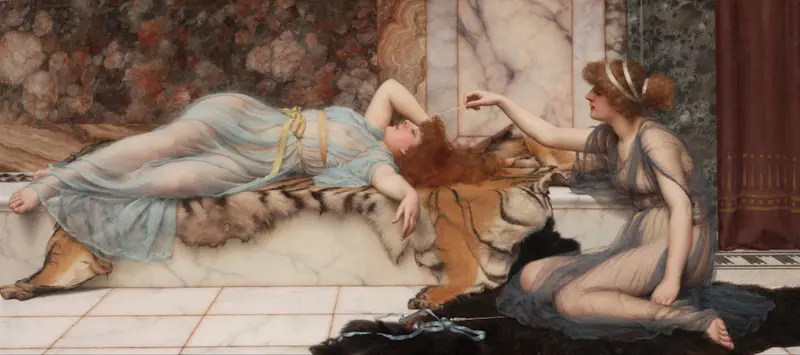
Mischief and Repose
John William Godward
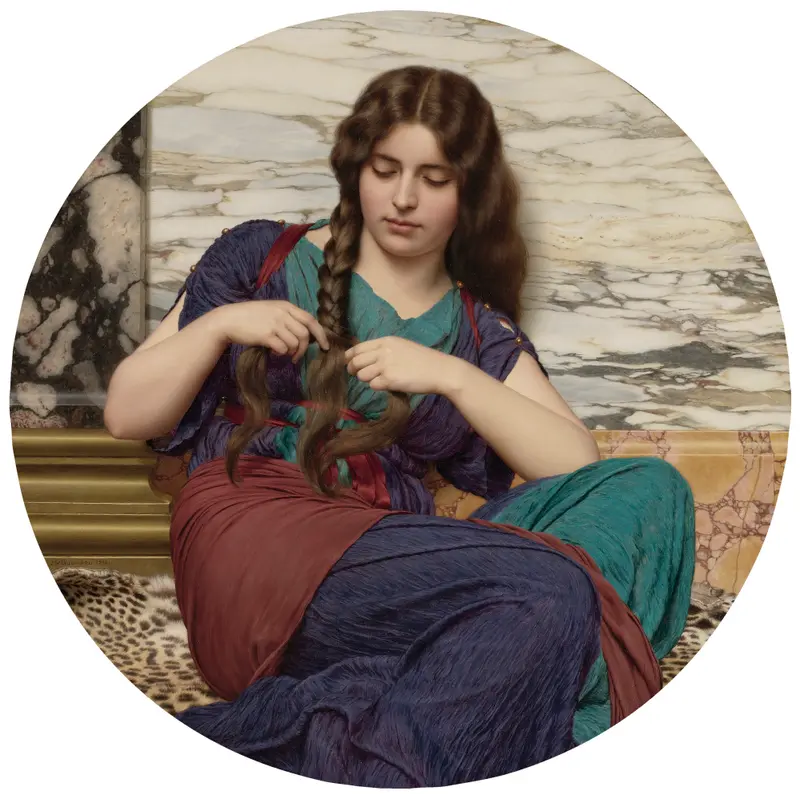
A Congenial Task
John William Godward
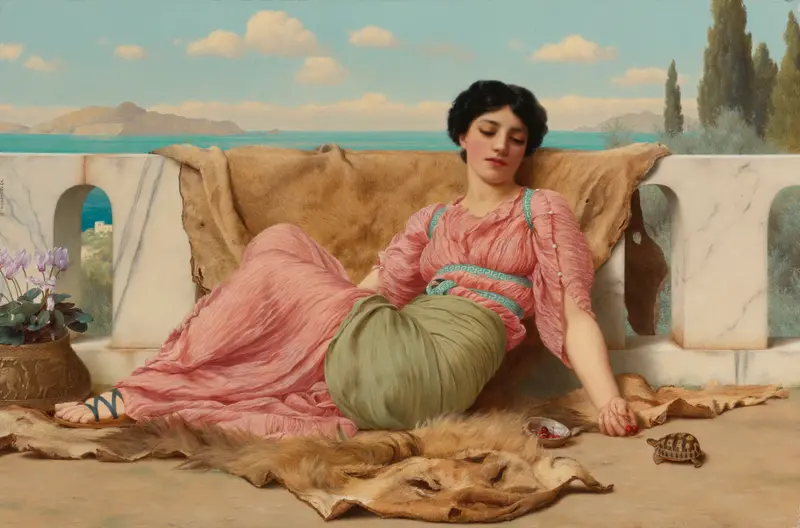
The Quiet Pet
John William Godward
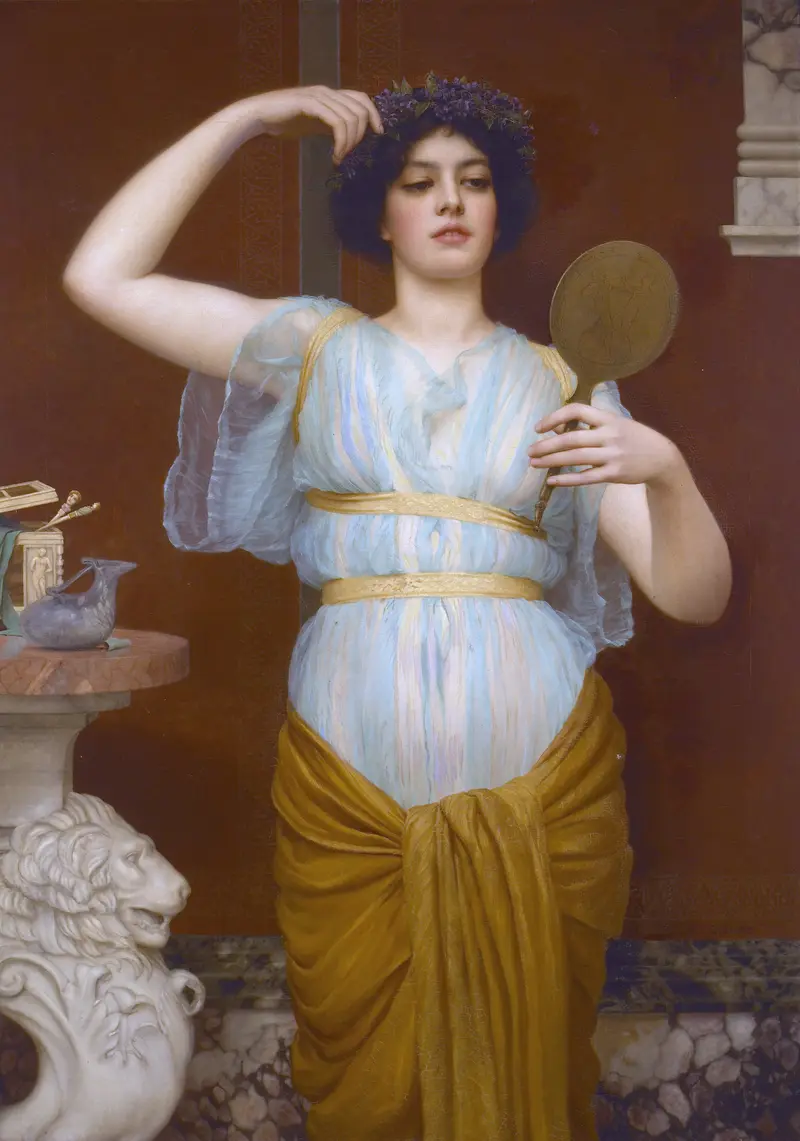
Ione
John William Godward
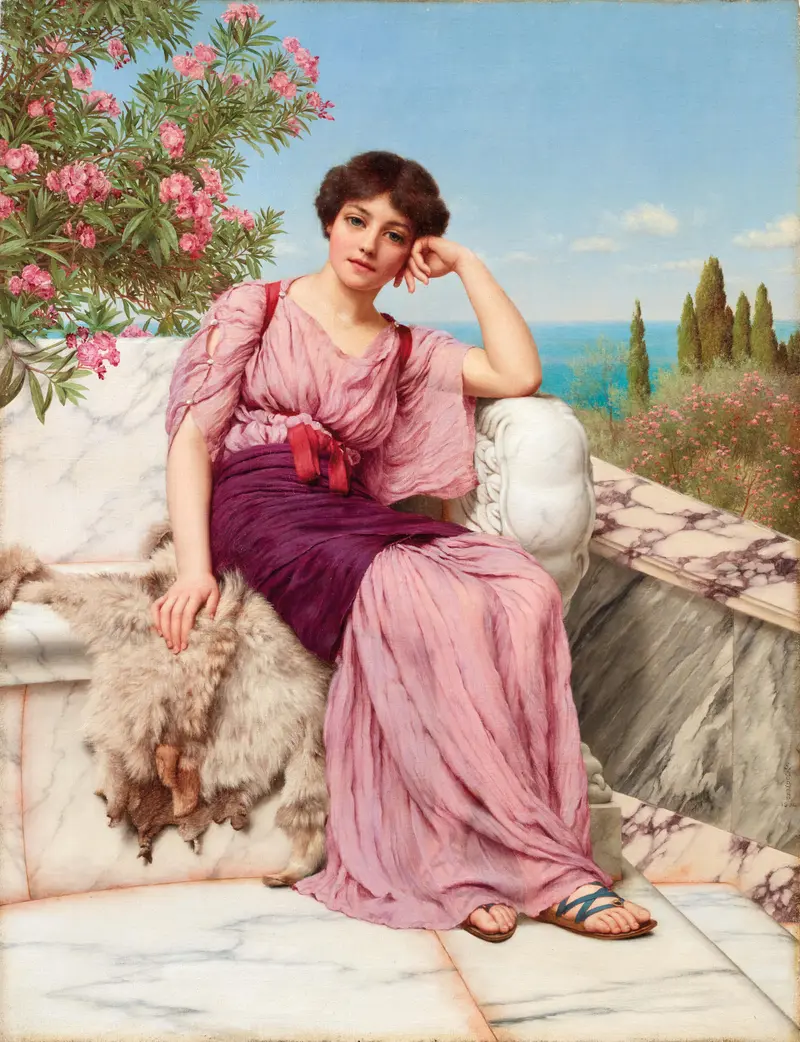
Sweet Dreams
John William Godward
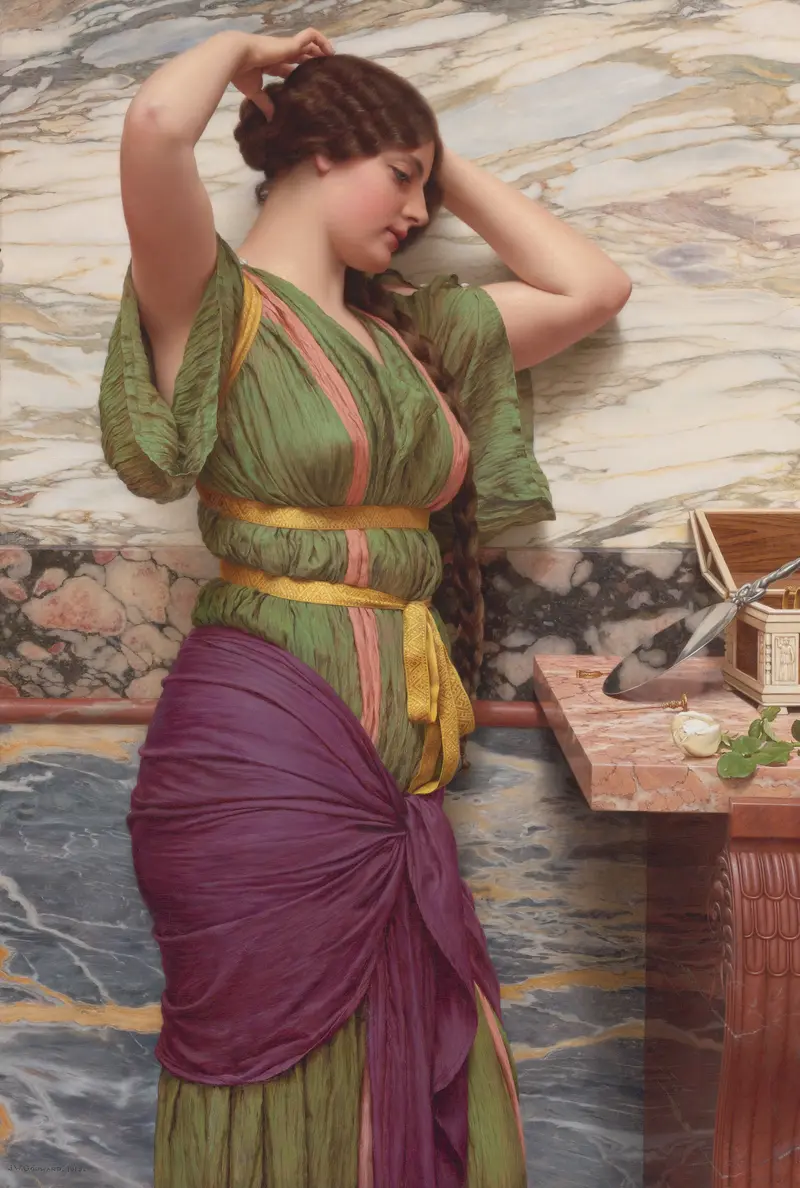
A Fair Reflection
John William Godward
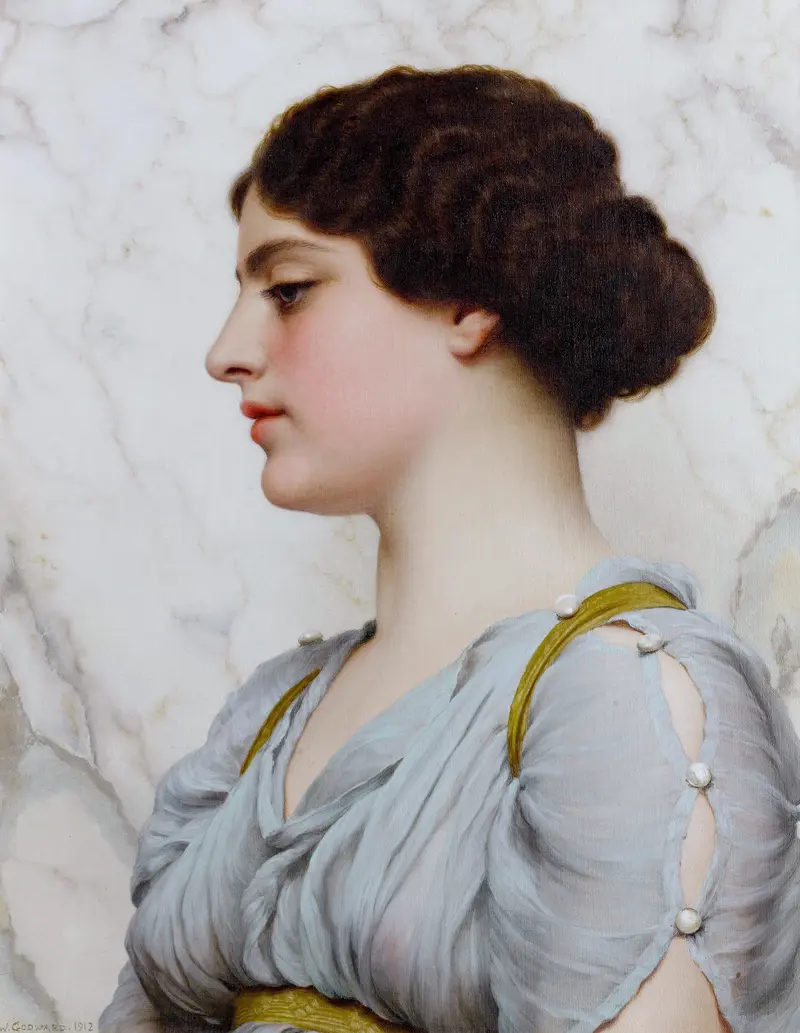
A Roman Beauty
John William Godward
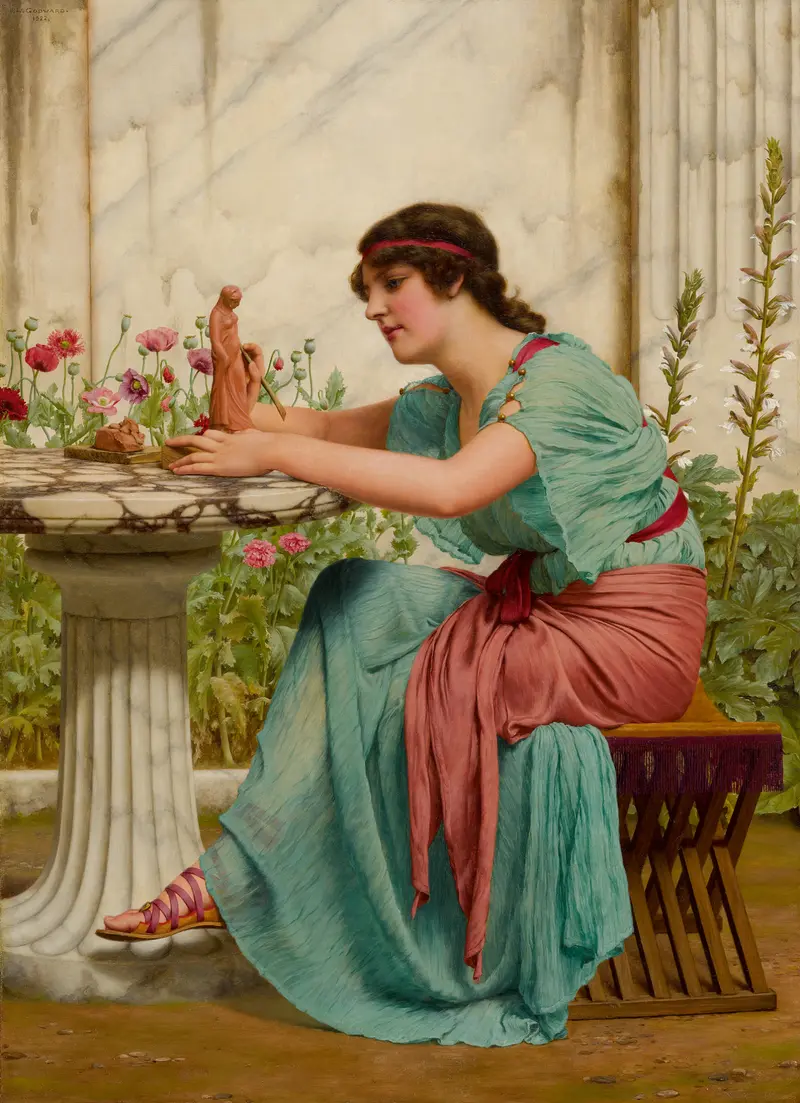
A Dilettante
John William Godward
Reverie
John William Godward



