
A Salutation — History & Facts
In the gentle embrace of twilight, where shadows linger and whispers dance, a moment suspended in time unfolds, inviting us to witness a quiet farewell. Look closely at the soft illumination emanating from the gaslight, casting a warm glow on the cobblestone path. The figures stand poised, their gestures suggesting a fleeting interaction; one leans slightly, while the other appears to listen intently, embodying the tenderness of a shared moment. The ethereal blues and rich browns of the background enhance the intimacy of their connection, guiding your gaze through the delicate interplay of light and shadow that Grimshaw masterfully orchestrates. Beneath the surface, this painting captures an emotional duality—the juxtaposition of movement against the stillness of night.
The figures convey a sense of urgency, as if caught in a moment of parting that speaks of unspoken promises. This tension invites viewers to ponder what lies beyond the canvas—a journey hinted at but never fully revealed, encapsulating the transient nature of relationships. The flickering light represents the impermanence of time, as it gently highlights the ephemeral beauty of human connection. In 1881, Grimshaw was deeply rooted in the artistic community of England, embracing the Pre-Raphaelite ideals while innovating with his own nocturnal landscapes.
During this period, industrial advances began to change the rhythm of life, yet his work retained a romantic nostalgia for the past. As he created this piece, he was both a product of and a commentary on a rapidly evolving society, capturing the delicate balance between progress and memory.
More Artworks by John Atkinson Grimshaw
Browse all →
Under the Silvery Moonbeams
John Atkinson Grimshaw
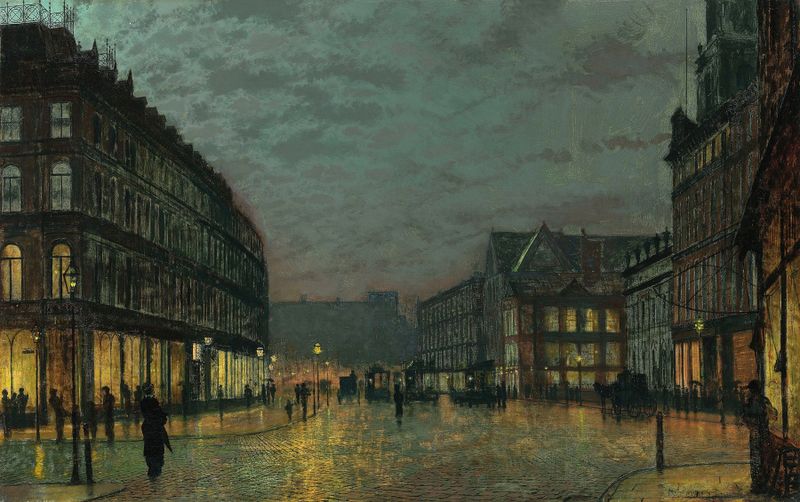
Boar Lane, Leeds by lamplight
John Atkinson Grimshaw
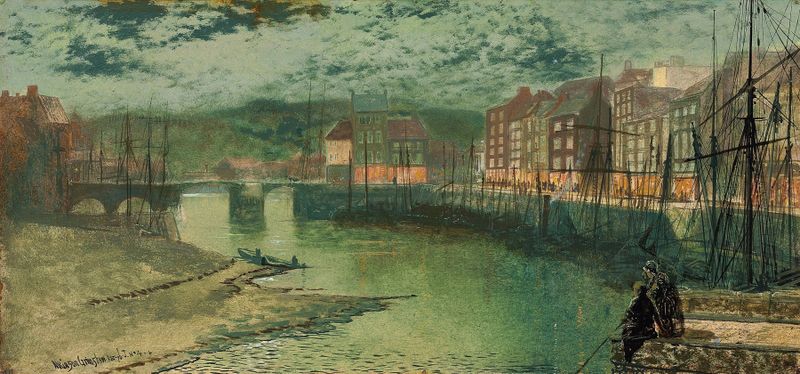
Whitby docks
John Atkinson Grimshaw

Old Chelsea
John Atkinson Grimshaw

Late October
John Atkinson Grimshaw
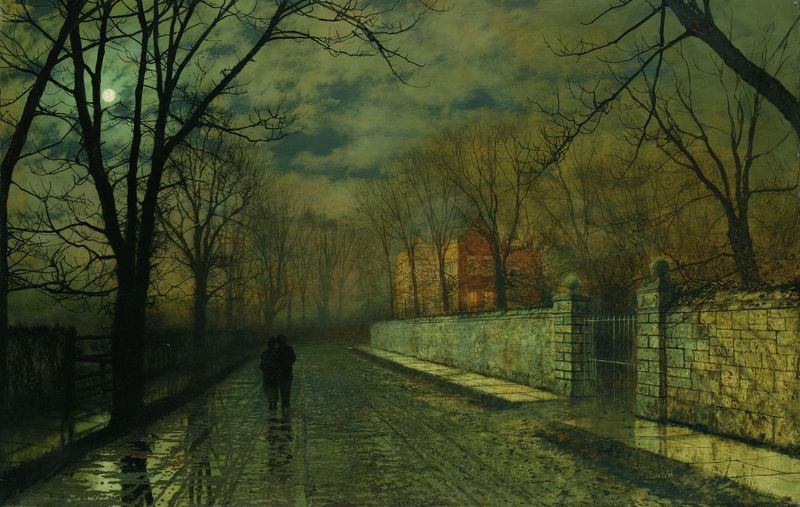
Figures In A Moonlit Lane After Rain
John Atkinson Grimshaw

Liverpool Lights
John Atkinson Grimshaw
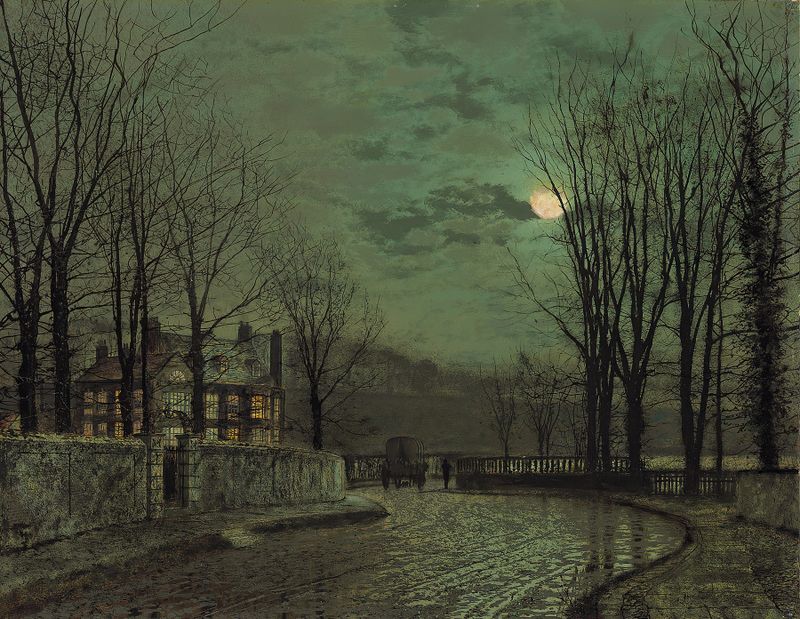
November Moonlight
John Atkinson Grimshaw
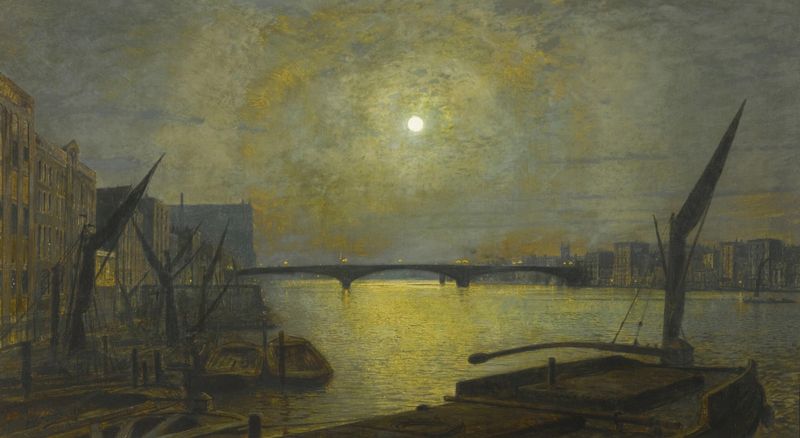
Southwark Bridge from Blackfriars by Moonlight
John Atkinson Grimshaw

Whitby From Scotch Head, Moonlight On The Esk
John Atkinson Grimshaw





