
A Summer Day — History & Facts
When did color learn to lie? In the hands of a master like Twachtman, it weaves an enchanting narrative, one that speaks of time slipping through our fingers like grains of sand. Here, the essence of a summer day is captured not merely in vibrant hues, but in the very mood of the moment, inviting reflection on how fleeting beauty can often disguise the passage of time. Look to the soft blend of greens and blues that dominate the canvas, where the colors dance together in effortless harmony. Notice how the light falls upon the moments caught in this idyllic scene, giving way to a luminosity that feels almost ethereal.
The brushwork is fluid, evoking the gentle sway of grasses and the warmth of sunlight, each stroke a testament to the artist's desire to immortalize a single, perfect day. Yet beneath this serene surface lies a poignant tension. The juxtaposition of vibrant summer scenes against the inevitable march of seasons reminds the viewer of life's transience. The delicate interplay of light and shadow hints at moments lost to time, while the understated figures in the distance seem to bask in an awareness of their own fleeting joy.
This subtle duality invites us to contemplate the passage of time itself, even as we revel in the beauty of the now. In 1900, while residing in the picturesque landscapes of Connecticut, Twachtman created this work amidst the burgeoning American Impressionist movement, which sought to convey visual impressions of a moment. As he engaged with the natural world, he was influenced by both European techniques and a distinct American sensibility, reflecting the era’s complex relationship with nature and the changing dynamics of art.
More Artworks by John Henry Twachtman
Browse all →
Hemlock Pool
John Henry Twachtman

Waterfall
John Henry Twachtman
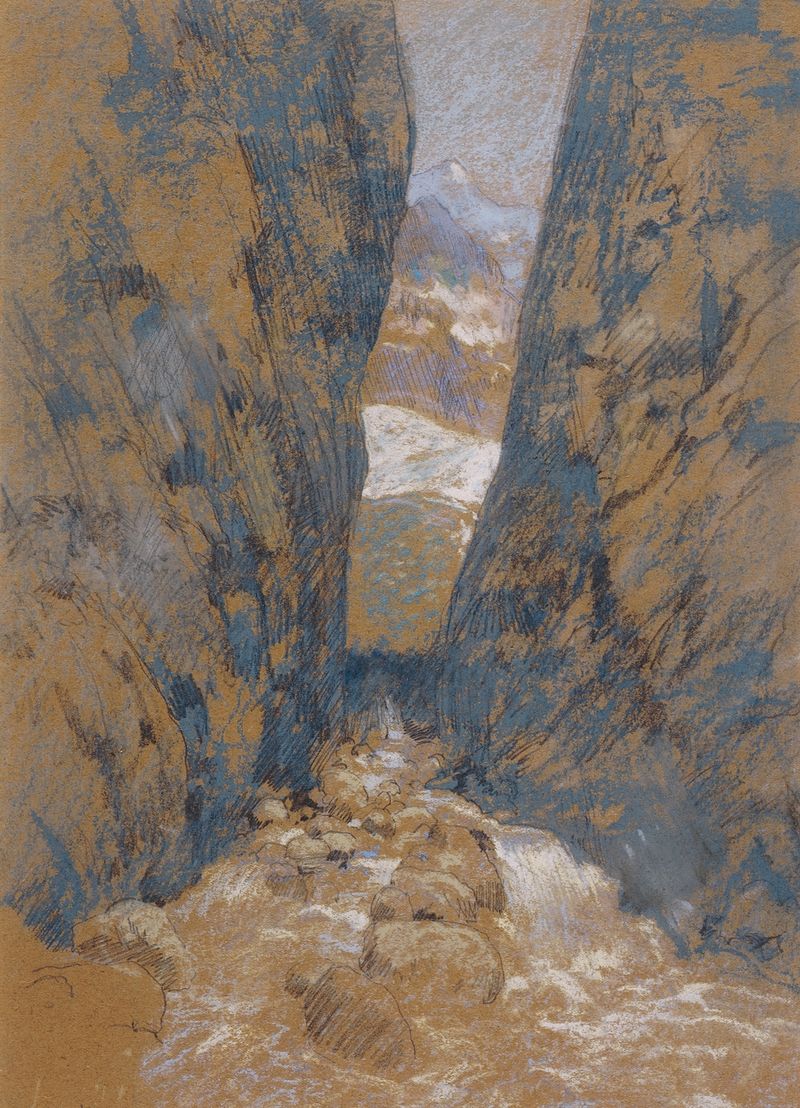
A Mountain Gorge
John Henry Twachtman

The White Bridge
John Henry Twachtman

Snow
John Henry Twachtman

Icebound
John Henry Twachtman
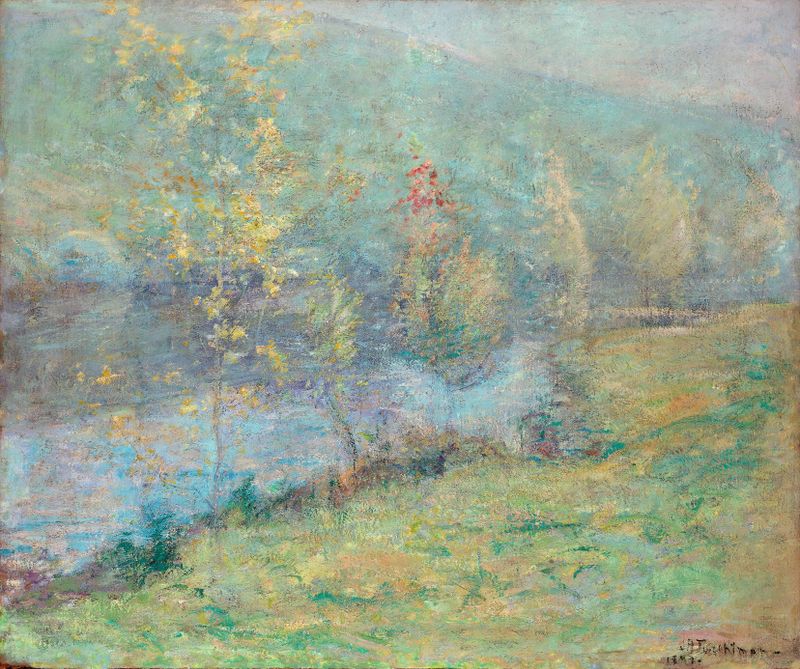
Misty May Morn
John Henry Twachtman
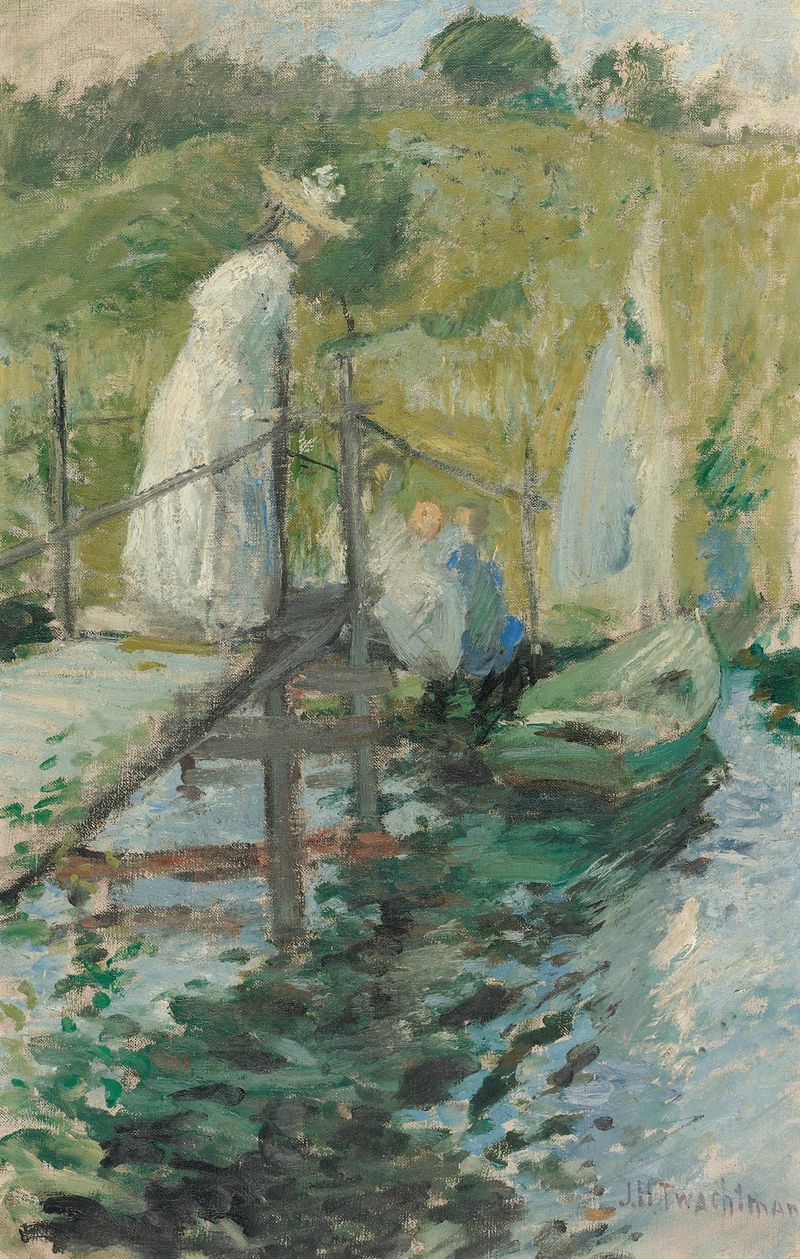
Summer Afternoon
John Henry Twachtman
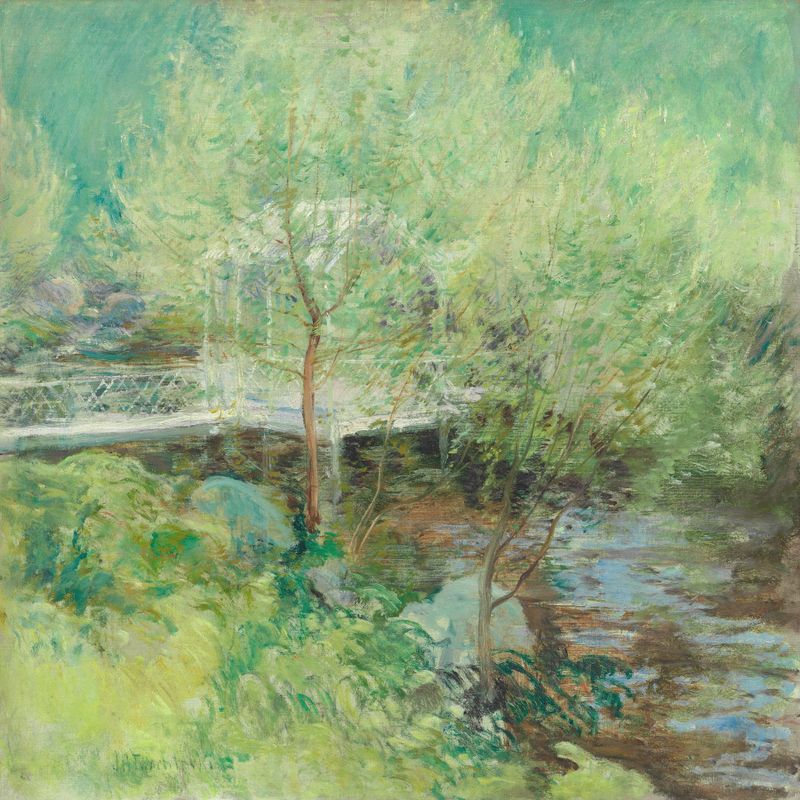
The White Bridge
John Henry Twachtman

Niagara Falls
John Henry Twachtman





