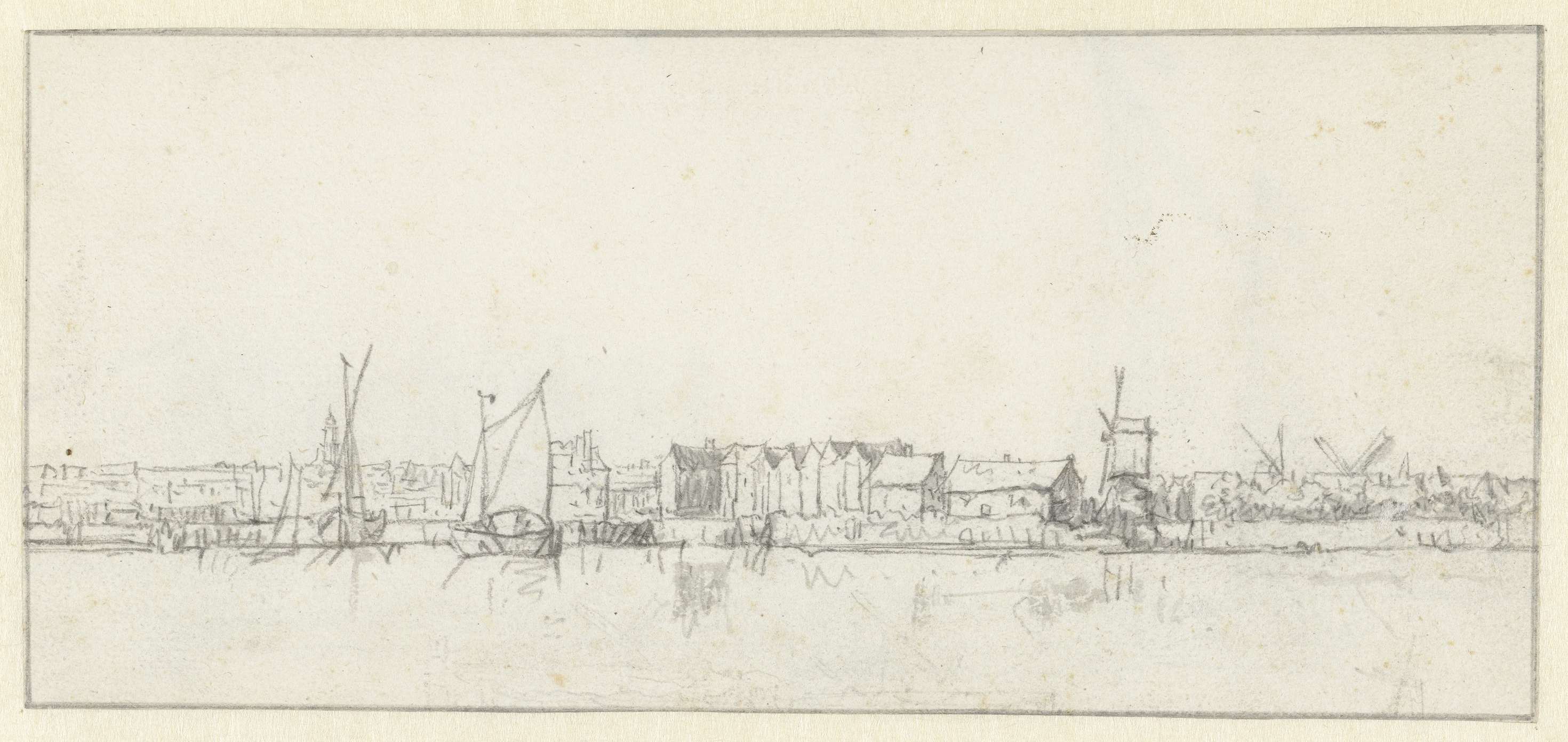
A View of Vianen with a Herdsman and Cattle by a River — History & Analysis
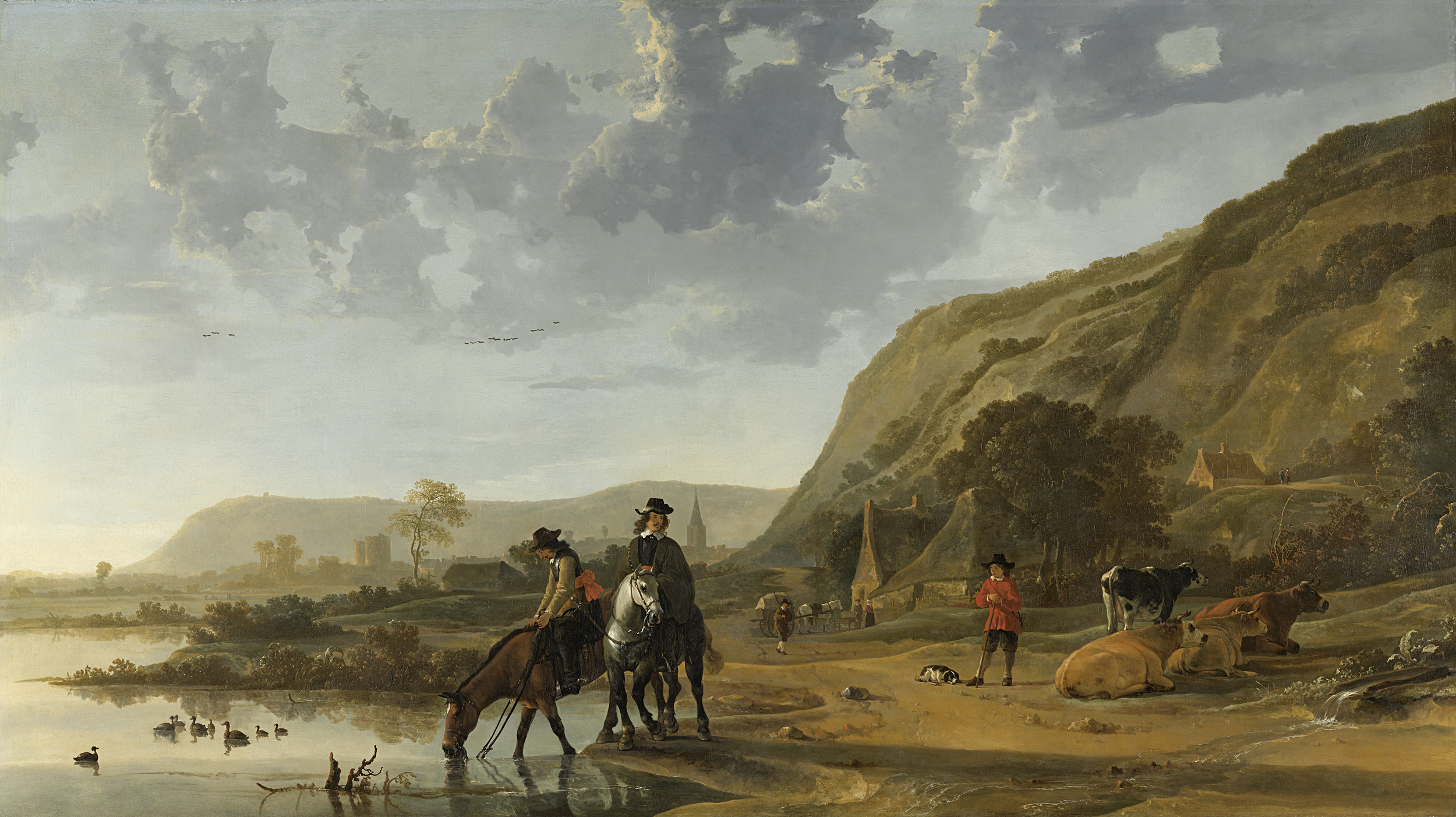
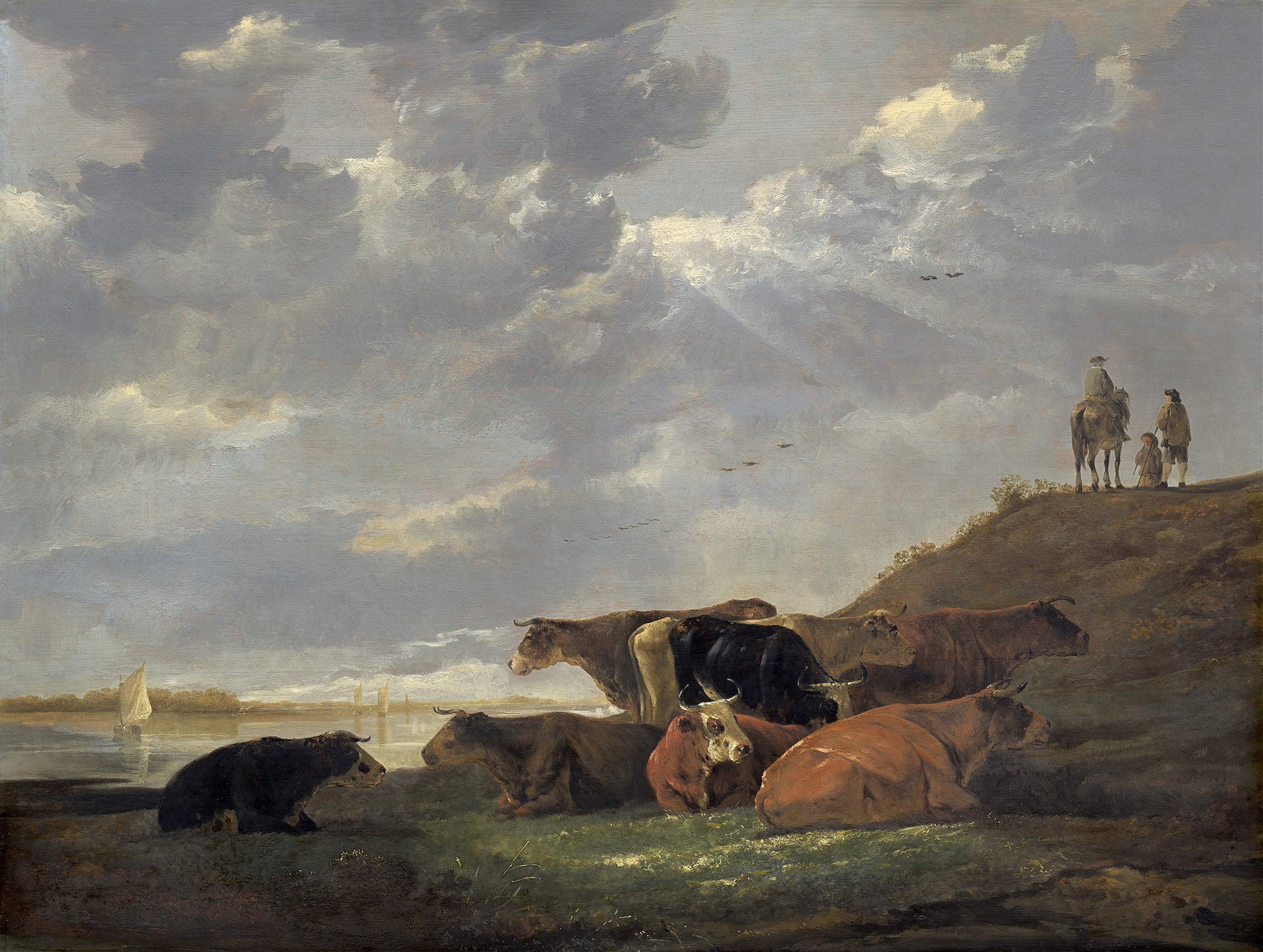
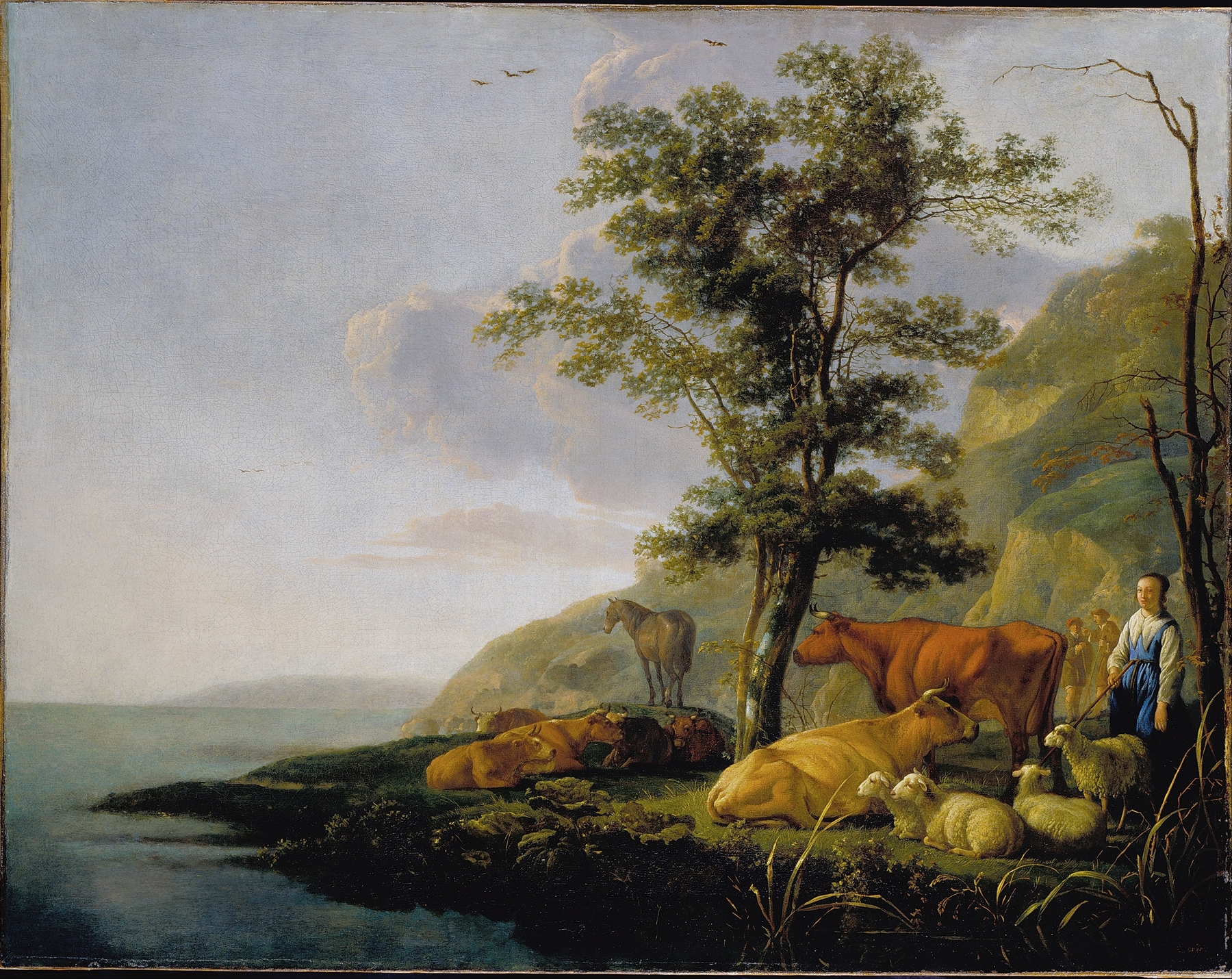
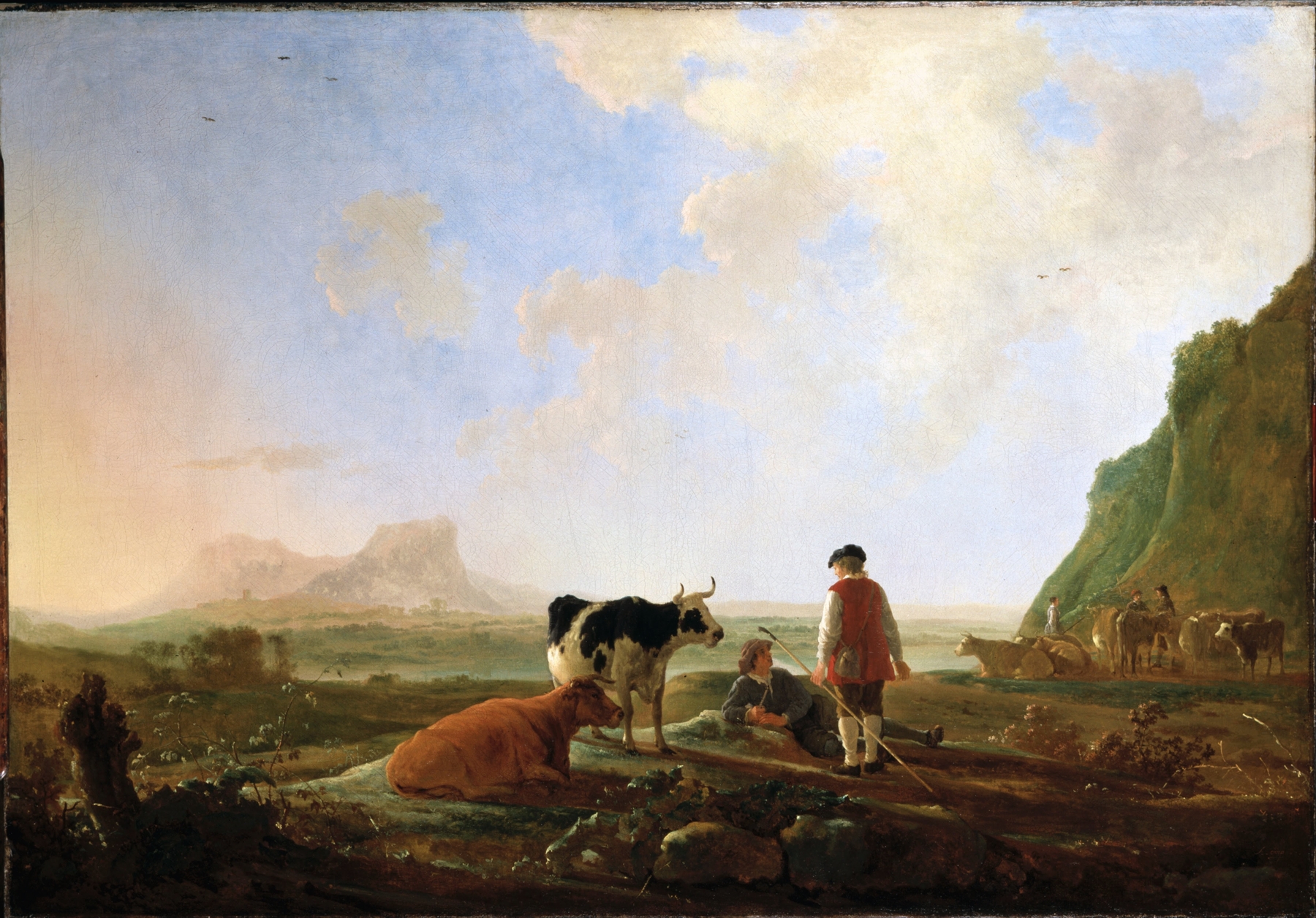
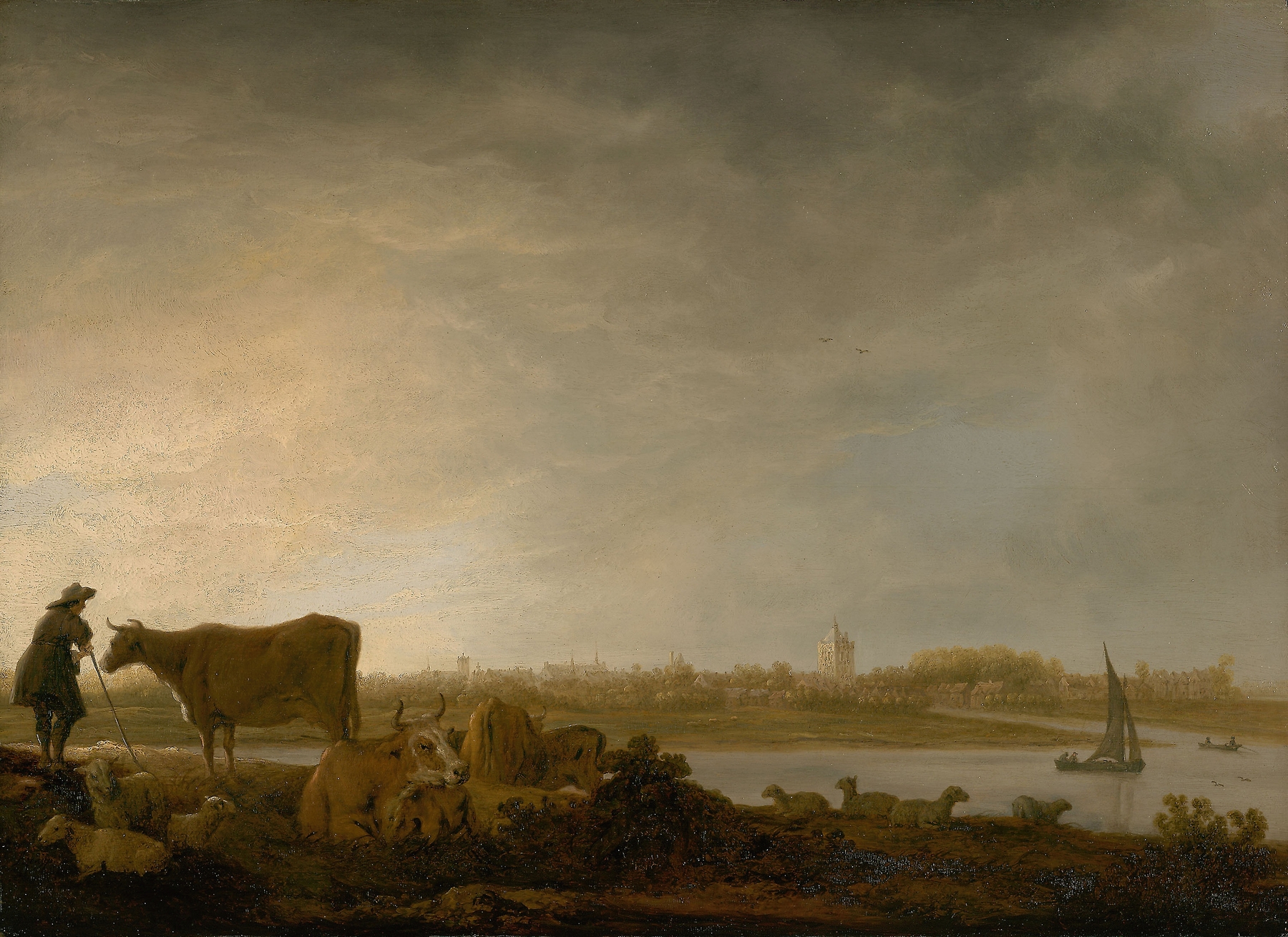
“Between color and silence, truth hides.” In the gentle embrace of twilight, a tranquil moment unfolds, whispering the faith that nature inspires. Focus on the serene river that glimmers softly under a vast, cloud-strewn sky, where the hues of soft oranges and deep blues meld seamlessly into one another. Notice how the herdsman stands grounded in his modest role, framed rhythmically by the silhouettes of cattle grazing peacefully along the bank.
The luminous light that bathes the landscape highlights the delicate curves of the hills, inviting the viewer’s eye to wander across the panorama, from the striking contrast of the dark cattle to the warm, inviting glow of the evening. The painting captures a striking balance between simplicity and profundity. The herdsman’s solitary presence symbolizes humility and the profound connection between man and nature, while the ethereal light suggests a divine presence watching over the scene.
The calmness of the water reflects not just the physical landscape but also an inner stillness, imbuing the moment with a sacred, almost meditative quality that prompts a contemplation of faith in the natural world. Created in the midst of the Dutch Golden Age, A View of Vianen with a Herdsman and Cattle by a River emerged around 1643-1645 when Aelbert Cuyp was residing in the city of Dordrecht. During this period, the artist was influenced by the heightened appreciation for landscape painting and the growing emphasis on capturing the nuances of light and atmosphere, both of which would define his celebrated body of work.