
A Village on a Hill — History & Facts
The eye is drawn first to the sturdy tree, its branches reaching skyward like a silent witness to the lives unfolding below. From this vantage, the viewer is invited to wander: past the tangle of undergrowth, up the gentle slope to a cluster of thatched-roof houses, and out across a broad, sunlit valley. The artist, Antonie Waterloo, uses the sweep of hillside and the careful play of shadow to guide us from the intimate foreground to the distant windmill, barely a gesture on the horizon.
Each etched line is purposeful—notice how the dense foliage anchors the right side, while the open sky and winding river on the left breathe a sense of calm and possibility into the scene. Works like A Village on a Hill belong to a world where landscape was gaining new importance, especially in the Dutch Golden Age. Artists such as Waterloo found eager patrons among the rising merchant class, who sought images that reflected the countryside they knew and cherished. These prints were not grand commissions for palaces, but rather intimate works, collected and traded, meant to be handled and studied up close.
History has kept few traces of this particular print’s journey, but its presence today in the National Gallery of Art—shared openly through their collection—reminds us how such quiet views once shaped the way people saw their own land. Look again at the way the light falls on the hillside, and imagine the generations who have paused over just this view.
More Artworks by Antonie Waterloo
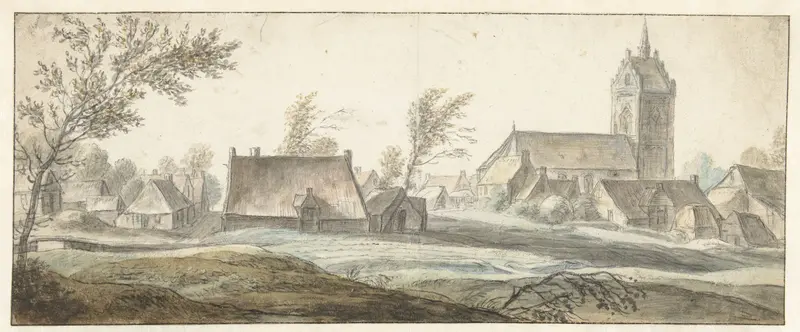
Gezicht op het dorp Soest
Antonie Waterloo
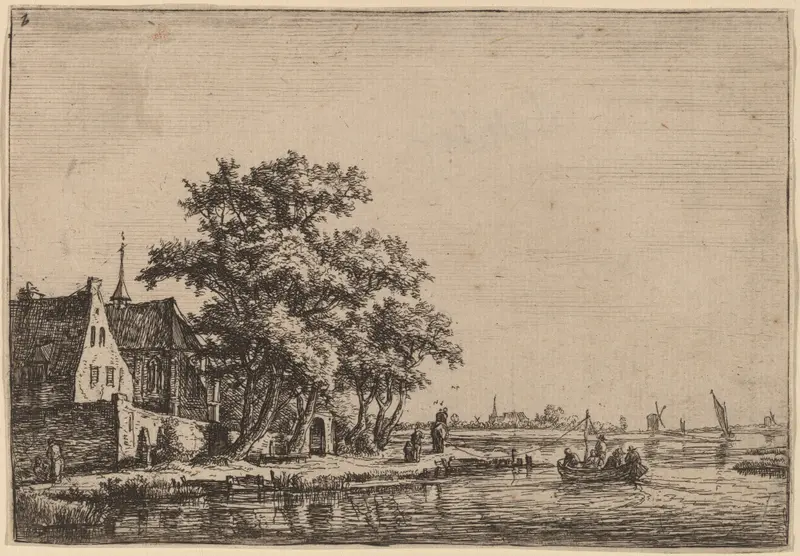
Churchyard at the Waterside
Antonie Waterloo
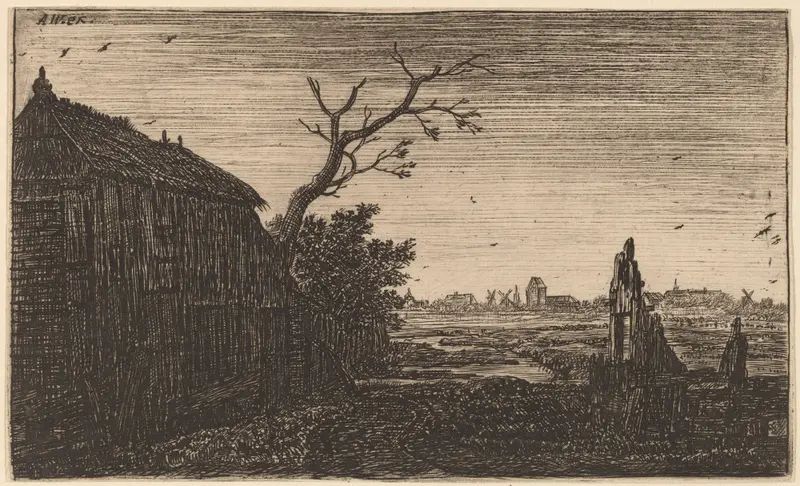
The Sluice
Antonie Waterloo
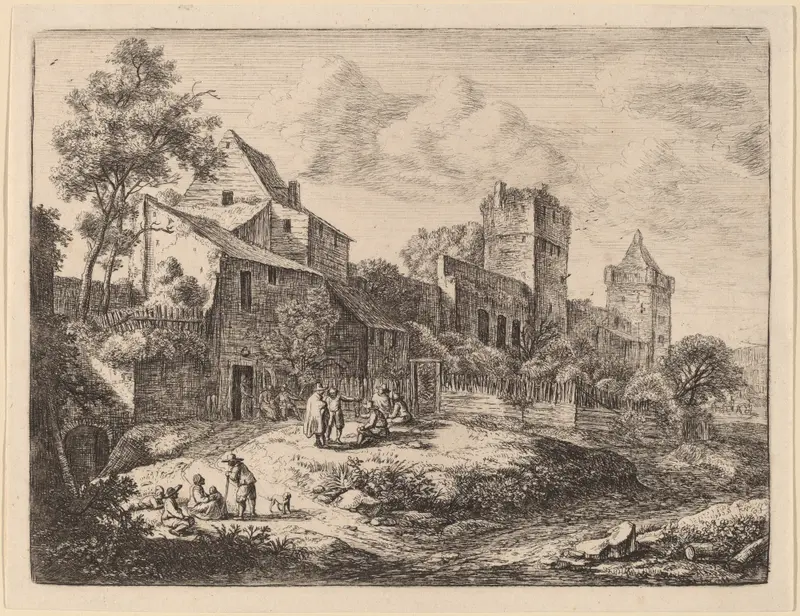
Square in Front of an Inn
Antonie Waterloo
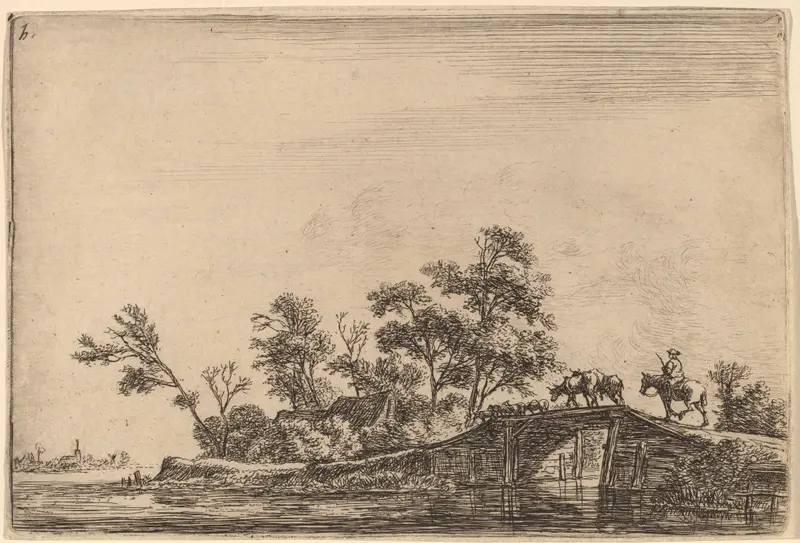
Rider and Flock on a Bridge
Antonie Waterloo
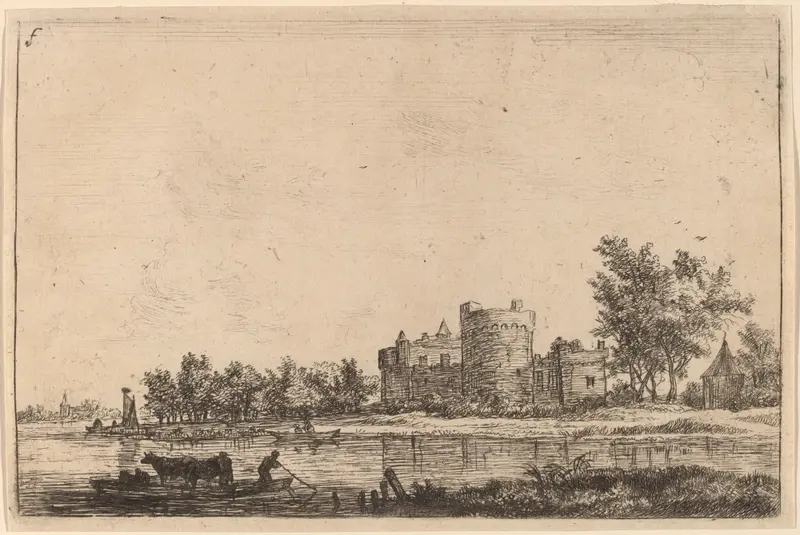
Two Cows on a Ferry
Antonie Waterloo
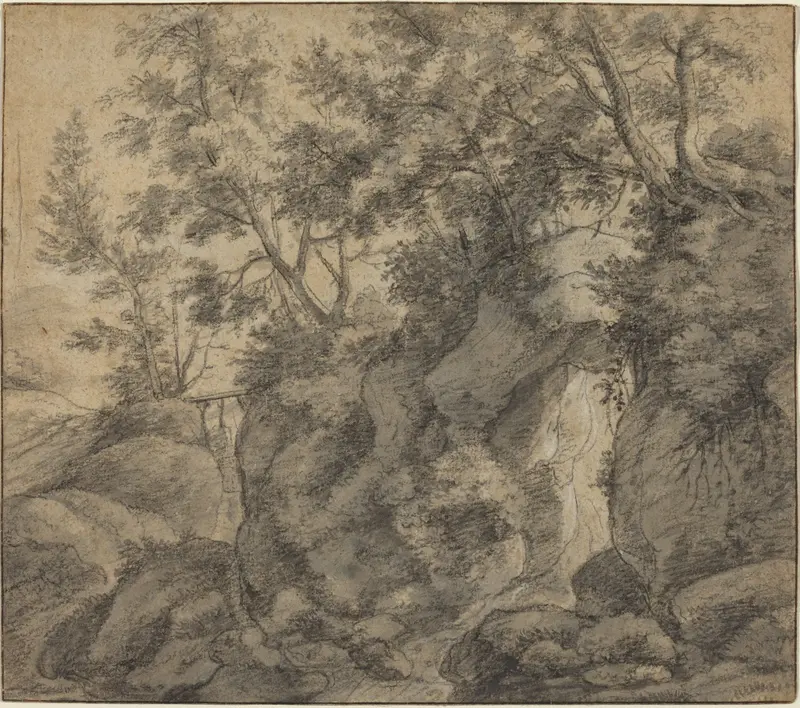
Landscape with a Wooded Ravine
Antonie Waterloo
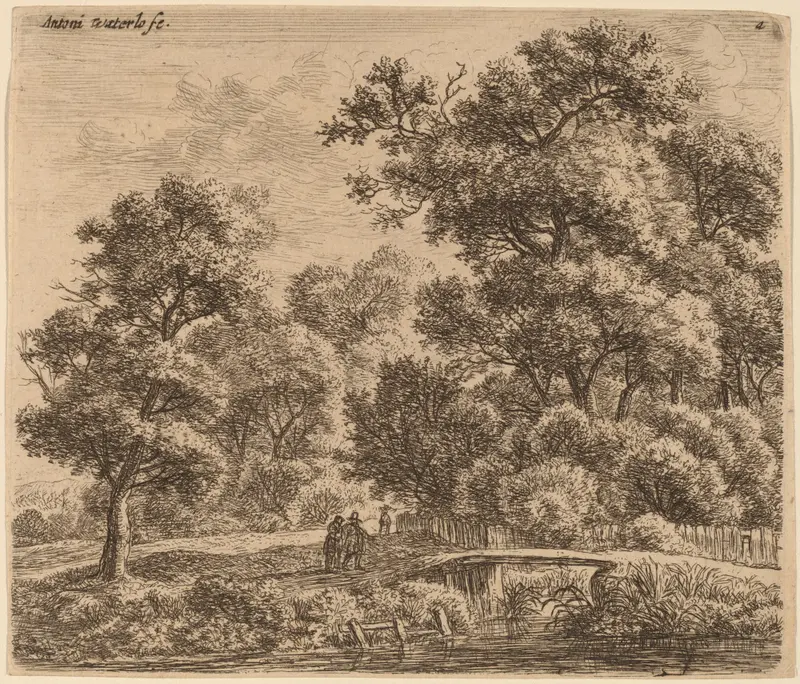
Wooded Landscape with a Bridge
Antonie Waterloo
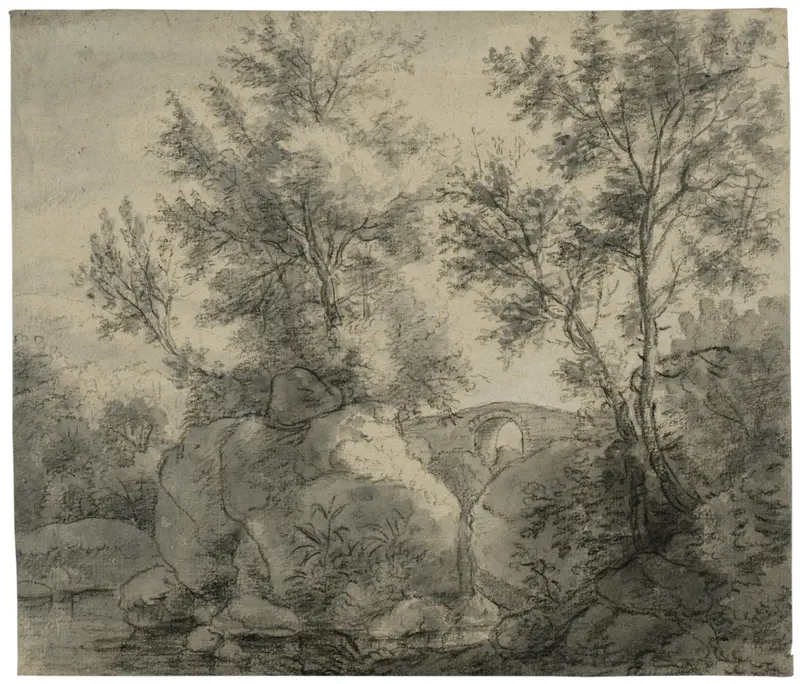
Rocky Landscape with a Stone Bridge
Antonie Waterloo
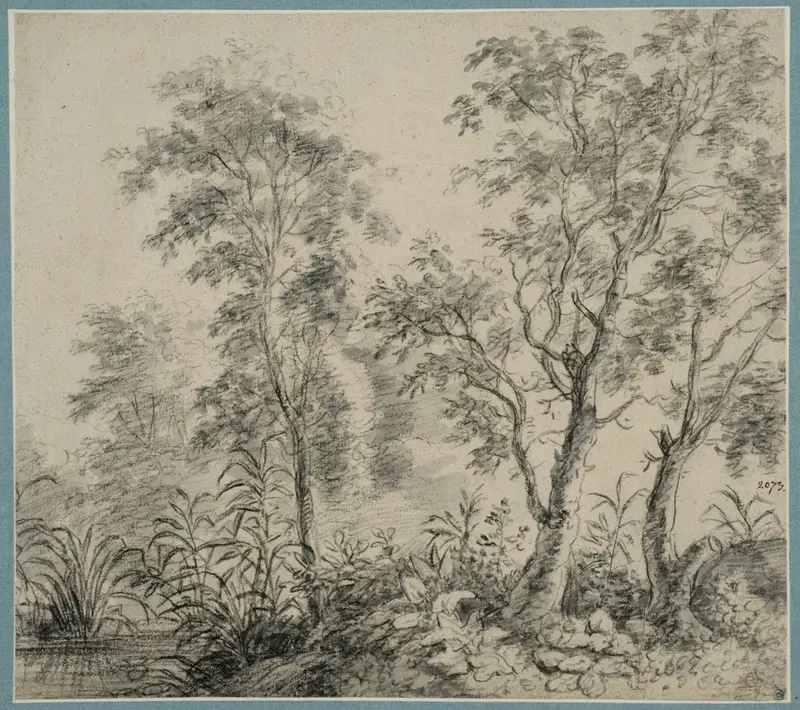
River Bank with a Row of Trees
Antonie Waterloo
More Landscape Art

The Starry Night
Vincent van Gogh

View of Delft
Johannes Vermeer

Water Lilies
Claude Monet

The Grand Canal, Venice, looking north-west from the Ca' Corner to the Ca' Contarini degli Scrigni, with the campanile of Santa Maria della Carità
Canaletto

Windsor Castle
Canaletto

The Grand Canal looking North-East from the Palazzo Dolfin-Manin to the Rialto Bridge
Canaletto