
Landscape with a Wooded Ravine — History & Facts
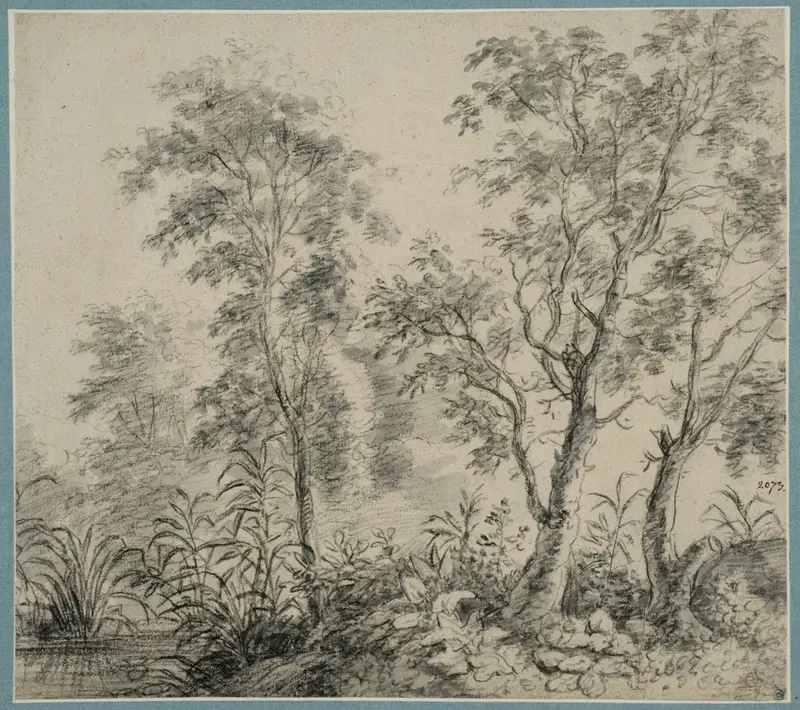
What pulls the viewer in first is the sense of quiet depth: a ravine, thick with trees, where light filters through a tangle of branches and stone. The drawing’s surface is alive with the restless marks of Antonie Waterloo, who guides the eye from the rugged foreground up through the layered foliage to a hidden bridge, barely suggested in the middle distance. Every twist of root and trunk feels deliberate, yet the composition resists symmetry, letting the wildness of nature assert itself.
The artist’s hand lingers on the rough texture of the rocks, the tangled undergrowth, and the play of shadow, inviting you to imagine the coolness beneath the trees and the hush of a secluded wood. Works like this emerged in the age when landscape was claiming its own place in Northern European art, not as mere backdrop but as a subject worthy of close, loving study. Antonie Waterloo was among those seventeenth-century artists who found poetry in untamed corners, catering to collectors who wanted reminders of the world’s quieter places. This sheet, now part of the National Gallery of Art’s collection and shared through their Open Access project, stands as a testament to that era’s fascination with the natural world’s intricacy.
History has kept few traces of this particular drawing’s journey, but its survival lets us wander, still, through Waterloo’s imagined ravine.
More Artworks by Antonie Waterloo
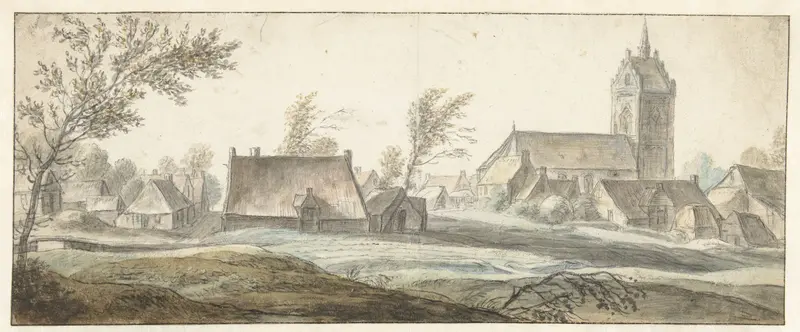
Gezicht op het dorp Soest
Antonie Waterloo
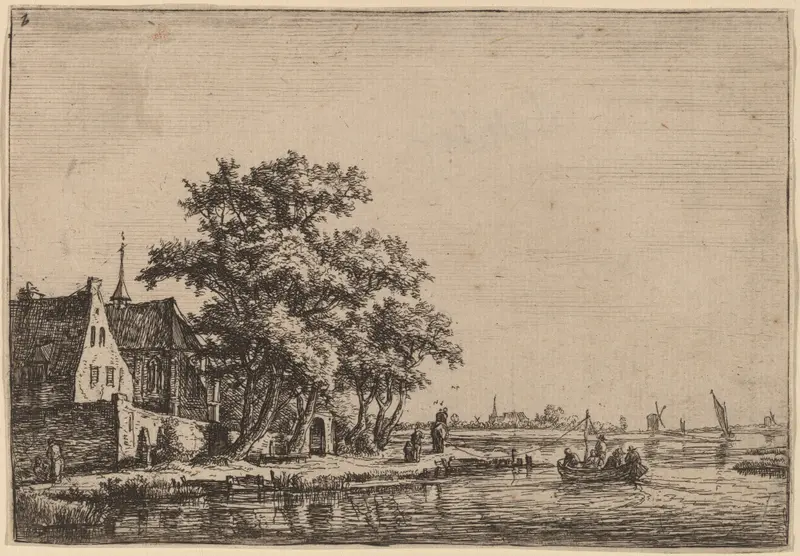
Churchyard at the Waterside
Antonie Waterloo
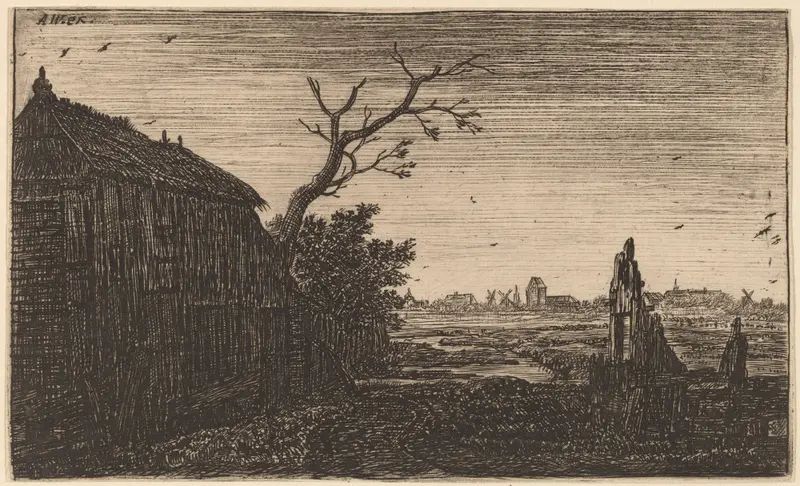
The Sluice
Antonie Waterloo
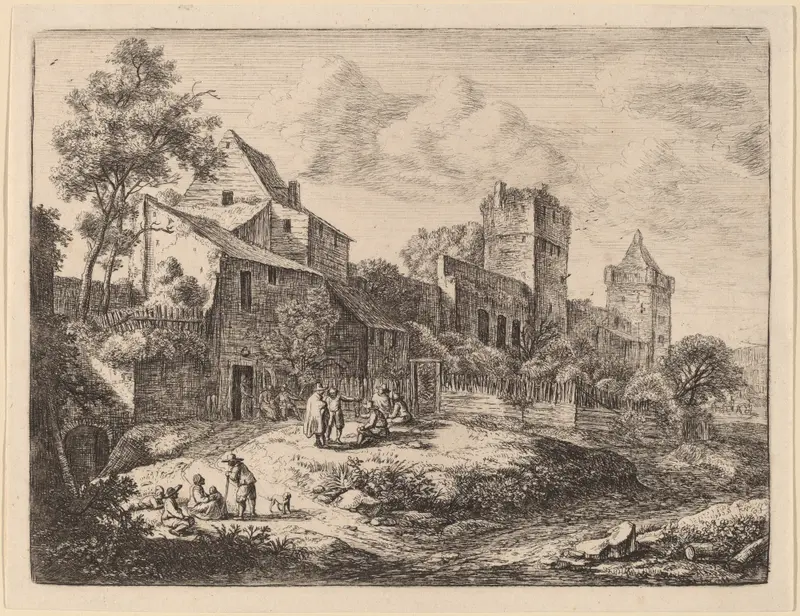
Square in Front of an Inn
Antonie Waterloo
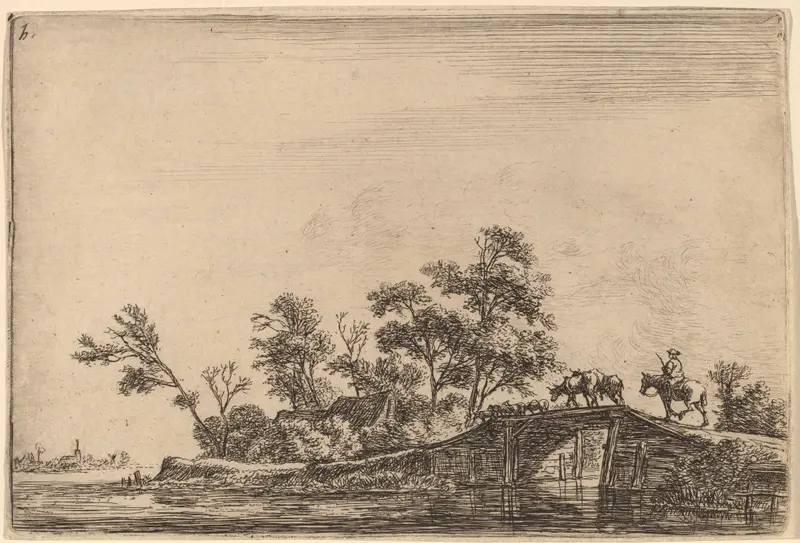
Rider and Flock on a Bridge
Antonie Waterloo
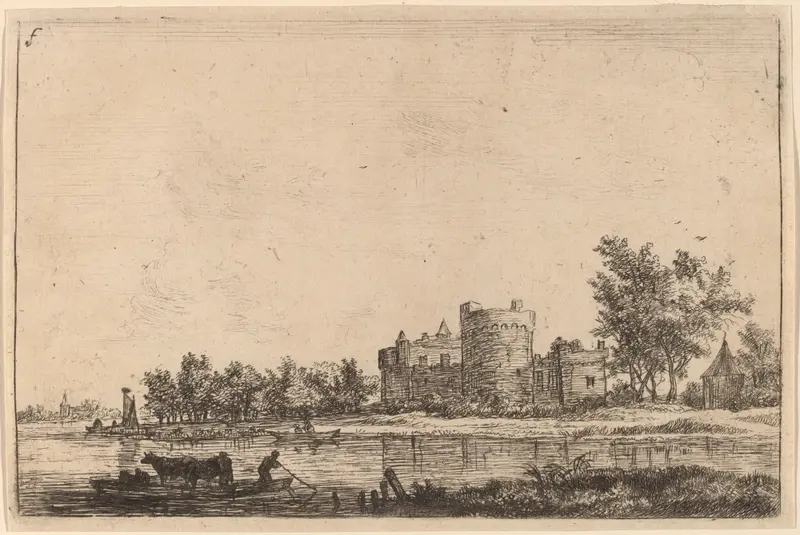
Two Cows on a Ferry
Antonie Waterloo
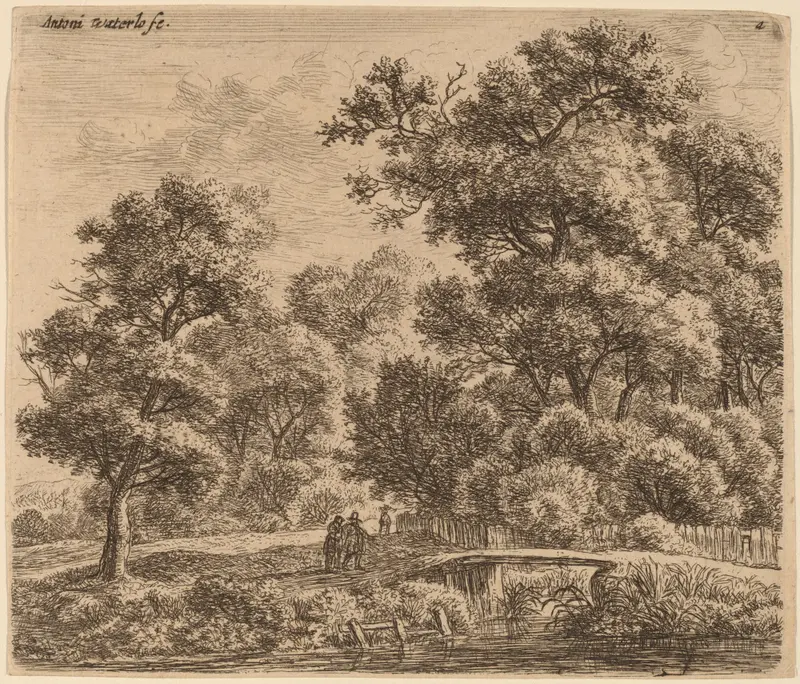
Wooded Landscape with a Bridge
Antonie Waterloo
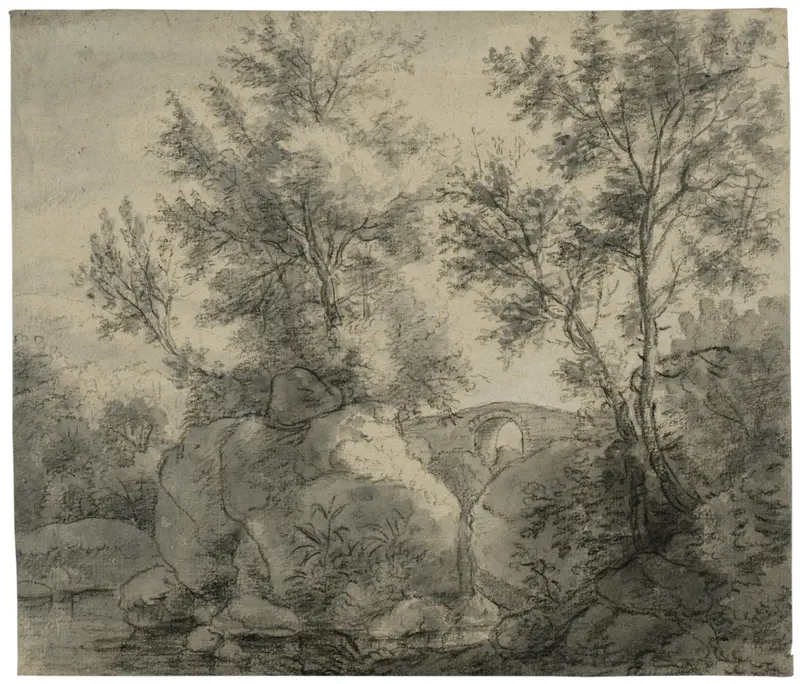
Rocky Landscape with a Stone Bridge
Antonie Waterloo
River Bank with a Row of Trees
Antonie Waterloo
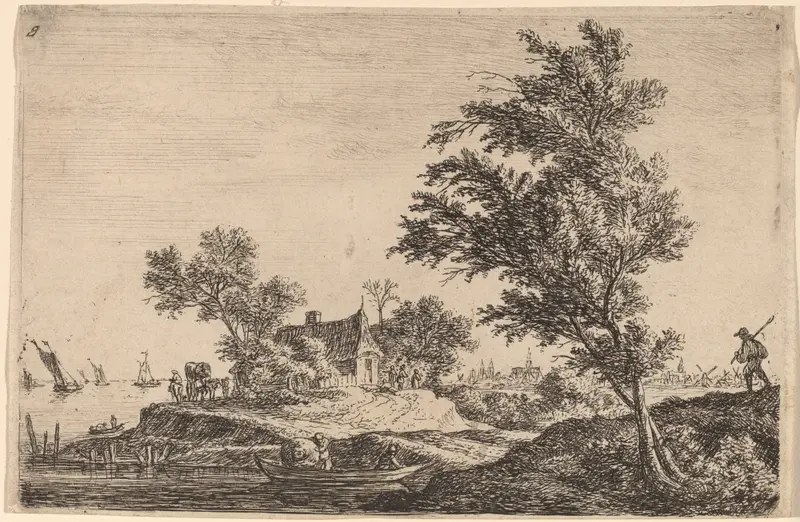
Traveler Passing Two Large Trees
Antonie Waterloo
More Landscape Art

The Starry Night
Vincent van Gogh

View of Delft
Johannes Vermeer

Water Lilies
Claude Monet

The Grand Canal, Venice, looking north-west from the Ca' Corner to the Ca' Contarini degli Scrigni, with the campanile of Santa Maria della Carità
Canaletto

Windsor Castle
Canaletto

The Grand Canal looking North-East from the Palazzo Dolfin-Manin to the Rialto Bridge
Canaletto