
Square in Front of an Inn — History & Facts
A hush of everyday life fills the open space before the inn, where travelers and locals mingle beneath the looming presence of ancient stone towers. The eye is drawn first to the gathering of figures at the heart of the scene: some standing in conversation, others resting on the ground, all dwarfed by the crumbling grandeur of the buildings behind them. The artist’s careful etching draws out the textures of mossy stone, rough timber, and tangled undergrowth, while the play of light across the clearing suggests the gentle pause of late afternoon.
Even the dogs at the lower left seem to share in this moment of rest, their bodies relaxed as they watch the humans’ quiet rituals. The composition leads us gently from the shaded foreground, up through the cluster of figures, and finally to the battered towers, which rise as silent witnesses to the passing of time. Works like Square in Front of an Inn by Antonie Waterloo belong to a tradition that flourished in the Dutch Golden Age, when artists captured the mingling of rural life and the remnants of a medieval past. These landscapes were prized by collectors who sought reminders of a world both familiar and quietly vanishing—ruins and inns standing as symbols of endurance and change.
While little is recorded about this particular print’s journey, its presence in the National Gallery of Art’s collection today, thanks to an open access initiative, allows us to linger over the details that once caught the artist’s eye. Look again at the way the figures animate the space: each gesture, each shadow, invites us to imagine the stories that unfold in the square, long after the artist’s hand has left the page.
More Artworks by Antonie Waterloo
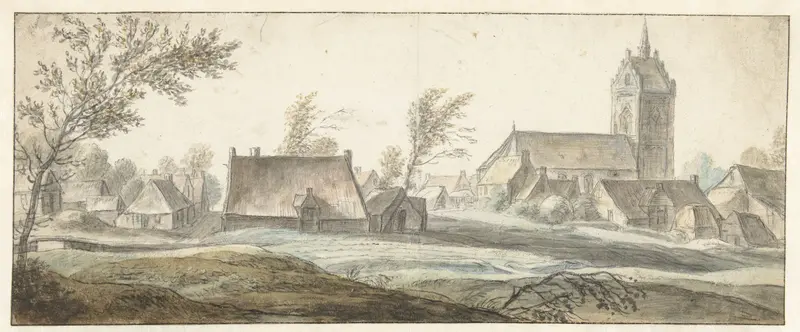
Gezicht op het dorp Soest
Antonie Waterloo
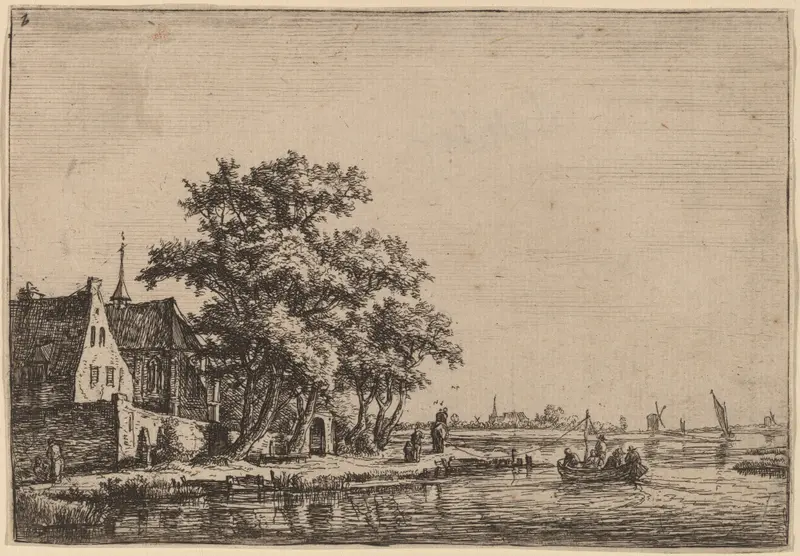
Churchyard at the Waterside
Antonie Waterloo
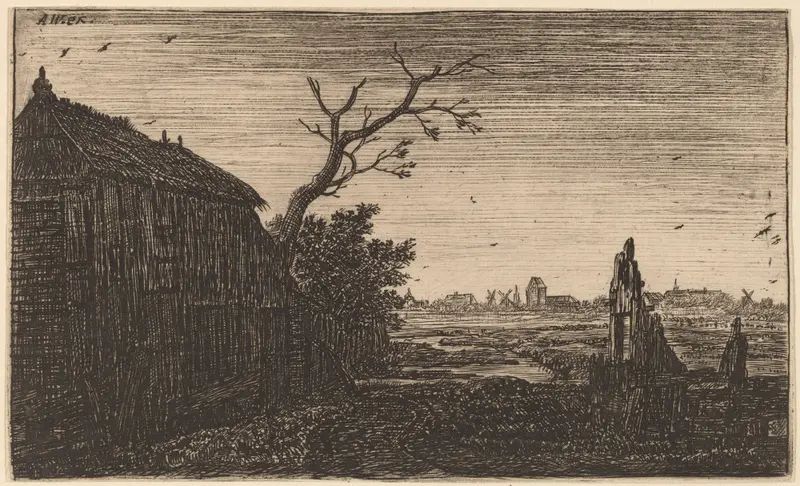
The Sluice
Antonie Waterloo
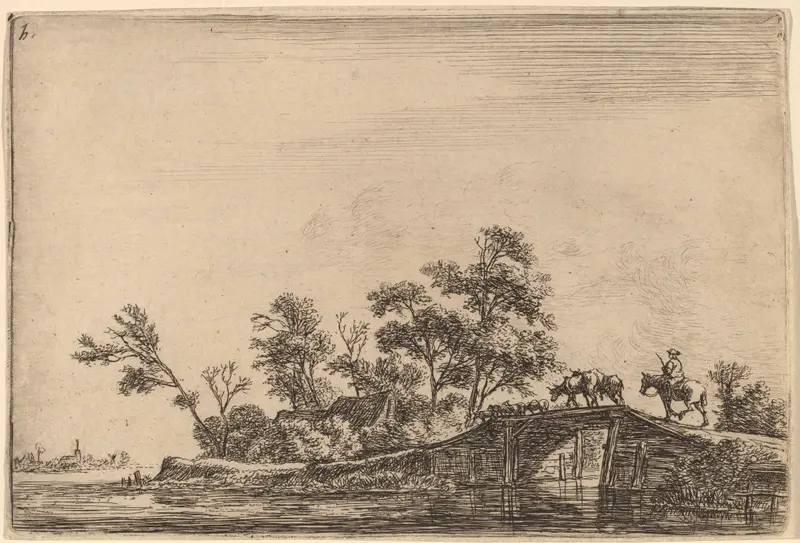
Rider and Flock on a Bridge
Antonie Waterloo
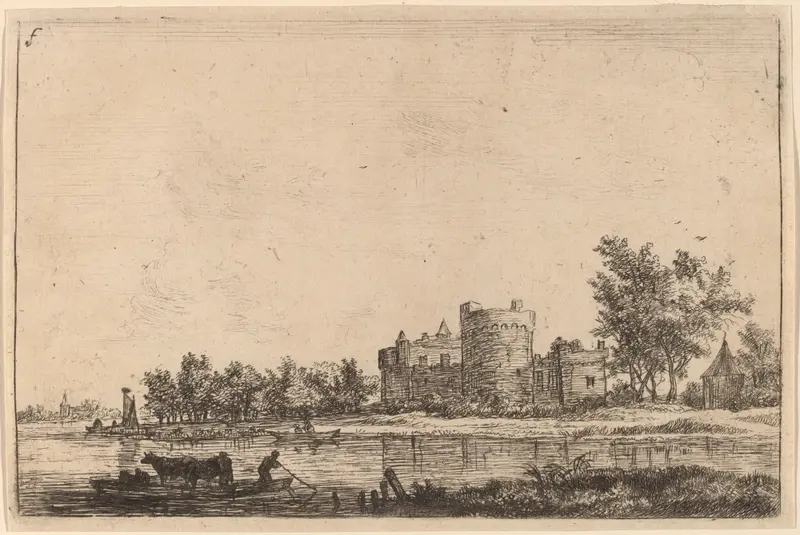
Two Cows on a Ferry
Antonie Waterloo
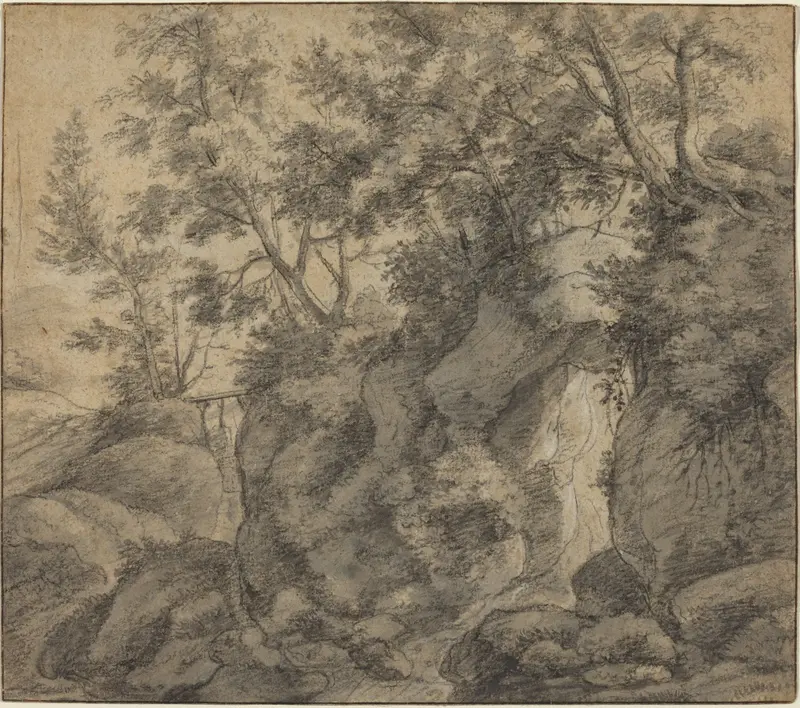
Landscape with a Wooded Ravine
Antonie Waterloo
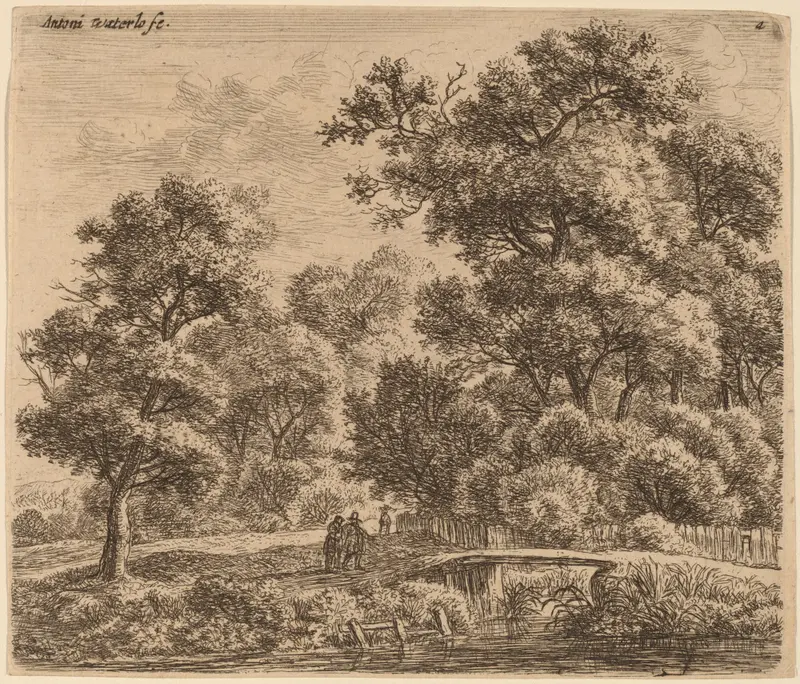
Wooded Landscape with a Bridge
Antonie Waterloo
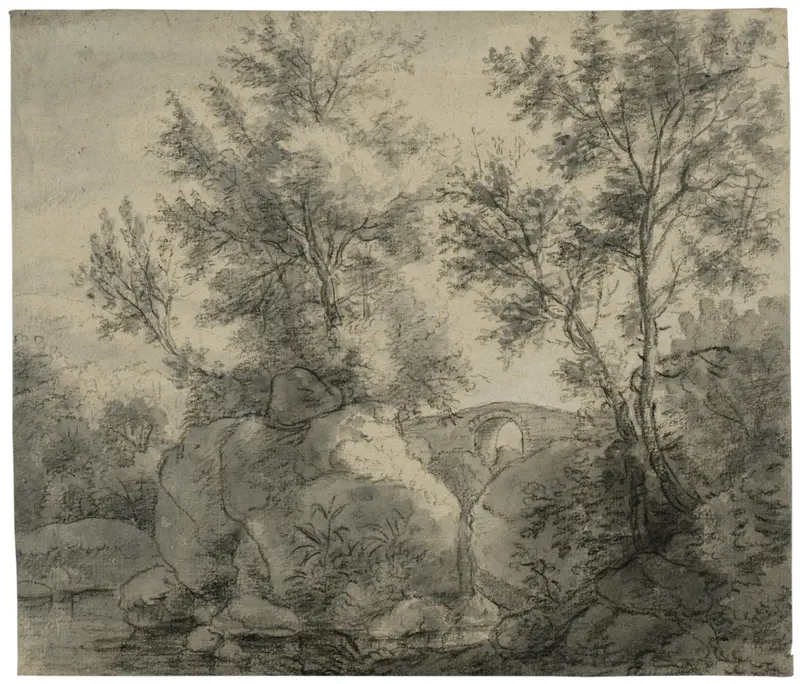
Rocky Landscape with a Stone Bridge
Antonie Waterloo
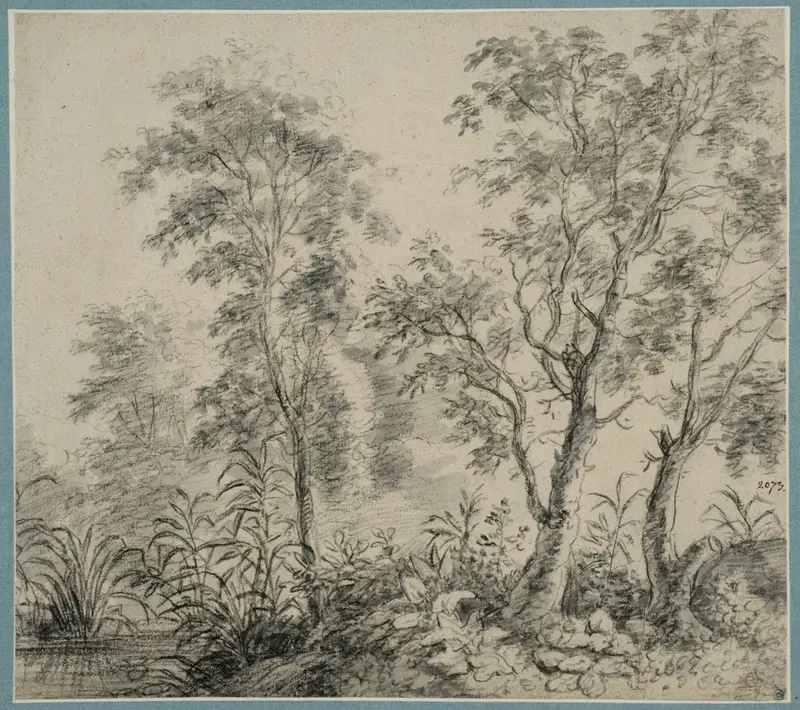
River Bank with a Row of Trees
Antonie Waterloo
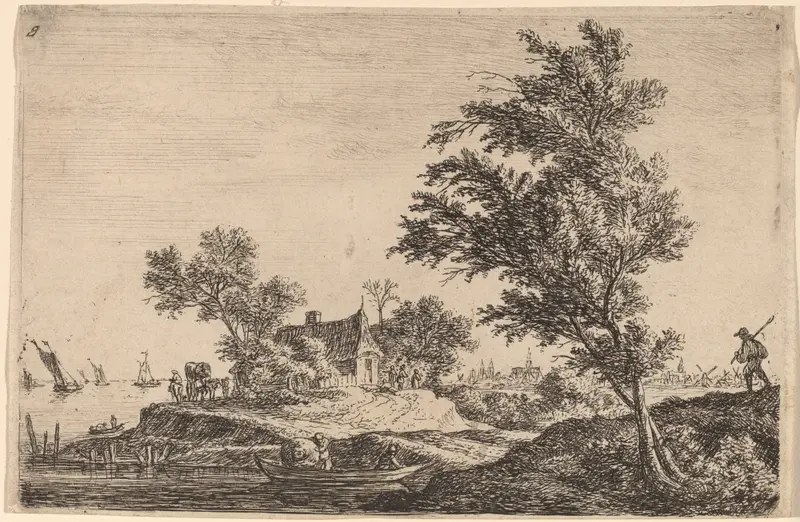
Traveler Passing Two Large Trees
Antonie Waterloo
More Landscape Art

The Starry Night
Vincent van Gogh

View of Delft
Johannes Vermeer

Water Lilies
Claude Monet

The Grand Canal, Venice, looking north-west from the Ca' Corner to the Ca' Contarini degli Scrigni, with the campanile of Santa Maria della Carità
Canaletto

Windsor Castle
Canaletto

The Grand Canal looking North-East from the Palazzo Dolfin-Manin to the Rialto Bridge
Canaletto