
A White Horse — History & Facts
In A White Horse, Diego Velázquez presents a striking image of a white horse set against a muted background. The horse stands majestically, its coat gleaming in the light. The artist captures the animal's strength and grace, emphasizing its powerful form.
The subtle color palette enhances the horse's presence, drawing the viewer's eye to its features. The painting is executed in oil on canvas, a common medium for Velázquez, allowing for rich textures and depth. The dimensions are approximately 100 x 130 cm, making it a substantial work that commands attention. Velázquez's brushwork is meticulous, showcasing his skill in rendering the horse's anatomy and the play of light on its body.
The composition is balanced, with the horse positioned prominently in the frame. Diego Velázquez, a key figure of the Spanish Baroque, created this work in 1634, during a period of great artistic development. This painting reflects his fascination with animals, which he often depicted with a sense of realism and vitality. Interestingly, Velázquez was also known for his portraits of the Spanish royal family, yet he found time to explore the beauty of nature through animal subjects.
A White Horse remains a testament to his versatility and skill as an artist.
More Artworks by Diego Velázquez

Las Meninas
Diego Velázquez

The Triumph of Bacchus
Diego Velázquez

Rokeby Venus
Diego Velázquez

Equestrian Portrait of Prince Balthasar Charles
Diego Velázquez

Bacchus
Diego Velázquez

Don Gaspar de Guzmán (1587–1645), Count-Duke of Olivares
Diego Velázquez
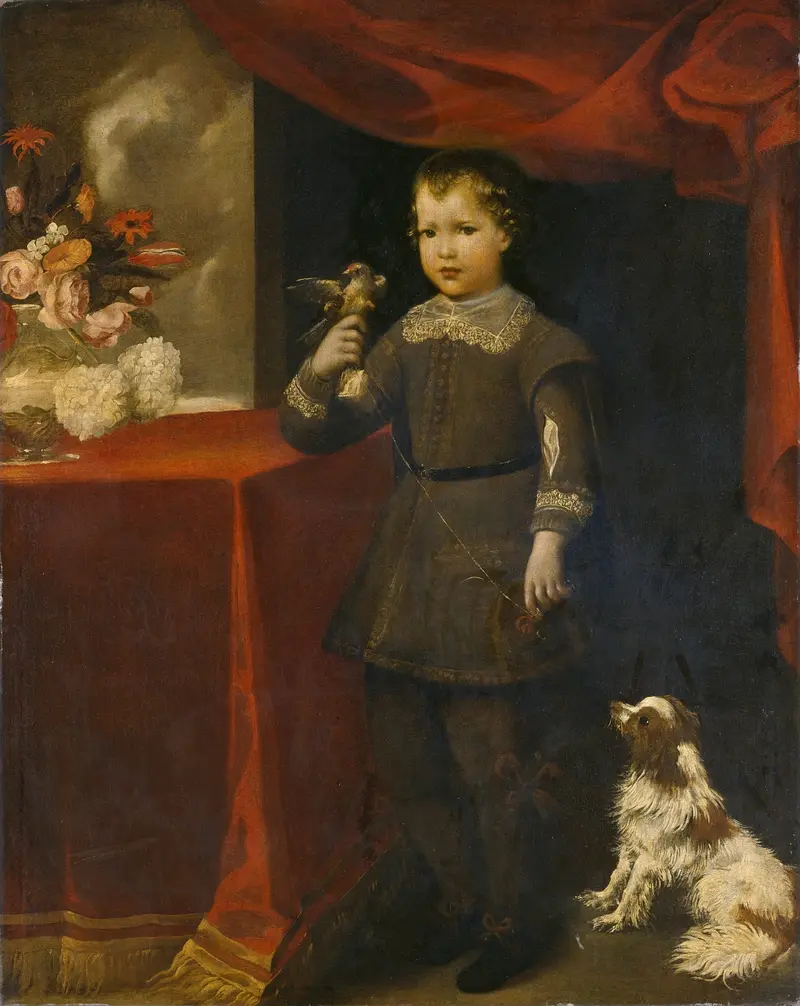
El príncipe Baltasar Carlos de Austria
Diego Velázquez

Equestrian Portrait of Philip III
Diego Velázquez

Equestrian Portrait of Margarita of Austria
Diego Velázquez
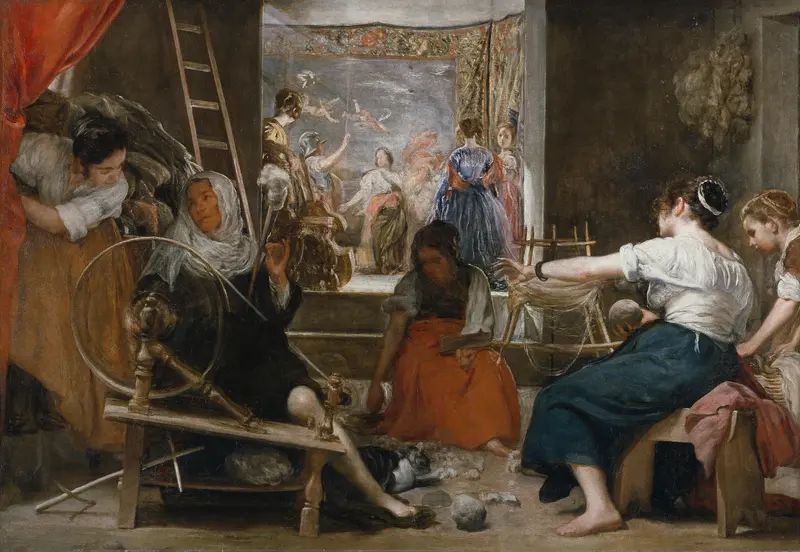
Las Hilanderas
Diego Velázquez





