
The Triumph of Bacchus — History & Facts
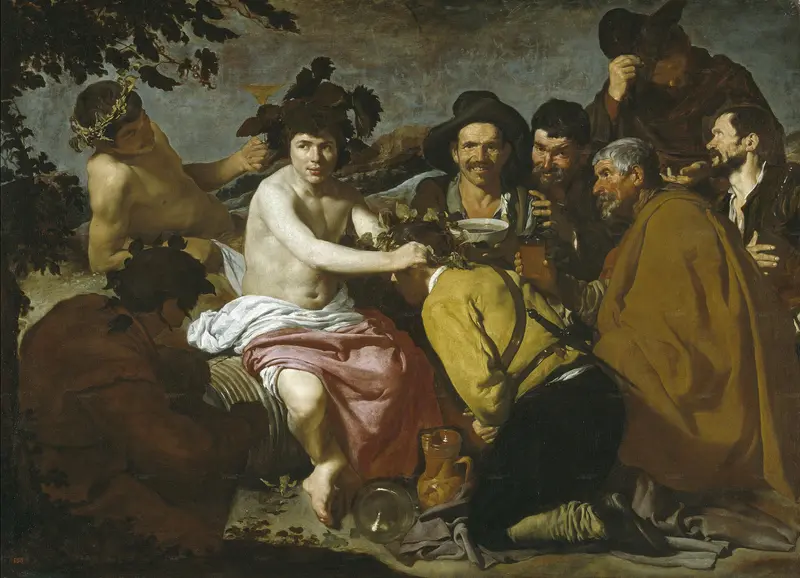
A pale, half-naked figure sits at the center, crowned with vine leaves and draped in a loose white and rose-colored cloth, his body bathed in a clear, luminous light. He extends a hand to place a leafy crown on the head of a kneeling man in a yellow jacket, who bows forward and holds a sword at his side. To the left, another bare-chested youth leans in, his own head adorned with vines, while a third figure sits lower, his face in shadow and his back turned to the viewer.
On the right, a group of five men gather closely, their faces rugged and expressive, dressed in the worn, earth-toned clothes of 17th-century Spanish peasants, some holding cups or jugs of wine. One man grins broadly as he raises a bowl, while another, older and wrapped in a brown cloak, looks on with a knowing smile; further back, a man in a wide-brimmed hat tips it over his eyes, half-hidden in shadow. The ground in front is scattered with a glass bottle and a ceramic jug, painted with a careful attention to their reflective surfaces and textures.
The composition divides into two halves: on the left, the mythic god Bacchus and his companion are idealized and brightly lit; on the right, the drinkers are rendered with earthy realism and strong contrasts of light and shadow. The brushwork varies from the smooth modeling of Bacchus’s skin to the rougher, more textured handling of the peasants’ faces and clothing, enhancing the contrast between divine and mortal.
Sources: Museo del Prado, record P001170 · Wikidata Q123935 · Wikipedia: The Triumph of Bacchus · Image source (Wikimedia Commons)
More Artworks by Diego Velázquez

Las Meninas
Diego Velázquez
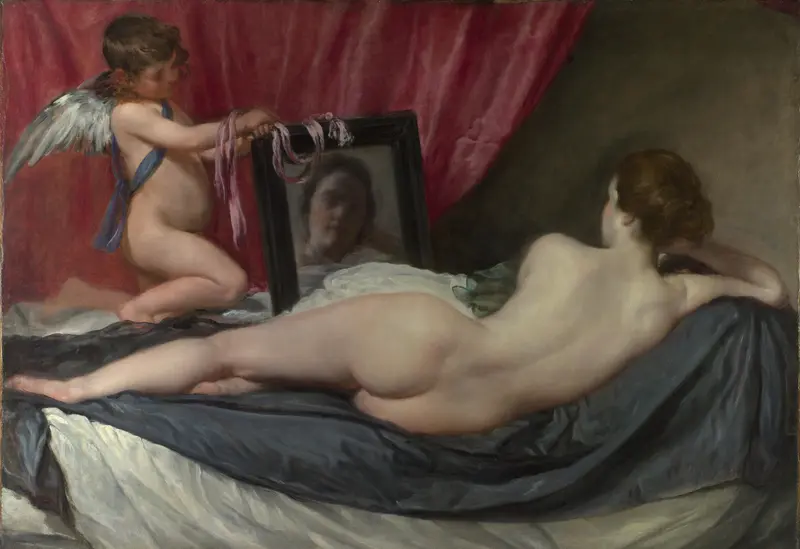
Rokeby Venus
Diego Velázquez
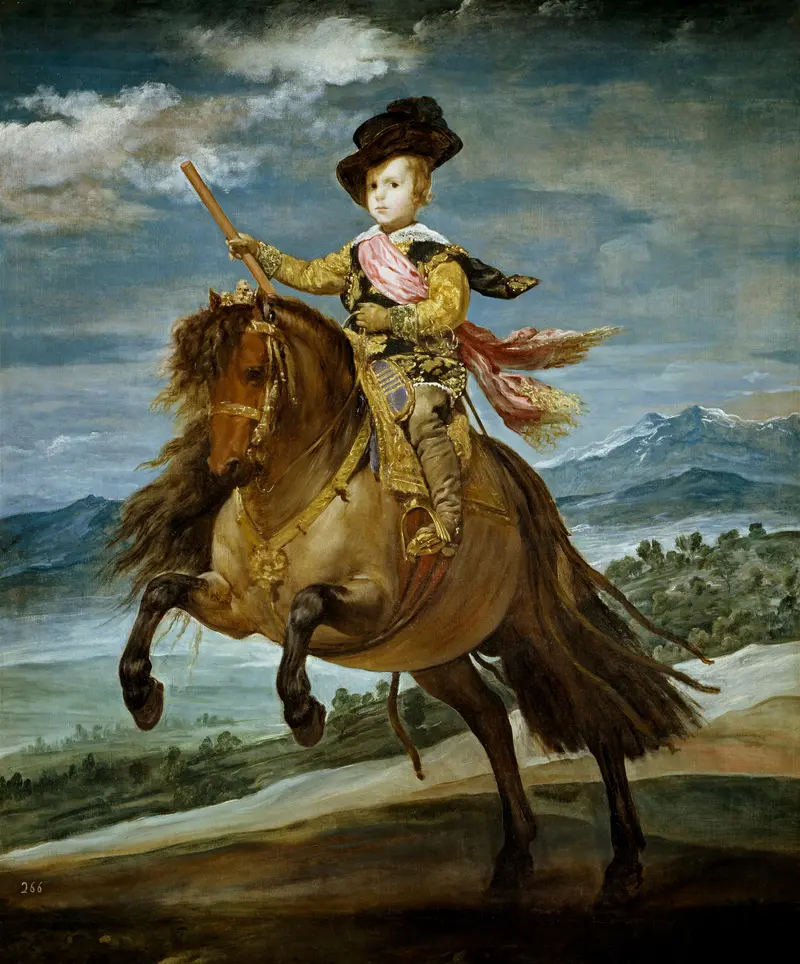
Equestrian Portrait of Prince Balthasar Charles
Diego Velázquez
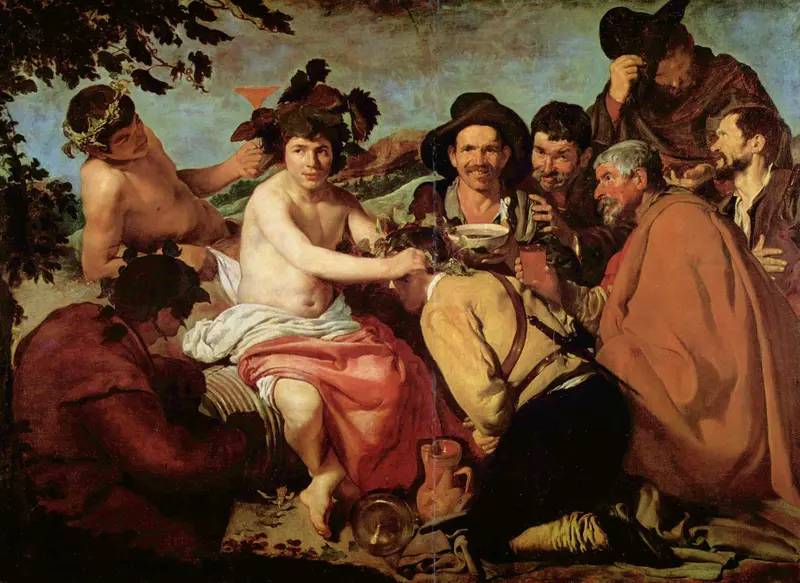
Bacchus
Diego Velázquez
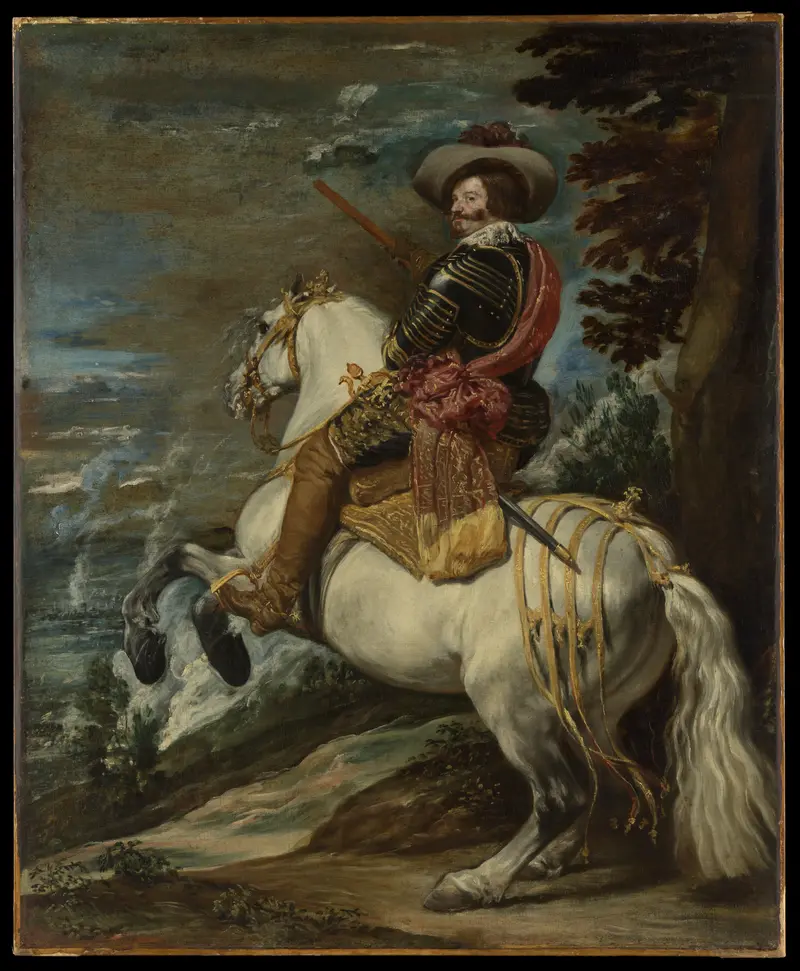
Don Gaspar de Guzmán (1587–1645), Count-Duke of Olivares
Diego Velázquez
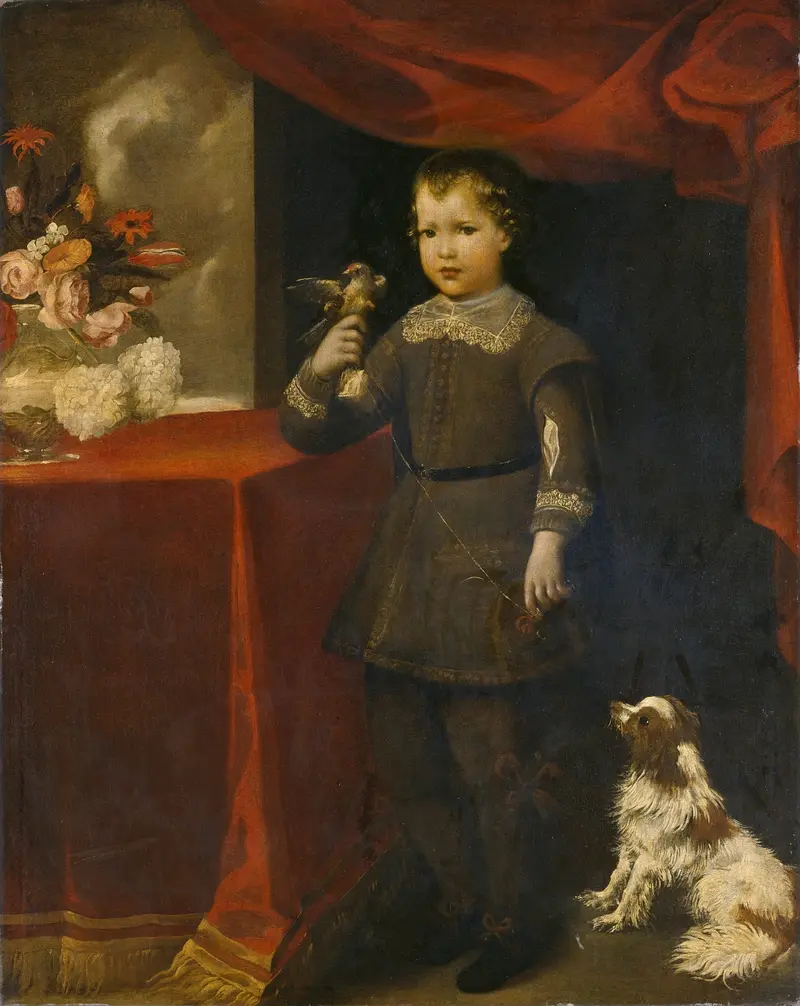
El príncipe Baltasar Carlos de Austria
Diego Velázquez
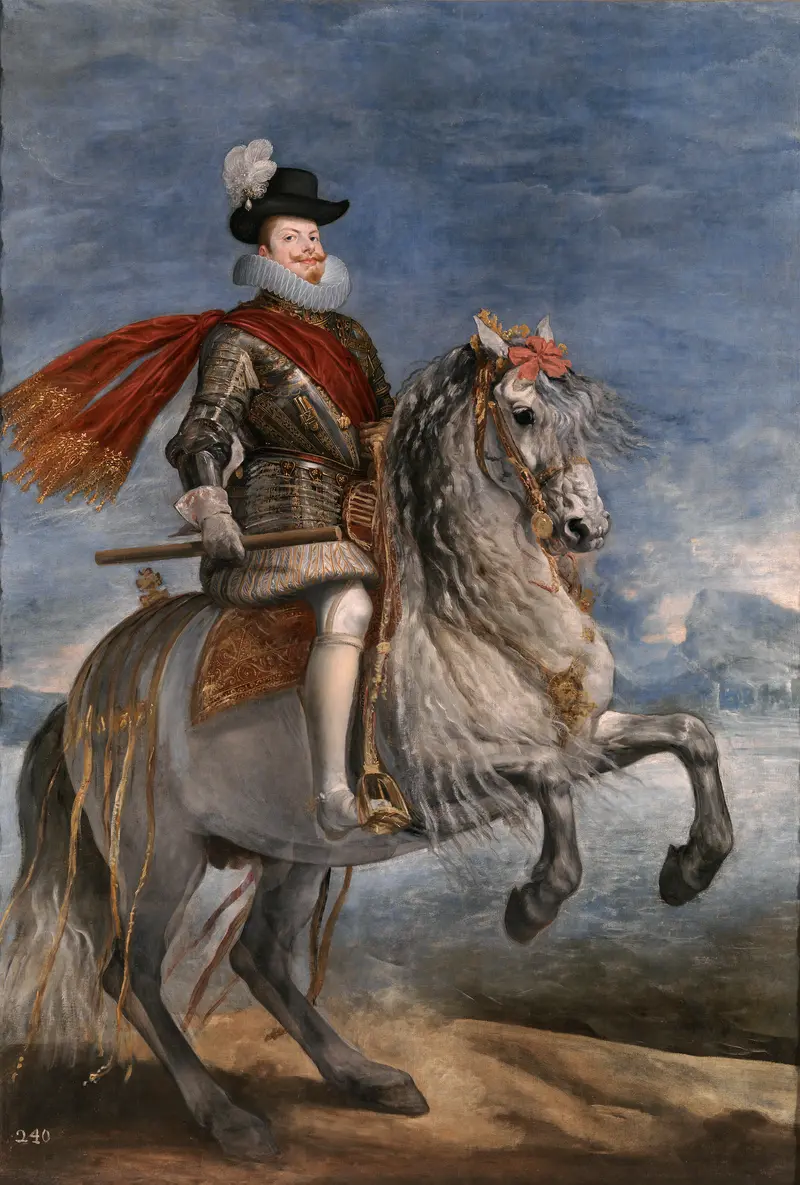
Equestrian Portrait of Philip III
Diego Velázquez
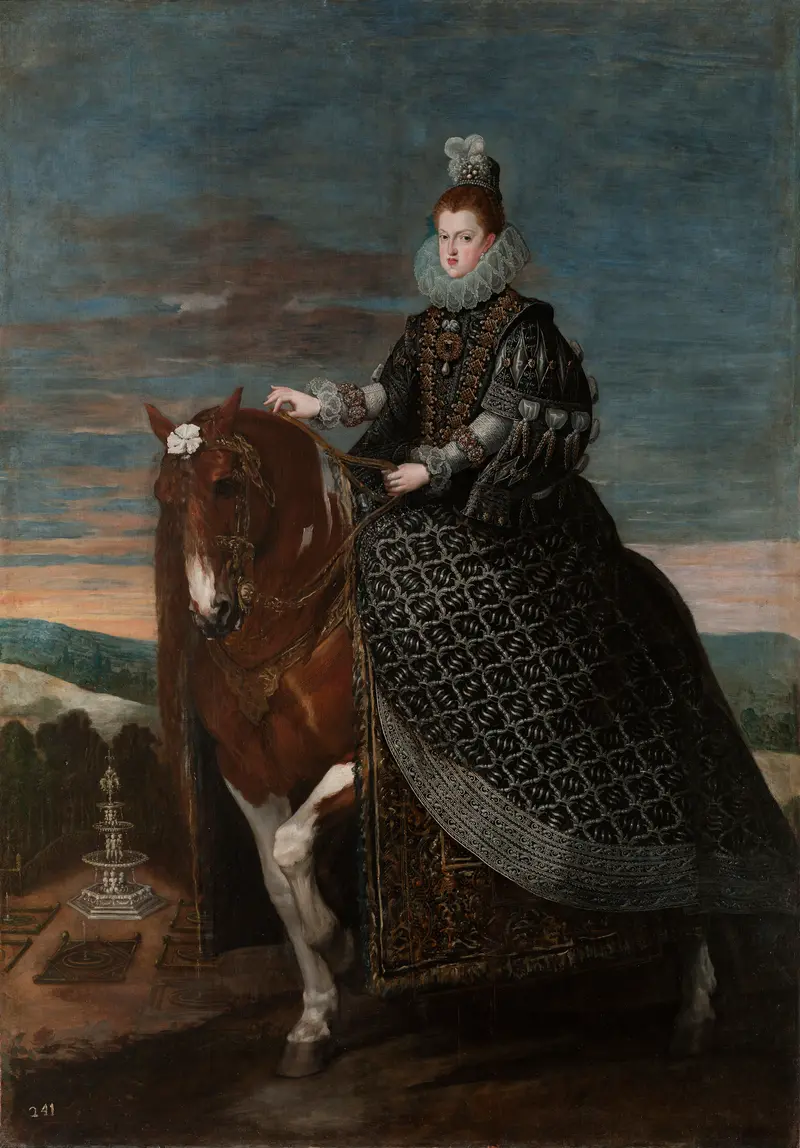
Equestrian Portrait of Margarita of Austria
Diego Velázquez
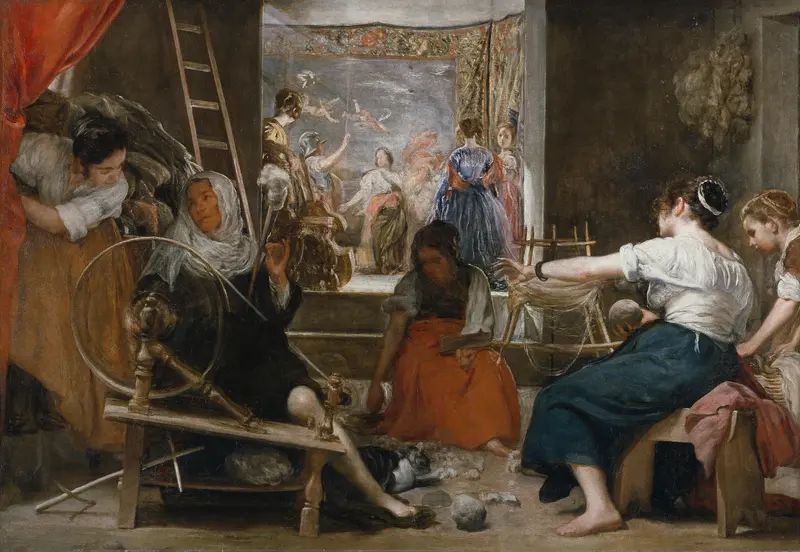
Las Hilanderas
Diego Velázquez
Los borrachos (The Triumph of Bacchus)
Diego Velázquez





