
A Winter Landscape with Peasants on a Path — History & Facts
What draws the eye first in A Winter Landscape with Peasants on a Path is the quiet choreography of daily life unfolding against a frozen countryside. The bare trees, their branches reaching like veins into the pale sky, frame a winding road where peasants trudge and horses pull heavy carts laden with goods. The low winter light softens the scene, tinting the snow with a gentle blue and casting long shadows that guide the viewer’s gaze from the bustling foreground to the distant, icy pond where tiny figures skate.
Every detail—down to the dog darting beside its master and the bundled figures huddled in conversation—serves to anchor this landscape in the rhythm of ordinary survival, where the cold is not an adversary but a fact of life. Painted in 1579, this work belongs to a tradition of Flemish winter scenes that flourished in the late sixteenth century, when artists like Abel Grimmer found beauty and meaning in the everyday. Such paintings were often commissioned by prosperous burghers for their homes, celebrating both the hardships and the communal spirit of rural life. The circular format, edged in gold, hints at a decorative function—perhaps once part of a set capturing the seasons.
Though history has kept few traces of this specific painting beyond its appearance at Sotheby’s London in 2012, its world is unmistakable: a society attuned to the cycles of nature, where even the starkest months are filled with quiet industry. Look again, and the landscape’s stillness gives way to a sense of movement, as if the scene might shift at any moment.
More Artworks by Abel Grimmer

Flemish proverbs
Abel Grimmer
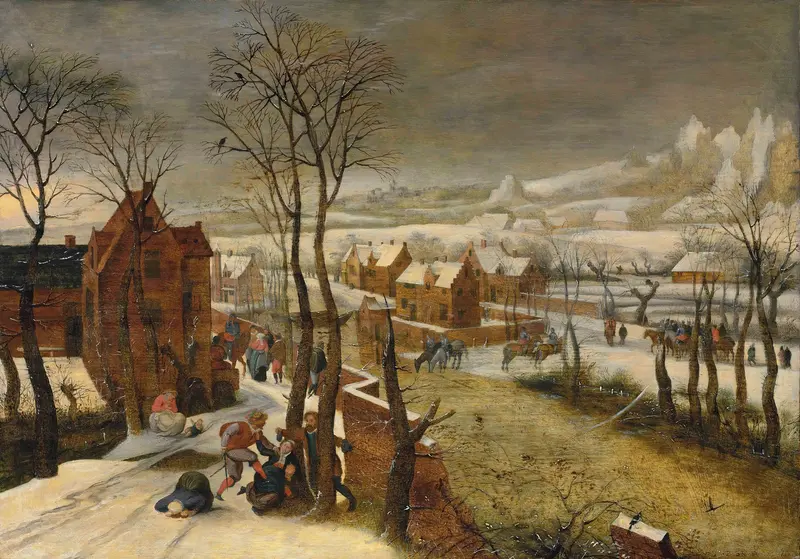
A Village Landscape In Winter With The Massacre Of The Innocents
Abel Grimmer
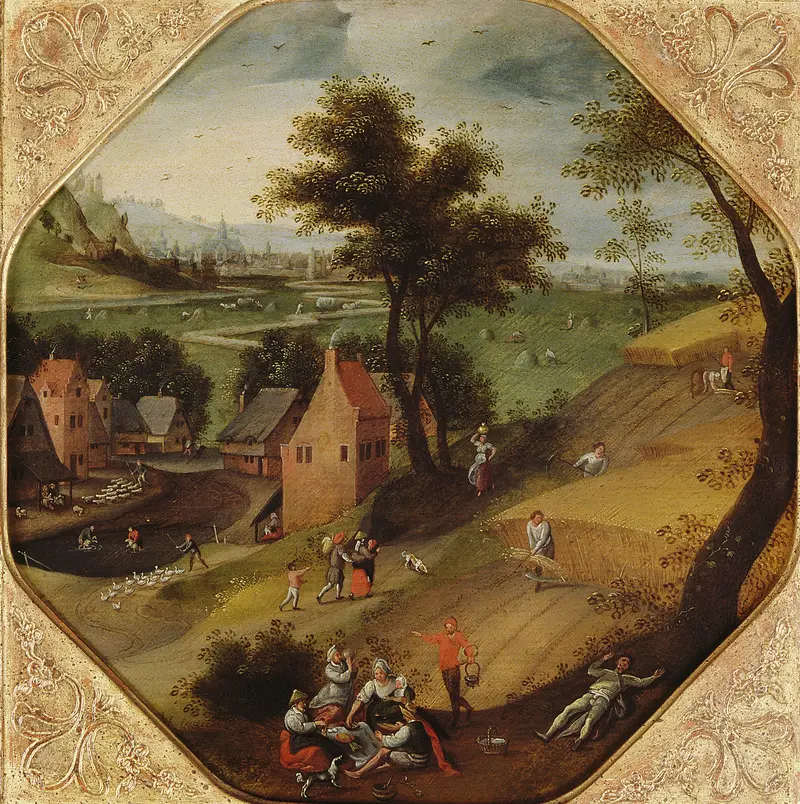
De Zomer
Abel Grimmer
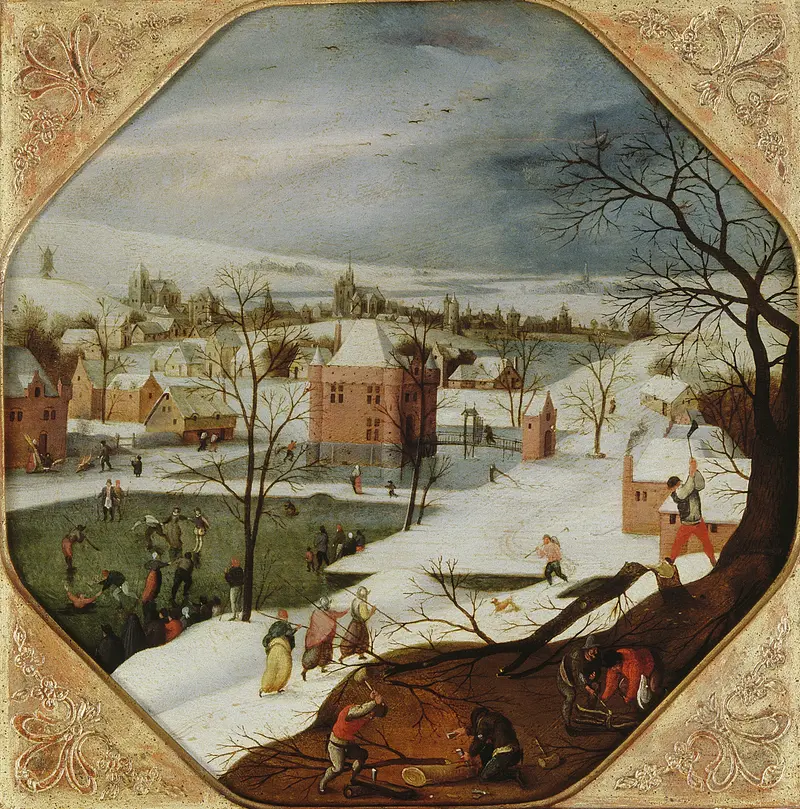
De Winter
Abel Grimmer
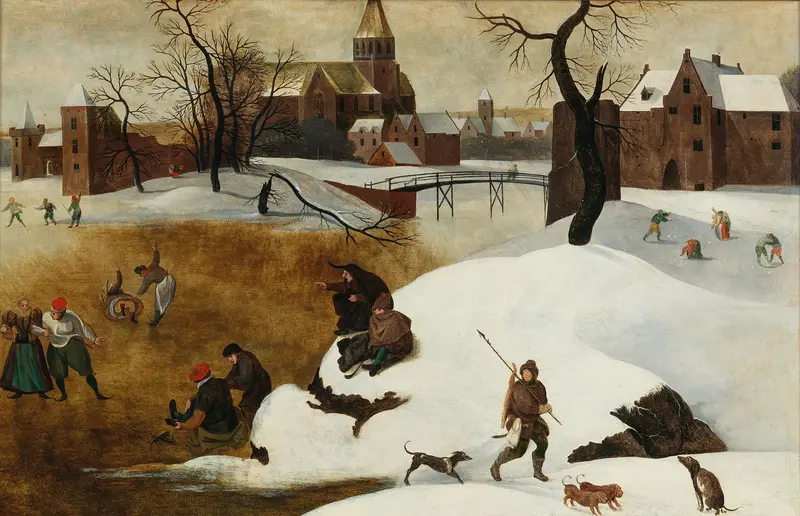
winter landscape with skaters
Abel Grimmer
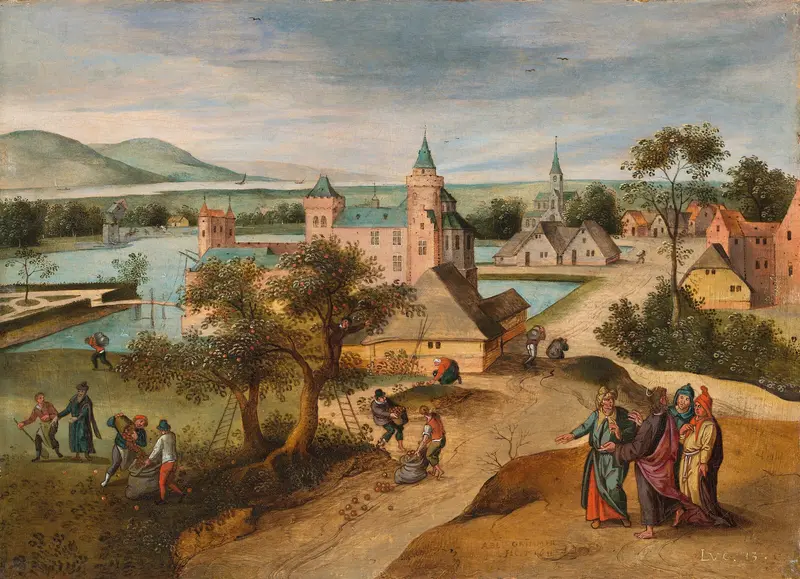
September – The Parable of the Barren Fig Tree
Abel Grimmer
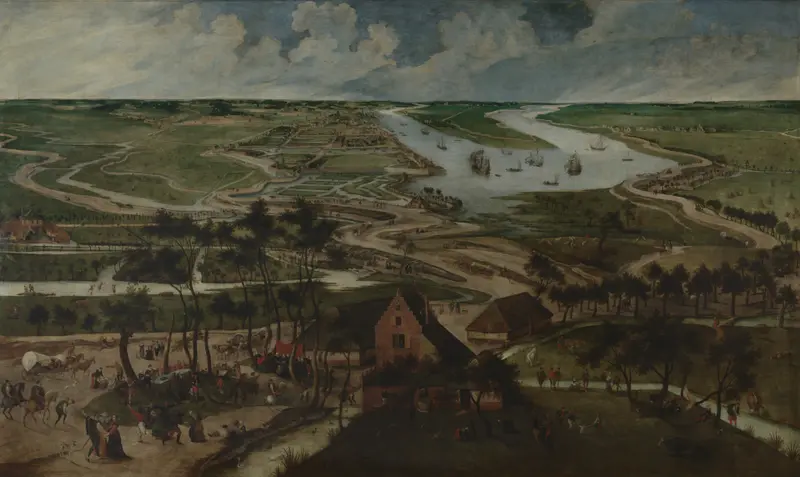
The Eel Huts in the Antwerp Polder outside the Lillo or Slijk Gate
Abel Grimmer
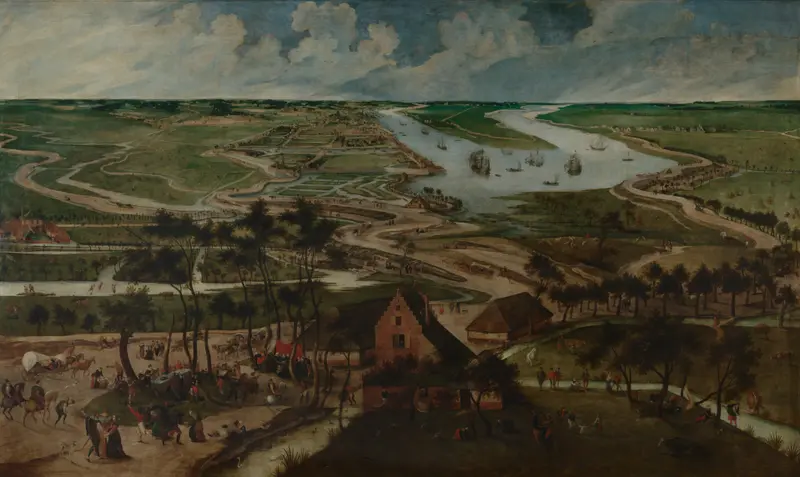
De Antwerpse polder en de Palinghuizen buiten de Slijk- of Lillopoort
Abel Grimmer
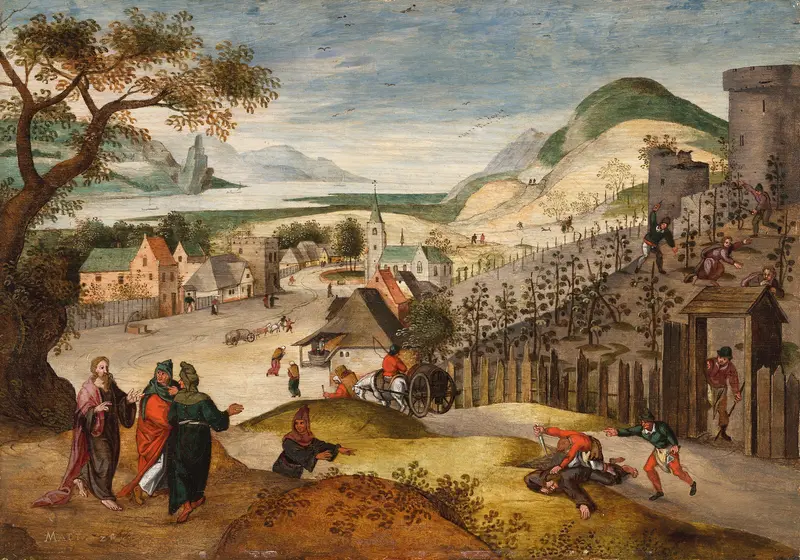
October – The Parable of the Vineyard
Abel Grimmer
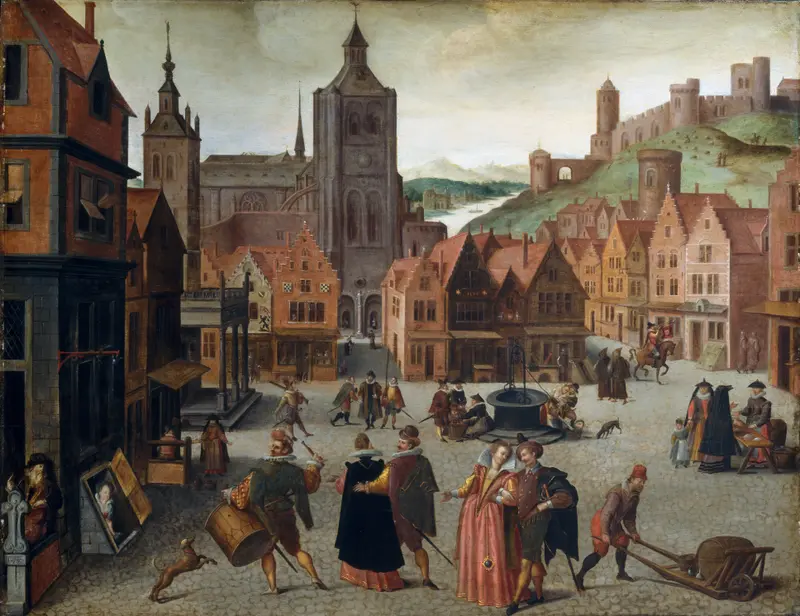
The Marketplace in Bergen op Zoom
Abel Grimmer
More Landscape Art

The Starry Night
Vincent van Gogh

View of Delft
Johannes Vermeer

Water Lilies
Claude Monet

The Grand Canal, Venice, looking north-west from the Ca' Corner to the Ca' Contarini degli Scrigni, with the campanile of Santa Maria della Carità
Canaletto

Windsor Castle
Canaletto

The Grand Canal looking North-East from the Palazzo Dolfin-Manin to the Rialto Bridge
Canaletto