
A Wooden and a Stone Bridge — History & Facts
The first thing that draws the eye in A Wooden and a Stone Bridge is the quiet tension between nature and human order: a sturdy stone arch and a humble wooden footbridge span the same stream, each telling its own story about passage and permanence. The viewer is led gently from the dense, leafy trees on the right, across the water’s reflective surface, and up toward the cluster of buildings nestled beneath a soft, expansive sky. A pair of figures pauses at the water’s edge, their presence grounding the scene in daily life, while a rider and horse in the distance hint at the wider world beyond this tranquil corner.
The careful play of light and shadow, especially in the foliage and stonework, invites a lingering gaze, rewarding attention with the subtle rhythms of line and texture. Works like this by Antonie Waterloo belong to a tradition that flourished in the Dutch Golden Age, when landscapes became prized for their ability to evoke both the familiar and the ideal. Artists of this period, often working for a growing middle-class market, delighted in scenes that balanced the cultivated and the wild, the built and the natural. While little is recorded about this particular piece—its date and medium remain unknown—it survives today thanks to the stewardship of the National Gallery of Art and its commitment to open access.
The print stands as a quiet testament to the era’s fascination with everyday beauty, inviting us to step into its world and linger a moment longer.
More Artworks by Antonie Waterloo
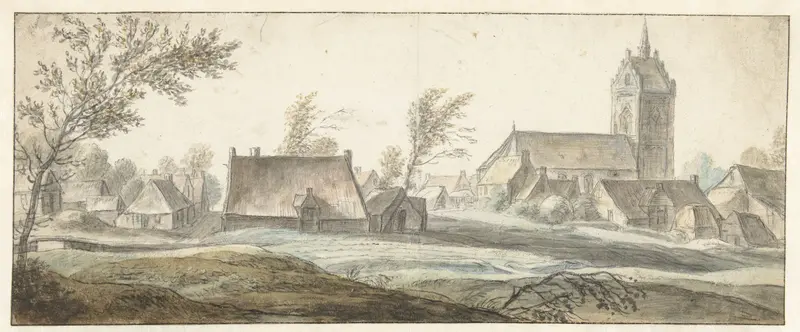
Gezicht op het dorp Soest
Antonie Waterloo
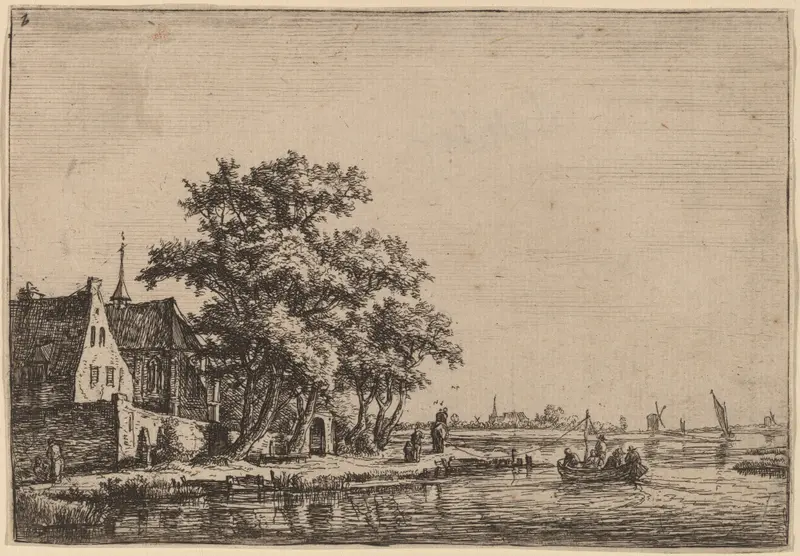
Churchyard at the Waterside
Antonie Waterloo
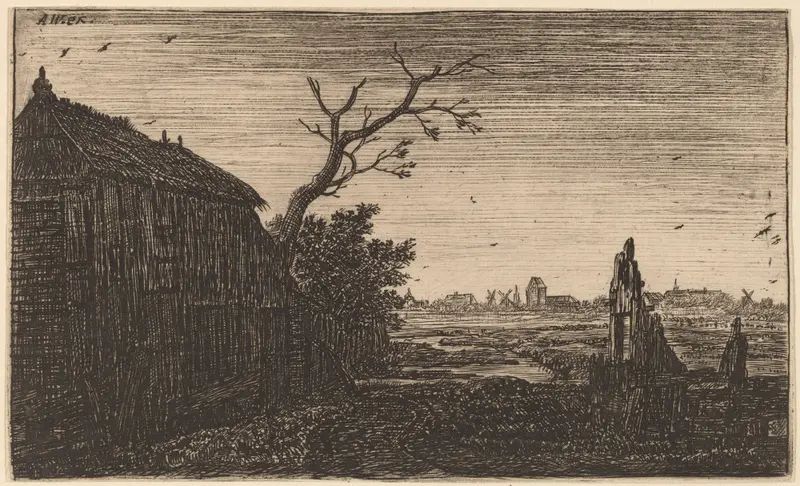
The Sluice
Antonie Waterloo
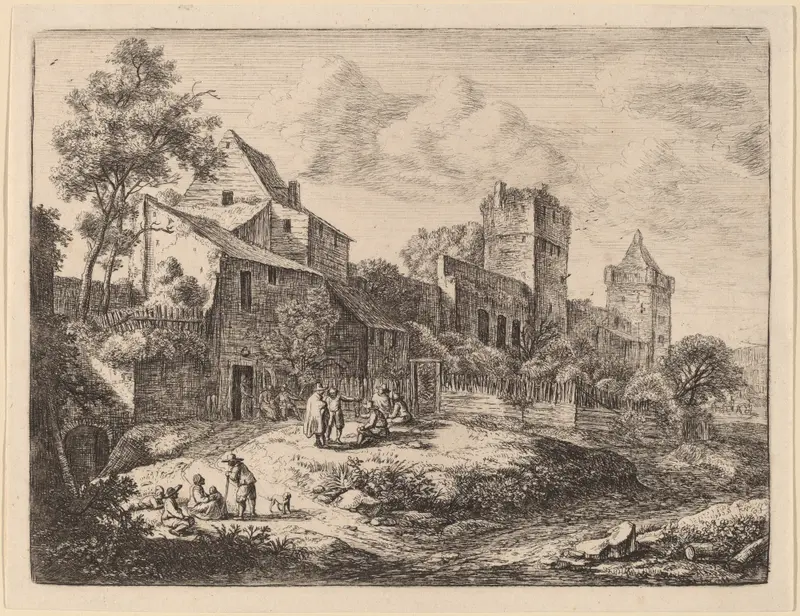
Square in Front of an Inn
Antonie Waterloo
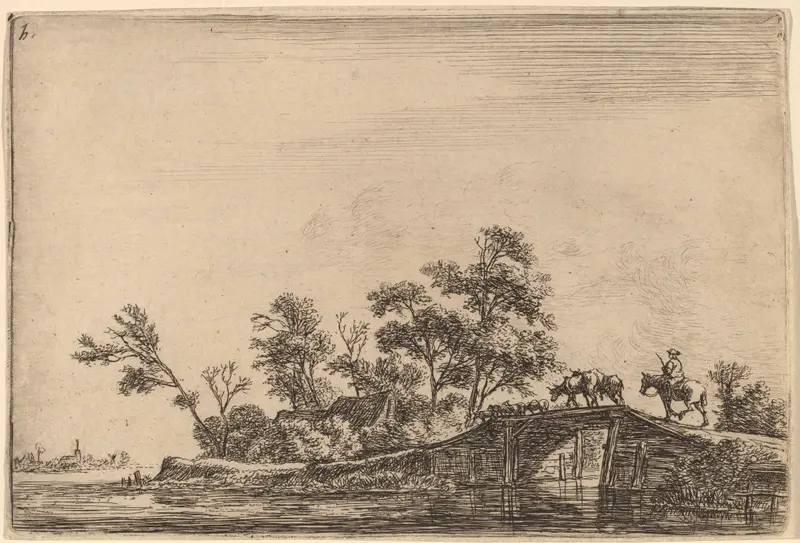
Rider and Flock on a Bridge
Antonie Waterloo
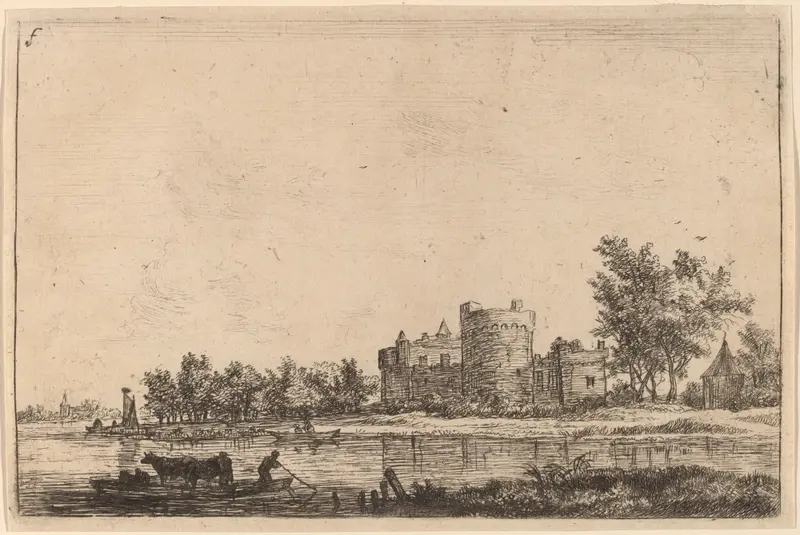
Two Cows on a Ferry
Antonie Waterloo
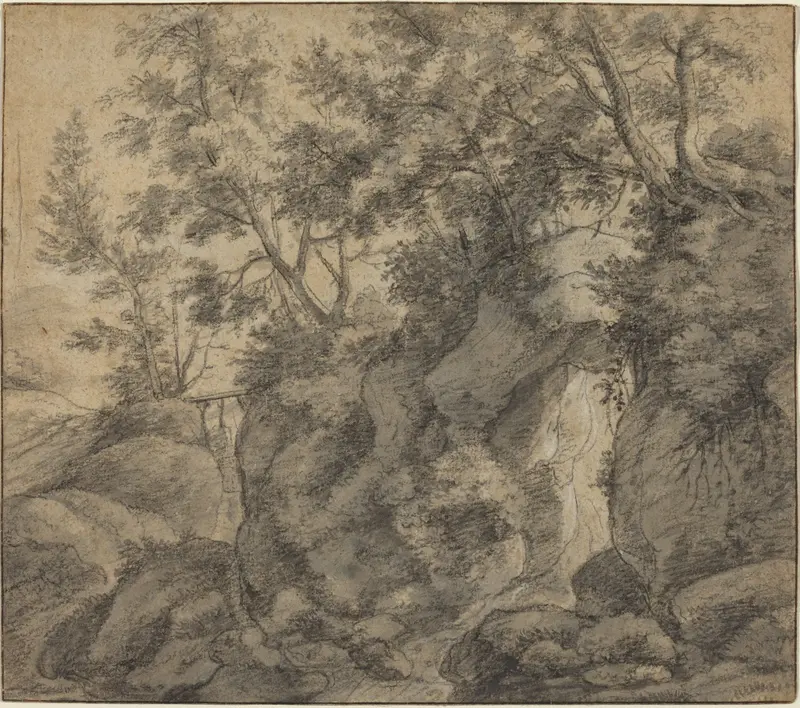
Landscape with a Wooded Ravine
Antonie Waterloo
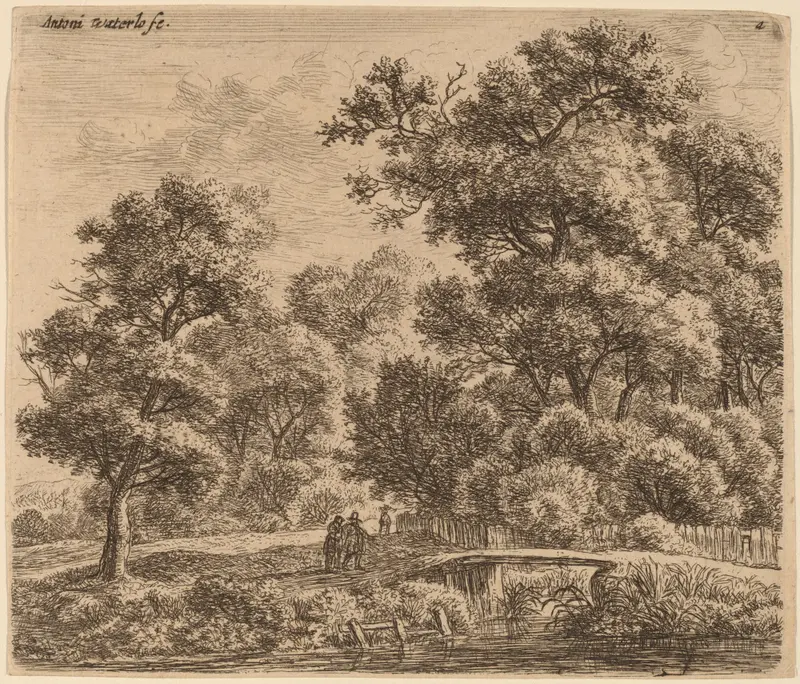
Wooded Landscape with a Bridge
Antonie Waterloo
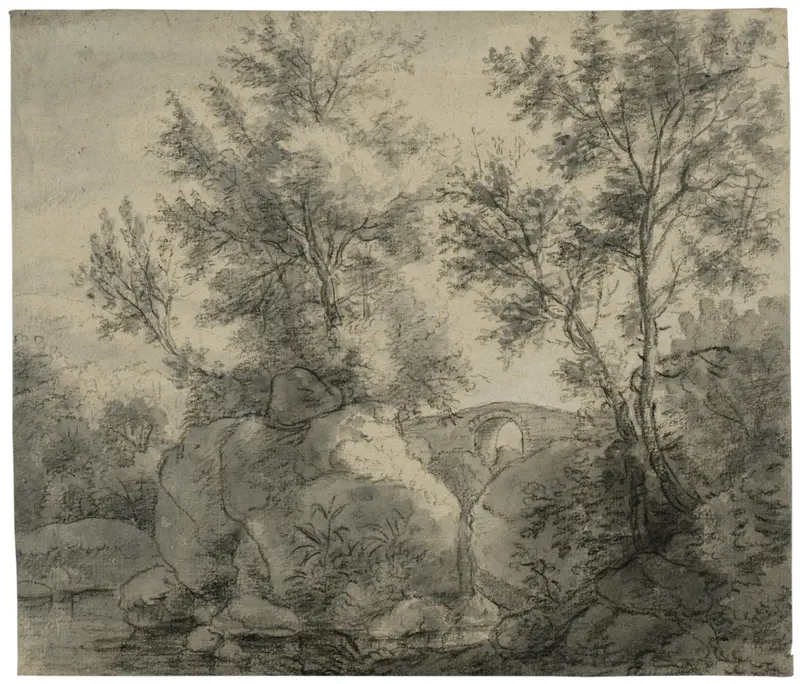
Rocky Landscape with a Stone Bridge
Antonie Waterloo
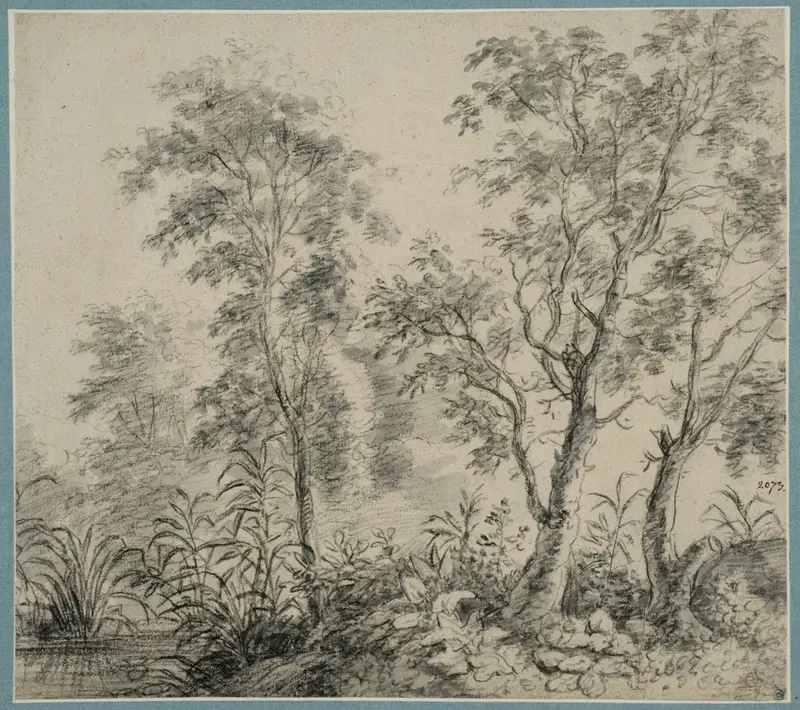
River Bank with a Row of Trees
Antonie Waterloo
More Landscape Art

The Starry Night
Vincent van Gogh

View of Delft
Johannes Vermeer

Water Lilies
Claude Monet

The Grand Canal, Venice, looking north-west from the Ca' Corner to the Ca' Contarini degli Scrigni, with the campanile of Santa Maria della Carità
Canaletto

Windsor Castle
Canaletto

The Grand Canal looking North-East from the Palazzo Dolfin-Manin to the Rialto Bridge
Canaletto