
A Woodland Fête — History & Facts
A hush of anticipation hangs in the air, as if the woodland itself is holding its breath for the revelers gathered beneath its shadowy canopy. The eye is drawn first to the cluster of elegant figures in luminous dresses, their forms softly glowing against the enveloping dusk. Each gesture is deliberate: a woman leans in to confide, another turns away, while a small group at the water’s edge seems to await the arrival of a boat gliding silently across the pond.
The light here is not the crisp daylight of a fête galante, but a golden haze that blurs detail and heightens the sense of secrecy and intimacy. The painter’s brush dissolves boundaries, letting the figures merge with their surroundings, as if the entire scene might vanish with a sigh. A Woodland Fête belongs to a mid-19th-century world in which leisure and sociability were newly celebrated themes, especially among the French bourgeoisie. Painted by Adolphe Joseph Thomas Monticelli sometime between the early 1850s and early 1860s, this work echoes the fêtes champêtres of earlier Rococo masters, yet with a modern, moody palette and a looser, more atmospheric touch.
Such scenes were prized for their ability to conjure a dream of refined escape—a gathering not only of people, but of light, color, and memory. Today, the painting resides in the Cleveland Museum of Art, its date uncertain, its mood unmistakable. Let your gaze linger on the shadows; they hold as much of the story as the figures themselves.
More Artworks by Adolphe Monticelli

Portrait of a Lady
Adolphe Monticelli
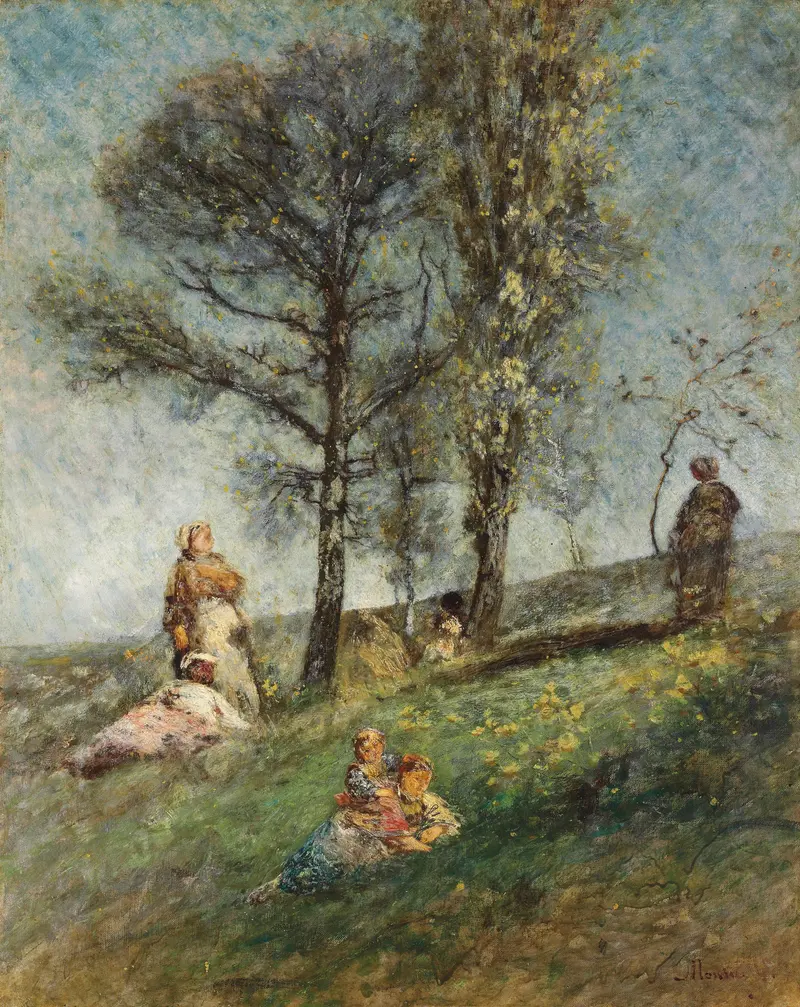
A Young Family Under Trees On A Hill
Adolphe Monticelli

Fête d'Après-Midi
Adolphe Monticelli
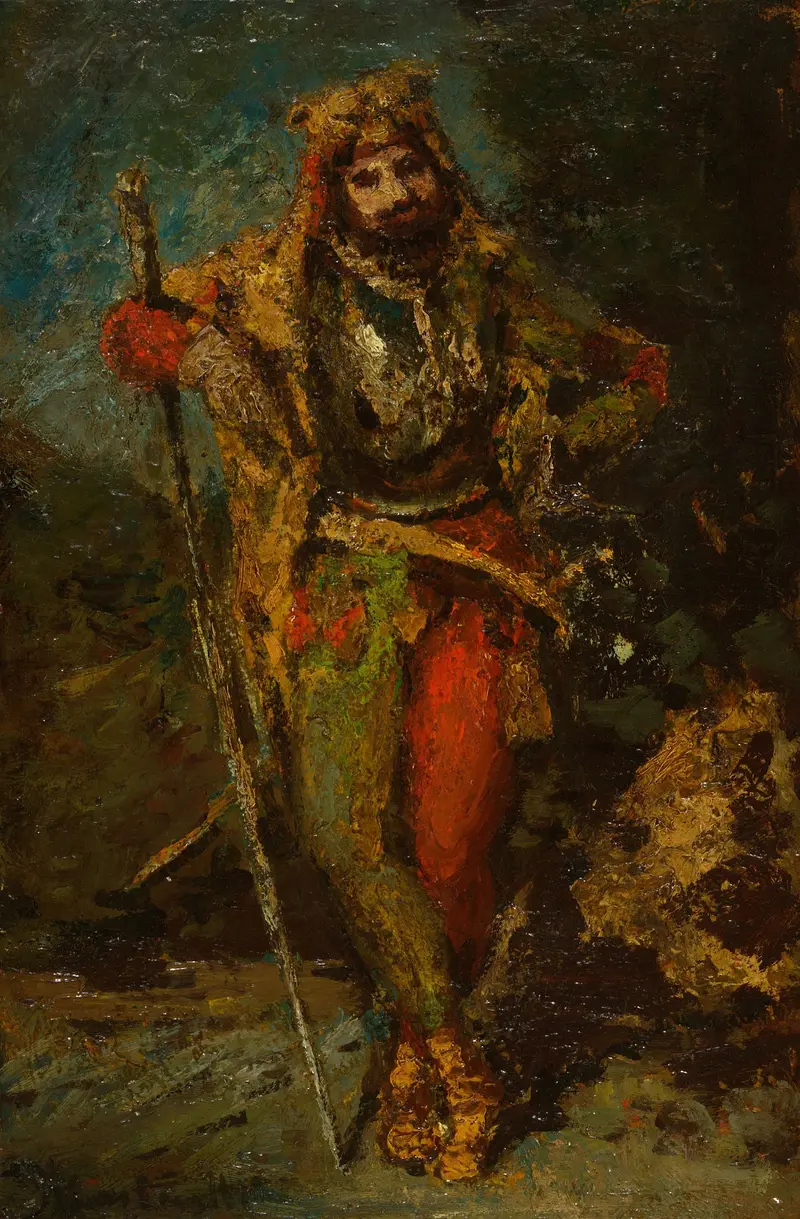
Mephisto from the Opera Faust
Adolphe Monticelli
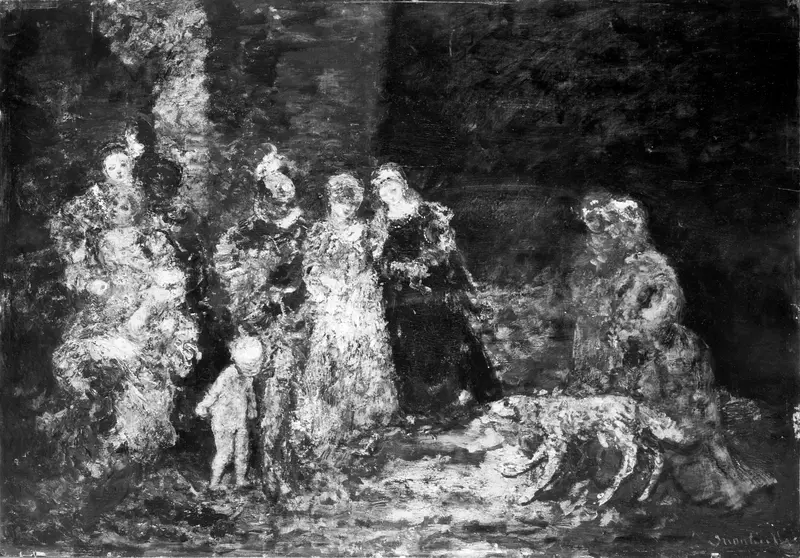
The Fairies
Adolphe Monticelli
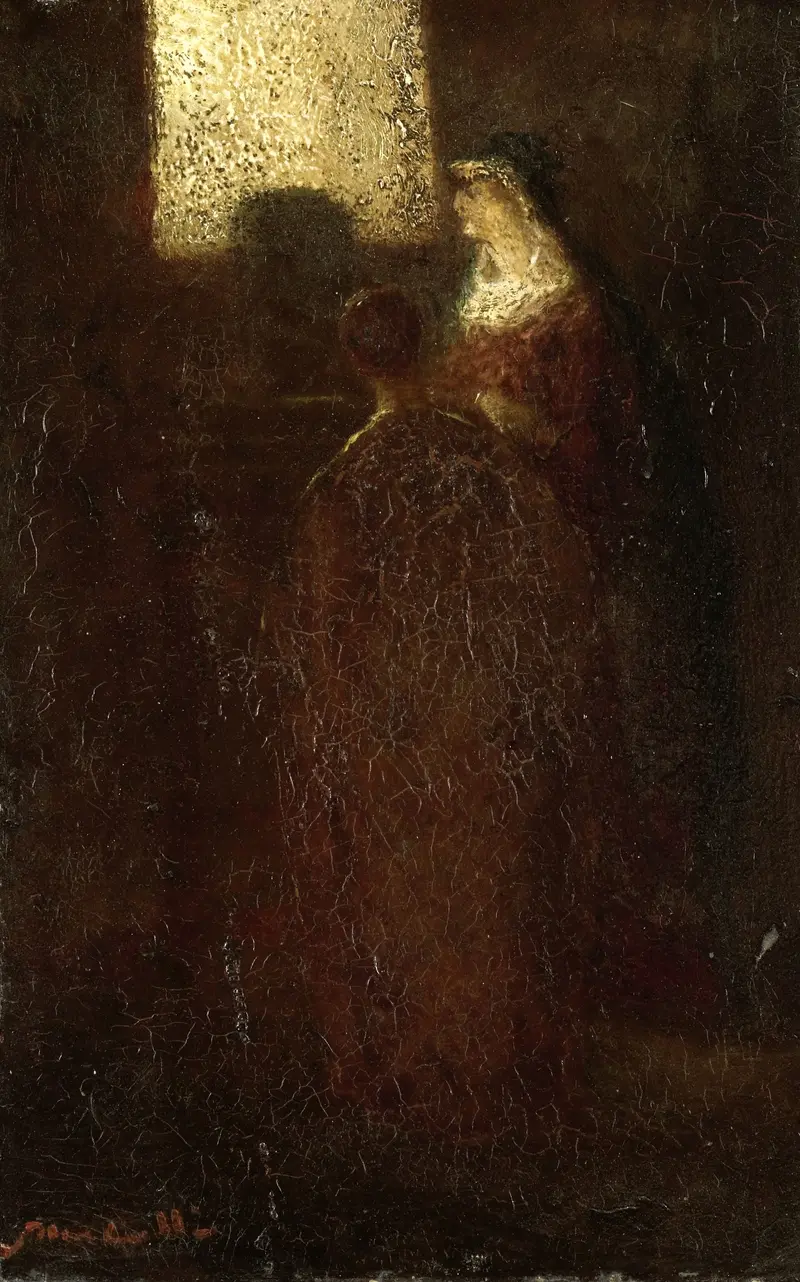
Aan het altaar
Adolphe Monticelli
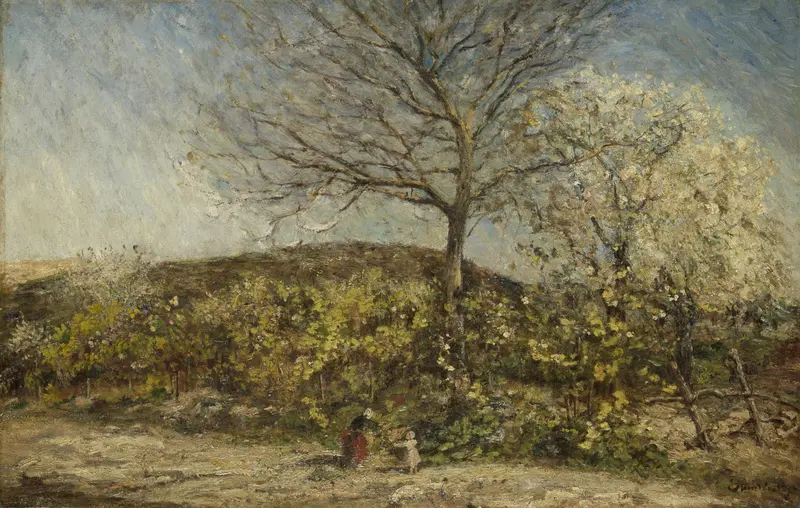
Landschap met bloeiende boomgaard
Adolphe Monticelli
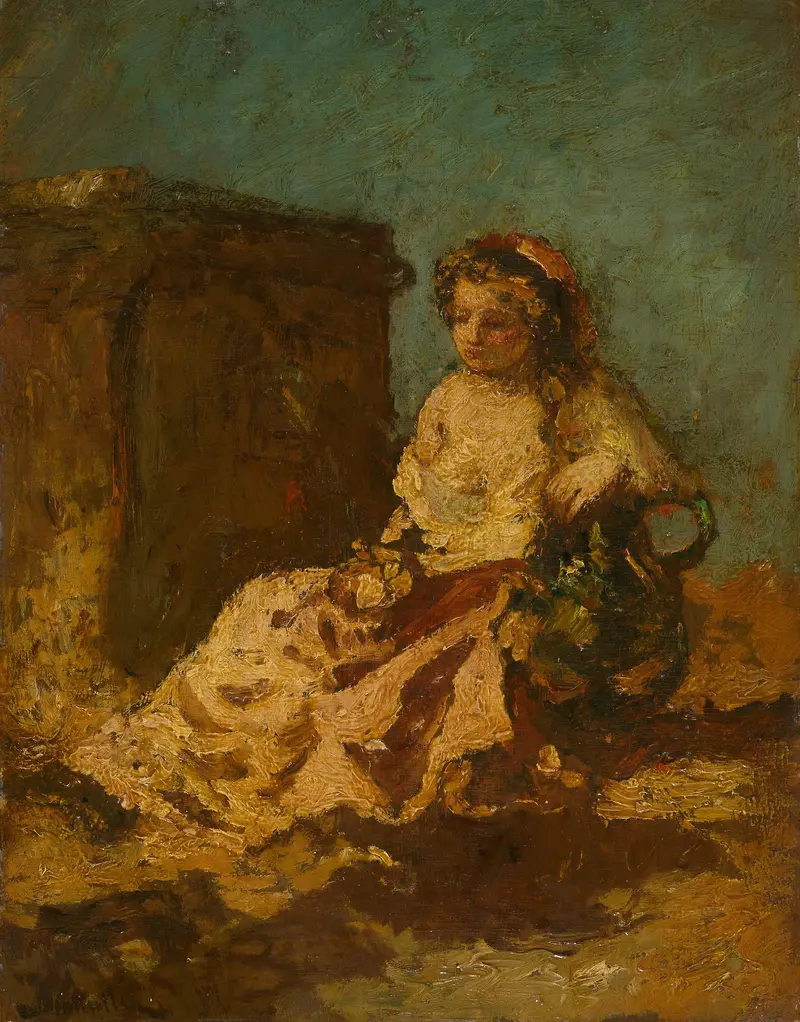
Meditation (Seated Woman)
Adolphe Monticelli
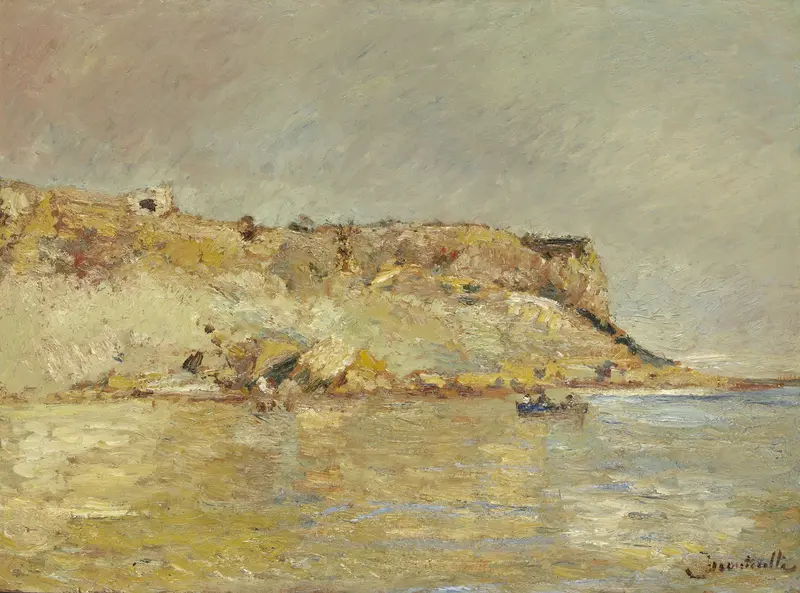
Coastal Mountains
Adolphe Monticelli
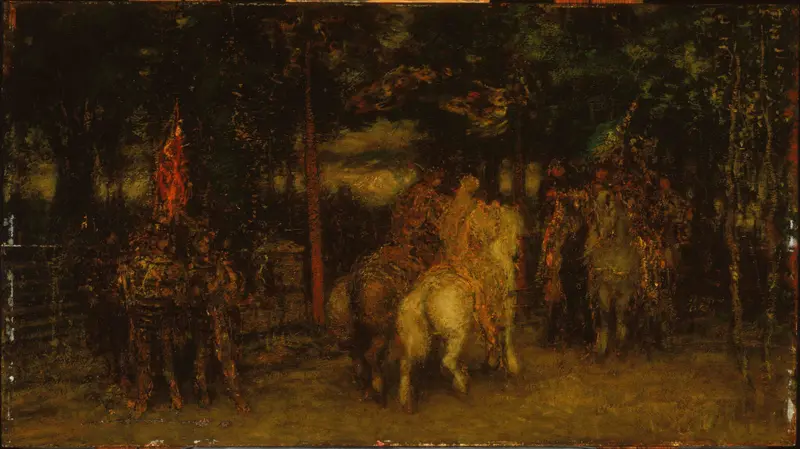
Landscape with Figures
Adolphe Monticelli
More Genre Scene Art

Banquet of the Officers of the St George Civic Guard
Frans Hals

Rembrandt and Saskia in the Scene of the Prodigal Son
Rembrandt van Rijn

Bal du moulin de la Galette
Pierre-Auguste Renoir

Quadrille at the Moulin Rouge
Henri de Toulouse-Lautrec

A Burial at Ornans
Gustave Courbet

When Will You Marry?
Paul Gauguin