
Aftenlandskap — History & Facts
A single figure emerges almost unnoticed along a path swallowed by shadow, while the last light of day burns gold behind a screen of trees. In Aftenlandskap, Alexandre-Gabriel Decamps chooses not to dramatize the landscape but to draw the viewer into its hush, where the glow on the horizon is both a promise and a farewell. The eye is led from the deep, earthy tones of the forest floor upward to the illuminated clouds, pausing at the almost hidden walker—a reminder of human smallness in the face of nature’s vastness.
The composition sets up a quiet tension: the darkness presses in, but the light persists, inviting the viewer to linger in this moment between day and night. Painted in 1854, this work belongs to a period when European artists were increasingly fascinated by the moods of nature, often painting outdoors to capture shifting light and atmosphere. While Decamps is best known for his Orientalist scenes, here he turns to the familiar genre of the evening landscape, a favorite among Romantic painters who sought to evoke the emotional power of dusk. Such paintings were often collected by a rising middle class eager to bring the drama and tranquility of nature into their homes.
Now held by the National Museum of Art, Architecture and Design, Aftenlandskap stands as a quiet testament to a time when the landscape was not just a backdrop, but a subject with its own story to tell—one that still asks us to look, and look again.
More Artworks by Alexandre-Gabriel Decamps

Still Life with Herring, Bread, and Cheese
Alexandre-Gabriel Decamps
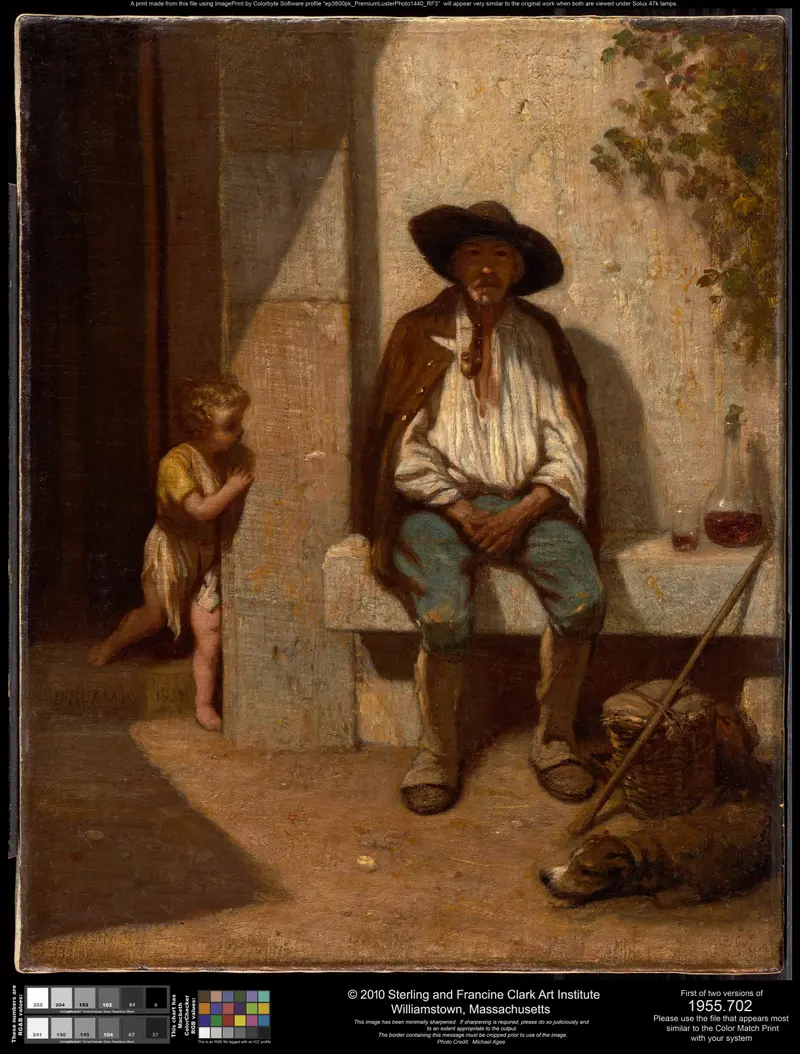
Italian Peasant
Alexandre-Gabriel Decamps
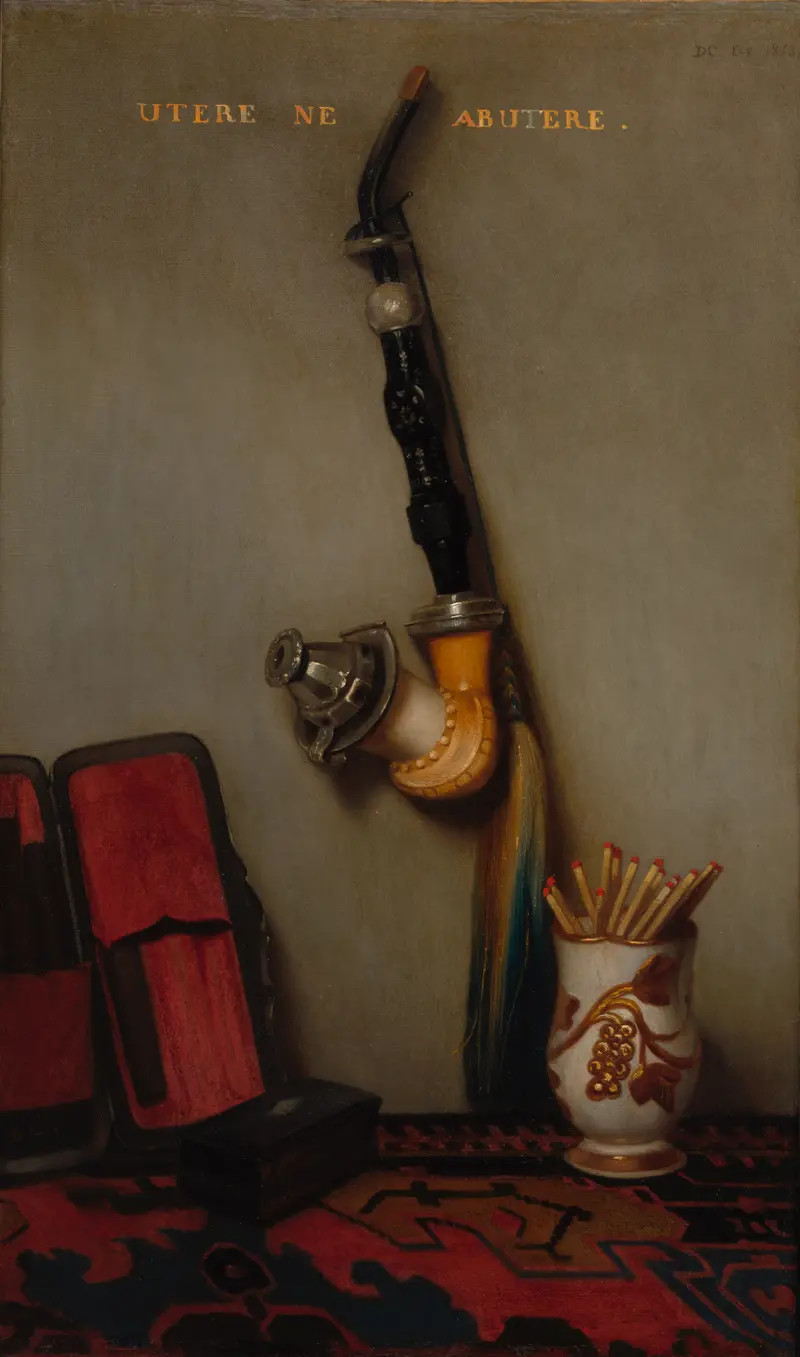
Still Life with Pipe and Matches
Alexandre-Gabriel Decamps
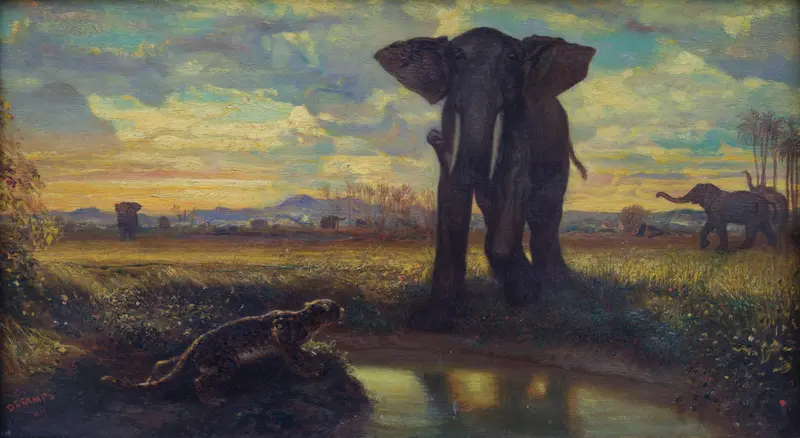
Tigre et éléphant à la source Musée du Louvre Peintures RF
Alexandre-Gabriel Decamps
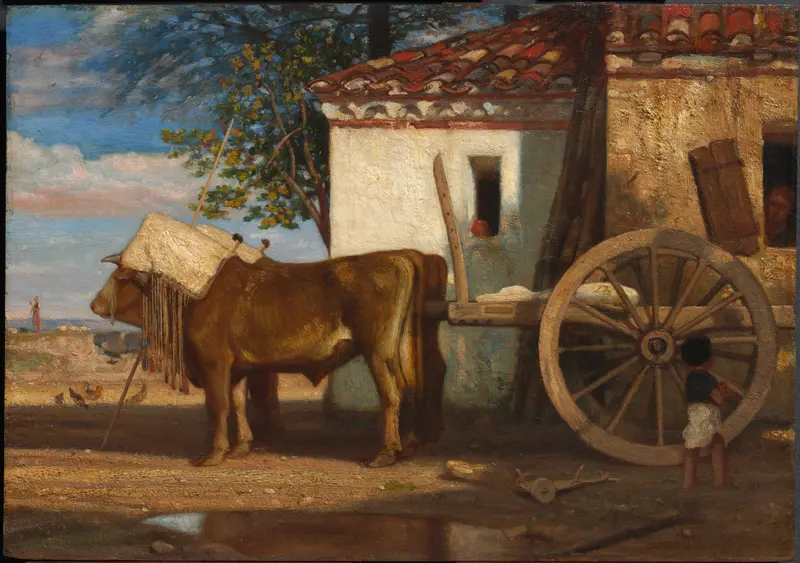
Oxen before a Farmhouse at Le Verrier
Alexandre-Gabriel Decamps
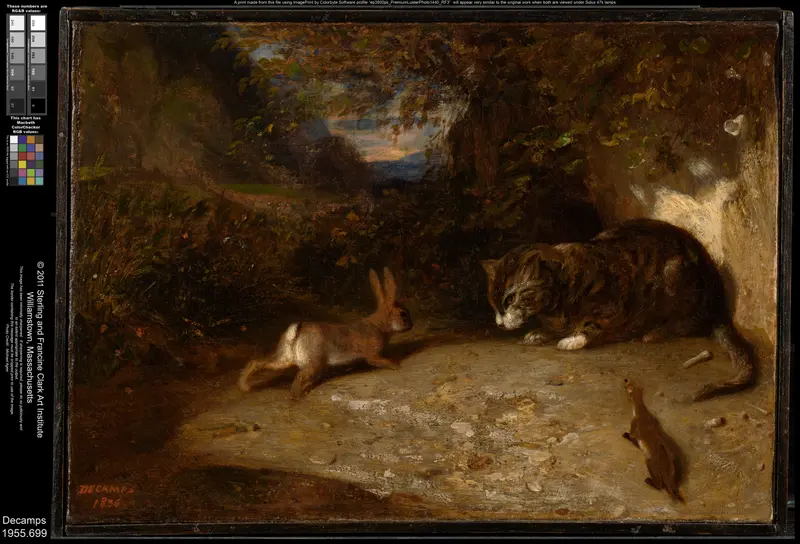
Cat, Weasel, and Rabbit
Alexandre-Gabriel Decamps
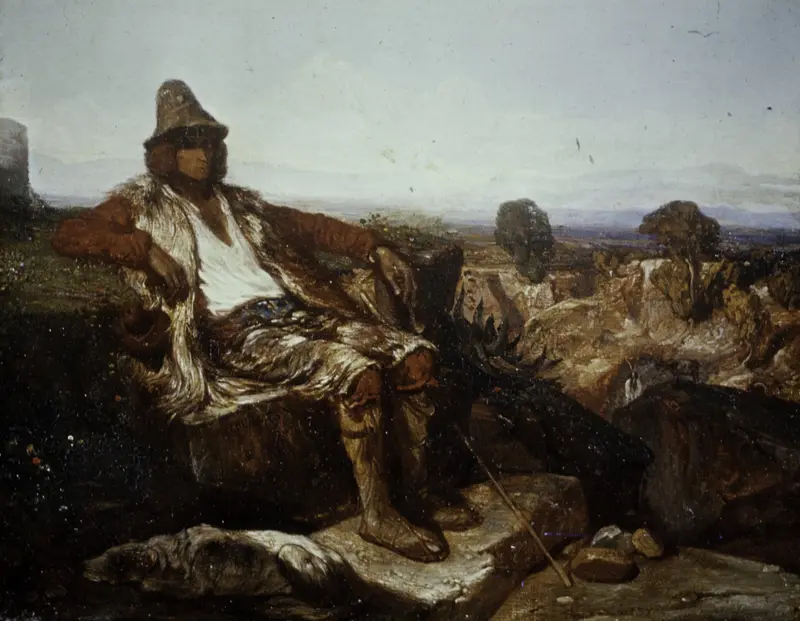
Goatherd of the Abruzzi
Alexandre-Gabriel Decamps
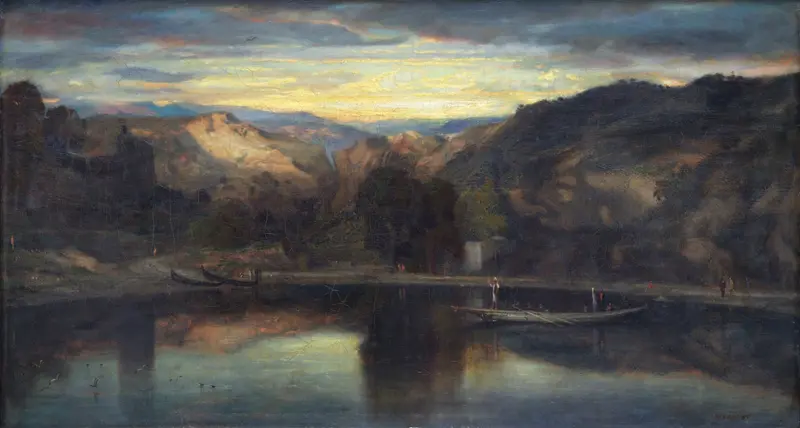
Jésus sur le lac de Génésareth Musée du Louvre Peintures RF
Alexandre-Gabriel Decamps

Espagnols jouant aux cartes Musée du Louvre Peintures RF
Alexandre-Gabriel Decamps
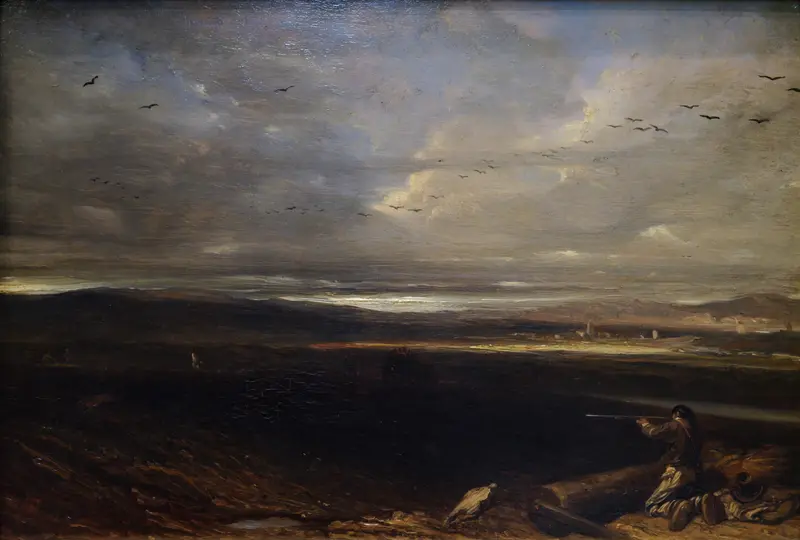
La battue en plaine Musée du Louvre Peintures RF
Alexandre-Gabriel Decamps
More Landscape Art

The Starry Night
Vincent van Gogh

View of Delft
Johannes Vermeer

Water Lilies
Claude Monet

The Grand Canal, Venice, looking north-west from the Ca' Corner to the Ca' Contarini degli Scrigni, with the campanile of Santa Maria della Carità
Canaletto

Windsor Castle
Canaletto

The Grand Canal looking North-East from the Palazzo Dolfin-Manin to the Rialto Bridge
Canaletto