
Afterglow on the Meadow — History & Facts
In the soft embrace of twilight, the world feels suspended between day and night, a delicate balance where time slips away. Each brushstroke captures the fleeting essence of nature, reflecting how moments, however ephemeral, can carve their imprint on our souls. Look to the left where the gentle undulation of the meadow starts, the grass painted in muted greens and warm yellows, bathed in a golden luminescence. The horizon glows softly, hinting at the sun's recent departure, while a serene sky, streaked with pastel hues, unfolds above the tranquil landscape.
Inness’s deft use of light and shadow encourages the eye to wander, inviting contemplation and an appreciation for the stillness that envelops the scene. At the heart of this painting lies a poignant tension between nostalgia and the inexorable passage of time. The tranquil meadow, seemingly serene, hints at a deeper yearning for moments that are lost yet beautifully preserved in memory. The sun’s afterglow signifies closure, suggesting that beauty and longing are inextricably intertwined, each hinting at the other’s existence in the fleeting dance of dusk. Created between 1888 and 1892, this work emerged during a transformative period for the artist in the quietude of his New Jersey home.
Inness, who was deeply influenced by both the Hudson River School and Impressionism, sought to capture the spiritual essence of nature. The late 19th century was a time of introspection and change in the art world, and through this piece, he solidified his vision of landscape as a reflection of human emotion.
More Artworks by George Inness
Browse all →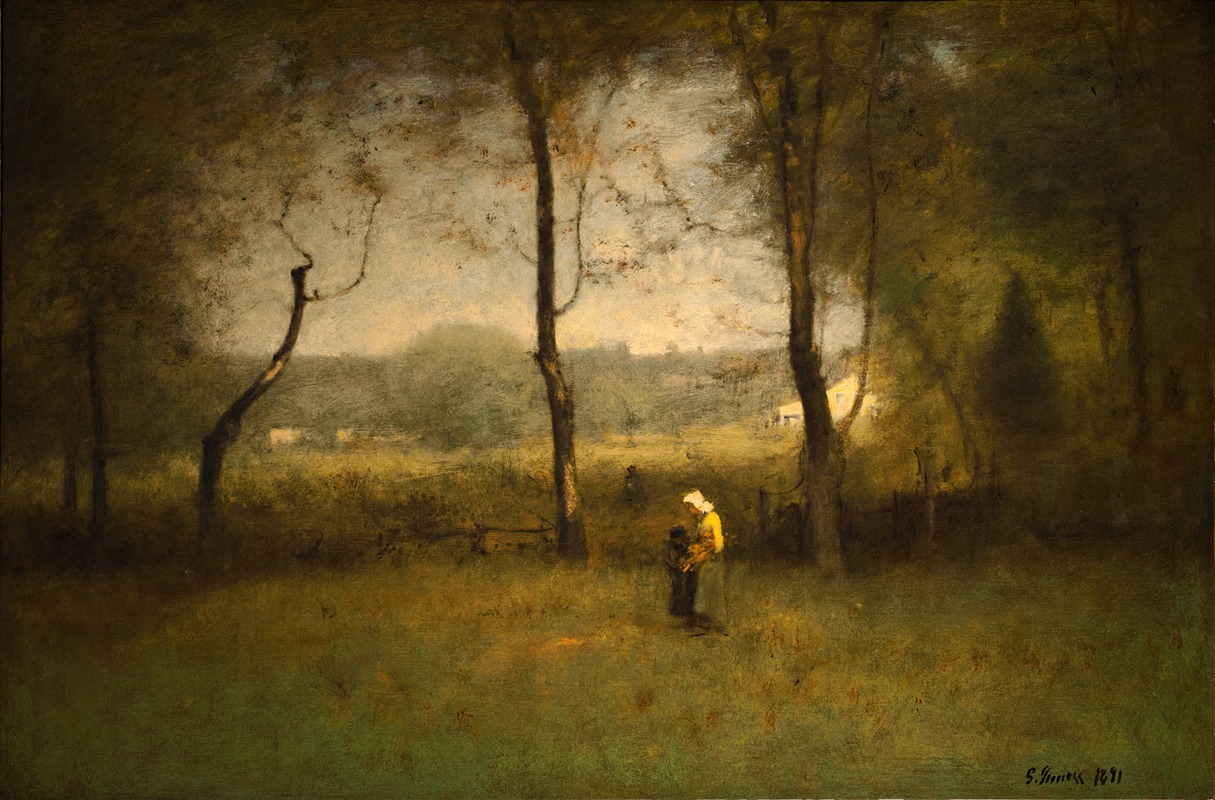
Autumn Woods
George Inness
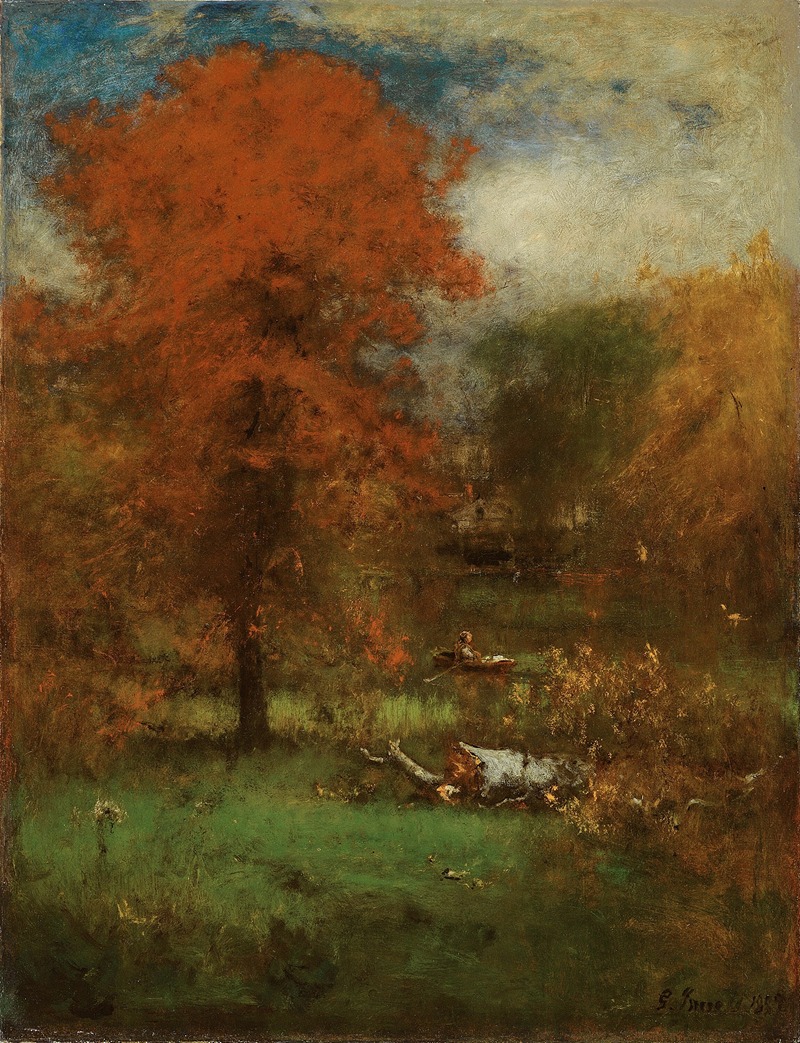
The Mill Pond
George Inness
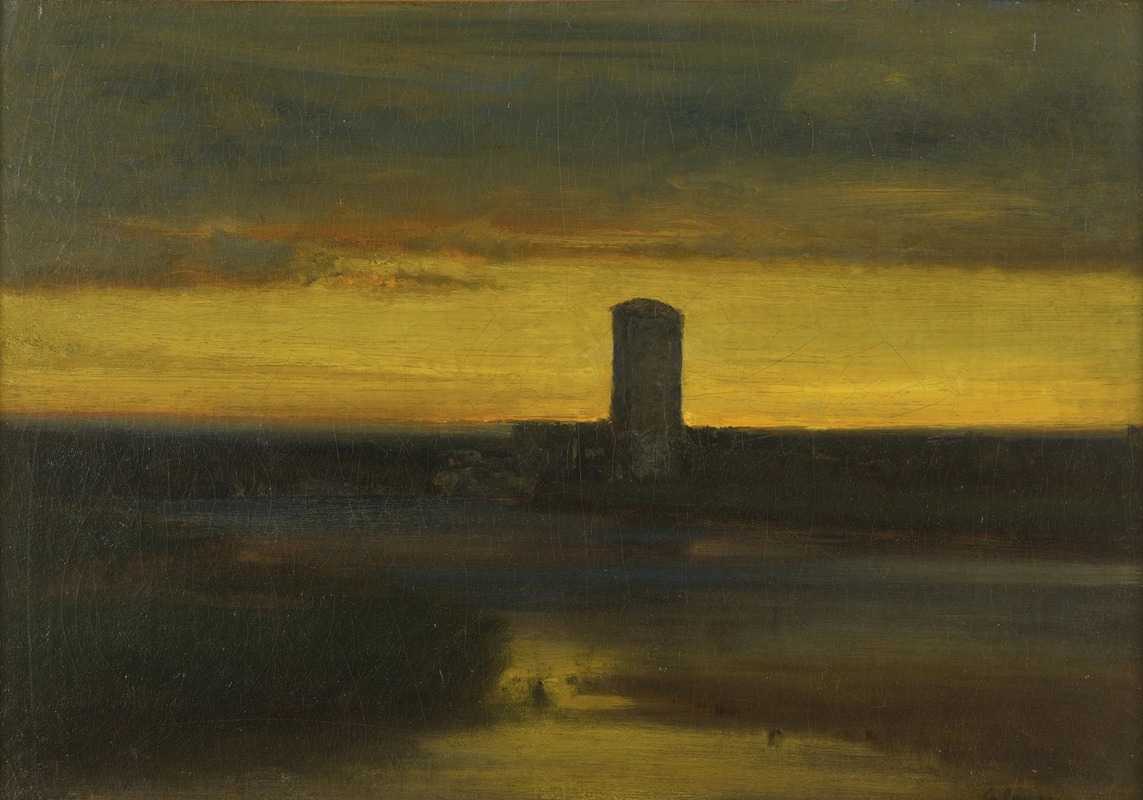
Afterglow
George Inness
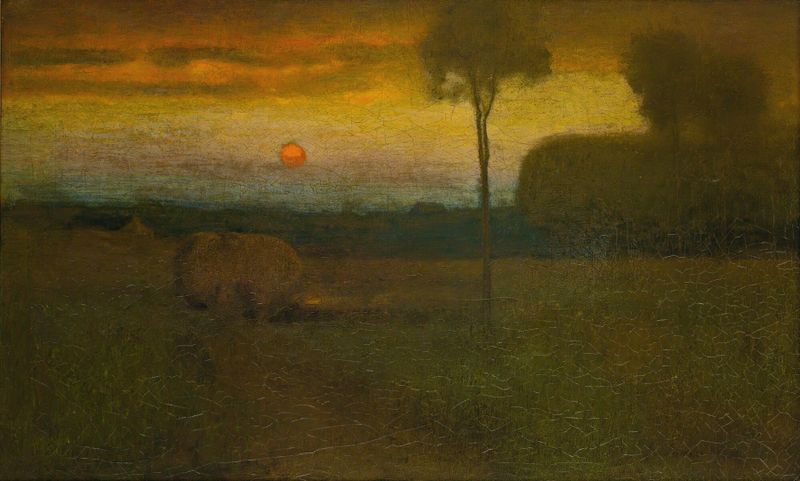
Landscape (Evening Landscape)
George Inness

Montclair
George Inness

View in Berkshire County, Massachusetts, Clearing Off after a September Storm
George Inness

October
George Inness
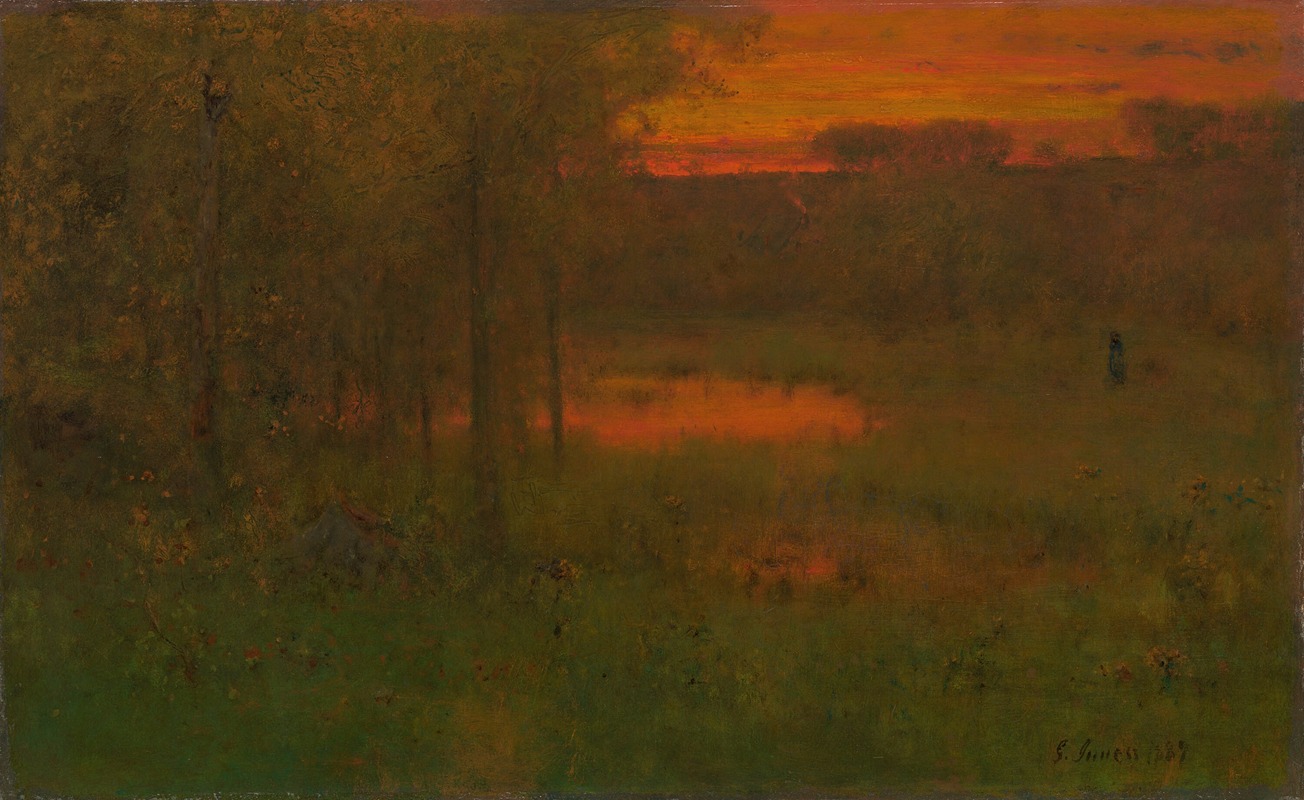
Landscape, Sunset
George Inness
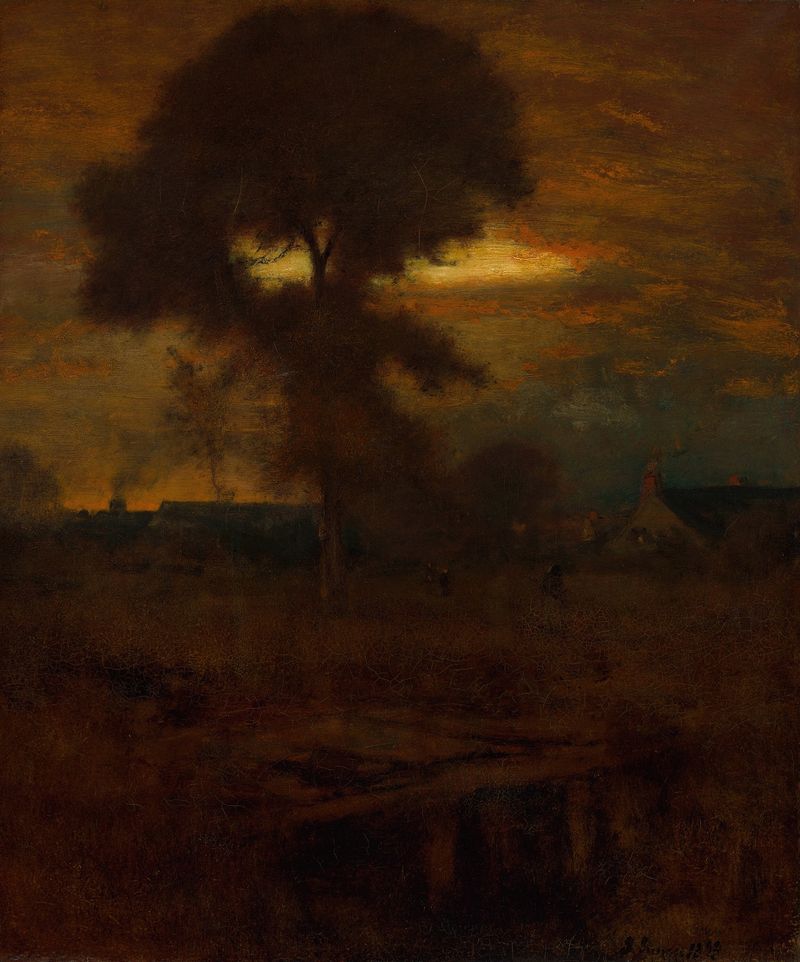
Afterglow
George Inness
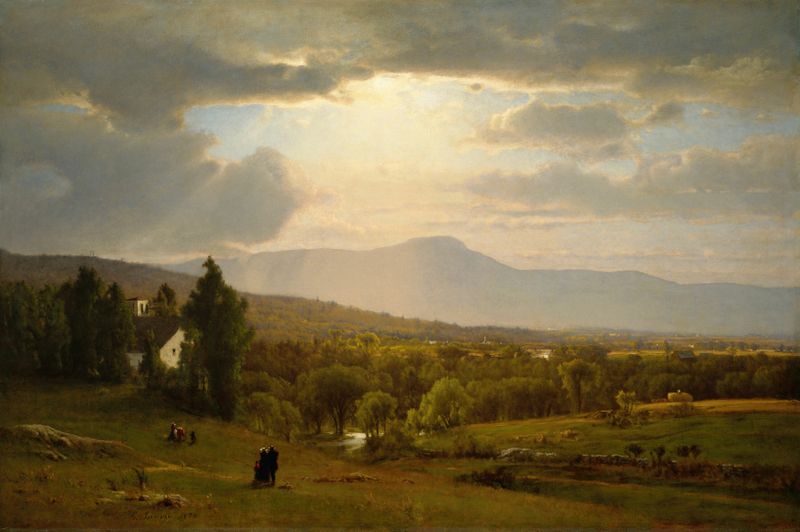
Catskill Mountains
George Inness





