
American Flamingo — History & Facts
A life-size, bright red-pink American flamingo bends its long neck in a deep curve until its black-tipped bill nearly touches the ground at the water's edge. Far behind it, small pale flamingos wade in a shallow lagoon, and faint uncolored studies of the bill and a webbed foot fill the top of the sheet. The engraved title runs along the bottom margin. John James Audubon insisted on showing every bird at life size in The Birds of America, which he published in London from 1827 to 1838 on double-elephant sheets of about 26 by 38 inches, the largest handmade paper of the day.
To fit the four-foot flamingo on the page, he curved its neck sharply downward. Robert Havell Jr. engraved, printed and hand-colored the plate in 1838 after Audubon's watercolor, in engraving and aquatint. Audubon saw flocks of flamingos in the Florida Keys in 1832 but struggled to get a specimen, finally obtaining birds from Cuba; on his instructions Havell added the distant flock and the studies of the feet.
This copy, one of only about 120 complete sets, was given to the university by the daughters of William McCullough Darlington, and when librarians scanned it they found cigar ash on the plates. It is in the University of Pittsburgh Library System in Pittsburgh.
More Artworks by John James Audubon
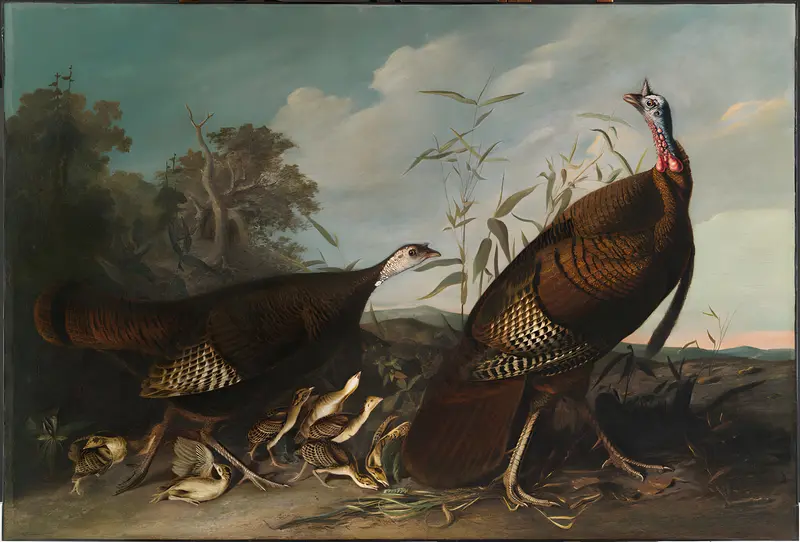
Wild Turkey Cock, Hen, and Chicks
John James Audubon
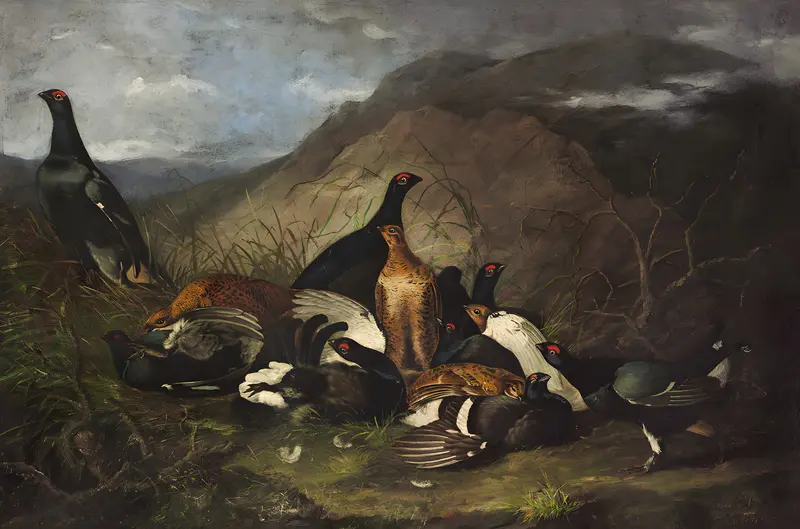
Scottish Black Grouse, Cocks and Hens
John James Audubon
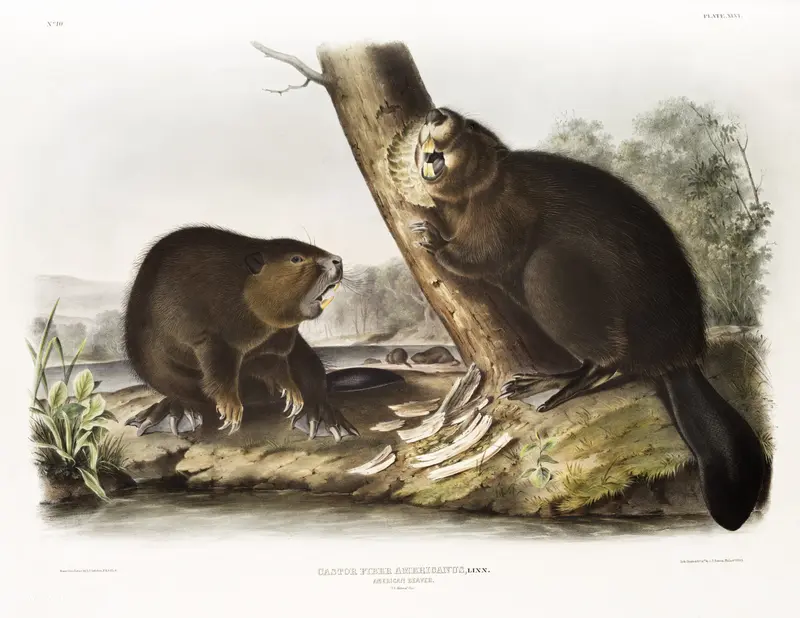
American Beaver
John James Audubon
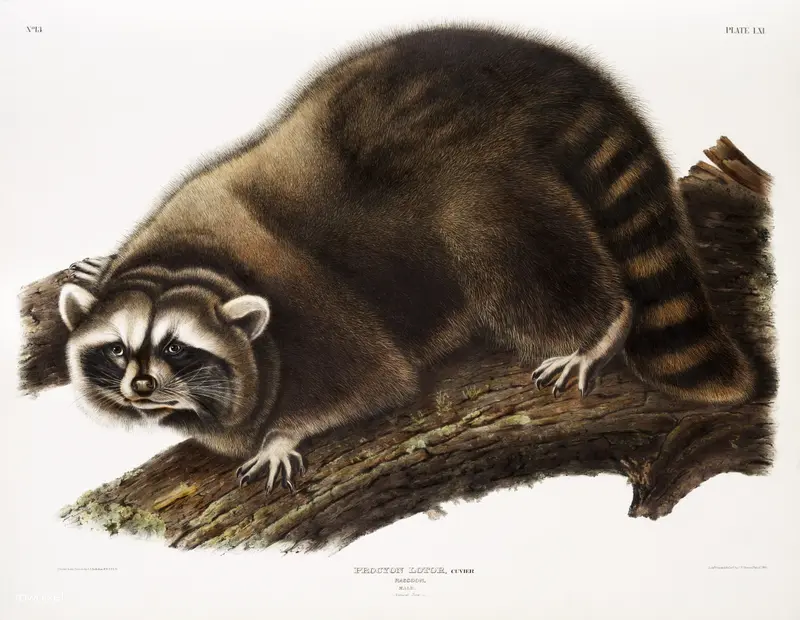
Raccoon
John James Audubon

Magnificent Frigatebird
John James Audubon
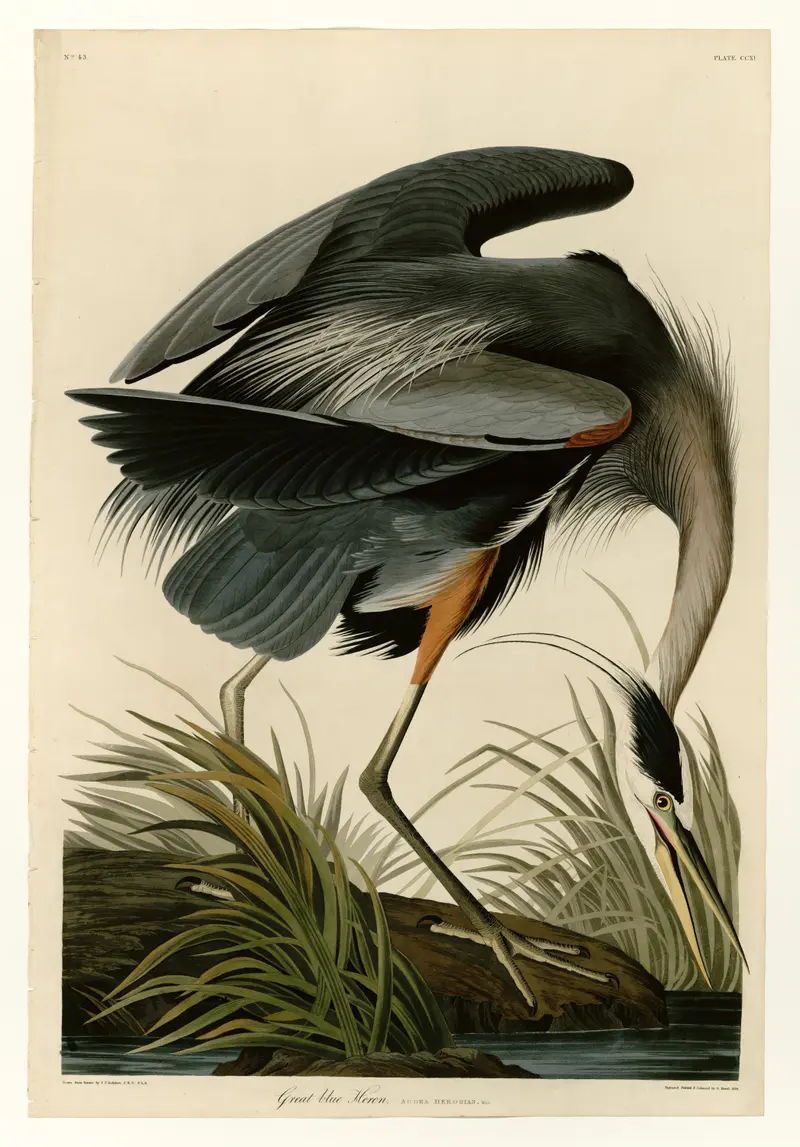
Great Blue Heron
John James Audubon
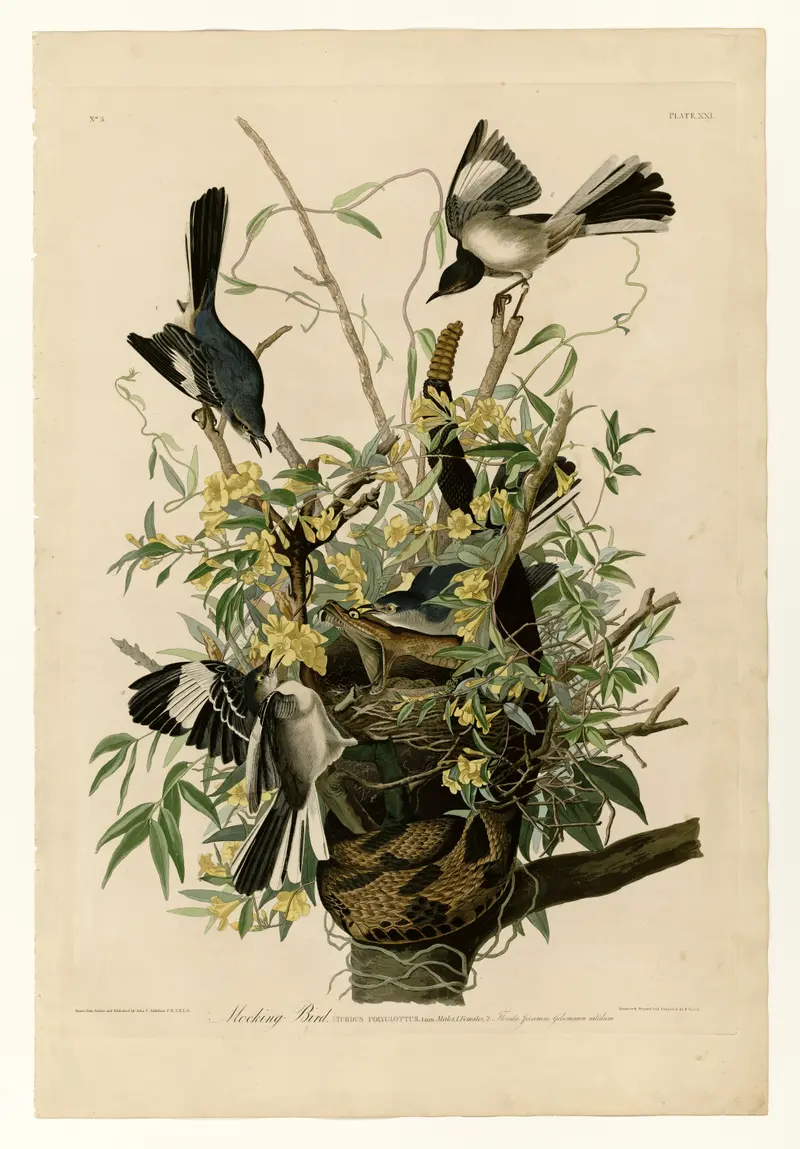
Northern Mockingbird
John James Audubon
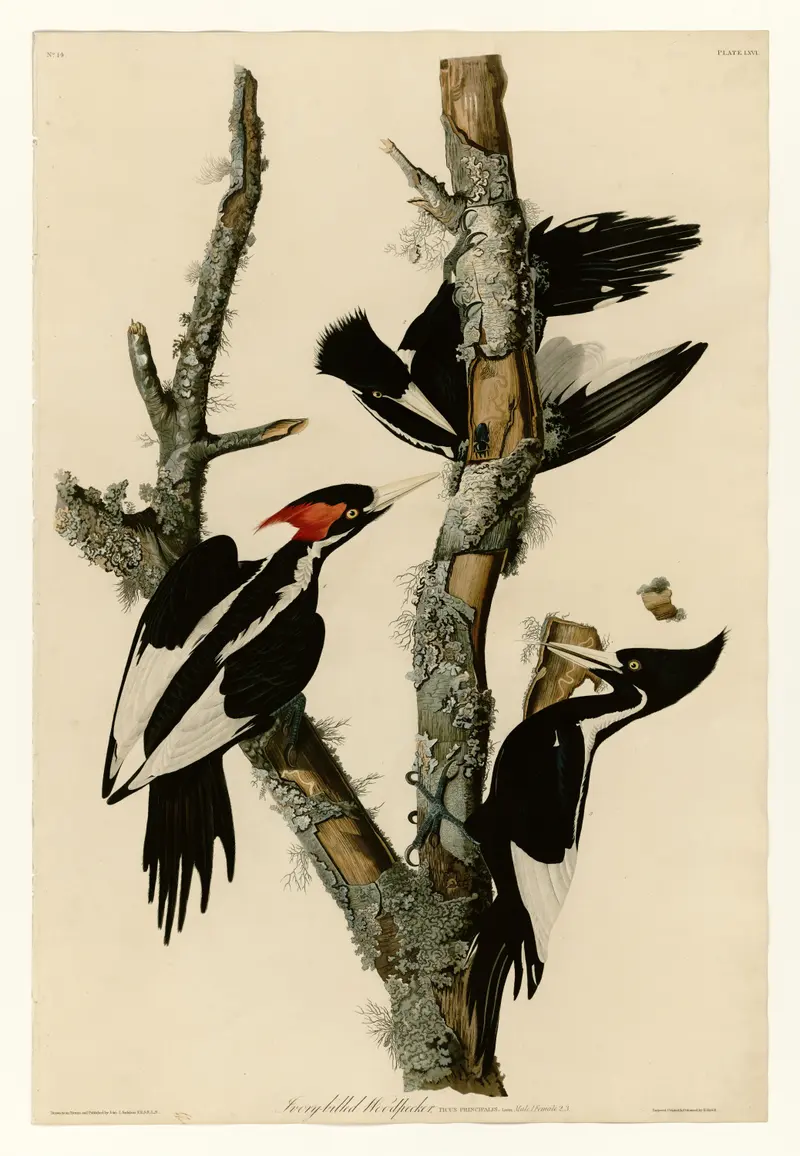
Ivory-billed Woodpecker
John James Audubon
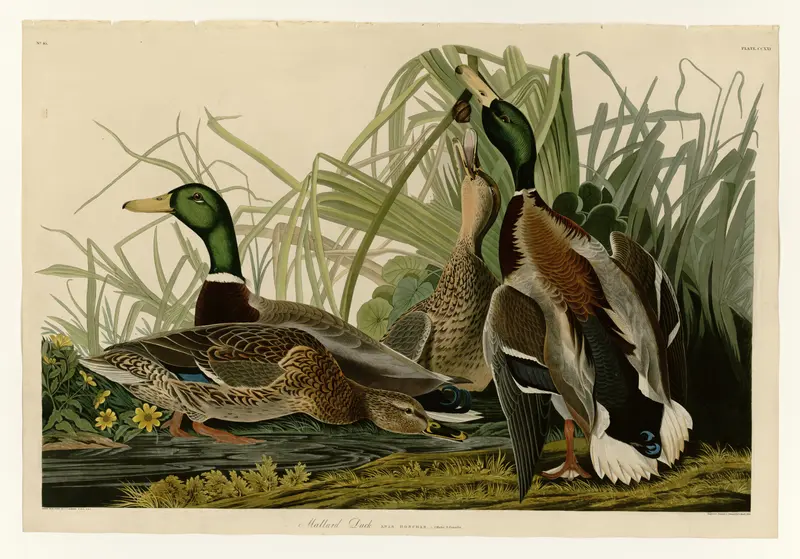
Mallard
John James Audubon
Ruby-throated Hummingbird
John James Audubon





