
An Italianate landscape with shepherds by a grotto — History & Facts
A single shaft of golden light draws the eye straight to the mouth of the grotto, where shepherds linger in quiet conversation and sheep cluster in the cool shadow. This is not the misty, flat lowlands of Aelbert Cuyp’s native Netherlands, but a sun-drenched, imaginary Italy—a vision shaped by the artist’s fascination with southern warmth and ancient ruins. The landscape stretches out in gentle ochres and greens, inviting the viewer to wander from the solitary figure in blue, staff in hand, toward the distant haze where land and sky dissolve.
Every detail—the goats pausing mid-step, the cow resting in the foreground, the delicate trees clinging to rocky outcrops—serves to heighten the sense of calm and timelessness, as if the world here has settled into a perfect afternoon. Painted in 1645, this scene belongs to a tradition that swept through Dutch art in the seventeenth century, when artists and collectors alike fell under the spell of the so-called Italianate landscape. Though few Dutch painters ever traveled to Italy, their works conjured up an idealized Mediterranean world, meant less as topographical record than as a stage for pastoral harmony and classical leisure. Such paintings were highly prized by prosperous burghers eager to display taste and learning, and Cuyp became especially admired for his ability to fuse northern clarity with southern light.
Little is recorded about the specific journey of this painting, now listed in a modern auction catalogue, but its gentle radiance and careful balance of figures and nature still invite the viewer to linger, imagining a world where the day’s only task is to watch over sheep and savor the sun.
More Artworks by Aelbert Cuyp

The Maas at Dordrecht
Aelbert Cuyp
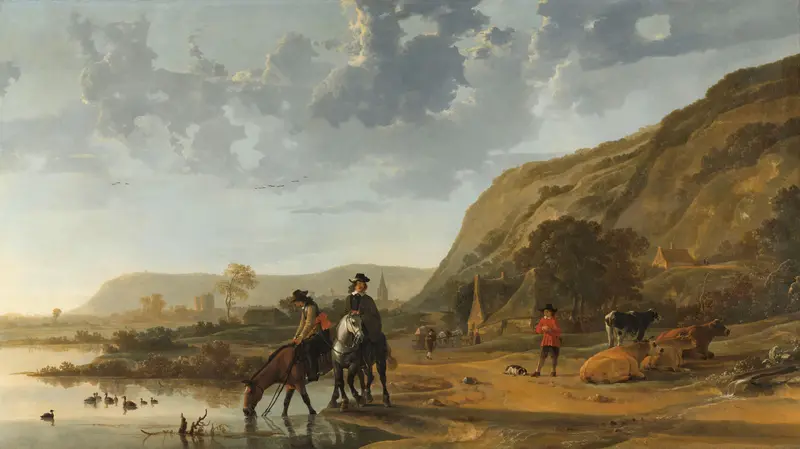
River Landscape with Riders
Aelbert Cuyp

The Maas at Dordrecht
Aelbert Cuyp
Gezicht op Dordrecht
Aelbert Cuyp
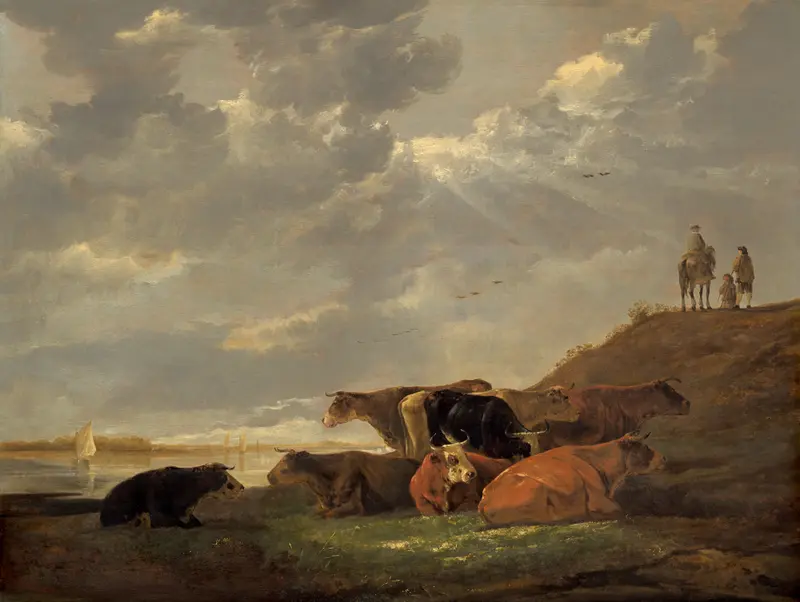
River Landscape with Cows
Aelbert Cuyp
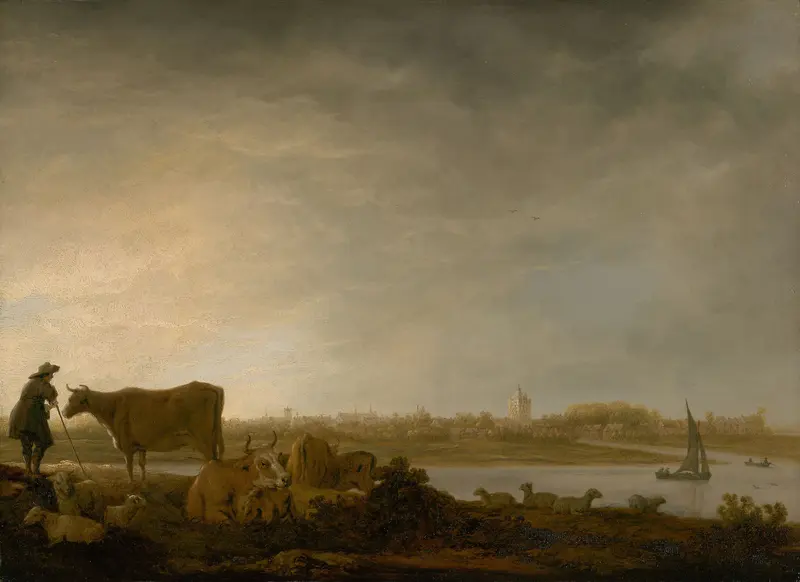
A View of Vianen with a Herdsman and Cattle by a River
Aelbert Cuyp
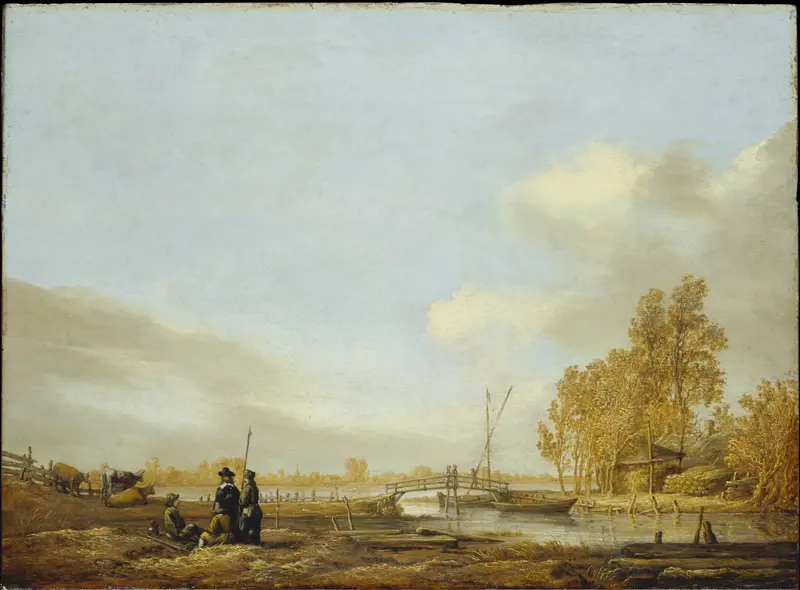
River Landscape with Footbridge
Aelbert Cuyp
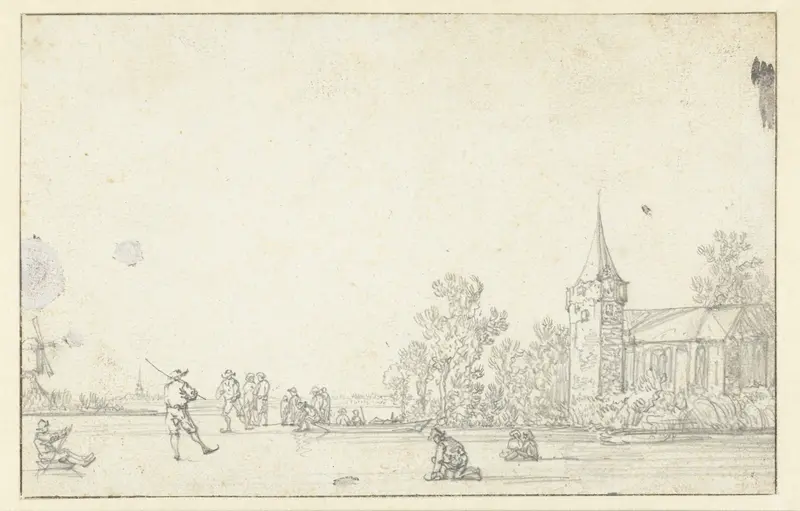
Bevroren rivier met schaatsers bij een kerk
Aelbert Cuyp

Cattle near a River
Aelbert Cuyp
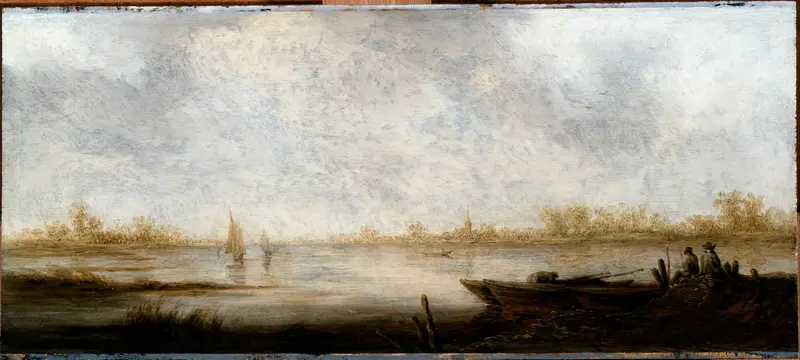
River Landscape
Aelbert Cuyp
More Landscape Art

The Starry Night
Vincent van Gogh

View of Delft
Johannes Vermeer

Water Lilies
Claude Monet

The Grand Canal, Venice, looking north-west from the Ca' Corner to the Ca' Contarini degli Scrigni, with the campanile of Santa Maria della Carità
Canaletto

Windsor Castle
Canaletto

The Grand Canal looking North-East from the Palazzo Dolfin-Manin to the Rialto Bridge
Canaletto