
Antwerp and the Vlaams Hoofd in — History & Facts
What first seizes the eye in Antwerp and the Vlaams Hoofd in is the audacious split between heaven and earth, a double world unfolding in a single frame. Above, a celestial vision unfolds: God the Father, orb and scepter in hand, presides in radiant authority, flanked by Christ and the Virgin Mary, their gestures and glances weaving a silent conversation of intercession and grace. Angels crowd the clouds, their bodies twisting in anticipation or awe, while below, the city of Antwerp stretches out in crisp, sunlit detail, its spires and harbor teeming with the quiet industry of ships and townsfolk.
The artist’s low horizon grants the sky—and the divine drama within it—the commanding role, yet the careful rendering of every ship and cow below insists that the earthly city is no less worthy of attention. This painting belongs to a moment in early seventeenth-century Flanders when city views were more than topographical records—they were acts of civic pride and spiritual reassurance. Antwerp, at the dawn of 1600, was a city marked by both commercial ambition and religious anxiety, its fortunes bound to the tides of faith and trade. Works like this, often commissioned by city officials or wealthy guilds, offered a vision of protection: the city, bustling and prosperous, watched over by the heavens.
Abel Grimmer, active in Antwerp, was known for such panoramic cityscapes, blending meticulous observation with an overlay of the sacred. History has kept few traces of this specific painting’s early life, but its home today in the Royal Museum of Fine Arts Antwerp lets us see the city as its citizens once hoped it would be seen—under the watchful gaze of both God and history.
More Artworks by Abel Grimmer

Flemish proverbs
Abel Grimmer
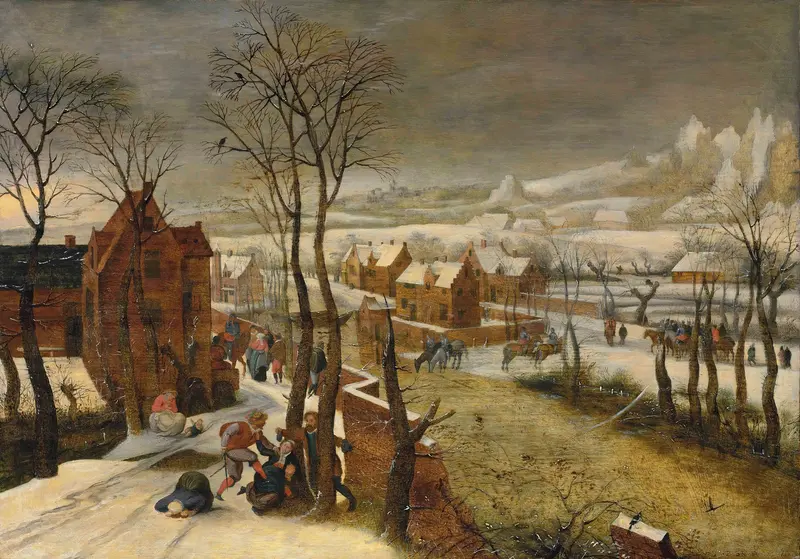
A Village Landscape In Winter With The Massacre Of The Innocents
Abel Grimmer
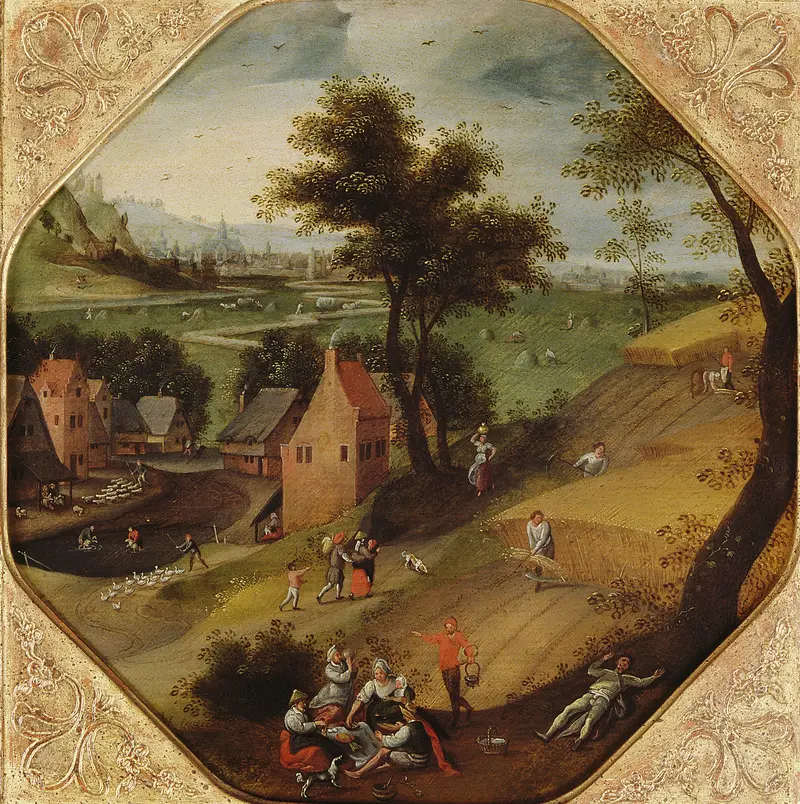
De Zomer
Abel Grimmer
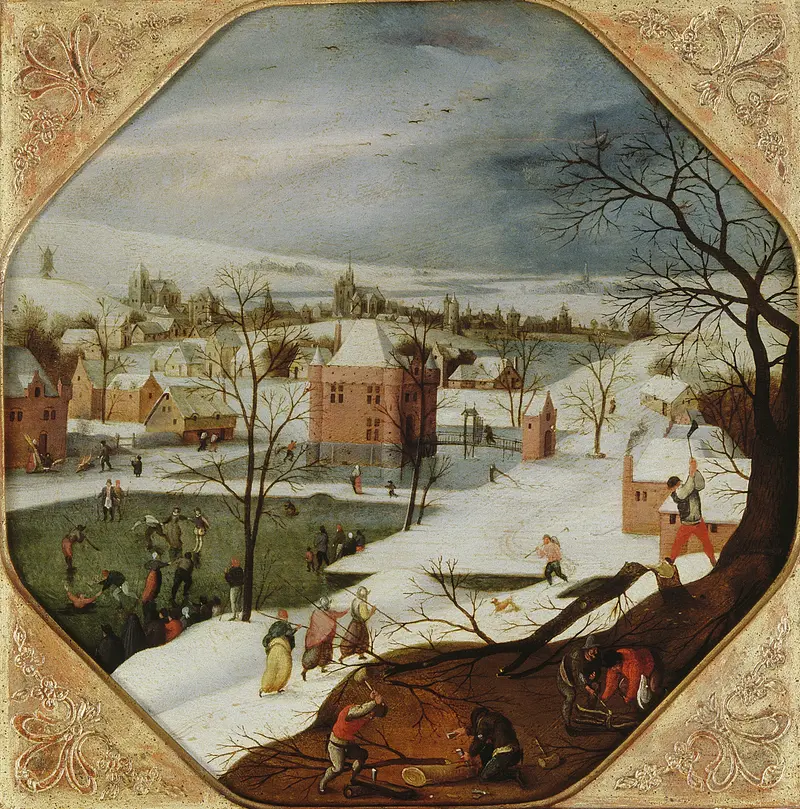
De Winter
Abel Grimmer
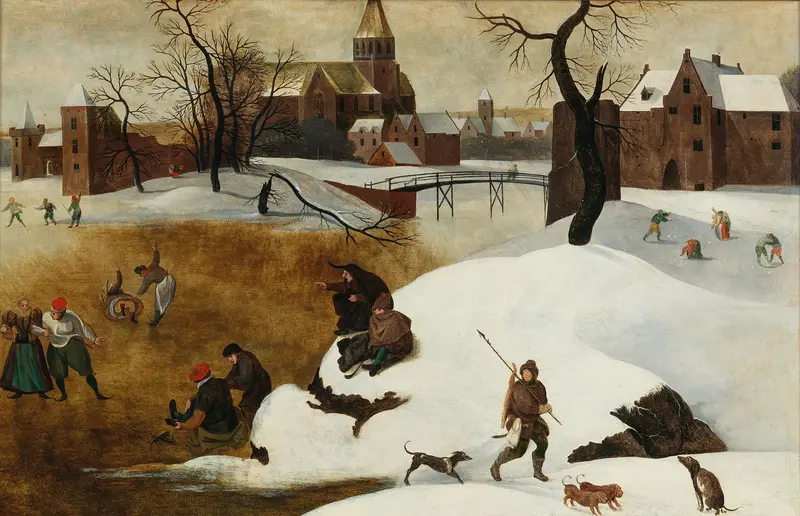
winter landscape with skaters
Abel Grimmer
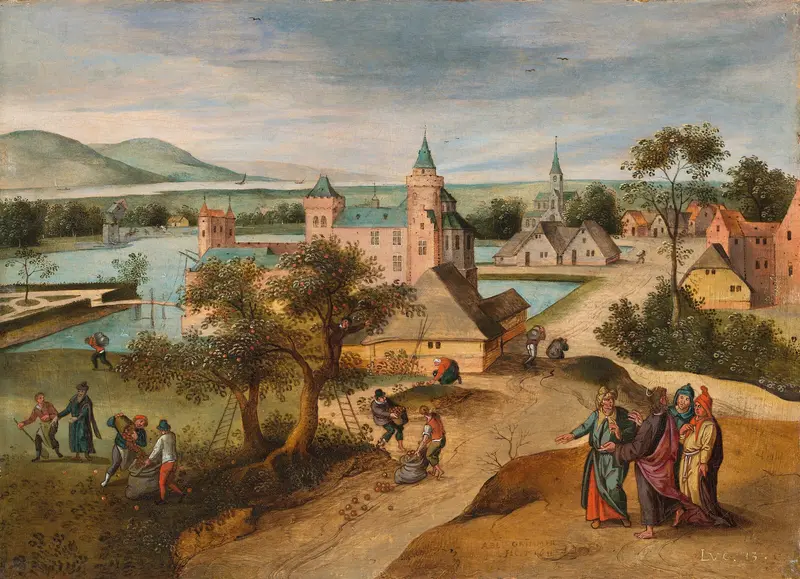
September – The Parable of the Barren Fig Tree
Abel Grimmer
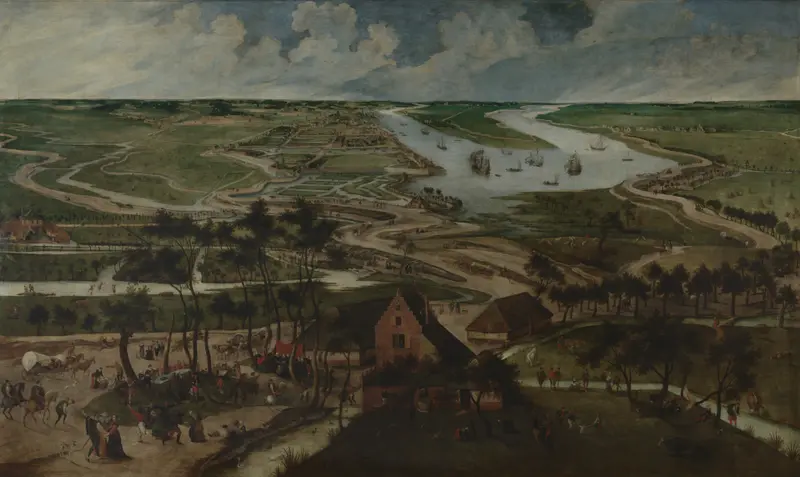
The Eel Huts in the Antwerp Polder outside the Lillo or Slijk Gate
Abel Grimmer
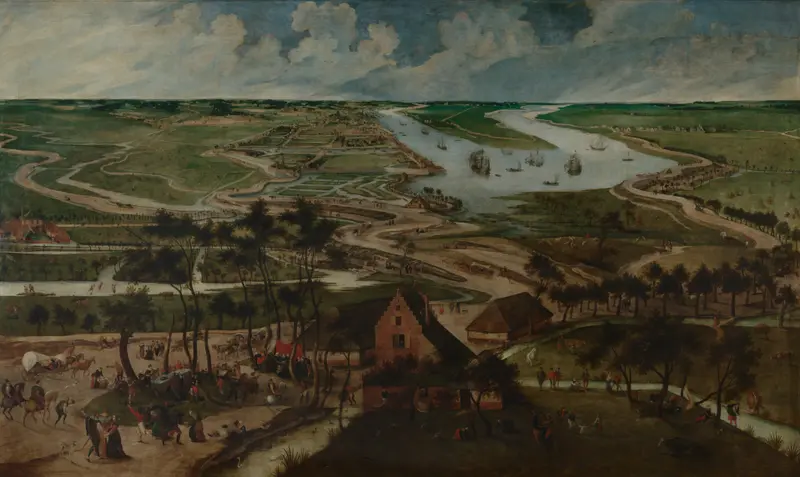
De Antwerpse polder en de Palinghuizen buiten de Slijk- of Lillopoort
Abel Grimmer
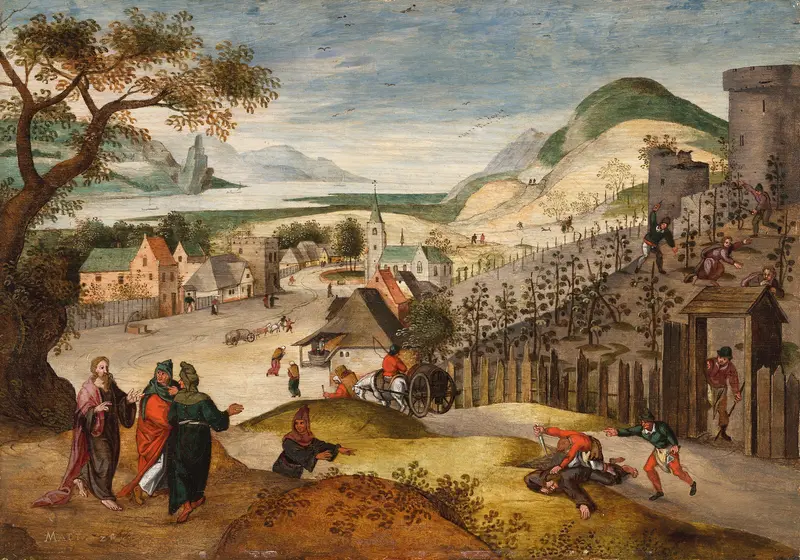
October – The Parable of the Vineyard
Abel Grimmer
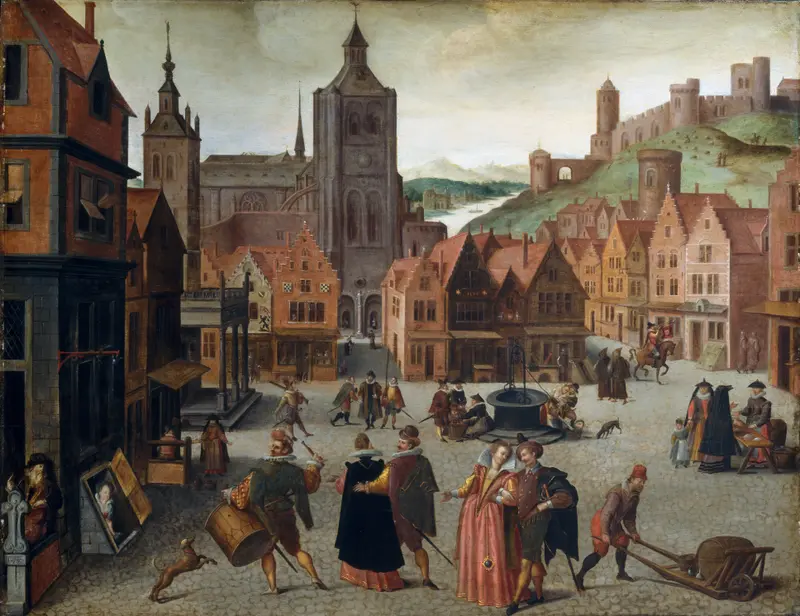
The Marketplace in Bergen op Zoom
Abel Grimmer
More Landscape Art

The Starry Night
Vincent van Gogh

View of Delft
Johannes Vermeer

Water Lilies
Claude Monet

The Grand Canal, Venice, looking north-west from the Ca' Corner to the Ca' Contarini degli Scrigni, with the campanile of Santa Maria della Carità
Canaletto

Windsor Castle
Canaletto

The Grand Canal looking North-East from the Palazzo Dolfin-Manin to the Rialto Bridge
Canaletto