
Arabia (The Year's at the Spring) — History & Facts
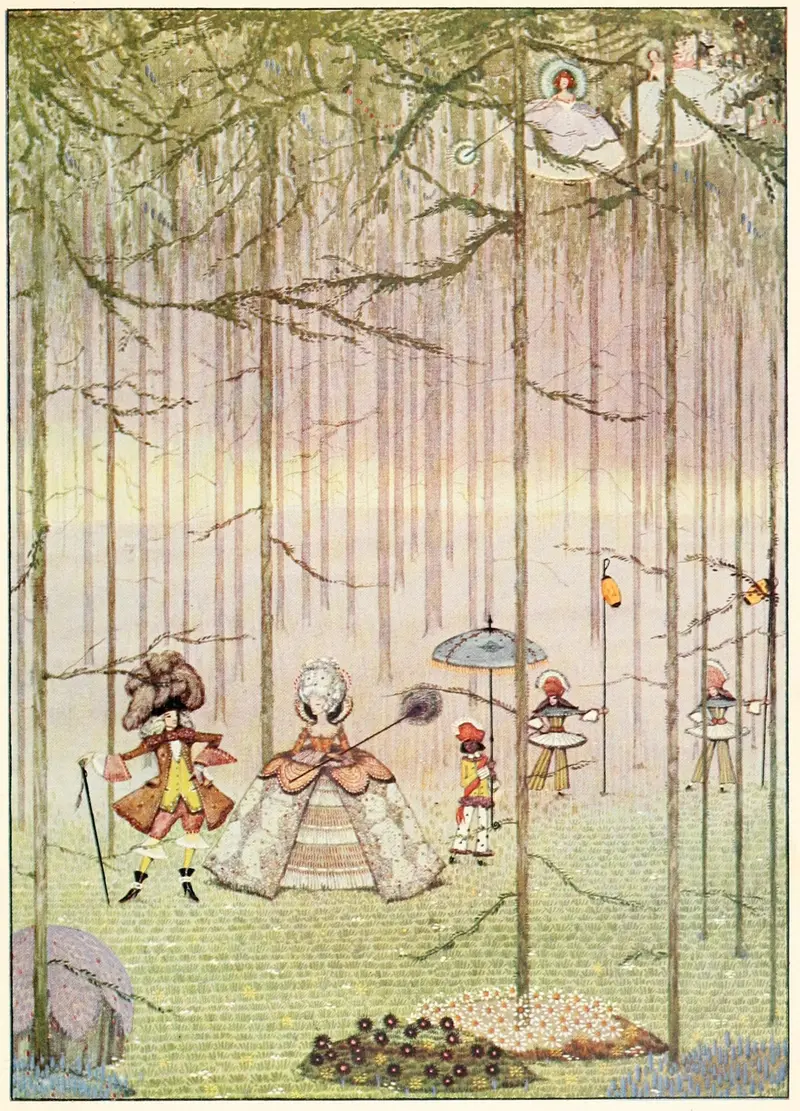
The first thing that catches the eye is the moon—full, pale, and watchful above a dreamlike landscape of flowering branches and distant, layered hills. Below, a procession of figures gathers in the foreground, their costumes and instruments hinting at a world of music and myth. The scene is alive with detail: a monkey sits companionably at the edge, its gaze fixed on the musicians; a pair of exotic birds perch on a branch, their plumage echoing the patterned robes below.
Every gesture is deliberate—the raised arm of the standing figure, the languid pose of the lute player, the delicate fingers of the woman with the stringed instrument. The palette is cool and misty, with soft blues and greens lending the night a sense of enchantment, while the flowers and costumes add bursts of pattern and color, inviting the viewer to linger over each surface. Created as an illustration for The year's at the spring; an anthology of recent poetry in 1920, this work by Harry Clarke belongs to a moment when book illustration was undergoing a transformation. The early twentieth century saw artists drawing on influences from Japanese prints, Art Nouveau, and Symbolism, creating images that were as much about mood as narrative.
Such illustrations were often commissioned to elevate books into treasured objects, blending poetry and art for a growing middle-class audience hungry for beauty and escape after the First World War. History has kept few traces of the journey of this specific page, now preserved in the University of California Libraries, but its intricate world still rewards the patient eye—inviting us to step into a night where music, myth, and moonlight meet.
More Artworks by Harry Clarke
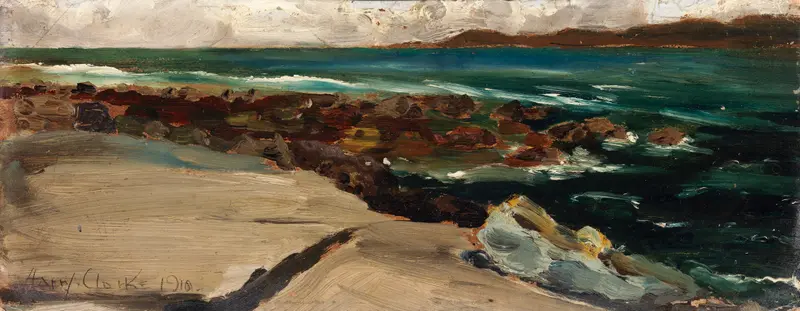
Landscape by the Coast
Harry Clarke
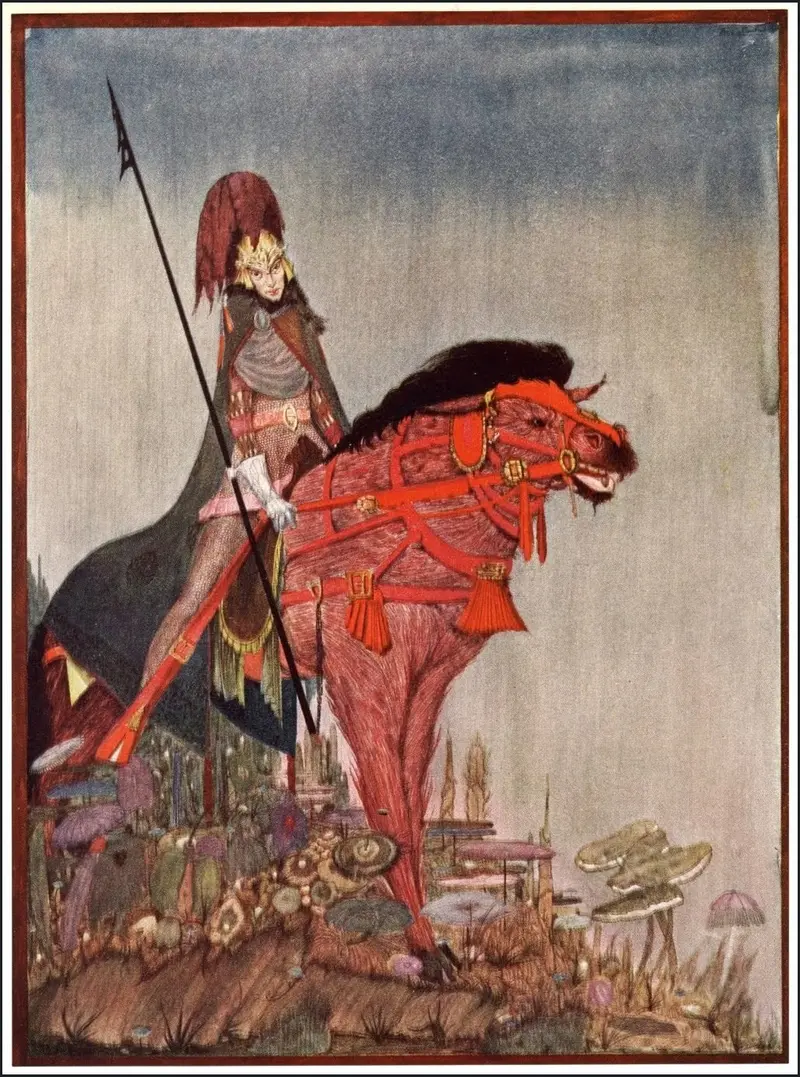
Metzengerstein (Poe)
Harry Clarke
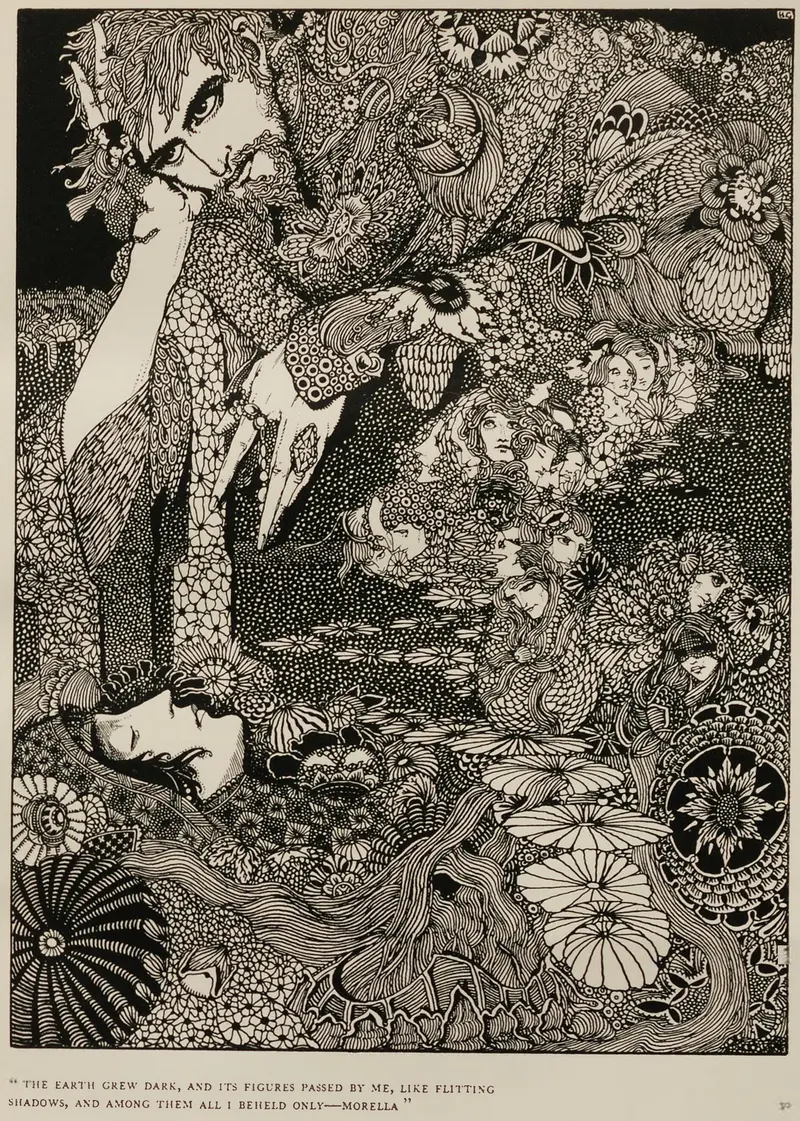
Morella (Poe)
Harry Clarke
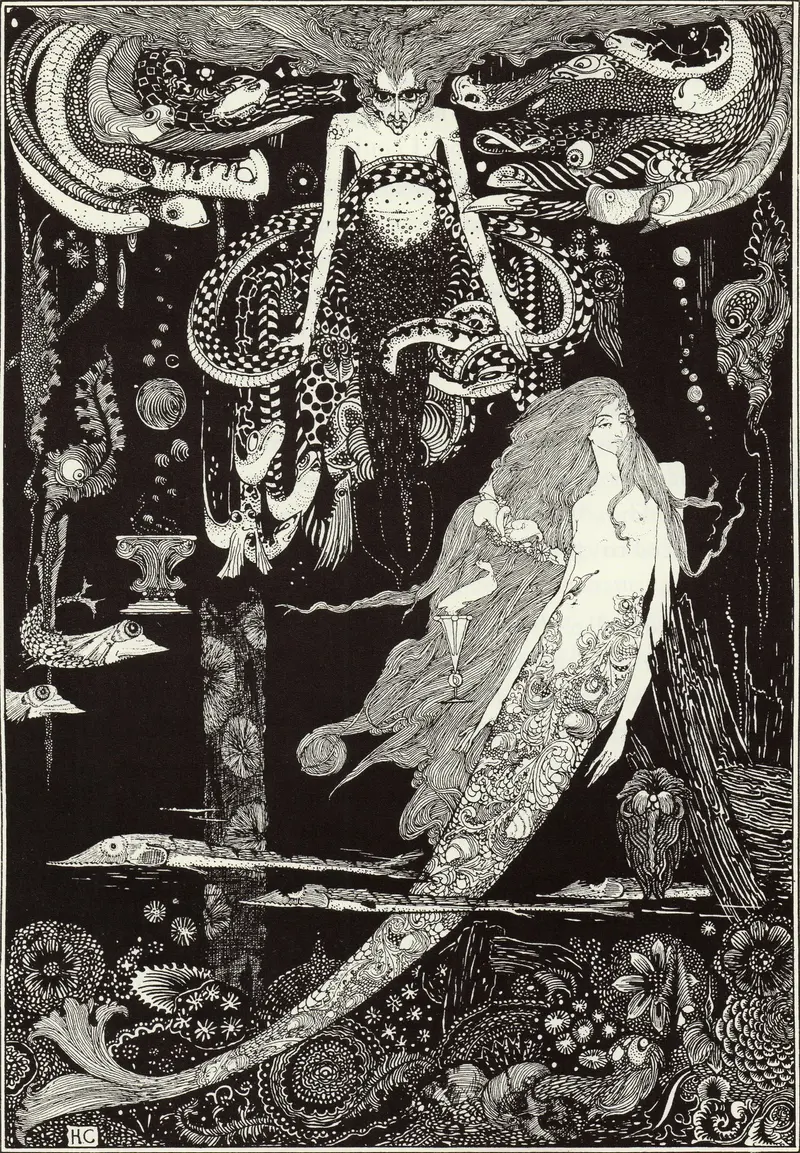
The Little Mermaid (Andersen)
Harry Clarke
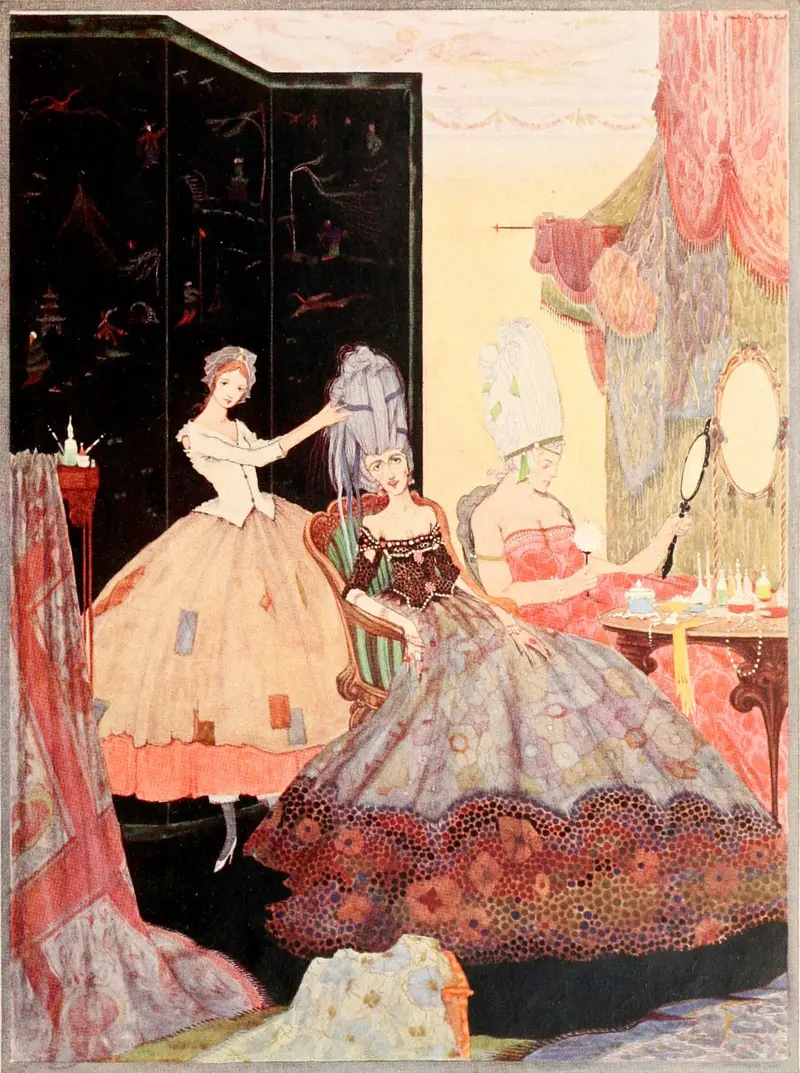
Cinderella (Perrault)
Harry Clarke
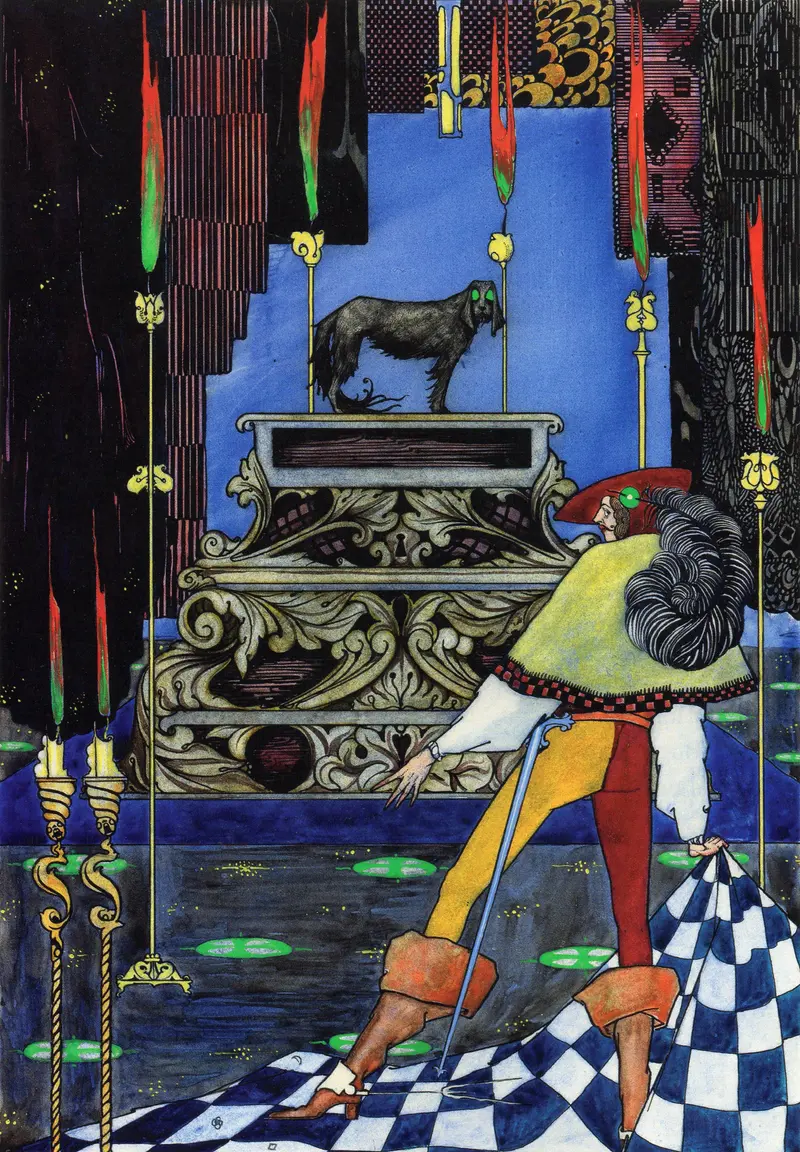
The Tinder Box (Andersen)
Harry Clarke
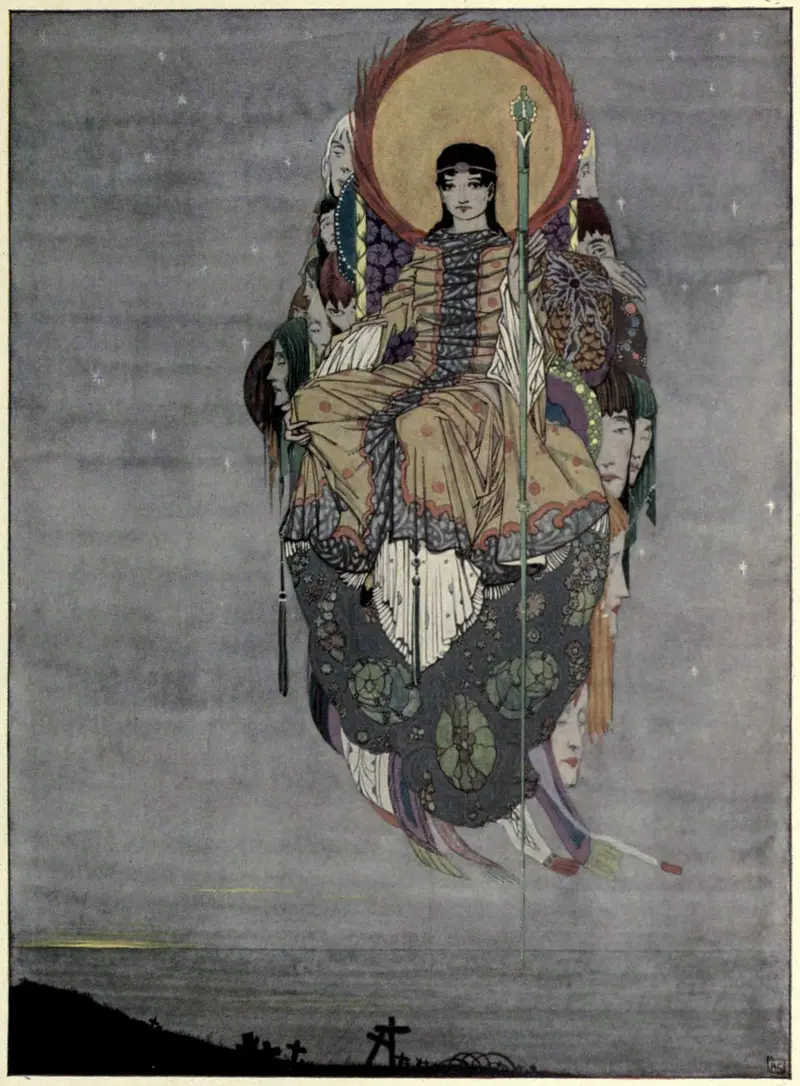
The Dead (The Year's at the Spring)
Harry Clarke
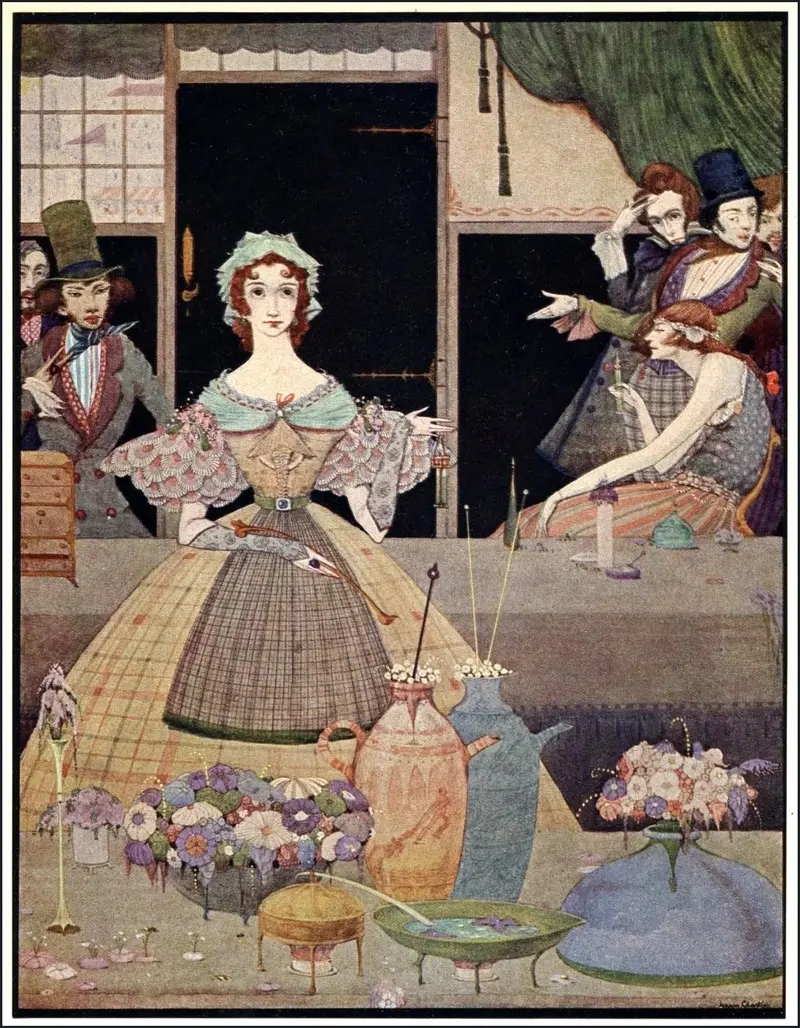
The Mystery of Marie Roget (Poe)
Harry Clarke

The Travelling Companion (Andersen)
Harry Clarke
Riquet with the Tuft (Perrault)
Harry Clarke





