
Cinderella (Perrault) — History & Facts
What first catches the eye is the swirl of pattern and color that spills across the lower half of the scene, a riot of lace and fabric that nearly overwhelms the figures themselves. At the heart of the composition, two women are absorbed in the rituals of vanity: one, seated and regal, has her towering coiffure arranged by a third, while the other, languid and aloof, inspects her reflection in a hand mirror at a table crowded with delicate bottles. The light is cool and indirect, filtering in from the right and setting the ornate textures aglow—each fold of the dresses, each patch and ribbon, rendered with loving precision.
The black lacquered screen behind them acts as a stage curtain, pushing the drama forward, while the figure to the left—her patched dress and gentle, almost wistful expression—quietly claims the viewer’s sympathy. This is a world of surface and spectacle, but the artist’s eye lingers on the outsider at its edge. Created in 1922 as an illustration for The fairy tales of Charles Perrault, this work by Harry Clarke belongs to a moment when book illustration was flourishing in Europe, and fairy tales were being reimagined for modern audiences. Clarke’s style, with its intricate detailing and theatrical compositions, was shaped by the decorative arts and the influence of Art Nouveau, yet here he turns those sensibilities to the brittle, mannered world of Perrault’s Cinderella.
Such illustrations were prized by publishers and collectors alike, serving as both visual enchantment and a mark of prestige for luxury editions. History has kept few traces of the specific journeys of these pages, but their survival in collections like that of the New York Public Library invites us to look again—not just at the story, but at the shimmering, uneasy beauty of its telling.
More Artworks by Harry Clarke
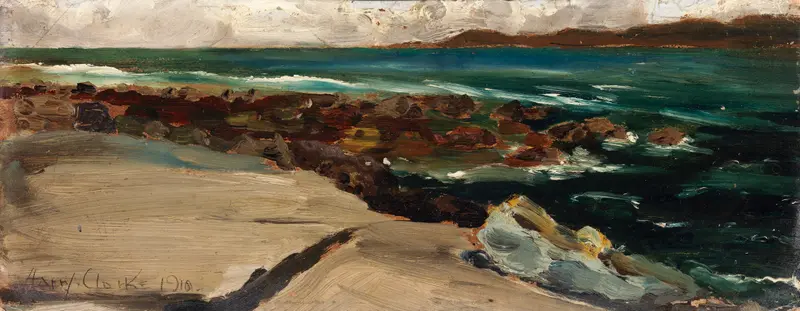
Landscape by the Coast
Harry Clarke
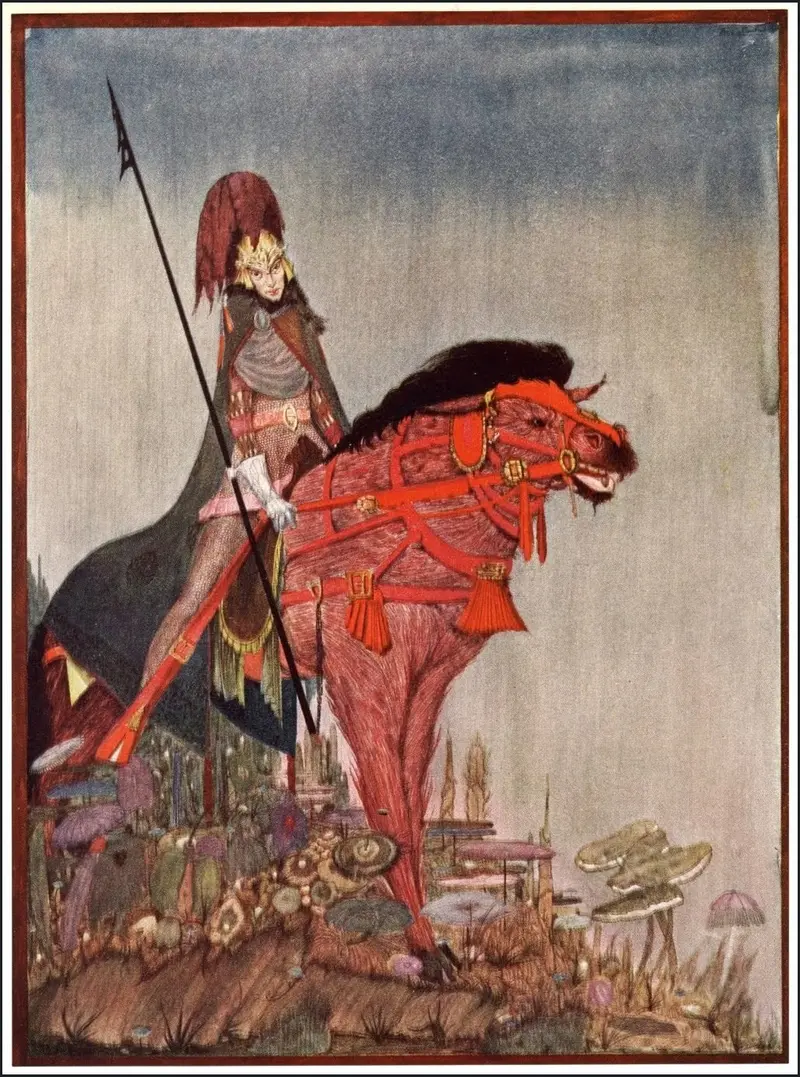
Metzengerstein (Poe)
Harry Clarke
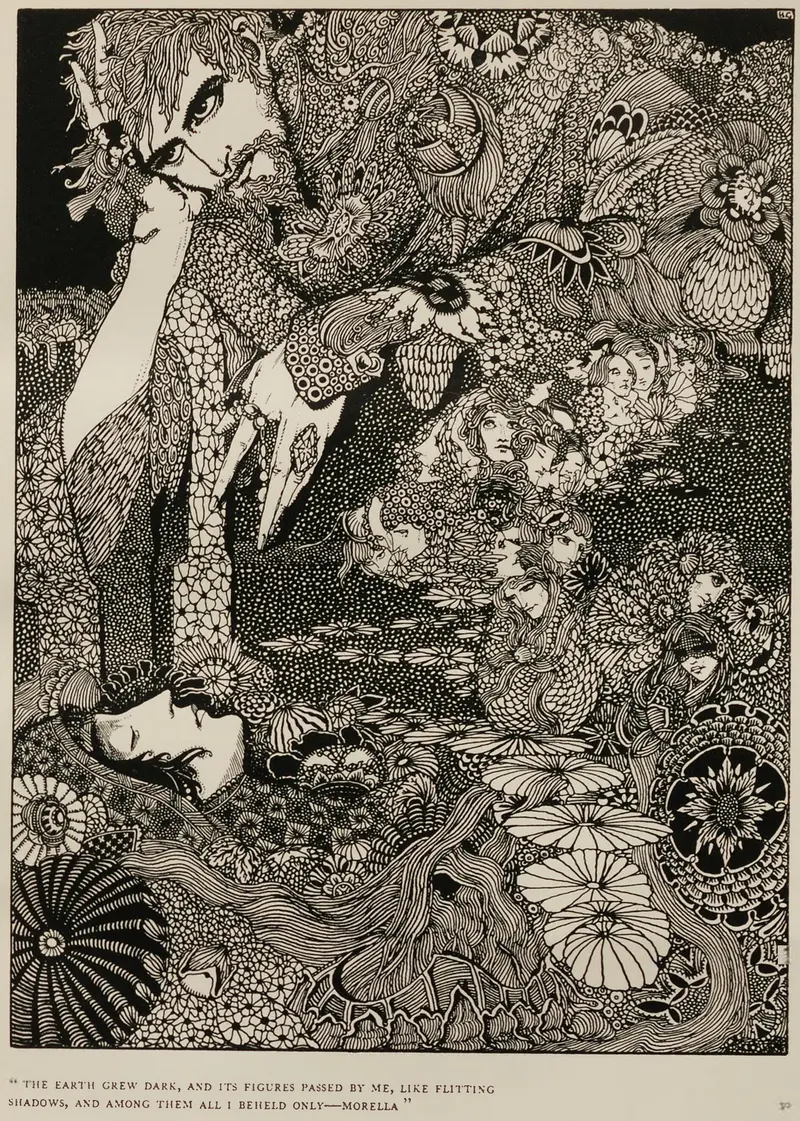
Morella (Poe)
Harry Clarke
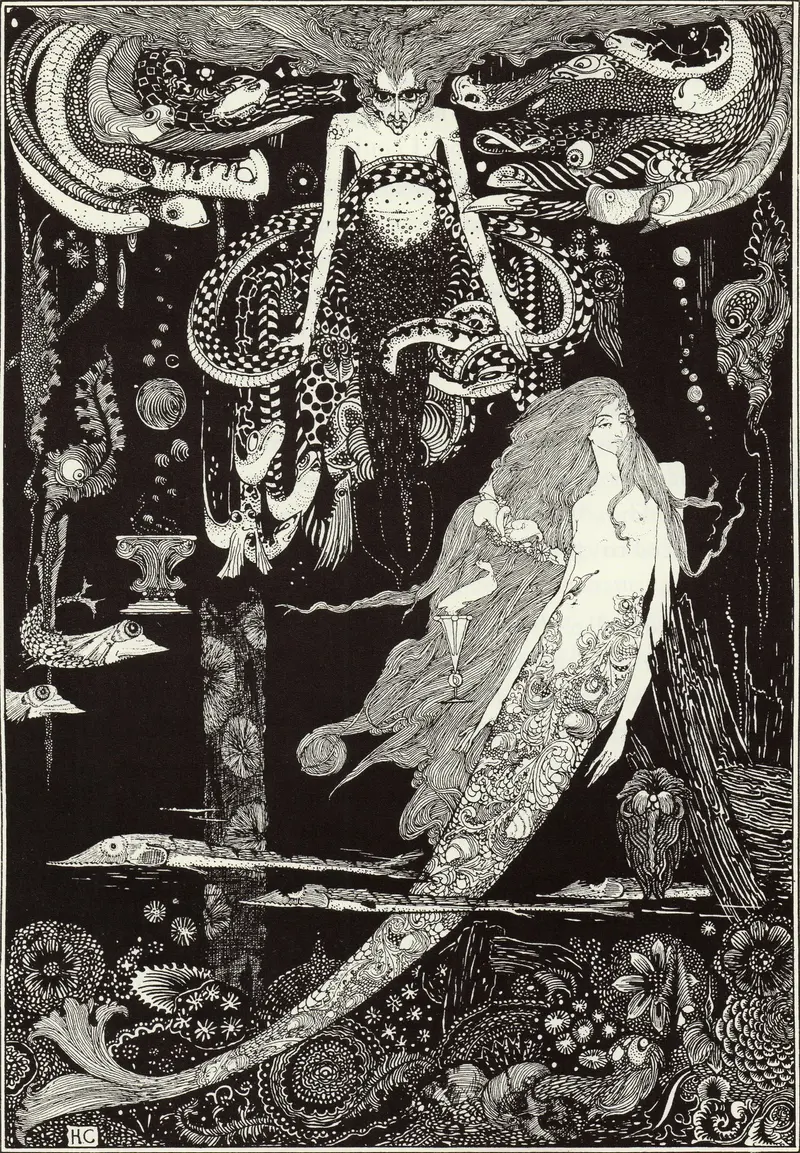
The Little Mermaid (Andersen)
Harry Clarke
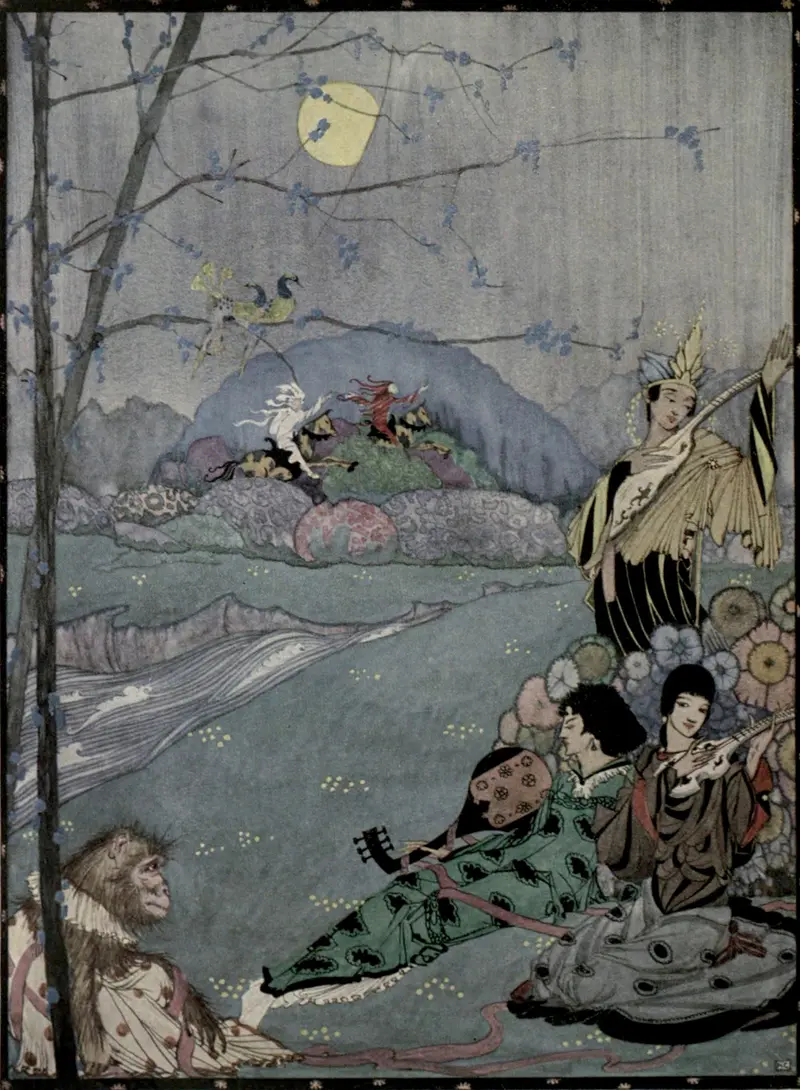
Arabia (The Year's at the Spring)
Harry Clarke
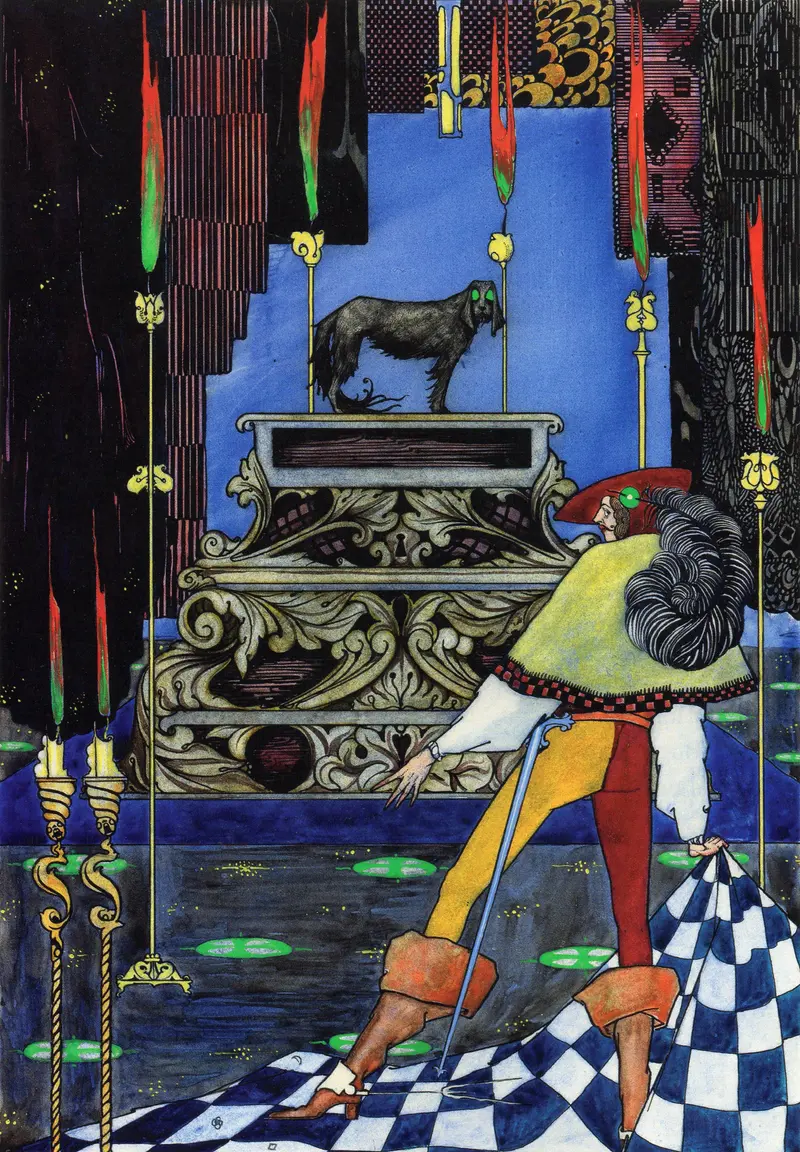
The Tinder Box (Andersen)
Harry Clarke
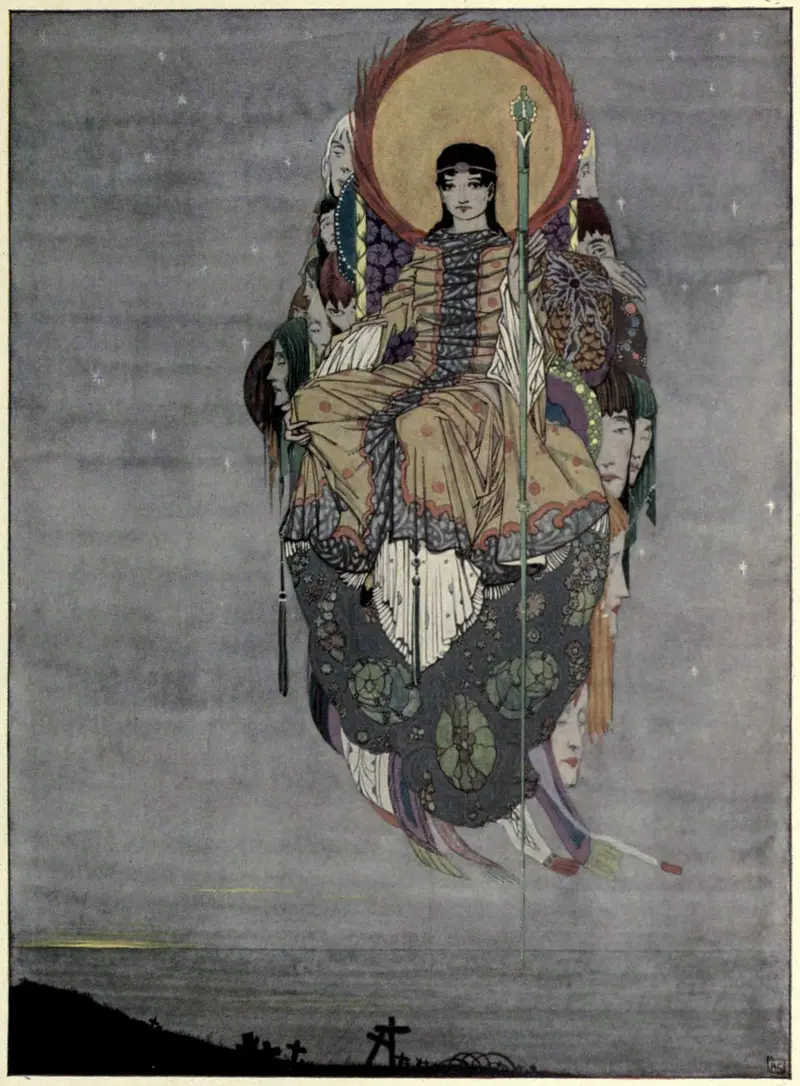
The Dead (The Year's at the Spring)
Harry Clarke
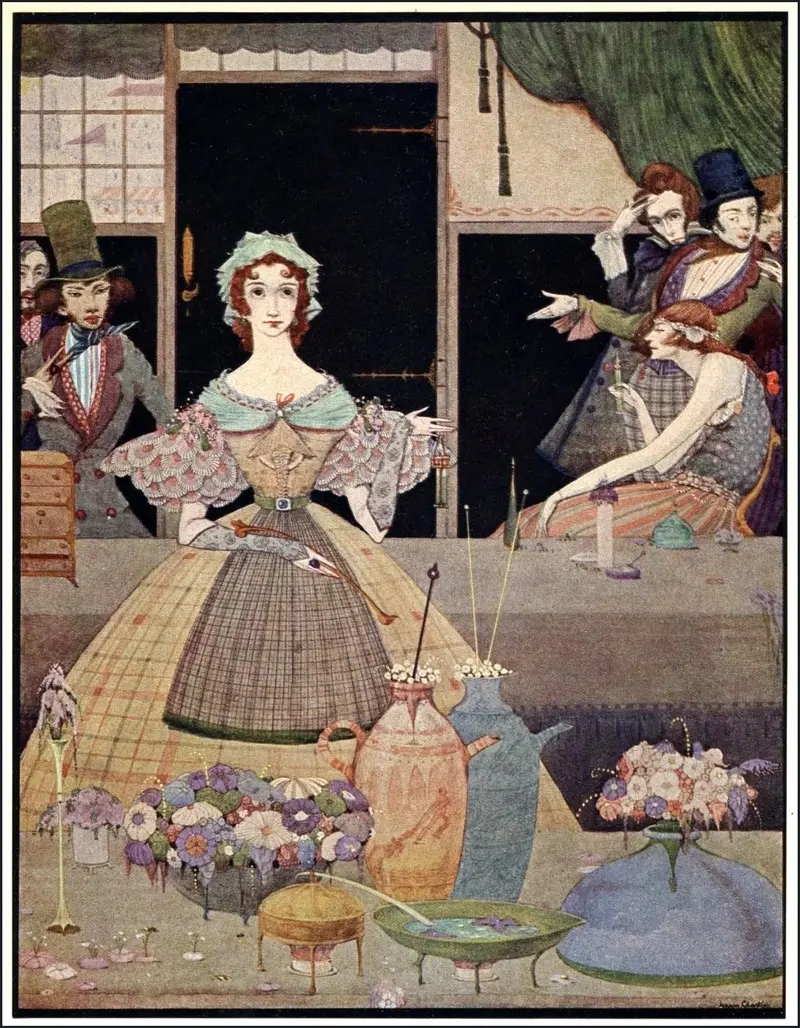
The Mystery of Marie Roget (Poe)
Harry Clarke

The Travelling Companion (Andersen)
Harry Clarke
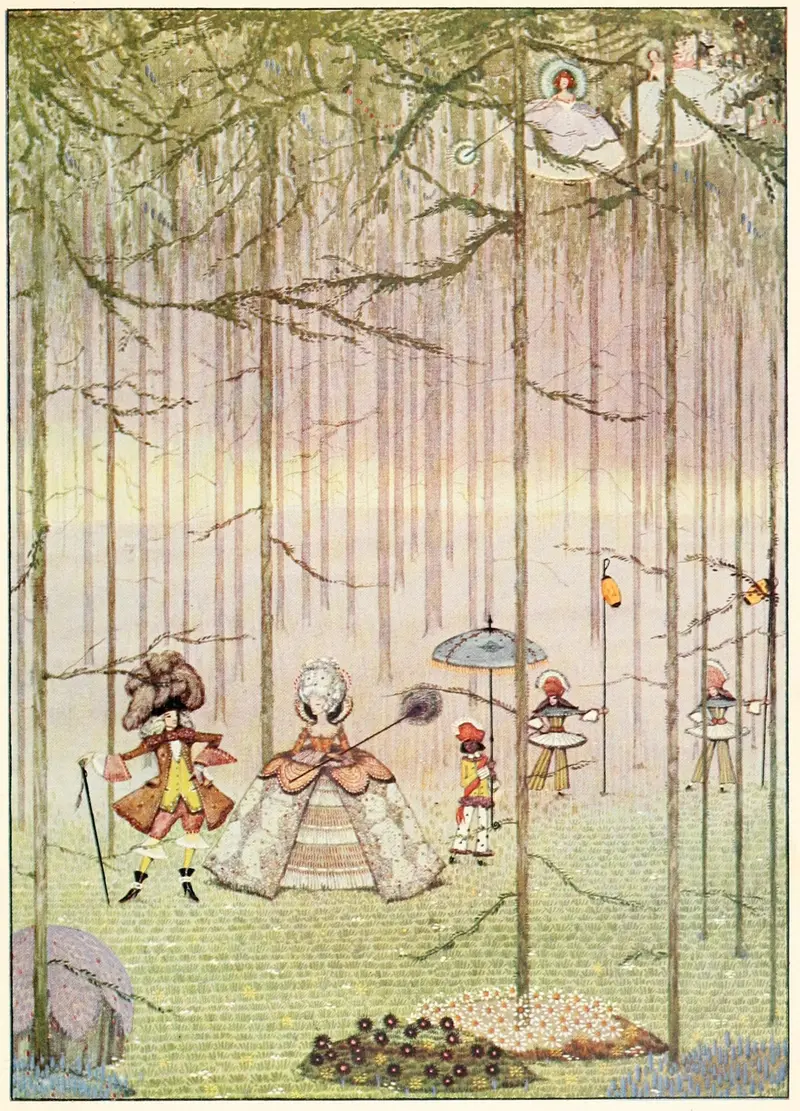
Riquet with the Tuft (Perrault)
Harry Clarke





