
Morella (Poe) — History & Facts
What first seizes the eye in Morella (Poe) by Harry Clarke is the hypnotic density of pattern—every inch of the page teems with feverish detail, drawing the viewer into a world where the boundaries between figure and ornament dissolve. The central, brooding face, hand pressed to cheek, commands attention with its heavy-lidded gaze, but it is the surrounding swarm of faces, flowers, and swirling lines that truly conjure the sense of haunted memory and obsession. Clarke uses the stark contrast of black ink on white paper to create a labyrinth of textures: the man's fingers, elongated and adorned, seem to reach not just into the space before him, but into the very fabric of the dreamlike scene below.
The faces that emerge from the patterns—some clear, some half-submerged—suggest a procession of memories or spirits, their forms entangled with the lush, almost suffocating flora. This illustration, created in 1909 for a collection of Tales of Mystery & Imagination, is steeped in the visual language of Art Nouveau, with its sinuous lines and organic motifs, yet Clarke’s vision is unmistakably gothic. The era delighted in book illustration, especially for works of Edgar Allan Poe, whose stories of psychological torment and supernatural dread found new life in the hands of artists like Clarke. Such images were not merely decorative; they were meant to amplify the text’s atmosphere, to give visual form to the uncanny.
History has kept few traces of the precise origins or journey of this particular drawing, but its date and source root it firmly in the early twentieth-century fascination with the macabre and the ornate. Look again at the faces peering from the darkness—each one a fragment of memory, a hint of the story’s lingering spell.
More Artworks by Harry Clarke
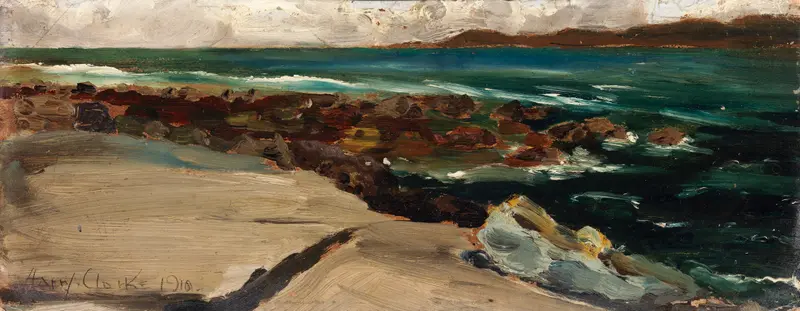
Landscape by the Coast
Harry Clarke
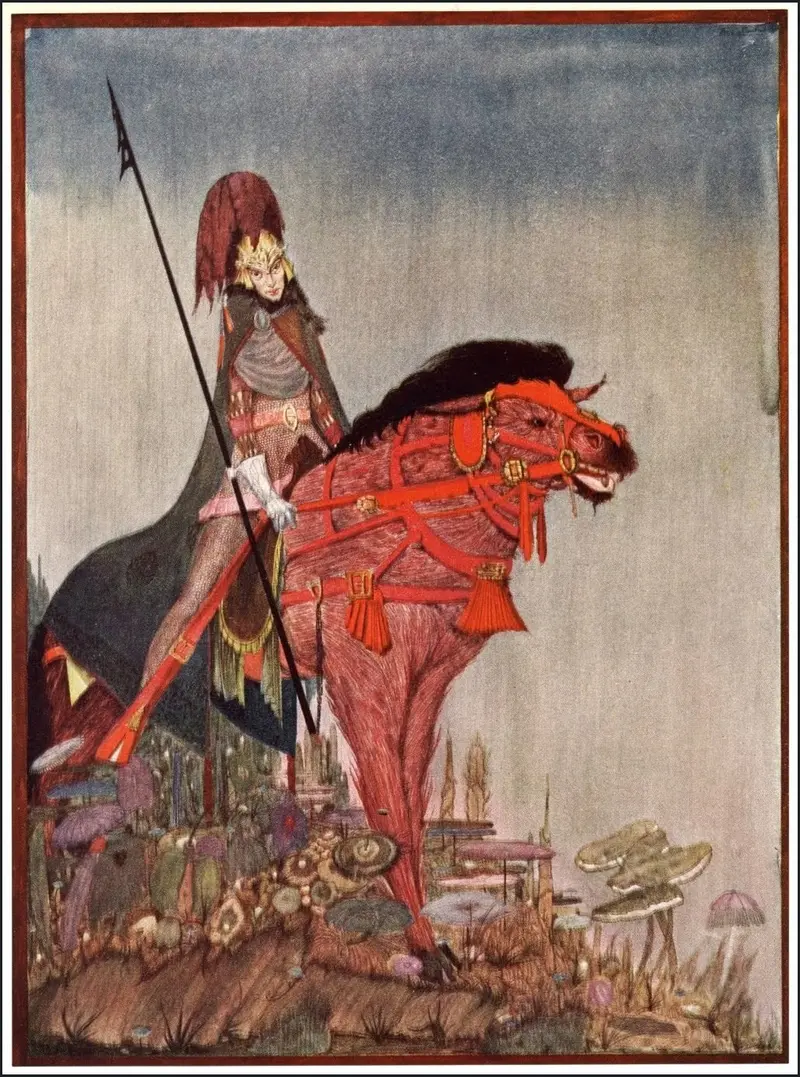
Metzengerstein (Poe)
Harry Clarke
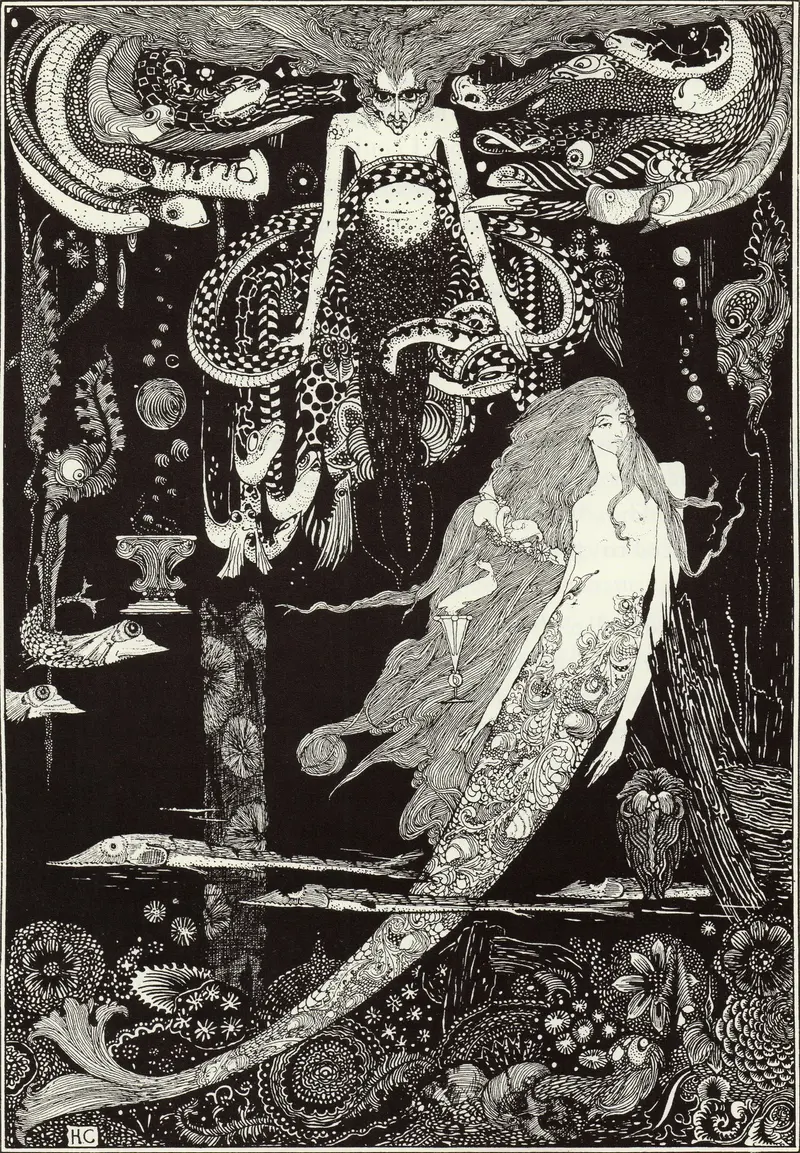
The Little Mermaid (Andersen)
Harry Clarke
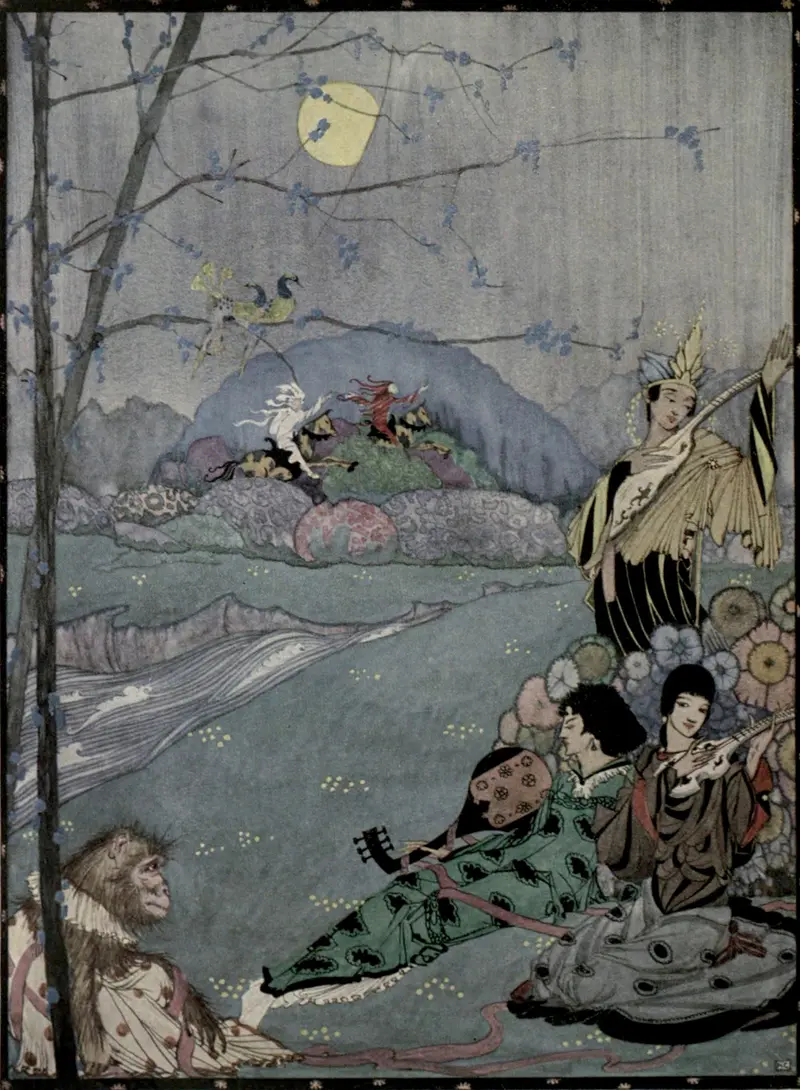
Arabia (The Year's at the Spring)
Harry Clarke
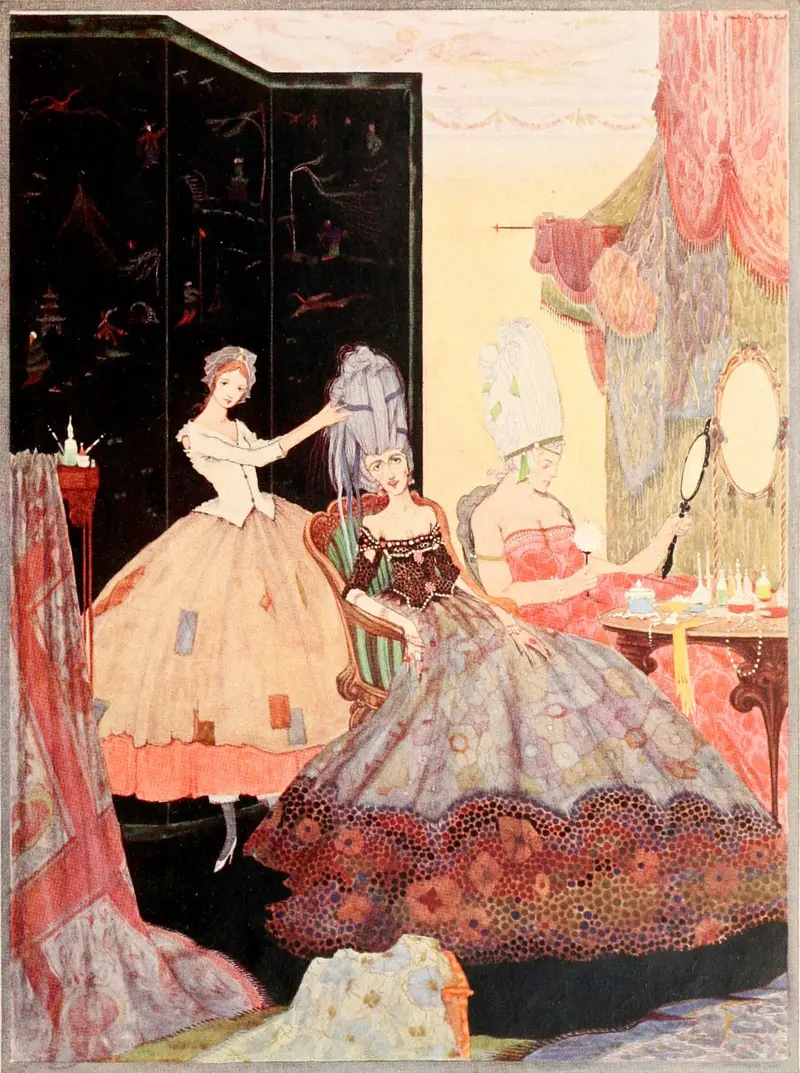
Cinderella (Perrault)
Harry Clarke
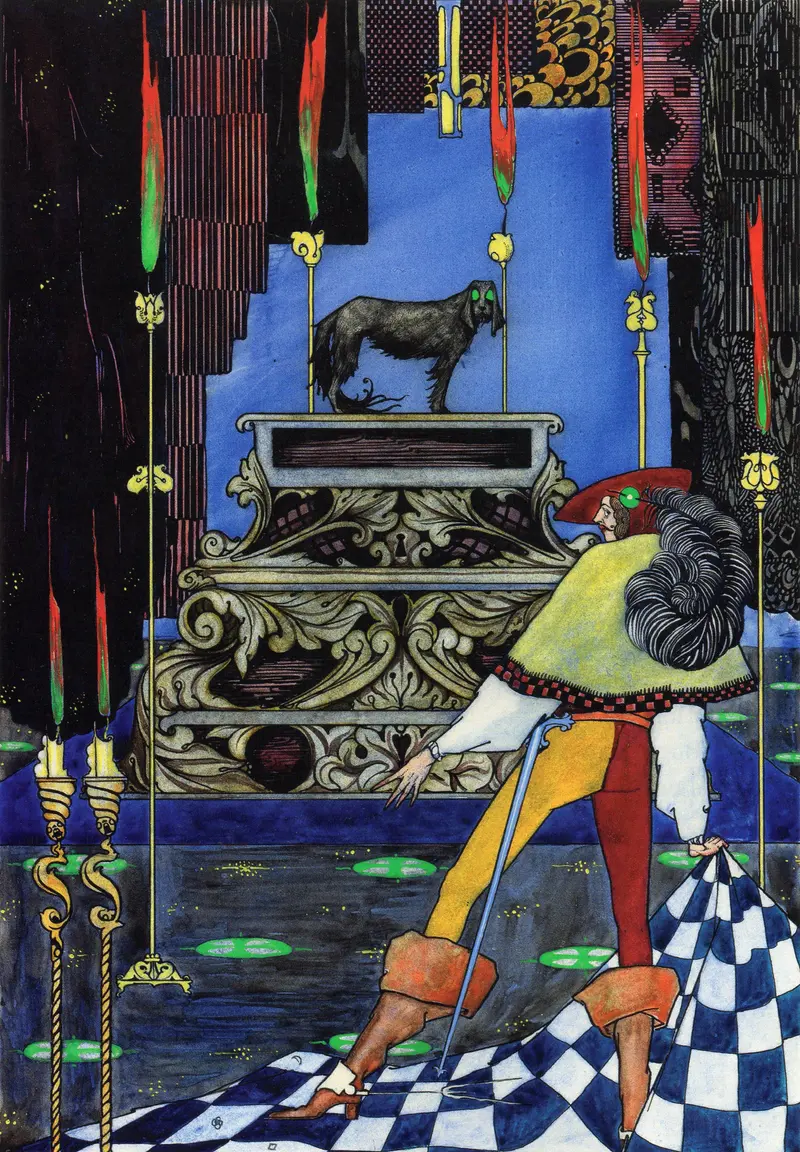
The Tinder Box (Andersen)
Harry Clarke
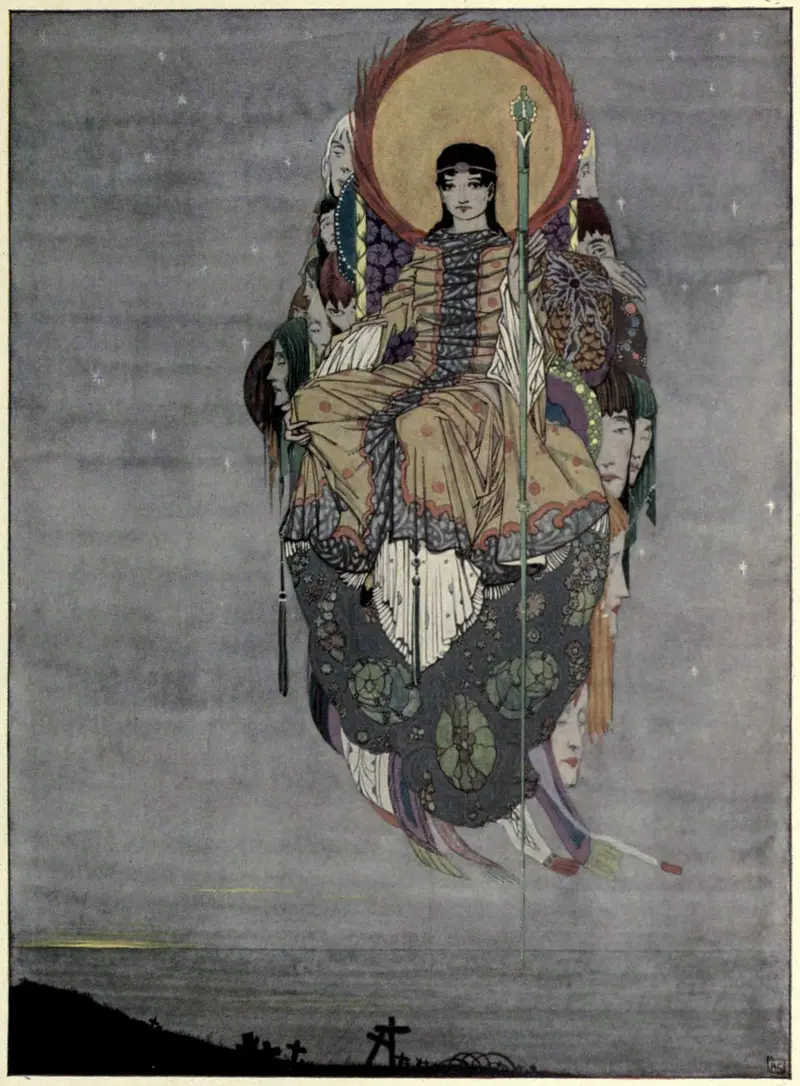
The Dead (The Year's at the Spring)
Harry Clarke
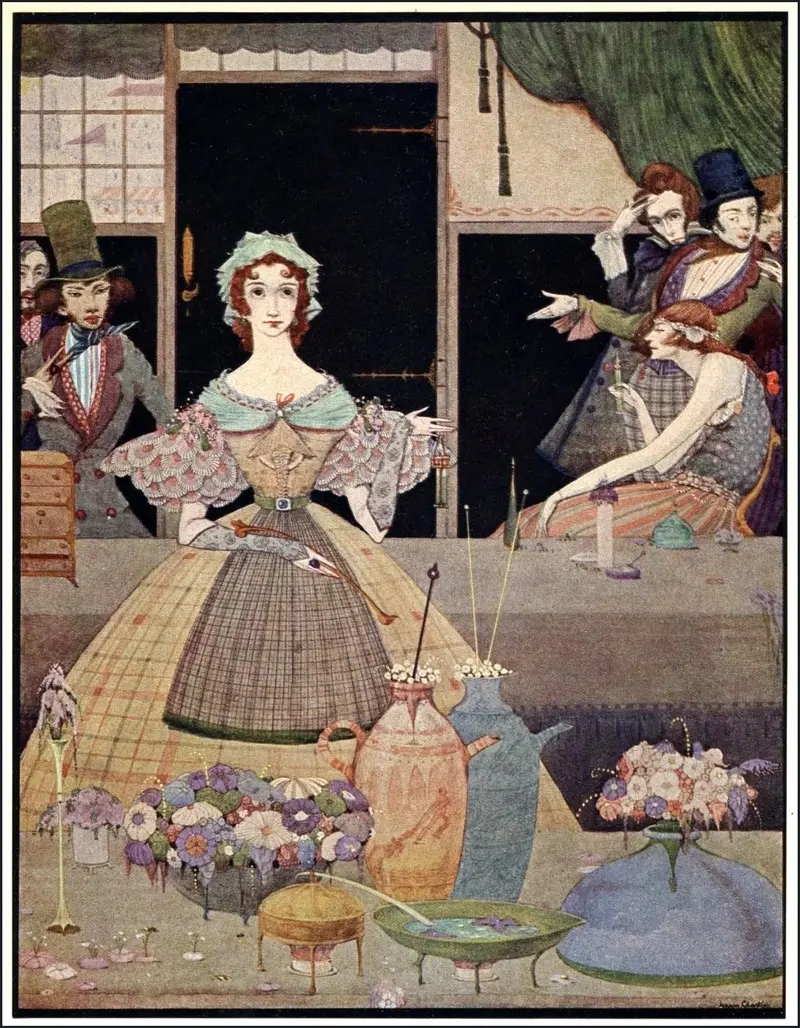
The Mystery of Marie Roget (Poe)
Harry Clarke

The Travelling Companion (Andersen)
Harry Clarke
Riquet with the Tuft (Perrault)
Harry Clarke





