
The Little Mermaid (Andersen) — History & Facts
What grips the eye first in The Little Mermaid (Andersen) by Harry Clarke is the hypnotic confrontation at its center: a spectral mermaid, her body a tapestry of swirling shells and sea flora, faces the looming, almost monstrous figure of the sea witch. The witch’s wild hair and piercing gaze dominate the upper half, her arms stretched downward, as if casting a spell or sealing a fate. Around them, a riot of fantastical sea creatures and intricate patterns swirl, their forms both menacing and mesmerizing, blurring the line between beauty and threat.
The stark contrast of black and white pulls the viewer into a world where every line vibrates with tension—the mermaid’s innocence set against the witch’s dark power, the delicate against the grotesque. Created in 1916, this engraving belongs to a moment when book illustration was at its most imaginative, especially in the realm of fairy tales. Harry Clarke was renowned for infusing his work with the ornate detail and psychological intensity of the Art Nouveau movement, and this piece, made for The Fairy Tales of Hans Christian Andersen, is a testament to that era’s fascination with the strange and the beautiful. Such illustrations were often commissioned for deluxe editions of classic stories, meant to enchant both children and adults during a time when the printed book was a prized object.
Today, little is recorded about the journey of this specific work, but its swirling forms and haunting faces invite us to linger, tracing every line as if decoding a spell cast long ago.
More Artworks by Harry Clarke
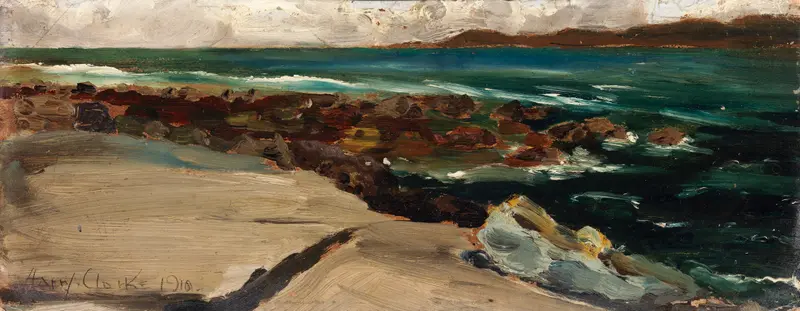
Landscape by the Coast
Harry Clarke
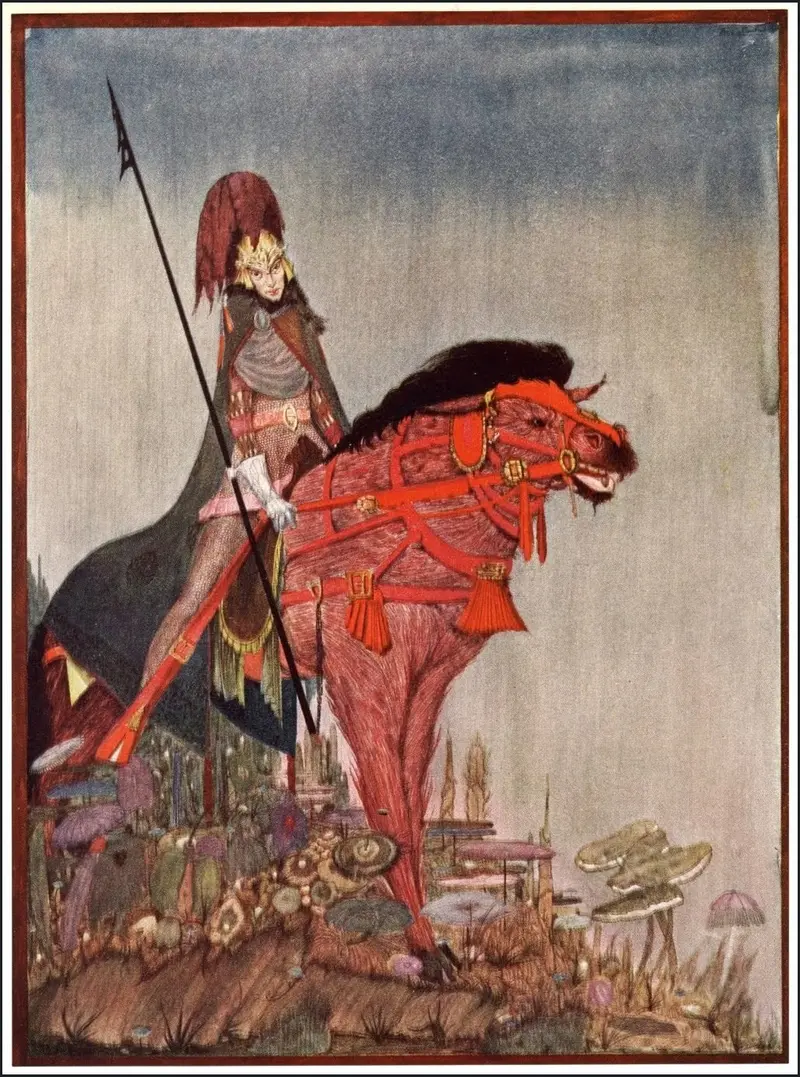
Metzengerstein (Poe)
Harry Clarke
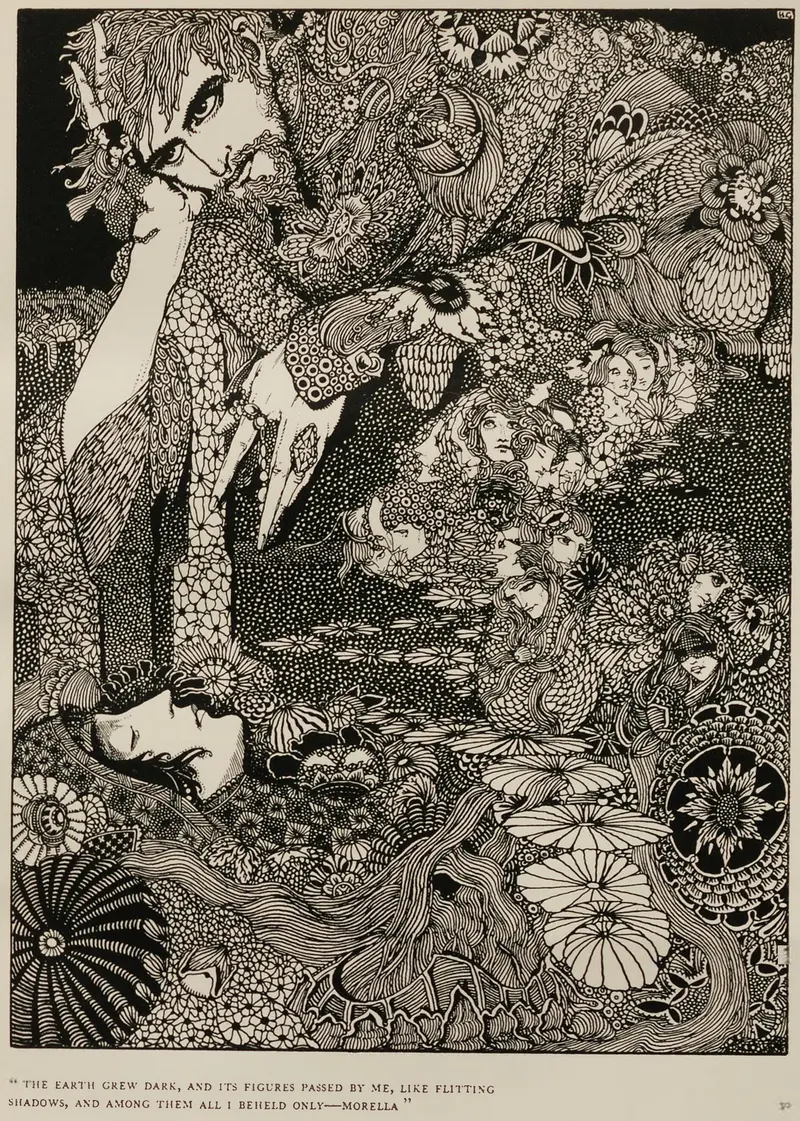
Morella (Poe)
Harry Clarke
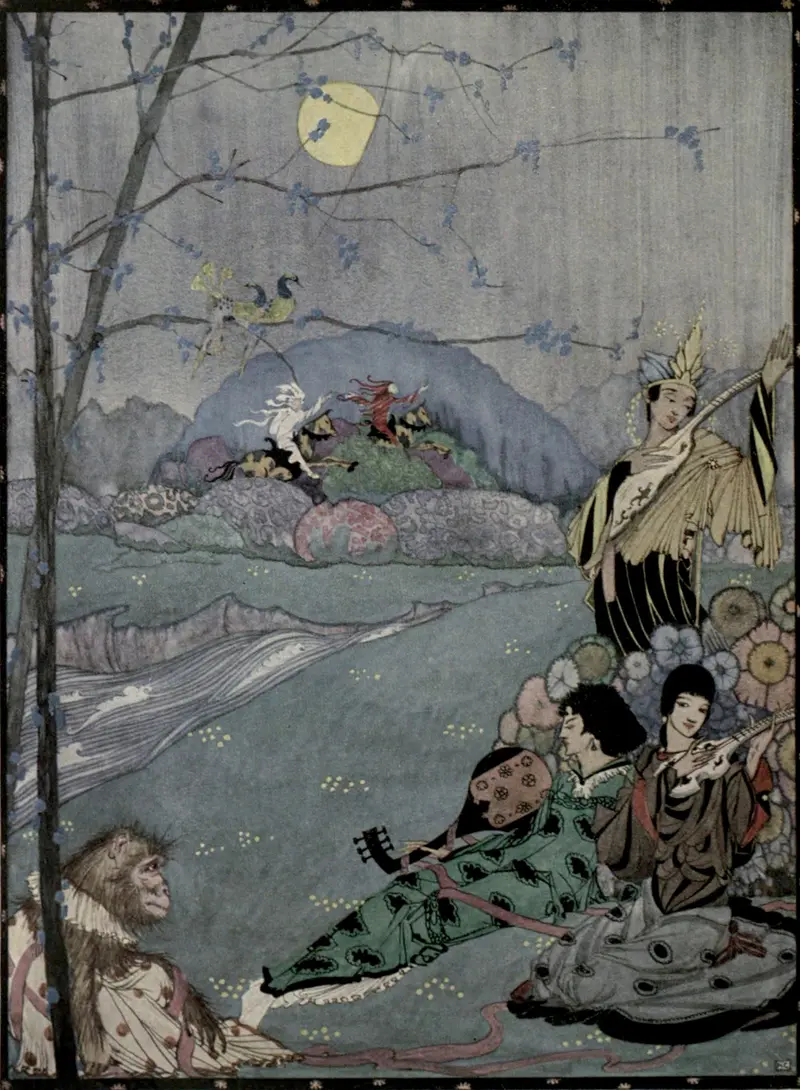
Arabia (The Year's at the Spring)
Harry Clarke
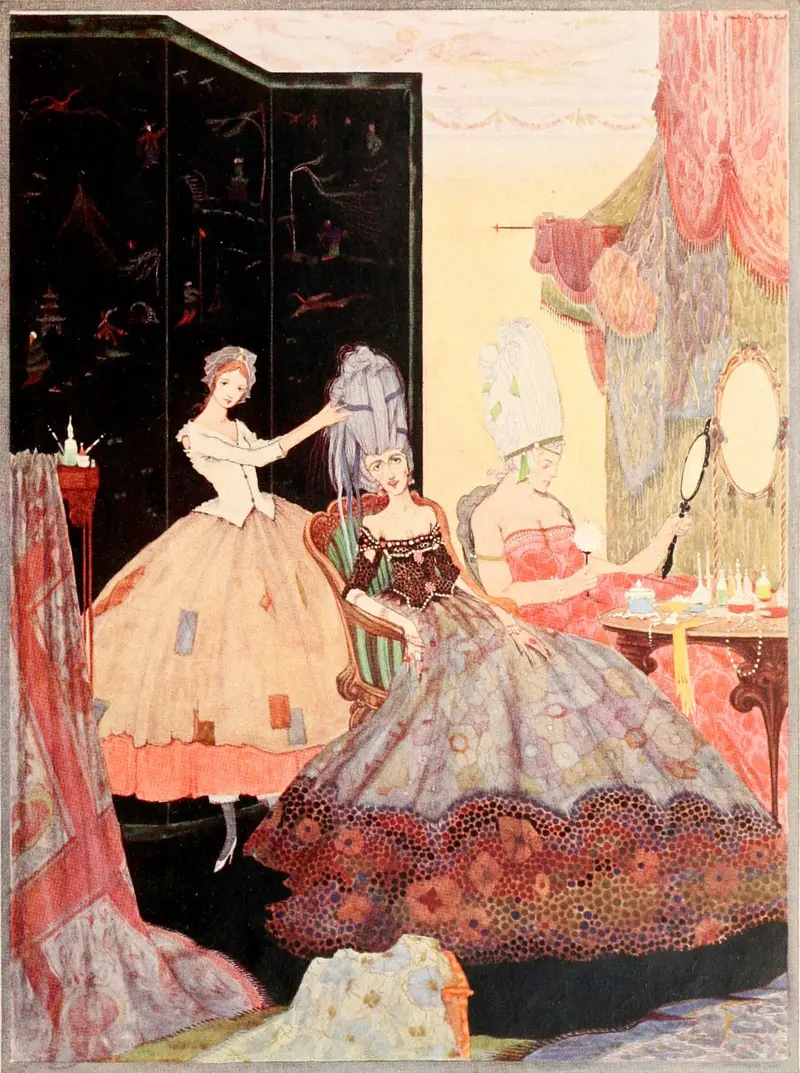
Cinderella (Perrault)
Harry Clarke
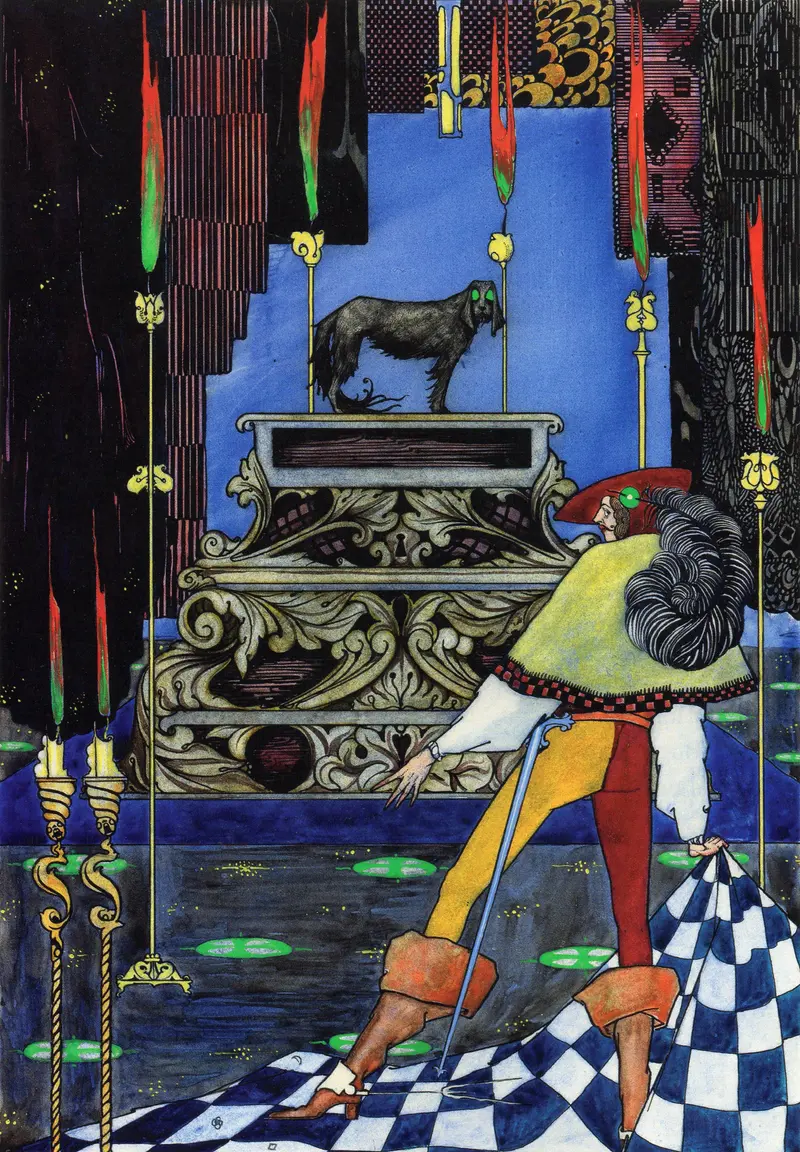
The Tinder Box (Andersen)
Harry Clarke
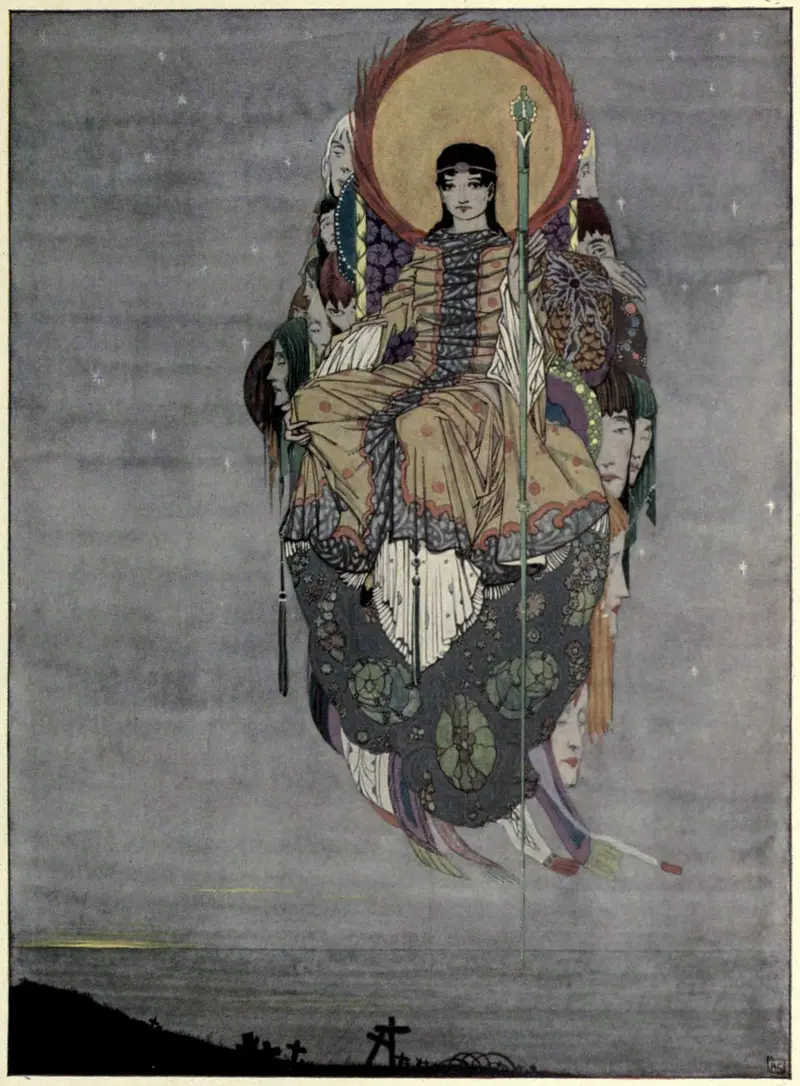
The Dead (The Year's at the Spring)
Harry Clarke
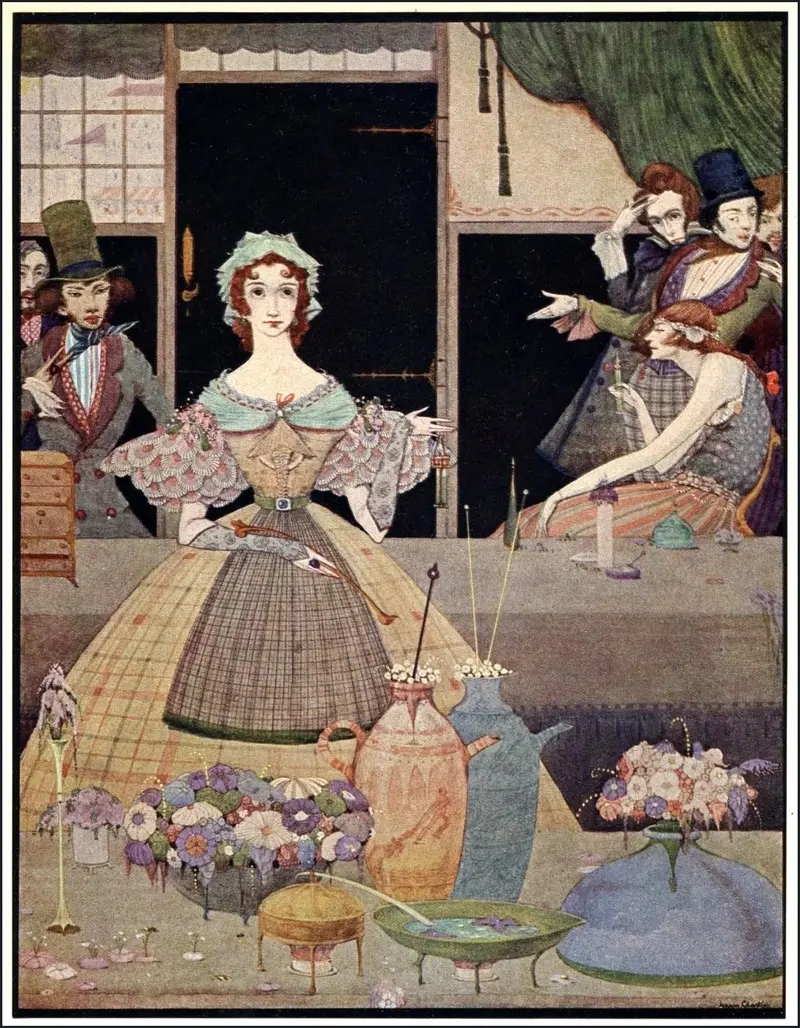
The Mystery of Marie Roget (Poe)
Harry Clarke

The Travelling Companion (Andersen)
Harry Clarke
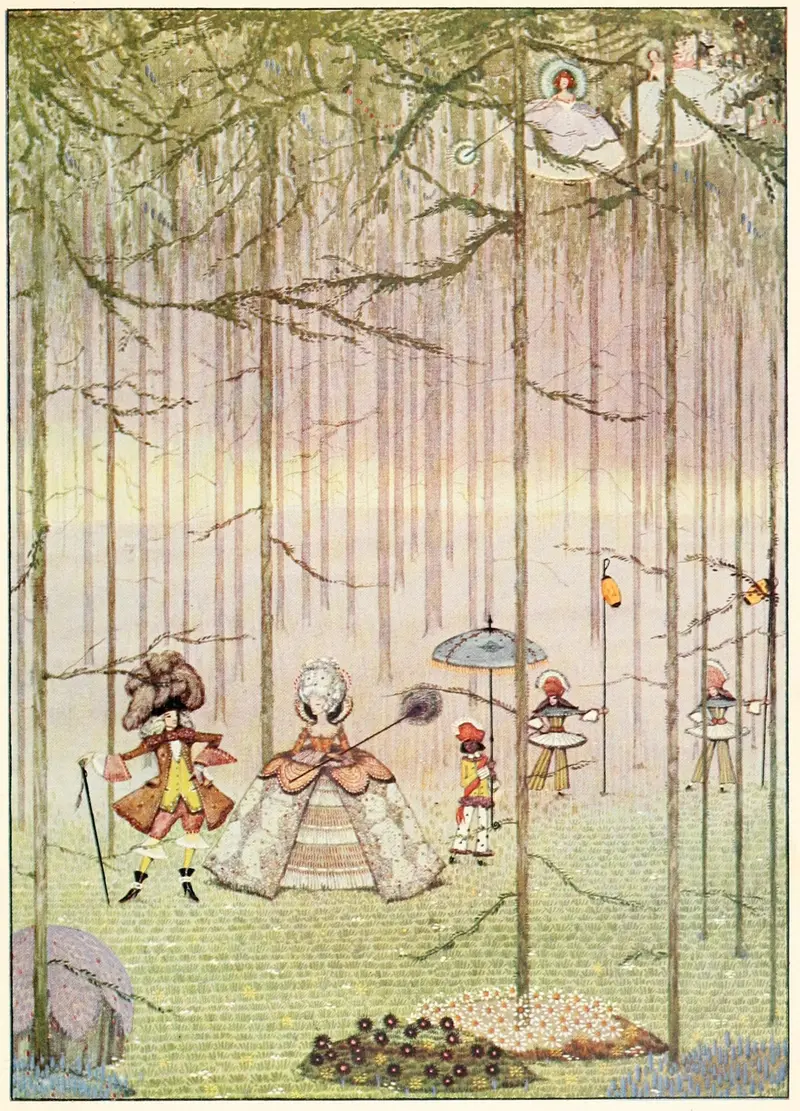
Riquet with the Tuft (Perrault)
Harry Clarke





