
The Mystery of Marie Roget (Poe) — History & Facts
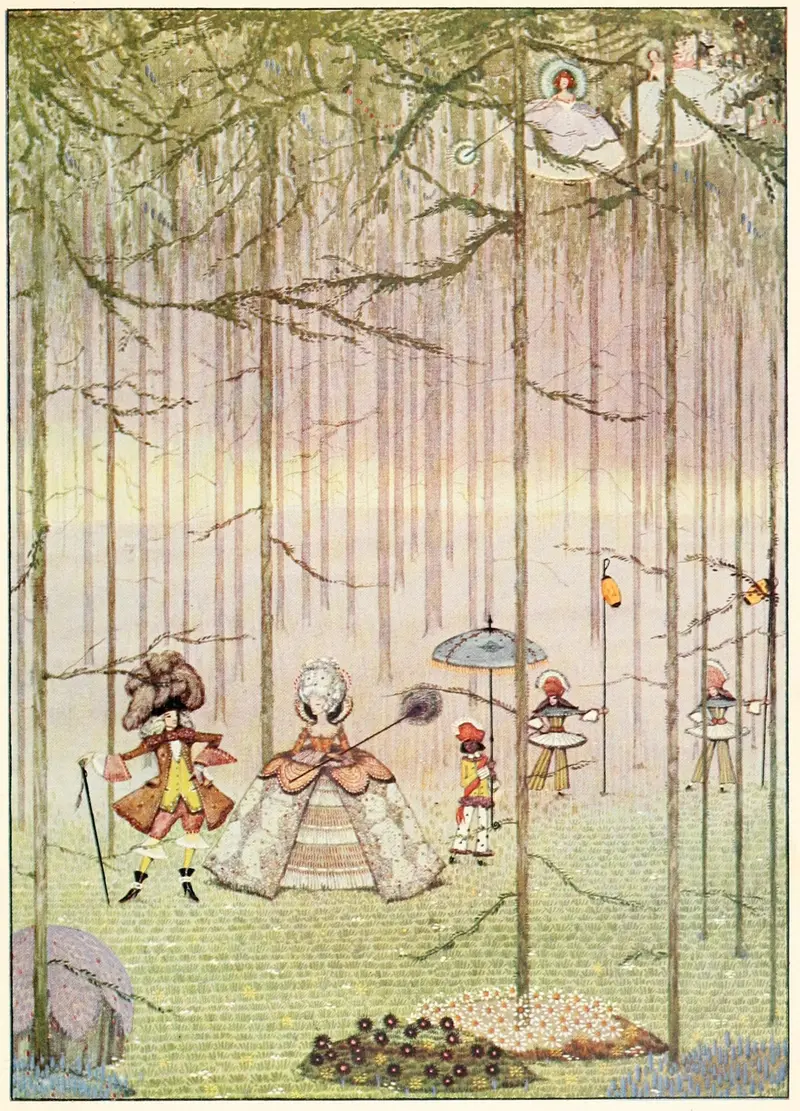
What first catches the eye in The Mystery of Marie Roget (Poe) by Harry Clarke is the poised, almost theatrical stillness of the central figure, her gaze meeting the viewer with a mixture of innocence and knowing. Her delicate, patterned dress and the meticulous arrangement of flowers and vessels in the foreground create a sense of ritual or performance, as if she is both subject and orchestrator of the unfolding scene. The drama intensifies in the background, where a group of sharply dressed onlookers—one pointing, another in mid-conversation—seem to debate or accuse, their gestures charged with suspicion and intrigue.
Clarke’s palette, with its soft pastels and sudden shadows, draws the viewer into a world that is at once decorative and unsettling, every detail a clue in the larger mystery. Created in 1923 as an illustration for Poe’s Tales of Mystery and Imagination, this work embodies the spirit of early twentieth-century book illustration, when artists like Clarke were commissioned to bring literary worlds to life for a growing audience of readers. The period saw a flourishing of fantastical and gothic imagery, often commissioned by publishers eager to capitalize on the popularity of classic tales. Clarke’s style—marked by intricate linework, jewel-like color, and a taste for the macabre—was especially suited to Poe’s stories, which trade in ambiguity and psychological tension.
Little is recorded about the specific journey of this piece beyond its place in the “Dark classics” collection, but its power lies in how it invites us to linger, searching for answers in every gesture and glance.
More Artworks by Harry Clarke
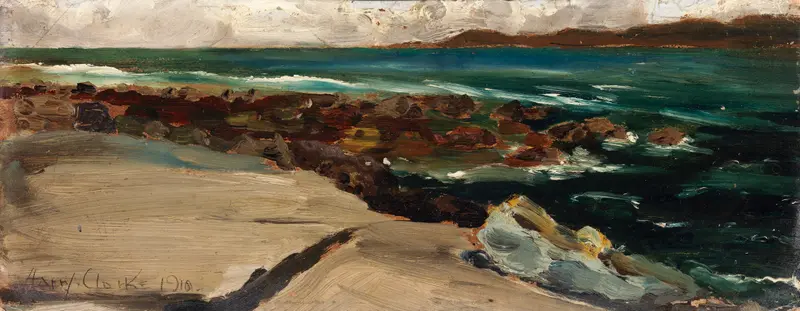
Landscape by the Coast
Harry Clarke
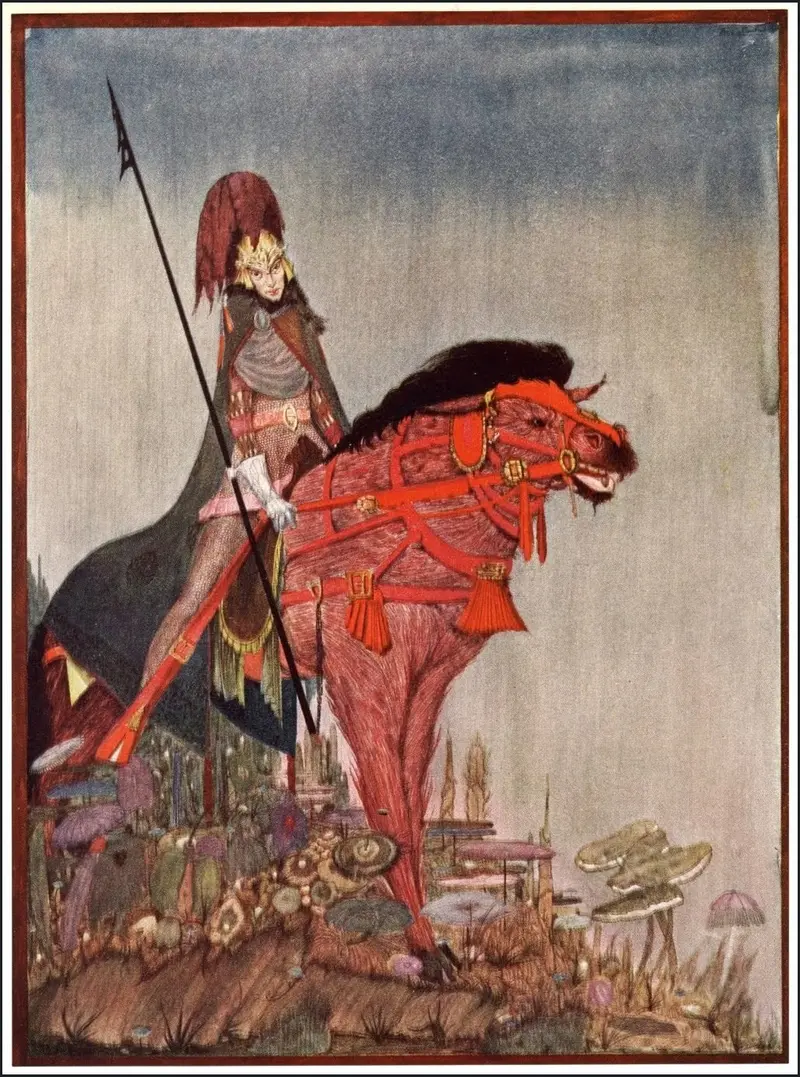
Metzengerstein (Poe)
Harry Clarke
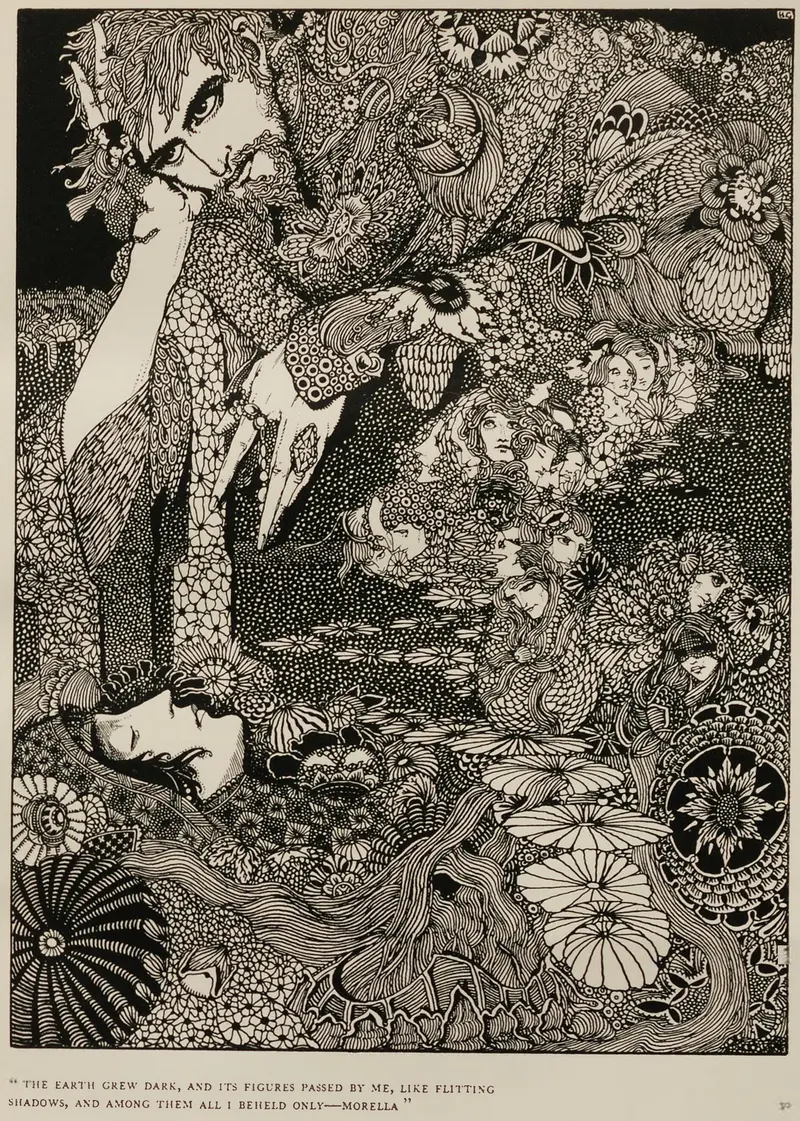
Morella (Poe)
Harry Clarke
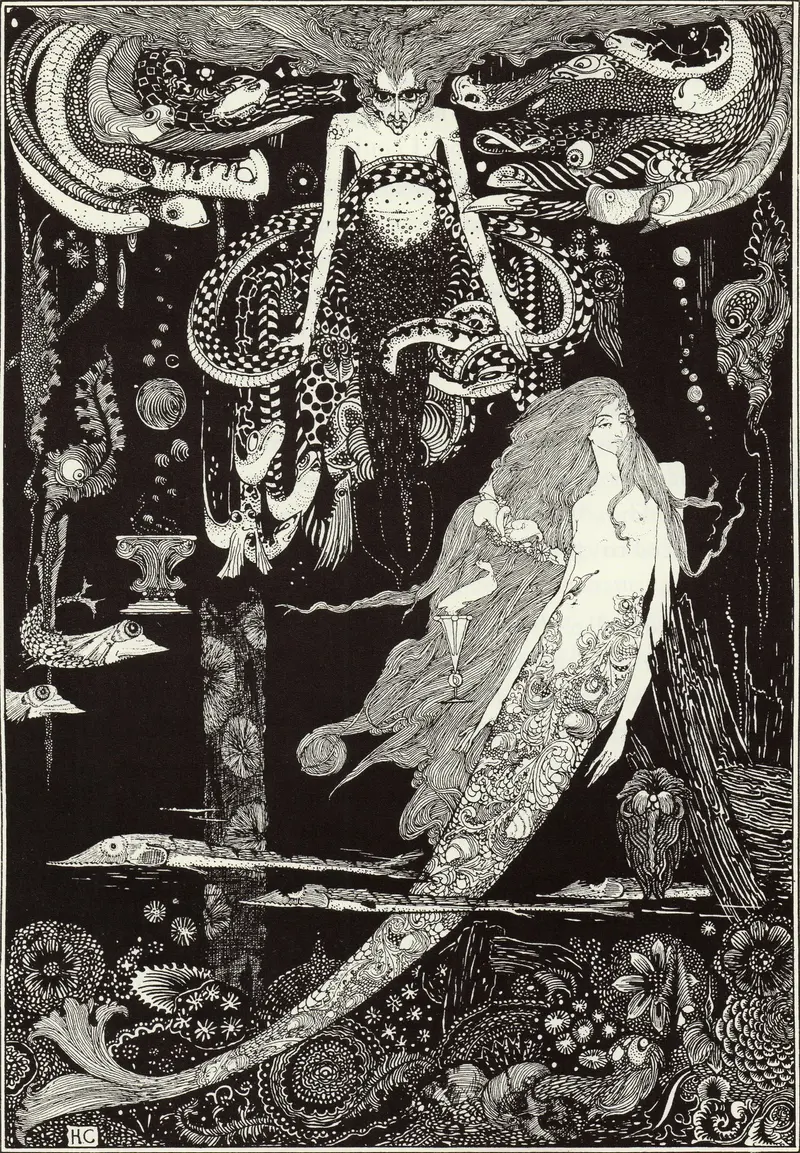
The Little Mermaid (Andersen)
Harry Clarke
Arabia (The Year's at the Spring)
Harry Clarke
Cinderella (Perrault)
Harry Clarke
The Tinder Box (Andersen)
Harry Clarke
The Dead (The Year's at the Spring)
Harry Clarke

The Travelling Companion (Andersen)
Harry Clarke
Riquet with the Tuft (Perrault)
Harry Clarke





