
Arbustes au bord de l'eau — History & Facts
A hush seems to settle over the paper before you even notice the subject—just the faintest suggestion of trees, their trunks and branches rendered with a delicacy that feels almost hesitant, as if Berthe Morisot were tracing the memory of a landscape rather than its exact likeness. The eye is drawn first to the central sapling, its slender form rising against a backdrop of barely-there foliage and water. The lines are so spare that the air itself seems to shimmer between them, and the suggestion of a bank or a bench at the lower right hints at a human presence just outside the frame.
The composition invites you to linger, to search for meaning in the gentle interruptions of line and the open spaces that breathe between them. This print, Arbustes au bord de l'eau, belongs to a world in which artists were just beginning to embrace the fleeting, the unfinished, and the intimate. In late nineteenth-century France, the Impressionists—among them Morisot, one of the movement’s few celebrated women—turned their gaze to the everyday, capturing moments of quiet observation rather than grand narratives. Prints like this were rarely commissioned; instead, they were personal explorations, sometimes exchanged among friends or exhibited in small, avant-garde circles.
History has kept few traces of the journeys of such minor works, but their very modesty draws us closer, inviting us to look again at the beauty of a simple, sunlit bank.
More Artworks by Berthe Morisot

The Harbor at Lorient
Berthe Morisot
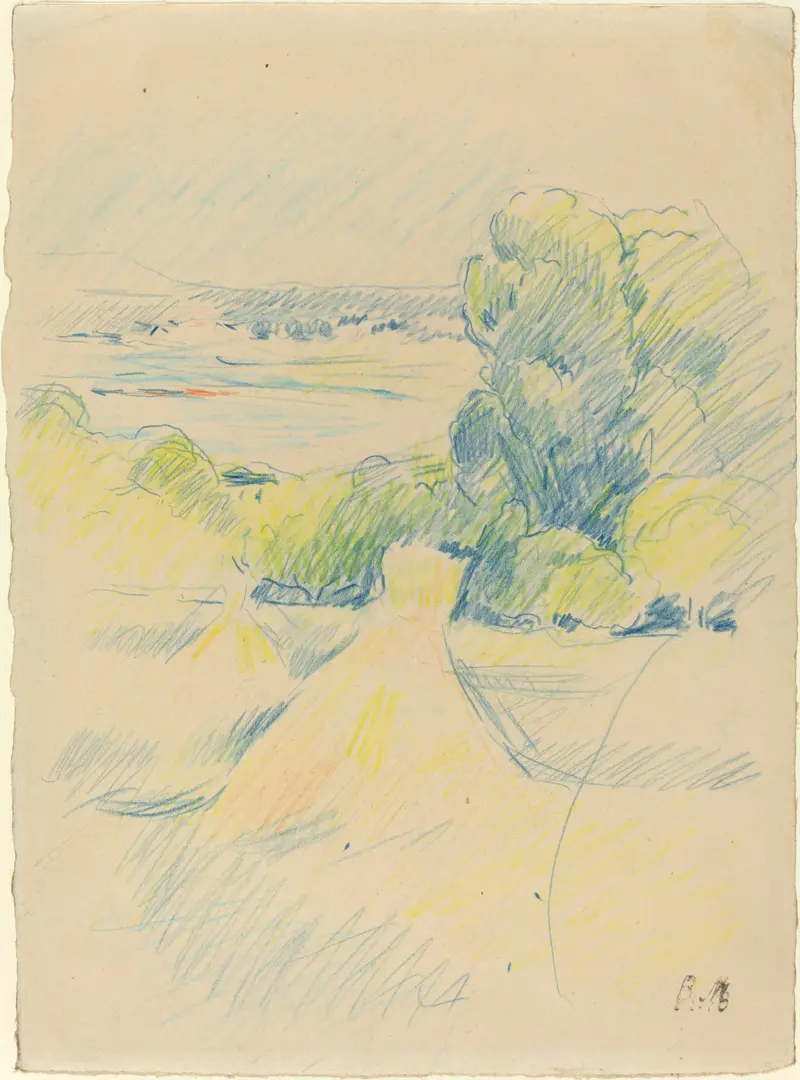
Landscape
Berthe Morisot

Hanging the Laundry out to Dry
Berthe Morisot

Woman in a Garden
Berthe Morisot

Young Girl with Hat
Berthe Morisot
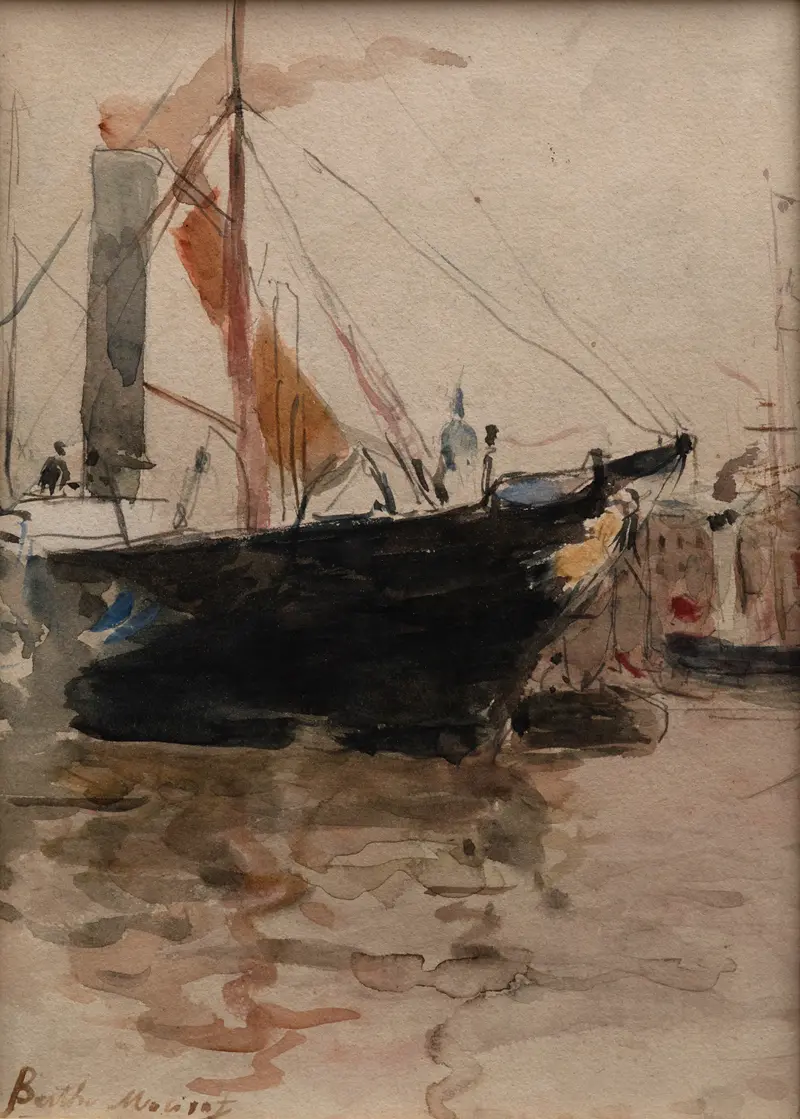
Harbor Scene, Isle of Wight
Berthe Morisot
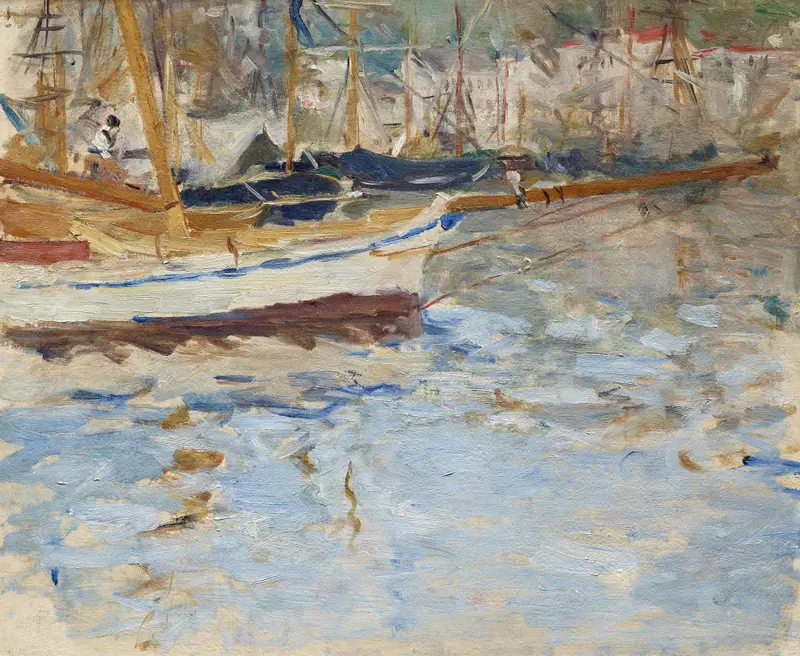
The Port of Nice
Berthe Morisot
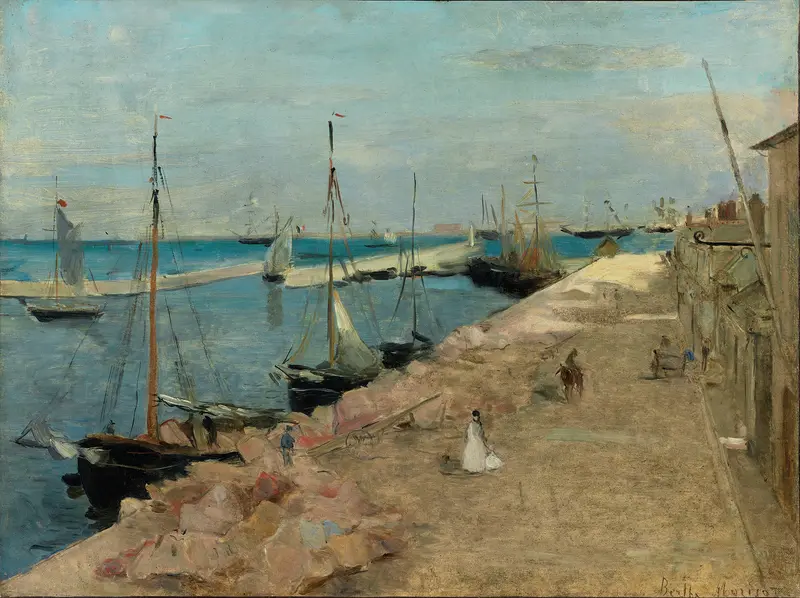
The Harbor at Cherbourg
Berthe Morisot

The Mother and Sister of the Artist
Berthe Morisot
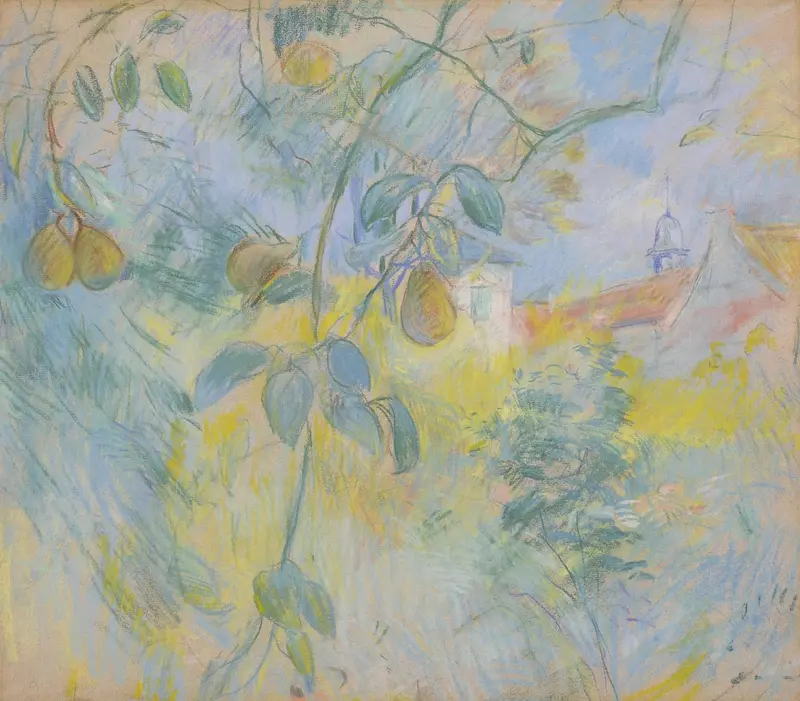
Les Poires
Berthe Morisot
More Landscape Art

The Starry Night
Vincent van Gogh

View of Delft
Johannes Vermeer

Water Lilies
Claude Monet

The Grand Canal, Venice, looking north-west from the Ca' Corner to the Ca' Contarini degli Scrigni, with the campanile of Santa Maria della Carità
Canaletto

Windsor Castle
Canaletto

The Grand Canal looking North-East from the Palazzo Dolfin-Manin to the Rialto Bridge
Canaletto