
Au coq des bruyeres — History & Facts
A burst of laughter seems to ripple through the leaves and across the crowded garden, where every figure is caught mid-gesture, mid-bite, or mid-song. In Au coq des bruyeres, Auguste Lepère draws the viewer into a world of convivial chaos, where the outdoor café is alive with the rituals of leisure. The eye is pulled first to the foreground, where a man in a top hat fixes us with a knowing gaze, his meal paused, as if to invite us into the scene.
Nearby, a waiter strides purposefully with a tray of drinks, the diagonal of his arm echoing the swing above, where a woman and child soar for the sheer thrill of it. The dappled light, filtered through dense foliage, scatters across faces and tabletops, lending the whole gathering a sense of fleeting, sunlit pleasure. This is the France of 1888, when urbanites and villagers alike flocked to open-air guinguettes to eat, drink, and escape the city’s press. Lepère was a keen observer of such moments, and here he captures both the exuberance and the fleetingness of communal joy.
The composition brims with the hallmarks of late nineteenth-century French printmaking: quick, expressive lines, a democratic jumble of classes, and a fascination with everyday spectacle. While little is recorded about the journey of this specific work, its presence in the National Gallery of Art today—thanks to an open access initiative—reminds us how much of history’s daily life survives not in grand canvases, but in scenes like this, where the ordinary becomes unforgettable. Let your eye wander; every face here has its own story.
More Artworks by Auguste Lepère

Le Pont-Neuf (Paris)
Auguste Lepère
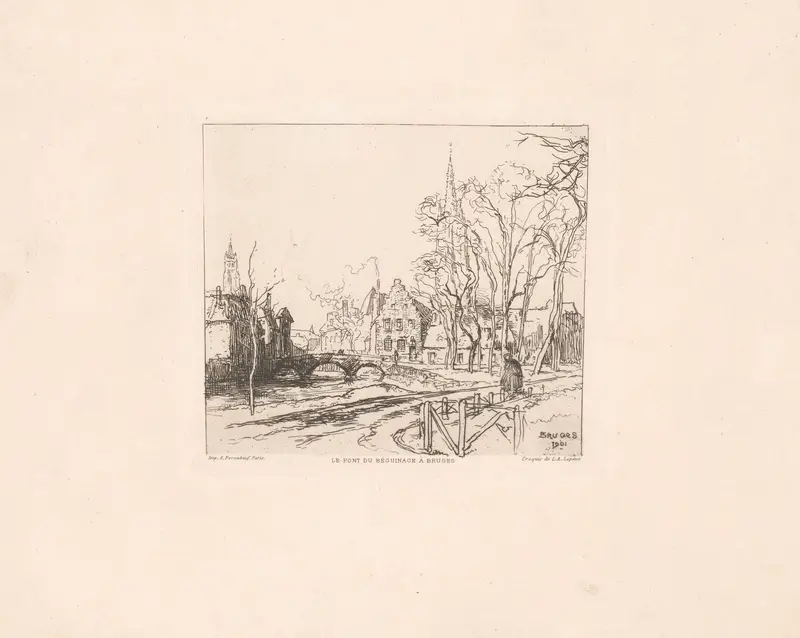
Le pont du Beguinage à Bruges
Auguste Lepère
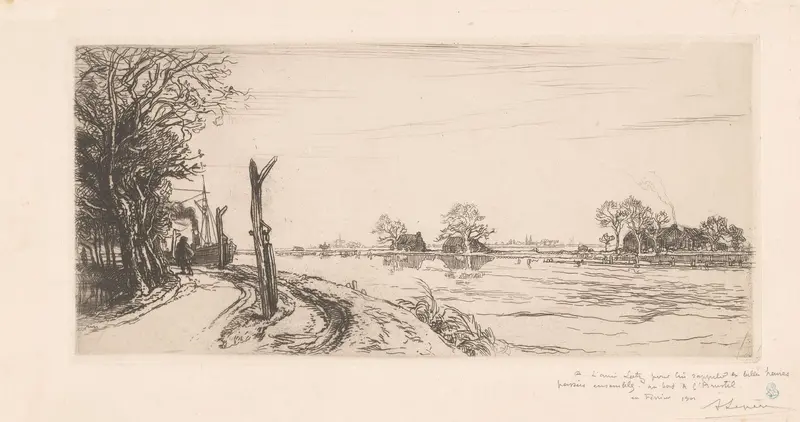
Au bord de l’Amstel
Auguste Lepère
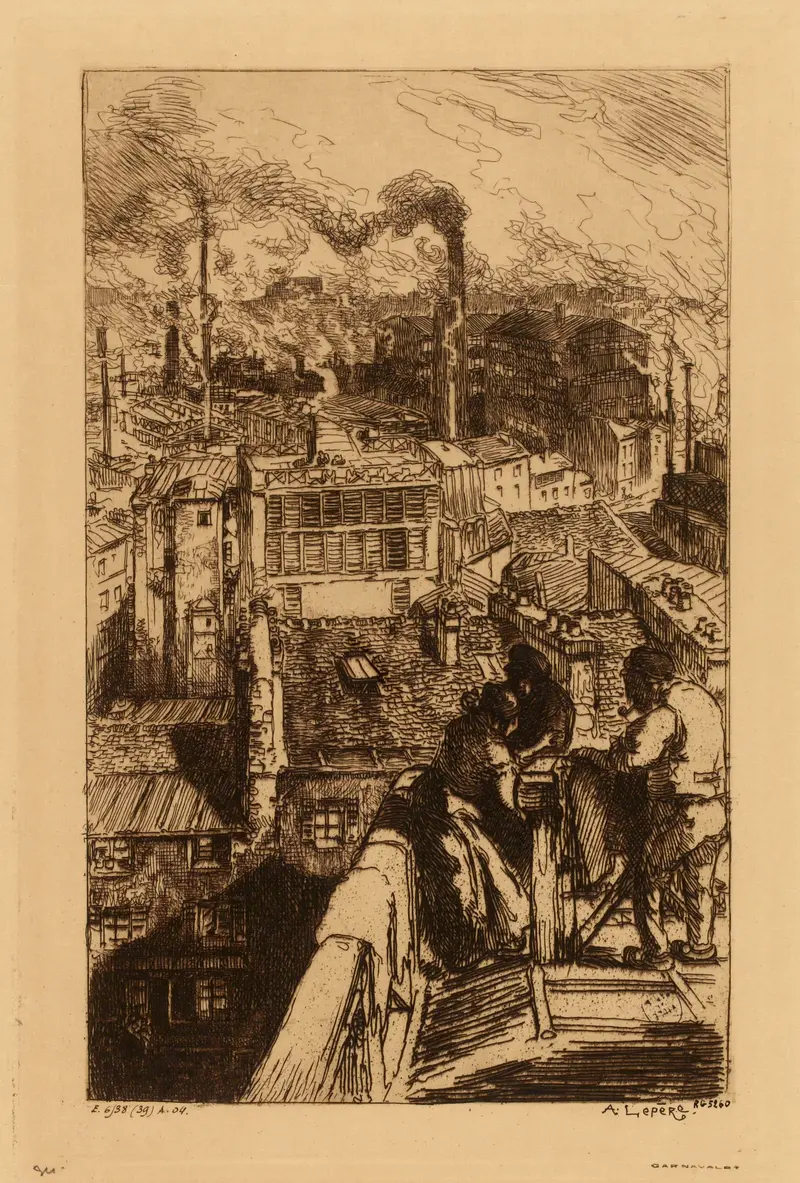
Le quartier des Gobelins
Auguste Lepère
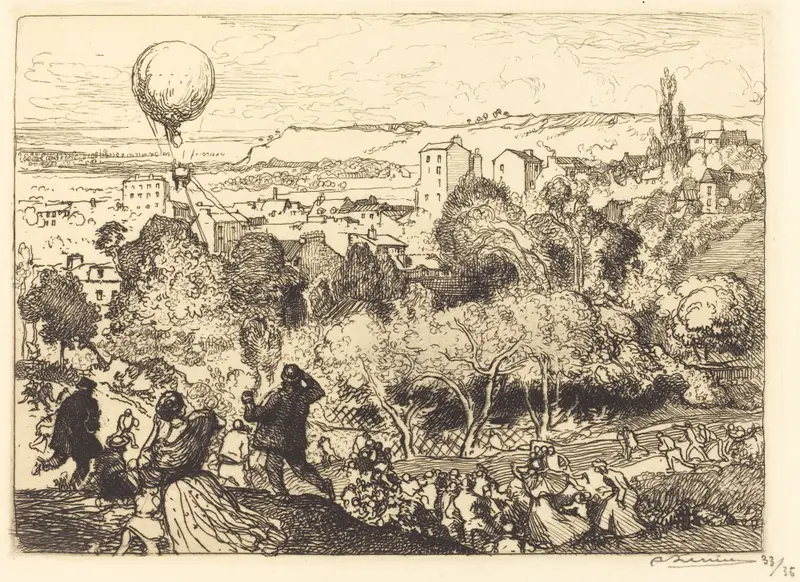
The Falling Balloon, in Pre-Saint-Gervais (Lebaloon qui tombe, au Pre-Saint-Gervais)
Auguste Lepère
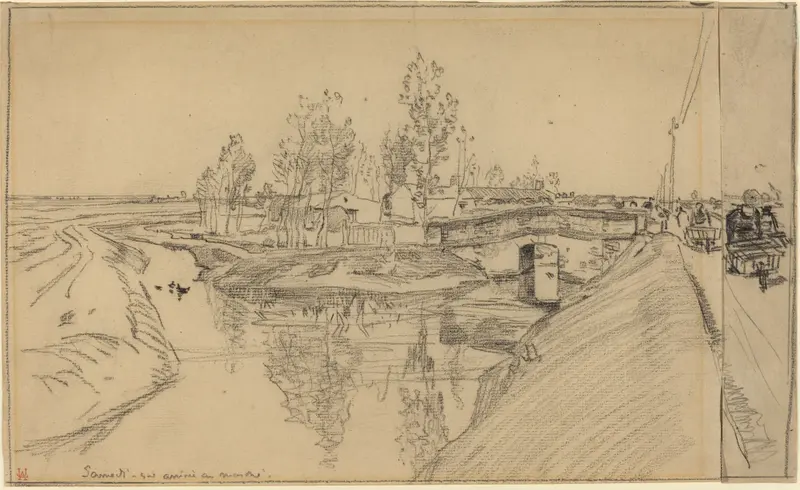
Arrivee au Marche
Auguste Lepère
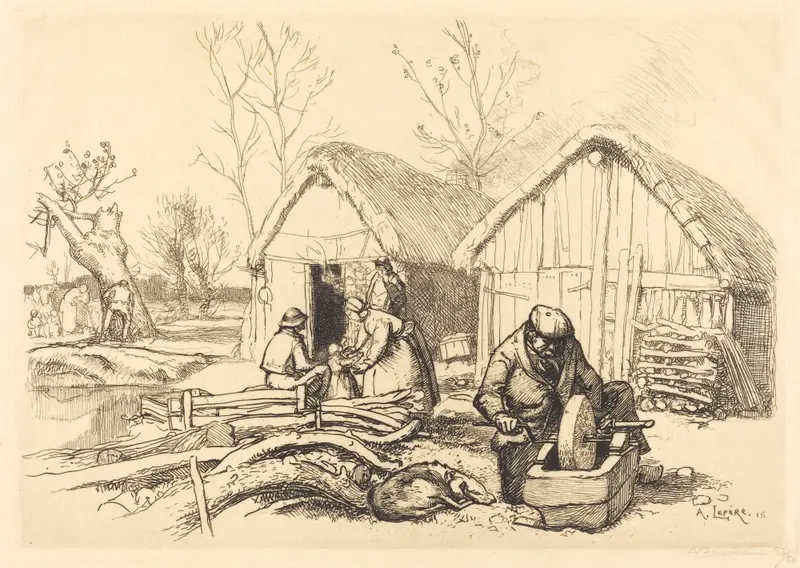
The House of the Woodcutter, Vendee (La maison du bucheron, Vendee)
Auguste Lepère
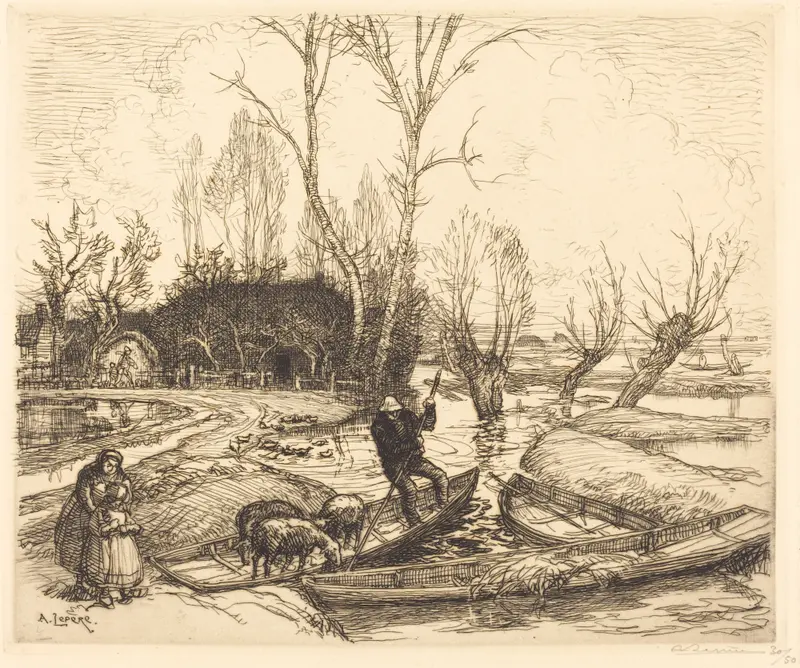
In the Deluged Marsh - The Shepherd (Au marais inonde - Le berger)
Auguste Lepère
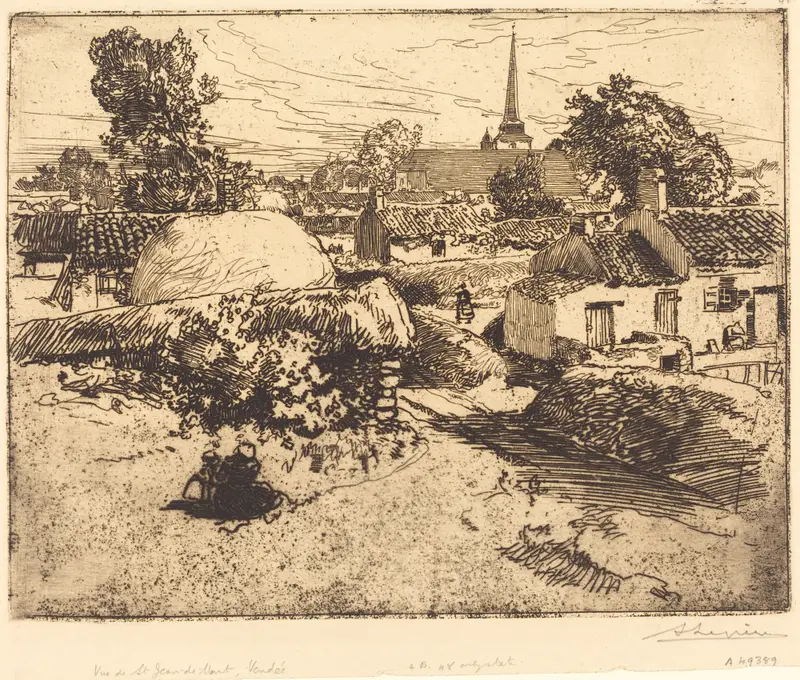
View of St.-Jean-de-Mont, Vendee (Vue de St.-Jean-de-Mont, Vendee)
Auguste Lepère
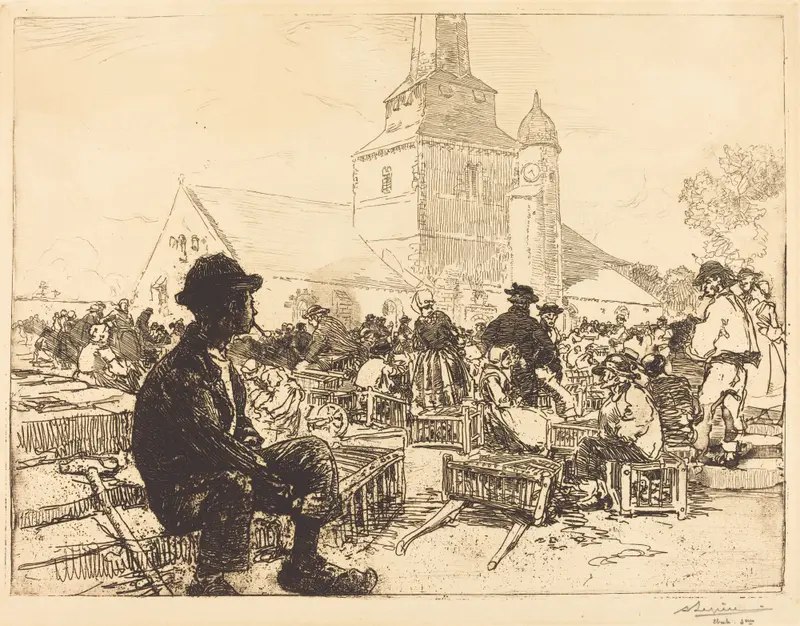
Poultry Market at St.-Jean-de-Mont (Marche a la volaille, a St.-Jean-de-Mont)
Auguste Lepère
More Genre Scene Art

Banquet of the Officers of the St George Civic Guard
Frans Hals

Rembrandt and Saskia in the Scene of the Prodigal Son
Rembrandt van Rijn

Bal du moulin de la Galette
Pierre-Auguste Renoir

Quadrille at the Moulin Rouge
Henri de Toulouse-Lautrec

A Burial at Ornans
Gustave Courbet

When Will You Marry?
Paul Gauguin