
Bakfark, lutenist of Queen Bona — History & Facts
A jolt of theatrical terror animates Bakfark, lutenist of Queen Bona by Ignacy Gierdziejewski. The viewer is caught mid-drama: a dark-clad musician recoils in alarm, his arms raised in frantic defense as three spectral, bald figures close in. The room’s arched ceiling and stone floor root the scene in a Renaissance interior, but the mood is anything but courtly.
Light pours from a high window, spotlighting the lutenist’s panic and casting the intruders in shadow, their gaunt forms and outstretched hands more apparition than flesh. A portrait on the wall, perhaps Queen Bona herself, looks on impassively, a silent witness to the unfolding nightmare. Painted in 1856, this work belongs to a 19th-century fascination with historical fantasy and the supernatural, where artists mined the past for stories charged with emotion and suspense. The real Bakfark was a celebrated lutenist at the court of Sigismund II Augustus, Queen Bona’s son, but here history bends to the painter’s imagination.
Such scenes were popular among Romantic-era audiences, who relished tales of haunted genius and the perils of artistic ambition. Today, the painting resides in the National Museum in Warsaw—a reminder that history’s shadows are never far from the stage, and that even the most illustrious musicians might have their nightmarish moments.
More Artworks by Ignacy Gierdziejewski

Dante and Vergil
Ignacy Gierdziejewski
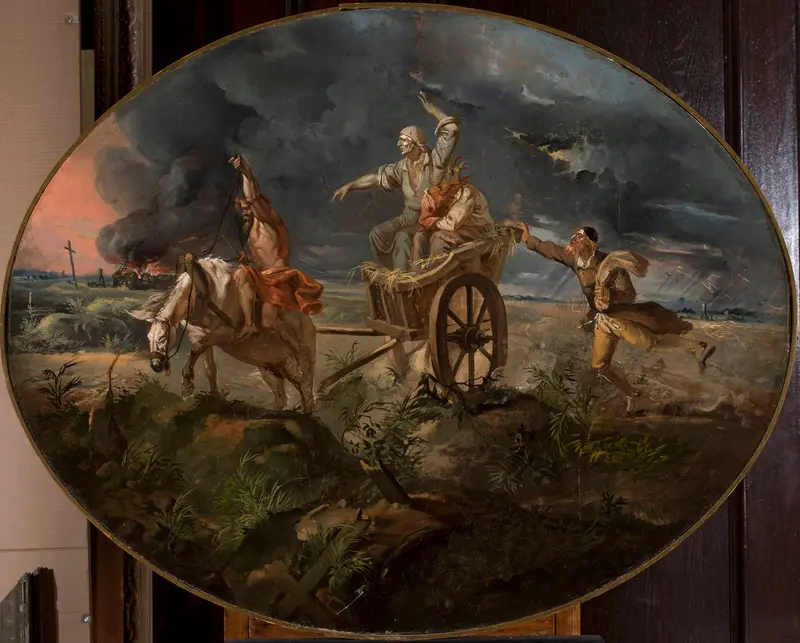
Symbolic scene – Poverty and misery come to see us
Ignacy Gierdziejewski
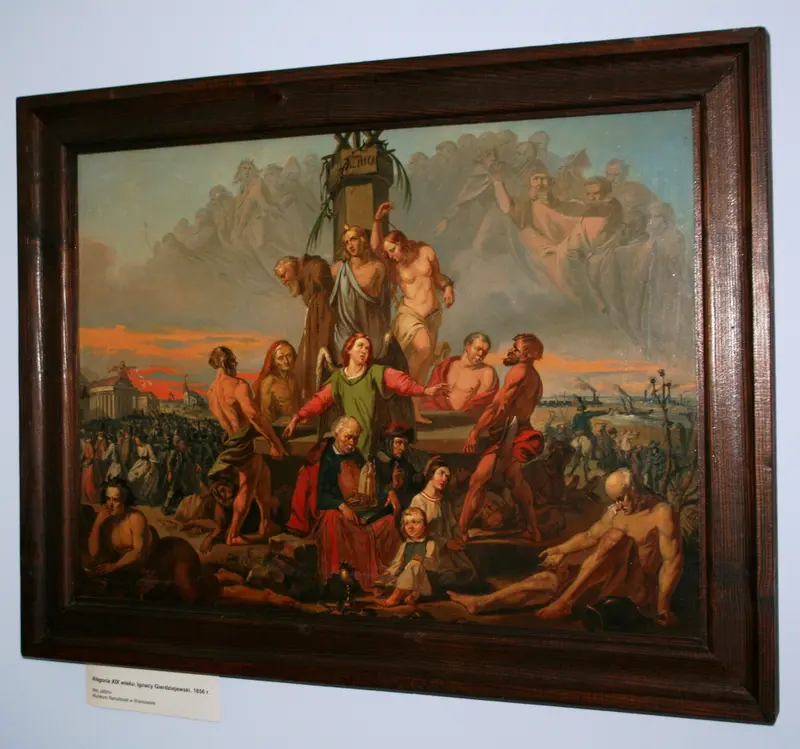
Allegory – The 19th Century
Ignacy Gierdziejewski
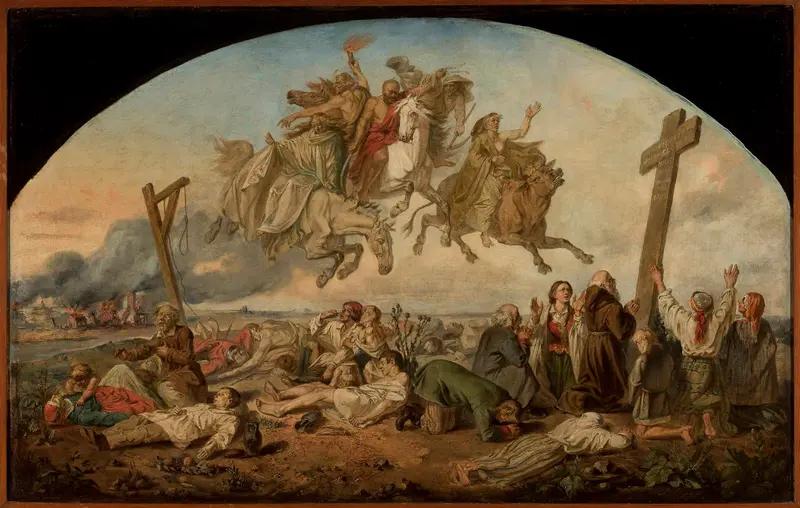
Lord deliver us from air, fire, war, famine and sudden death
Ignacy Gierdziejewski
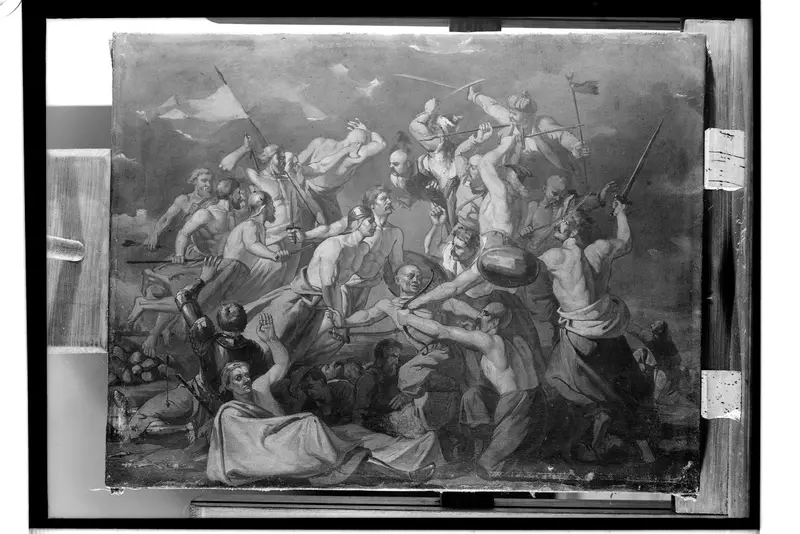
Night after the battle of Legnica
Ignacy Gierdziejewski
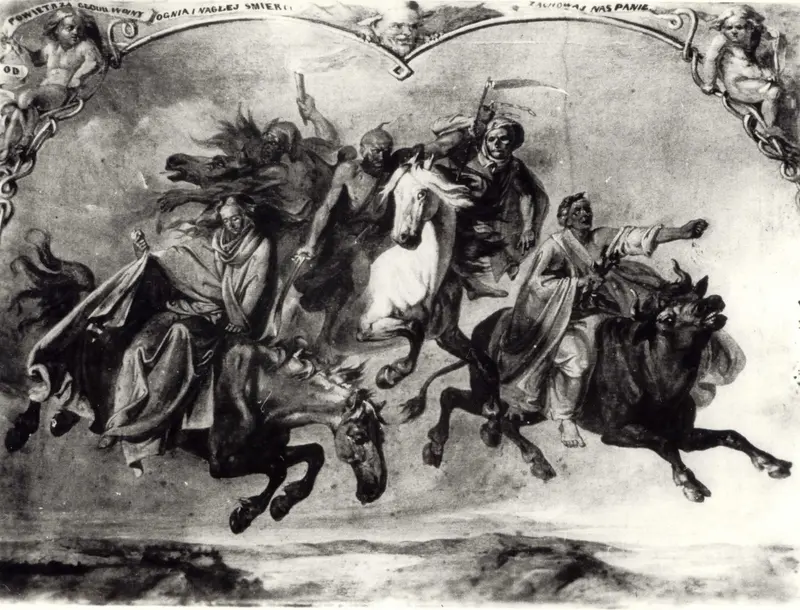
Apocalypse
Ignacy Gierdziejewski
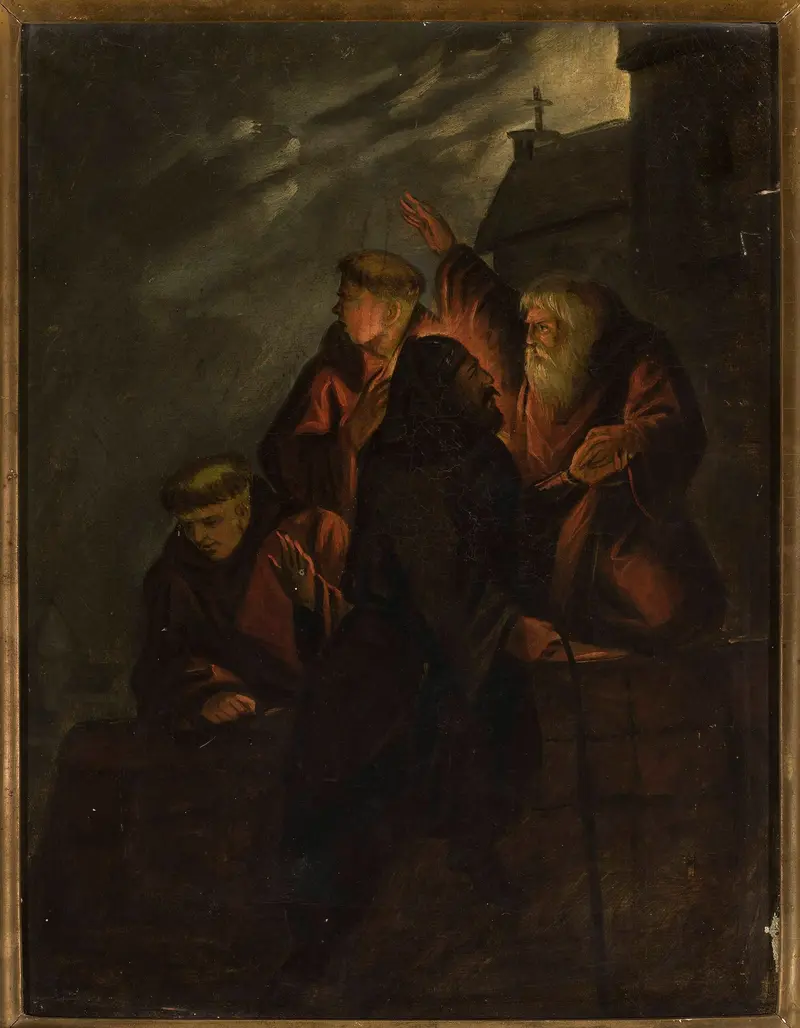
Priest Marek facilitates the escape of Władysław the Short
Ignacy Gierdziejewski
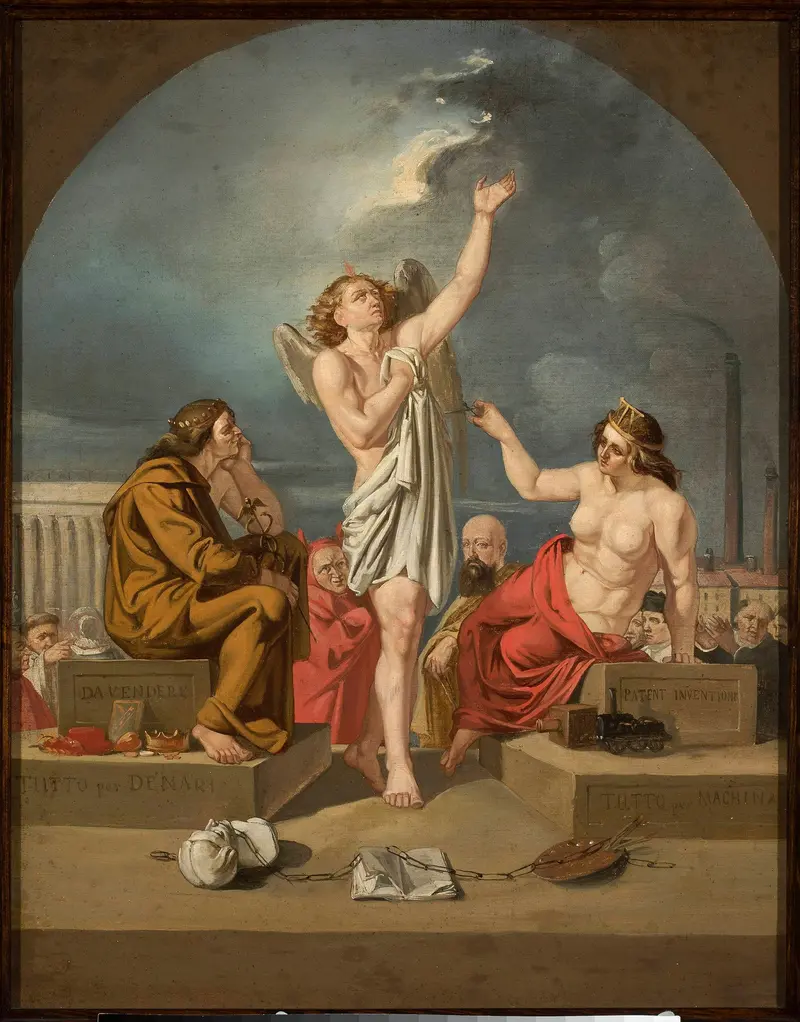
Symbolic scene – Tutto per Machina. Tutto per Denari
Ignacy Gierdziejewski
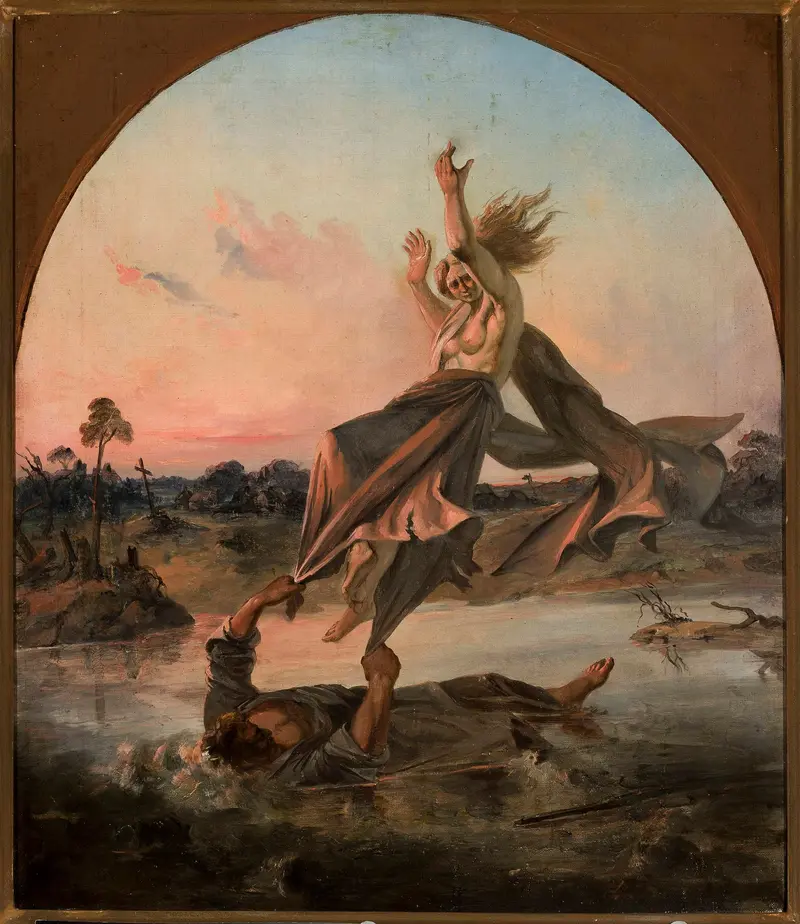
Pestilent air
Ignacy Gierdziejewski
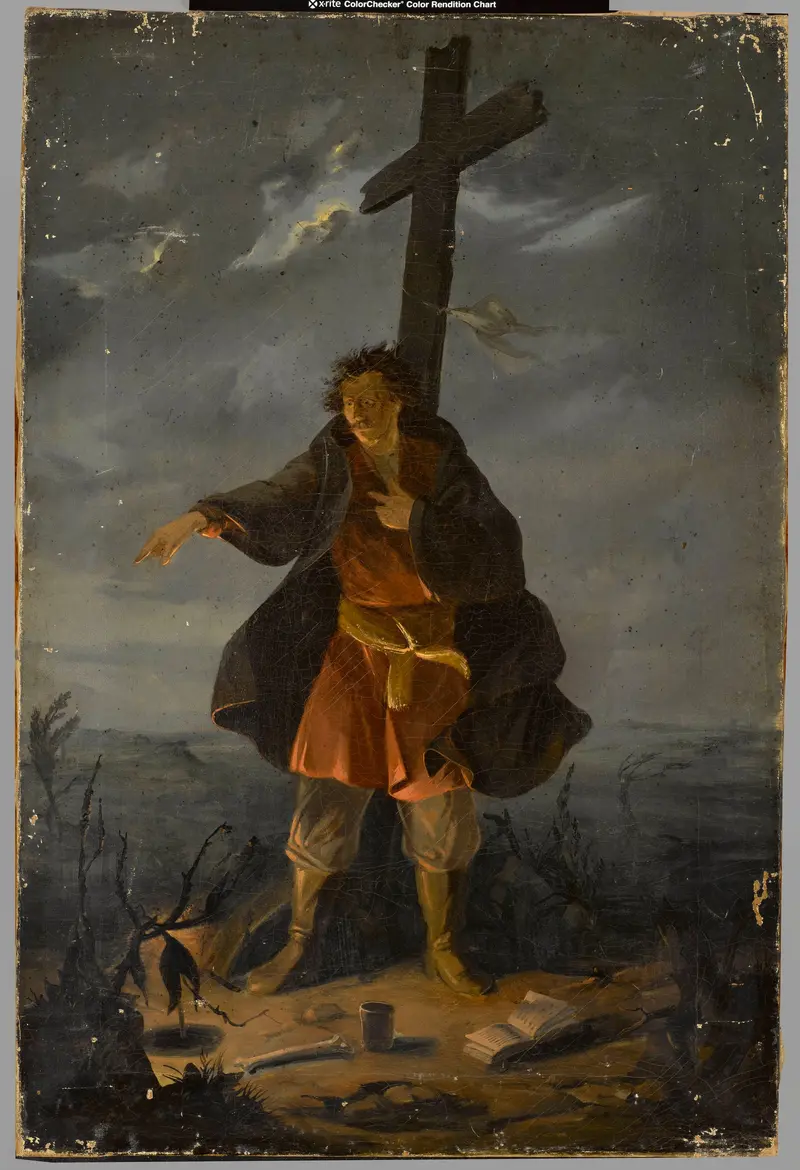
Twardowski in Krzemionki near Kraków
Ignacy Gierdziejewski





