
Symbolic scene – Poverty and misery come to see us — History & Facts
What grips the viewer first is the sense of desperate motion: a ragged family tumbles across a blasted landscape, their cart lurching forward as if chased by the storm itself. The sky is bruised with smoke and fire, and in the distance, the last traces of home burn beneath a cross. Every gesture in the scene is charged with urgency—the figure on horseback raises an arm in warning or command, the driver twists to urge the horse onward, and an old man, clutching a bundle, strains to catch up, his face turned in anguish.
The palette is raw and earthy, the brushwork loose, as if the painter himself could not linger. Light falls harshly from the left, illuminating the fleeing figures but casting the world behind them into shadow and ruin. Painted in 1856 by Ignacy Gierdziejewski, this work belongs to a moment in European art when allegory and realism collided. The mid-nineteenth century was an era of upheaval—wars, uprisings, and the slow, grinding poverty of rural life.
Artists across Central and Eastern Europe turned to such scenes not only to document suffering, but to warn, to mourn, and sometimes to accuse. History has kept few traces of Gierdziejewski’s life or intentions, and the medium of this painting remains uncertain, but its presence in the National Museum in Warsaw roots it firmly in the Polish experience. The painting invites the viewer to look again—not just at the figures, but at the world they flee, and the world that awaits them.
More Artworks by Ignacy Gierdziejewski

Dante and Vergil
Ignacy Gierdziejewski
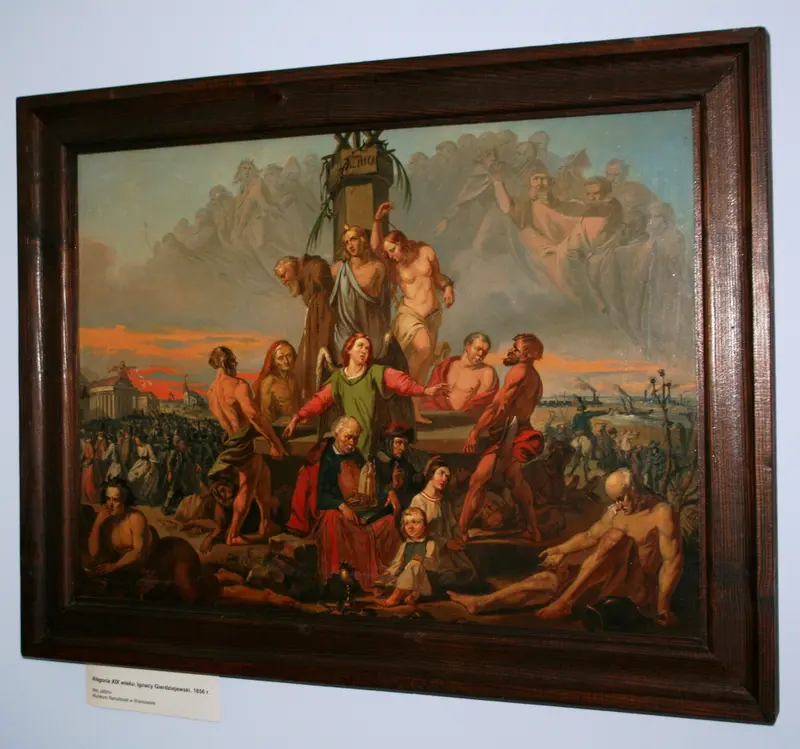
Allegory – The 19th Century
Ignacy Gierdziejewski
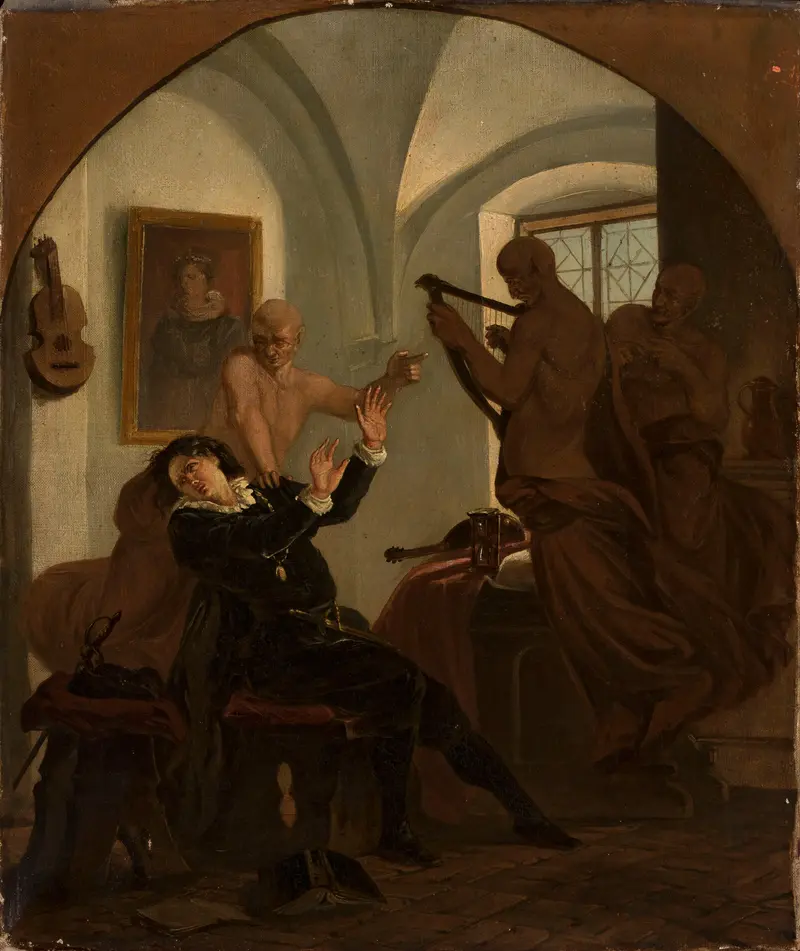
Bakfark, lutenist of Queen Bona
Ignacy Gierdziejewski
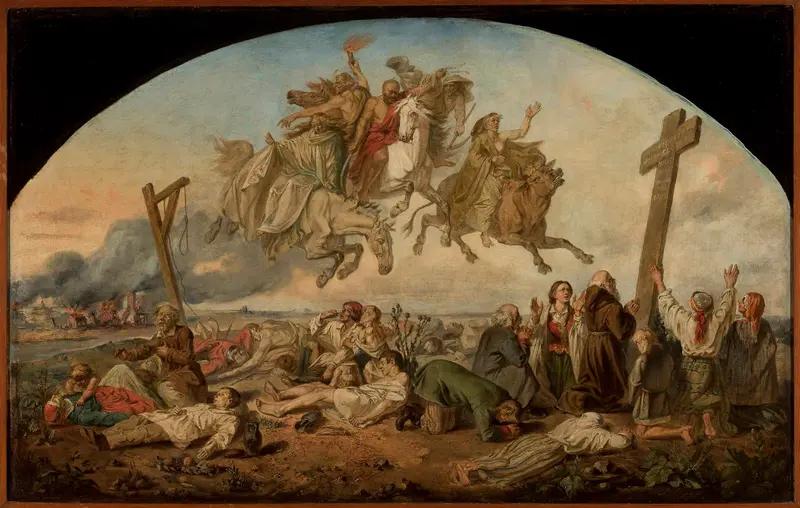
Lord deliver us from air, fire, war, famine and sudden death
Ignacy Gierdziejewski
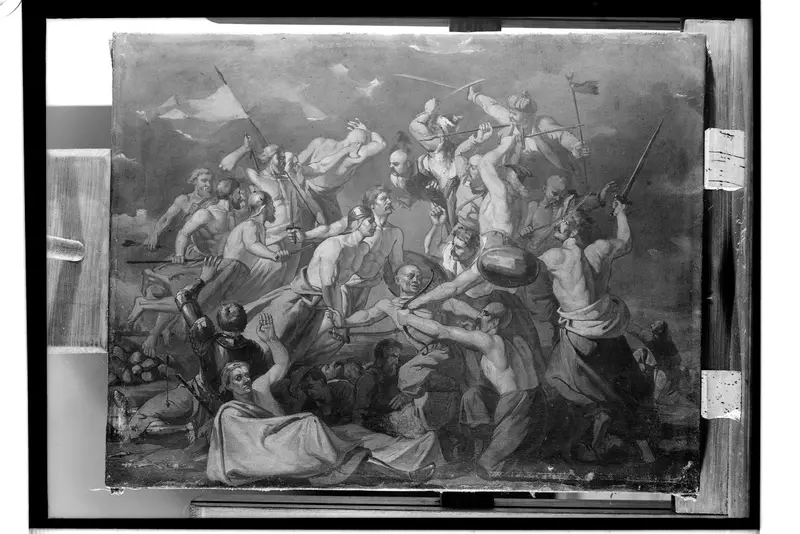
Night after the battle of Legnica
Ignacy Gierdziejewski
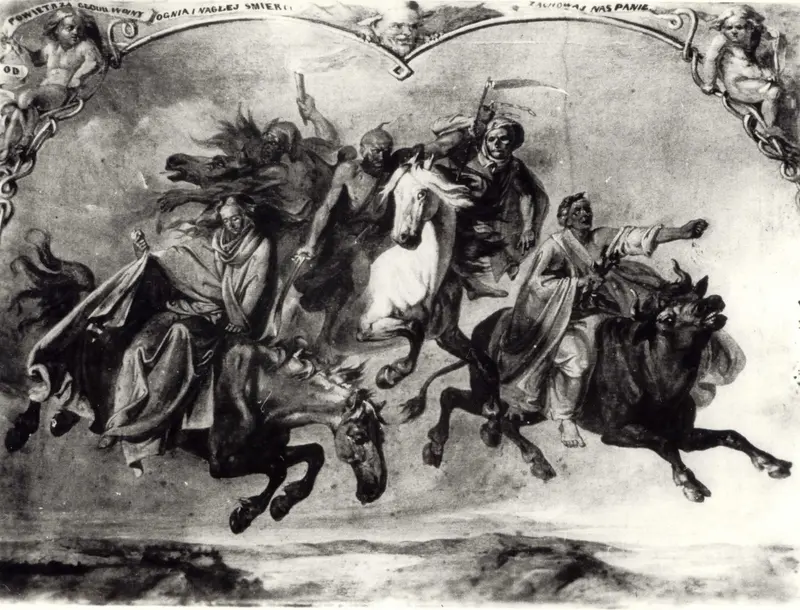
Apocalypse
Ignacy Gierdziejewski
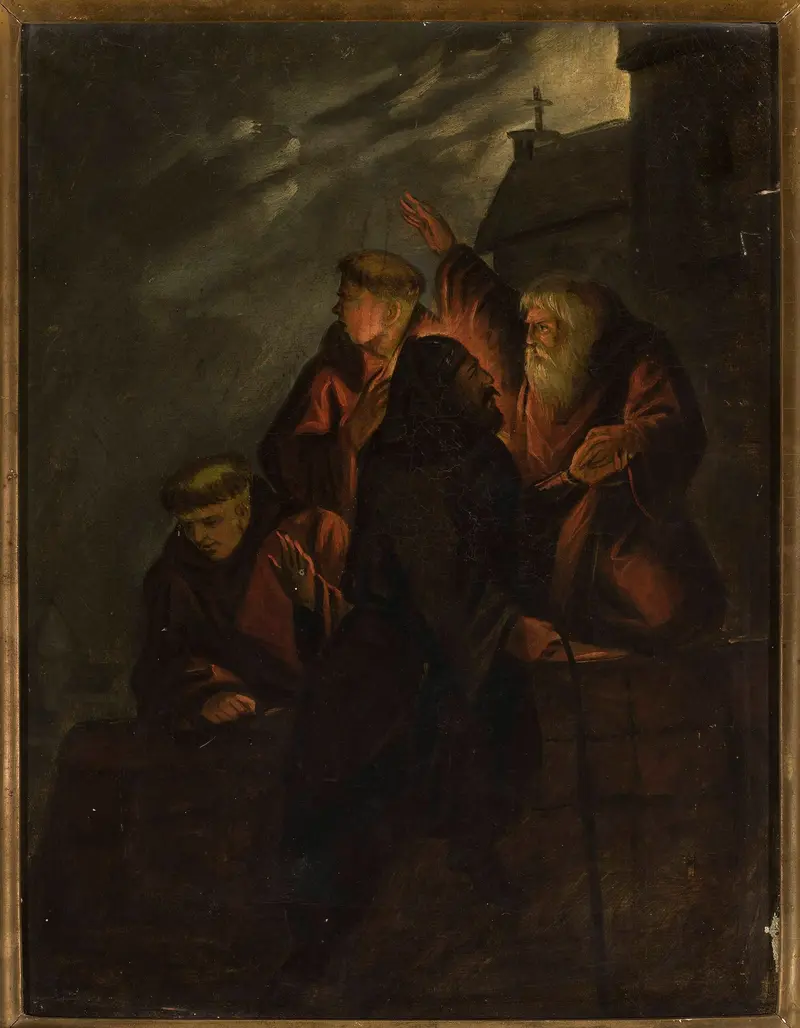
Priest Marek facilitates the escape of Władysław the Short
Ignacy Gierdziejewski
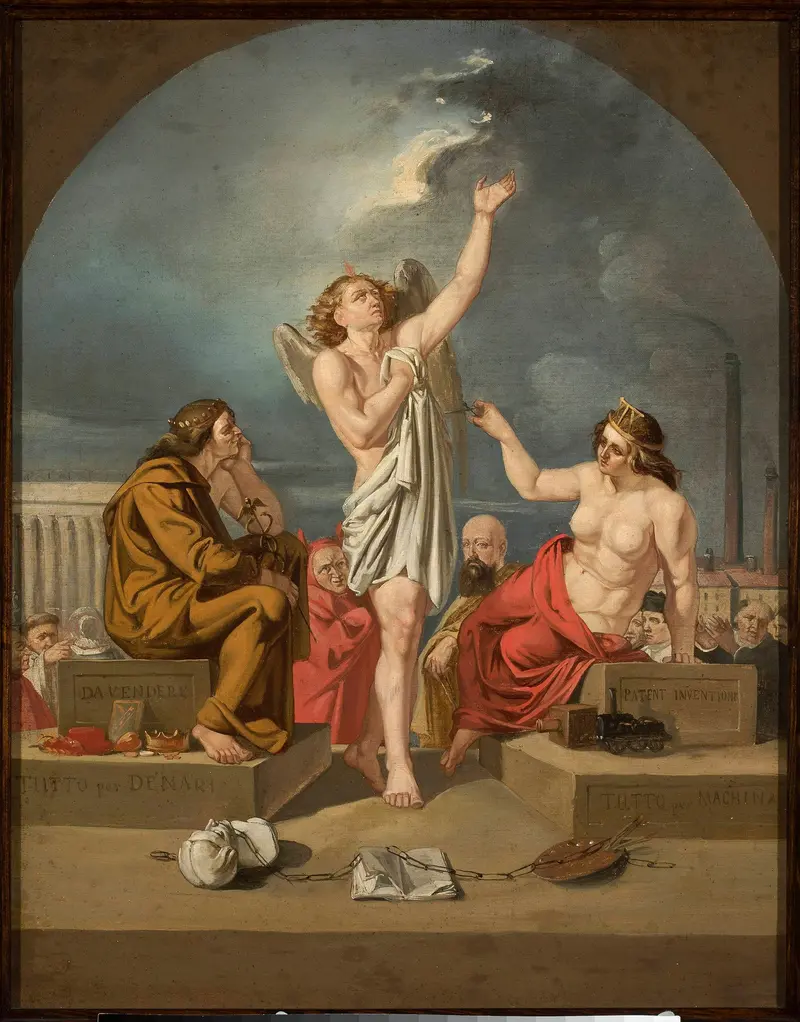
Symbolic scene – Tutto per Machina. Tutto per Denari
Ignacy Gierdziejewski
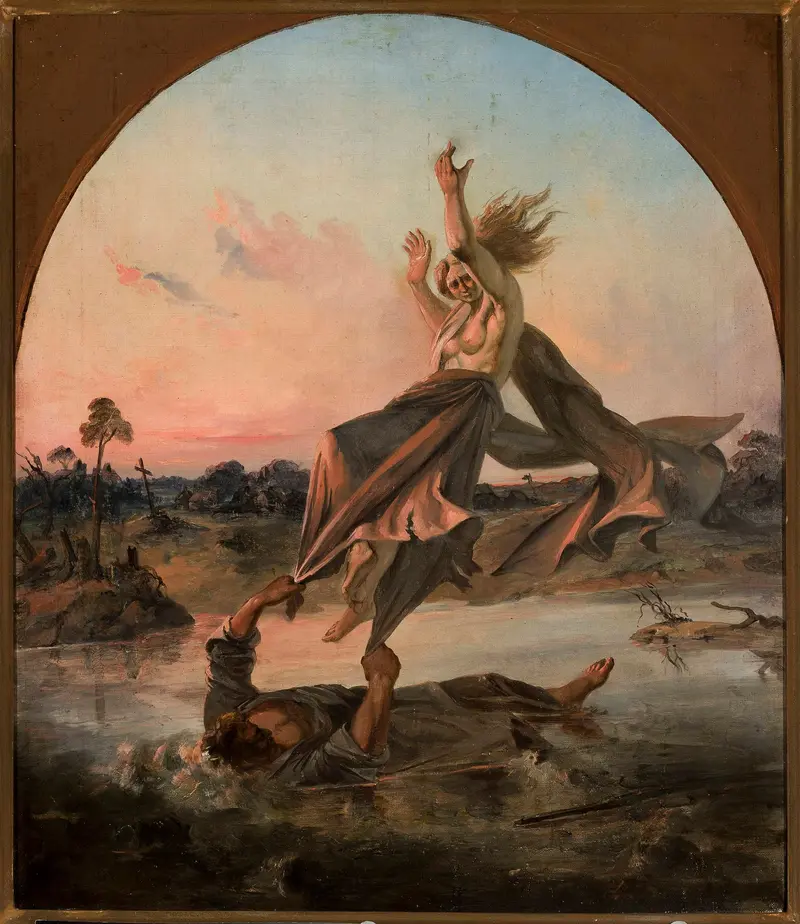
Pestilent air
Ignacy Gierdziejewski
Twardowski in Krzemionki near Kraków
Ignacy Gierdziejewski





