
Symbolic scene – Tutto per Machina. Tutto per Denari — History & Facts
What first catches the eye in Symbolic scene – Tutto per Machina. Tutto per Denari is the theatrical confrontation at its center: an angelic figure, draped in white and poised between two earthly forces, gestures skyward as if yearning for something beyond the reach of the bustling crowd below. The composition draws the viewer into a drama of ideals and temptations, with each figure and object carefully staged for maximum effect.
To the left, a brooding, robed man sits atop a block inscribed “Tutto per Denari”—all for money—his brow heavy with contemplation, while a devilish figure whispers in his ear. Opposite him, a crowned, bare-chested woman reclines on a plinth marked “Tutto per Machina”—all for machines—her hand stretching out to prod the central figure, as if to claim his allegiance. The scattered objects at their feet—money bags, chains, and mechanical parts—are not mere props, but clues to the painting’s moral calculus. This is a world shaped by the tensions of the nineteenth century, when the promises and perils of industrialization, invention, and commerce were debated in salons and satirized on canvas.
Allegorical scenes like this one flourished in an era fascinated by progress but wary of its costs; artists used personification and symbolism to grapple with questions that statistics and manifestos could not answer. The presence of smokestacks and a colonnaded building in the background hint at the era’s competing visions: the grandeur of classical ideals and the relentless advance of industry. Ignacy Gierdziejewski’s painting, now in the National Museum in Warsaw, stands as a testament to a time when art was a stage for public argument, and the fate of the soul was imagined as a contest between invention and avarice.
The more you look, the more the painting’s cast of characters seems to demand your judgment—whose side would you take?
More Artworks by Ignacy Gierdziejewski

Dante and Vergil
Ignacy Gierdziejewski
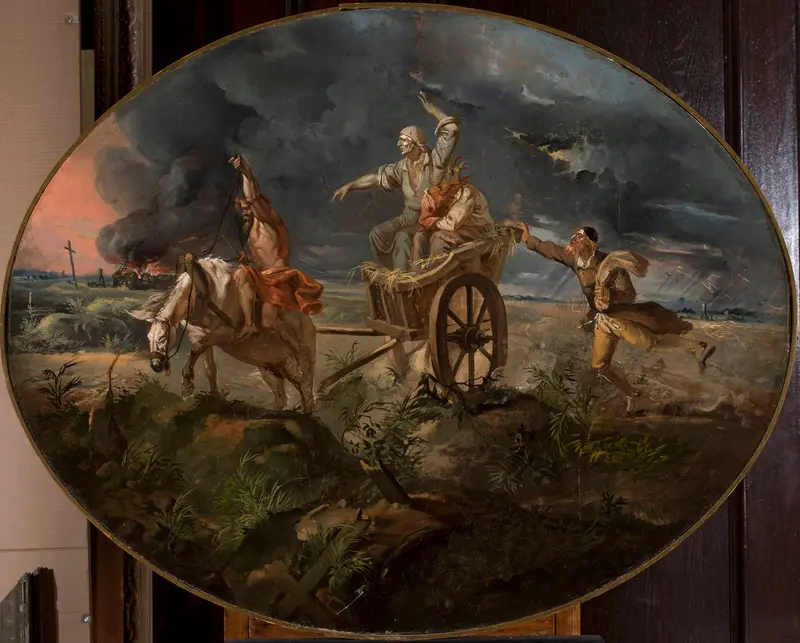
Symbolic scene – Poverty and misery come to see us
Ignacy Gierdziejewski
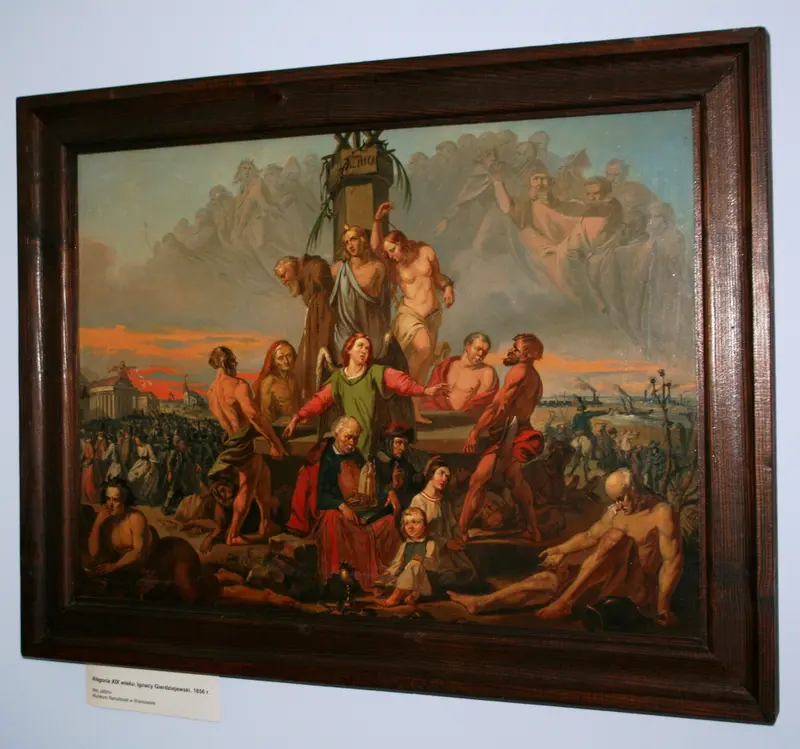
Allegory – The 19th Century
Ignacy Gierdziejewski
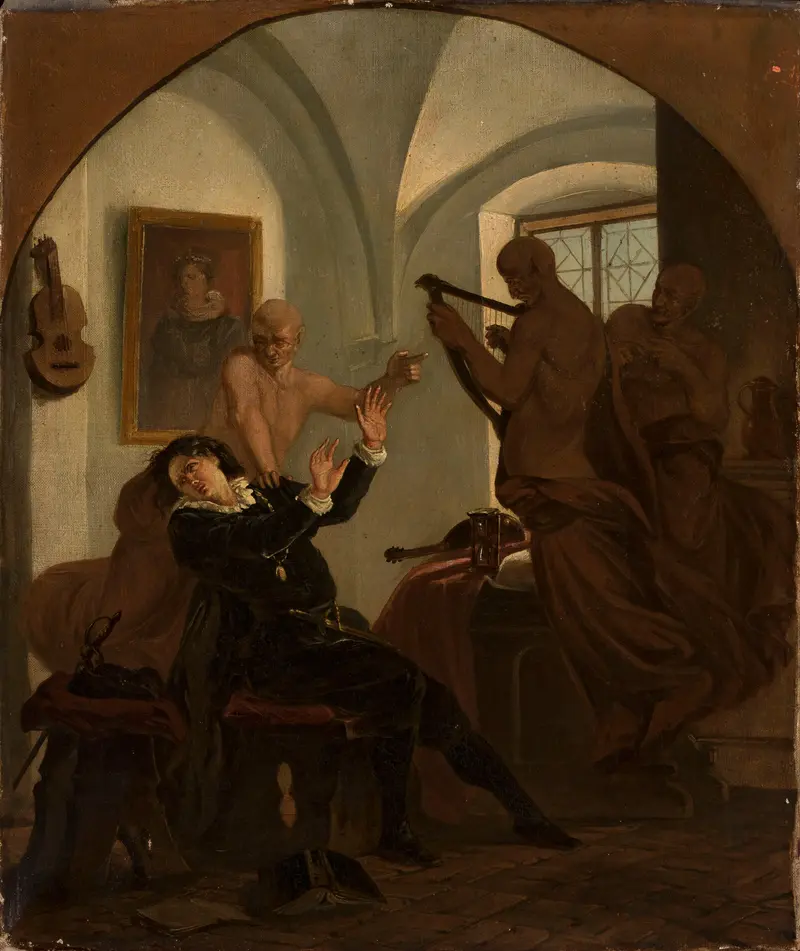
Bakfark, lutenist of Queen Bona
Ignacy Gierdziejewski
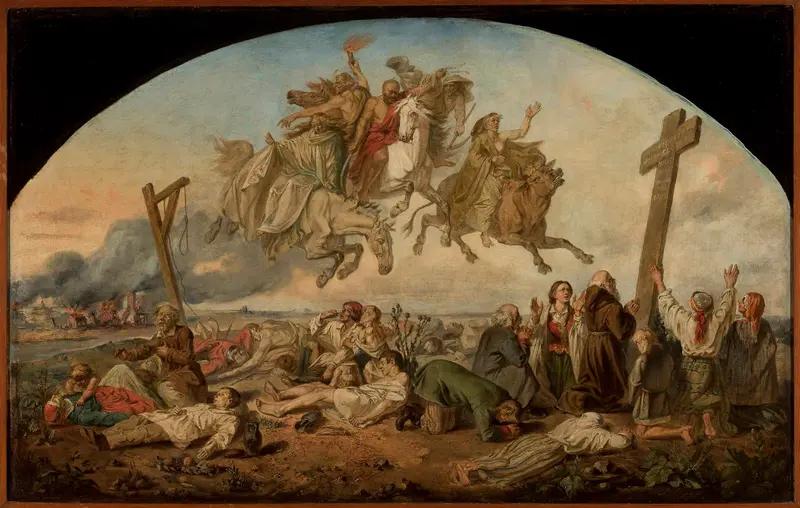
Lord deliver us from air, fire, war, famine and sudden death
Ignacy Gierdziejewski
Night after the battle of Legnica
Ignacy Gierdziejewski
Apocalypse
Ignacy Gierdziejewski
Priest Marek facilitates the escape of Władysław the Short
Ignacy Gierdziejewski
Pestilent air
Ignacy Gierdziejewski
Twardowski in Krzemionki near Kraków
Ignacy Gierdziejewski





