
Bal dans la cour intérieure de l’Hôtel de Ville, 4ème arrondissement. Fêtes Franco-Russes à Paris, le 19 octobre 1893 — History & Facts
Who listens when art speaks of silence? In a realm where movement intertwines with stillness, a dance unfolds that echoes through time, inviting us to witness the beauty of fleeting moments captured on canvas. Look to the left at the elegantly dressed figures swirling in a vibrant waltz, their costumes a riot of color against the muted background of the Hôtel de Ville. The artist employs broad, sweeping brushstrokes to echo the rhythm of their movements, while the gentle play of light accentuates their joyous expressions. Notice how the interplay of soft shadows creates a sense of depth, drawing your eye toward the heart of the dance—a celebration of life itself, bathed in the golden hues of an autumn afternoon. Beneath the surface, the artwork contrasts the exuberance of the dancers with the stillness of the surrounding architecture.
Each figure seems to transcend their surroundings, an embodiment of joy in an era marked by tumult. The structural elements of the Hôtel de Ville loom quietly, a reminder of tradition and history, while the dancers represent the hopes and aspirations of a society longing for connection and festivity amid the tensions of the early 20th century. Created during a time of upheaval in Europe, this work emerged between 1915 and 1945, a period defined by two world wars and shifting artistic movements. Fédor Hoffbauer, reflecting on the Franco-Russian festivities in Paris, sought to capture a moment of cultural unity where joy might prevail, even as the world outside the ballroom faced uncertainty.
His brush conveys not just dance but the resilience of the human spirit amidst chaos.
More Artworks by Fédor Hoffbauer
Browse all →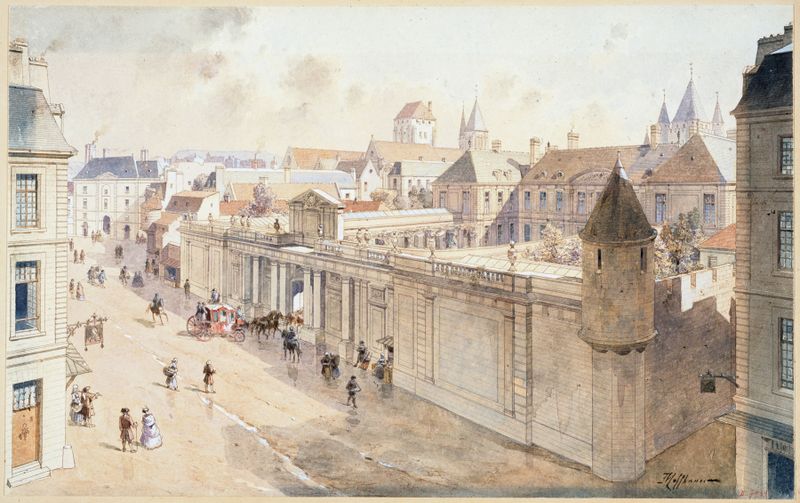
Le palais du Grand Prieur au Temple, en 1770
Fédor Hoffbauer
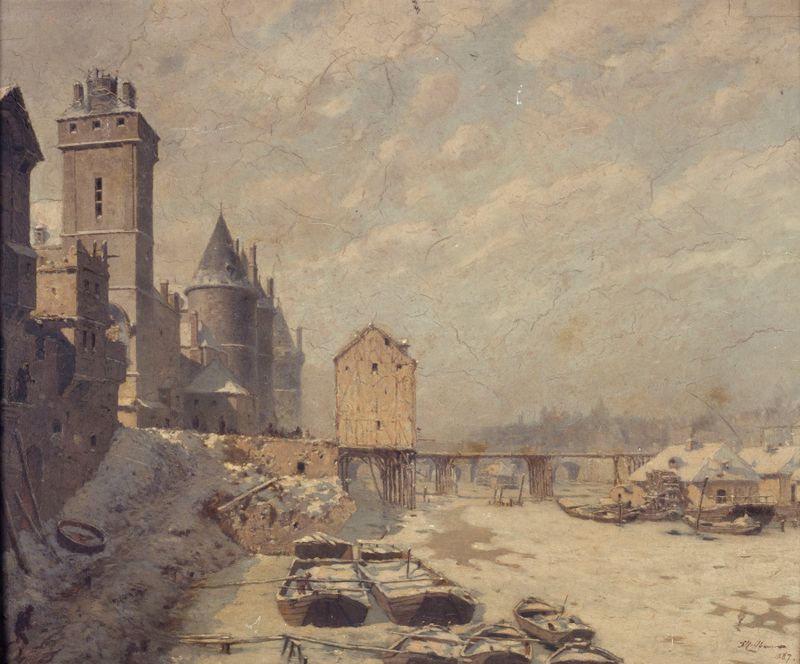
La tour de l’Horloge, la Conciergerie et le pont au Change, en 1621
Fédor Hoffbauer

Banquet des officiers de la marine Russe, dans la salle des fêtes à l’Hôtel de Ville. Fêtes Franco-Russes à Paris
Fédor Hoffbauer

Le Grand Châtelet et le pont de Bois, 1621-1645
Fédor Hoffbauer
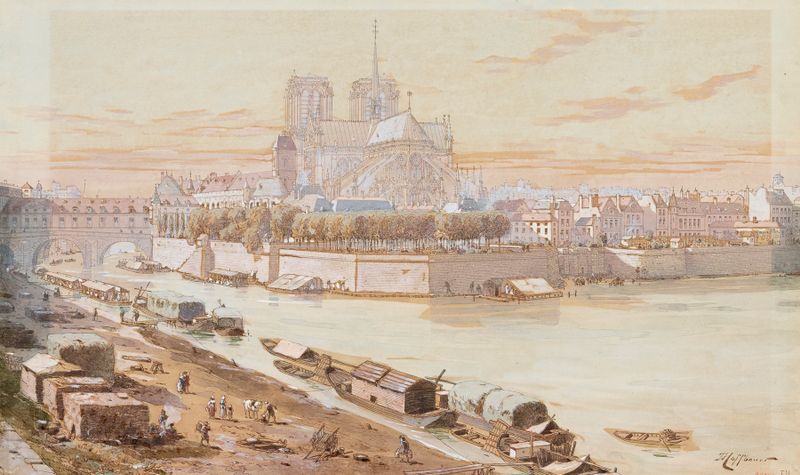
Notre-Dame et l’Evêché en 1750
Fédor Hoffbauer

Vue panoramique de Paris en 1588, depuis les toits du Louvre, avec le Pont-Neuf en construction
Fédor Hoffbauer
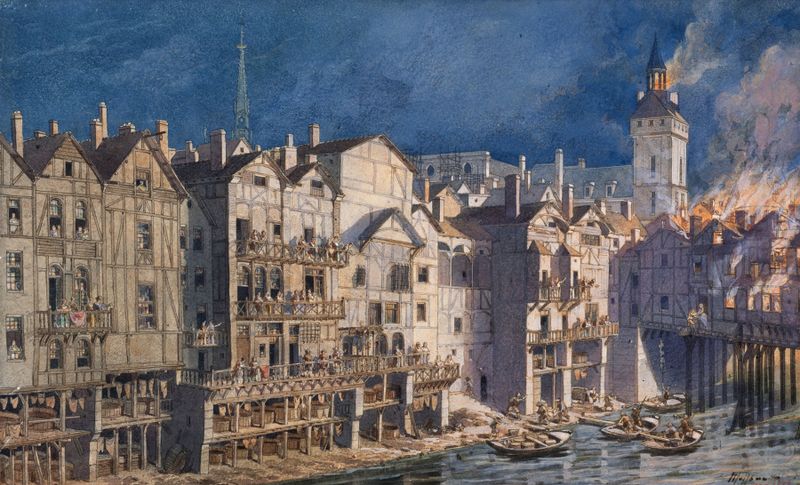
La Cité entre le pont Notre Dame et le pont au Change en 1621
Fédor Hoffbauer

L’Hôtel de Ville et le pont d’Arcole en 1842
Fédor Hoffbauer

Le Cimetière des Innocents en 1750
Fédor Hoffbauer
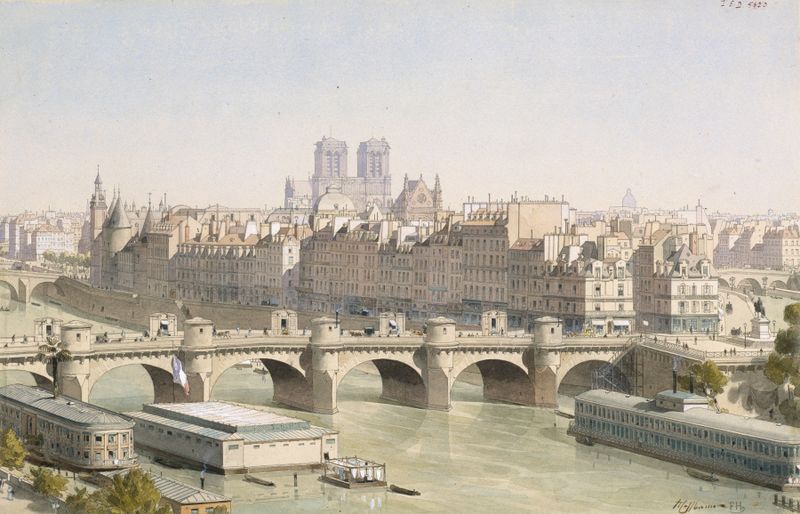
Vue de l’île de la Cité et le pont-Neuf avec ses boutique, vers 1840
Fédor Hoffbauer





