
Barberini Villa — History & Facts
When did color learn to lie? In Barberini Villa, the lush greenery cradles a villa that seems to whisper its secrets, inviting us to uncover the desires hidden within its vibrant hues. Look to the center, where the villa stands elegantly against the backdrop of a sprawling landscape. The soft brushstrokes create a harmonious blend of greens and earth tones, drawing your gaze to the warm, welcoming facade of the building. Notice how the sunlight bathes the scene, casting gentle shadows that breathe life into the surrounding foliage.
The path leading to the villa, a mix of rich browns and soft ochres, appears to beckon the viewer forward, inviting exploration. Yet, beneath this idyllic surface lies a subtle tension. The tranquil sky, painted in soft blues, contrasts with the vibrant earth, suggesting a yearning for balance between nature and manmade structure. The overhanging trees, while lush, seem to hold a weight of melancholy, hinting at the passing of time and the inevitable decay that follows beauty.
This duality creates a palpable longing, a desire for permanence in a world of flux. In 1871, George Inness painted this scene during a period of personal growth and artistic exploration. Living in Paris, he was heavily influenced by the Barbizon School and the advent of Impressionism, which shaped his approach to light and landscape. This work reflects his evolving style, merging a sense of realism with emotional depth, capturing a moment that speaks to the heart of both the artist and the viewers.
More Artworks by George Inness
Browse all →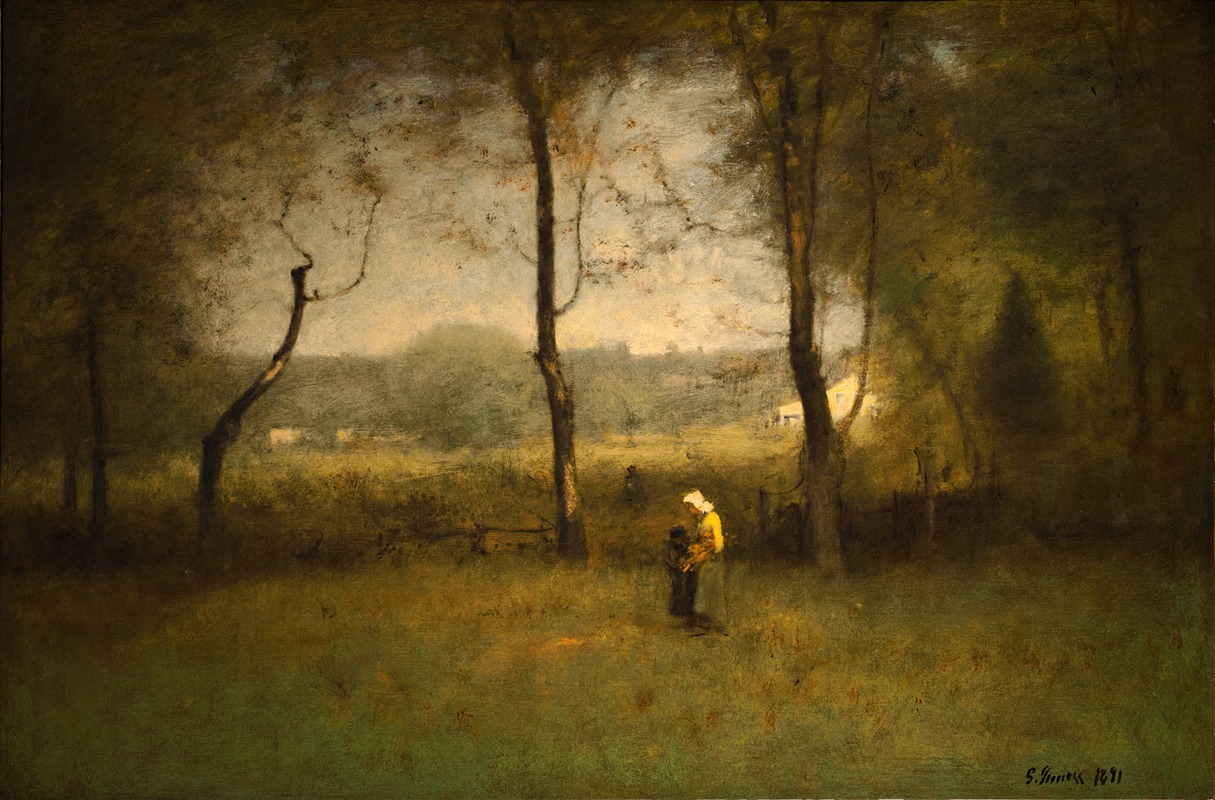
Autumn Woods
George Inness
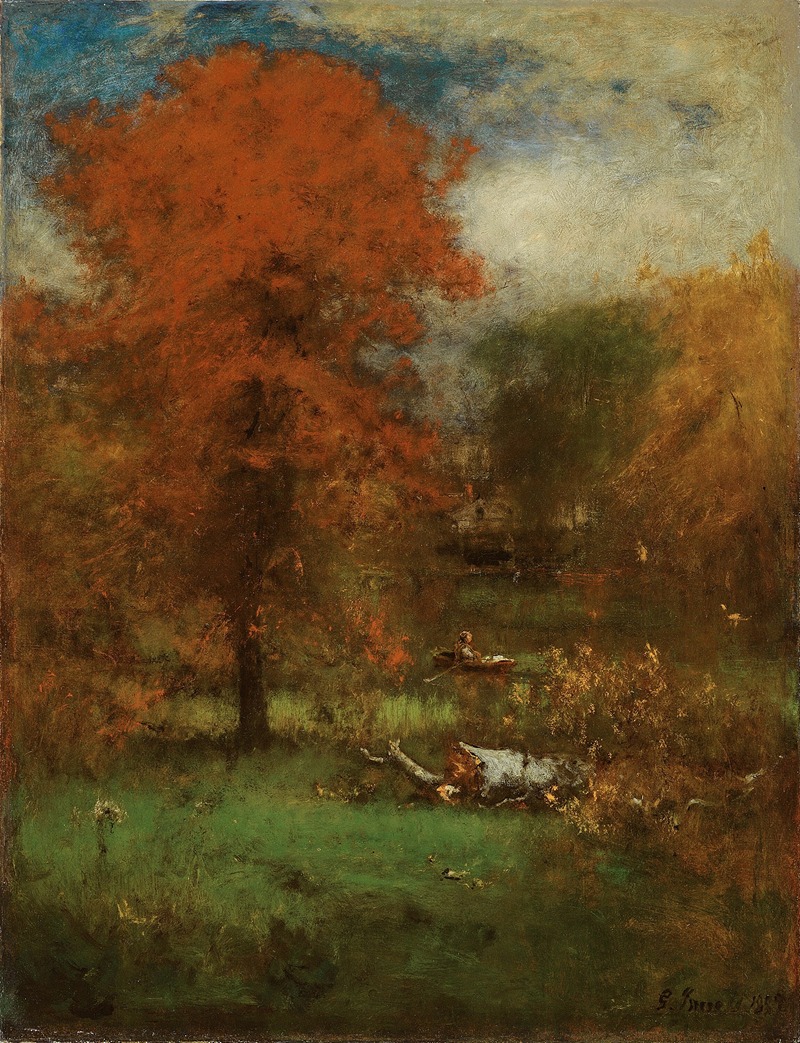
The Mill Pond
George Inness
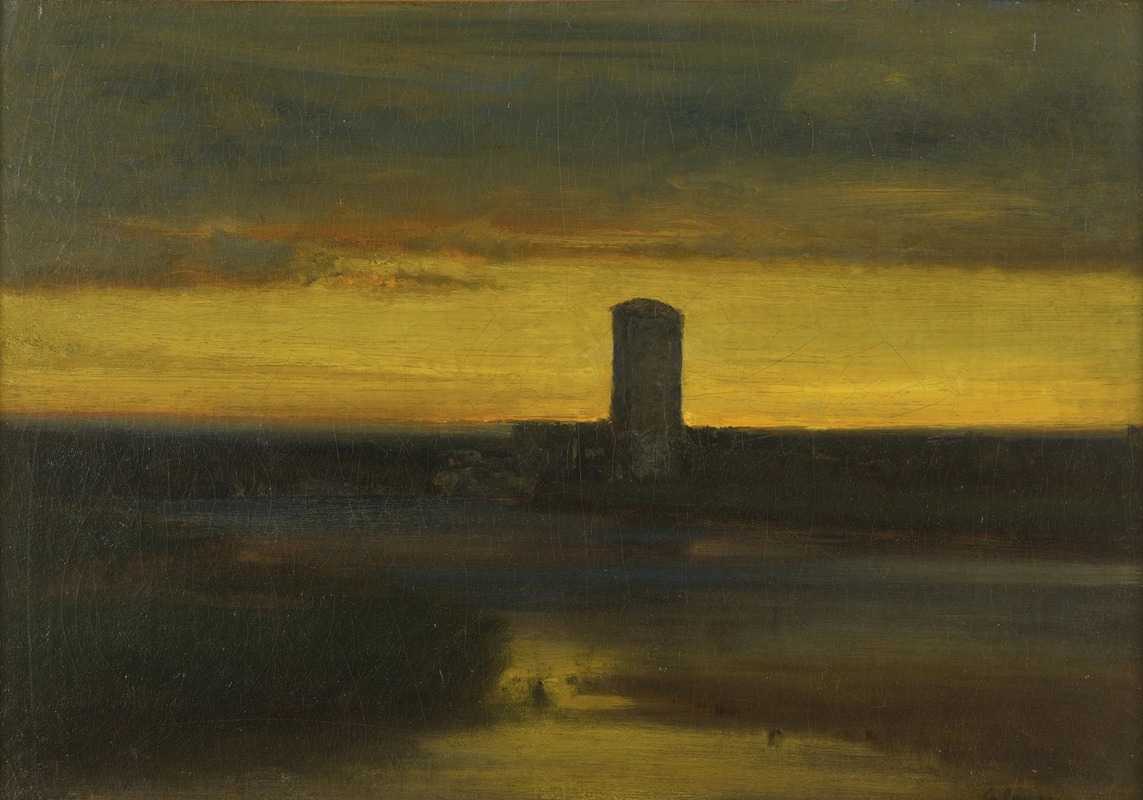
Afterglow
George Inness
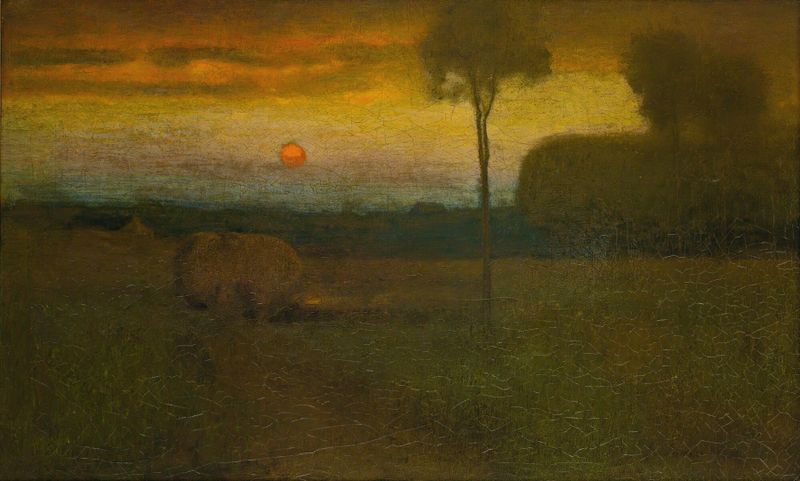
Landscape (Evening Landscape)
George Inness

Montclair
George Inness

View in Berkshire County, Massachusetts, Clearing Off after a September Storm
George Inness

October
George Inness
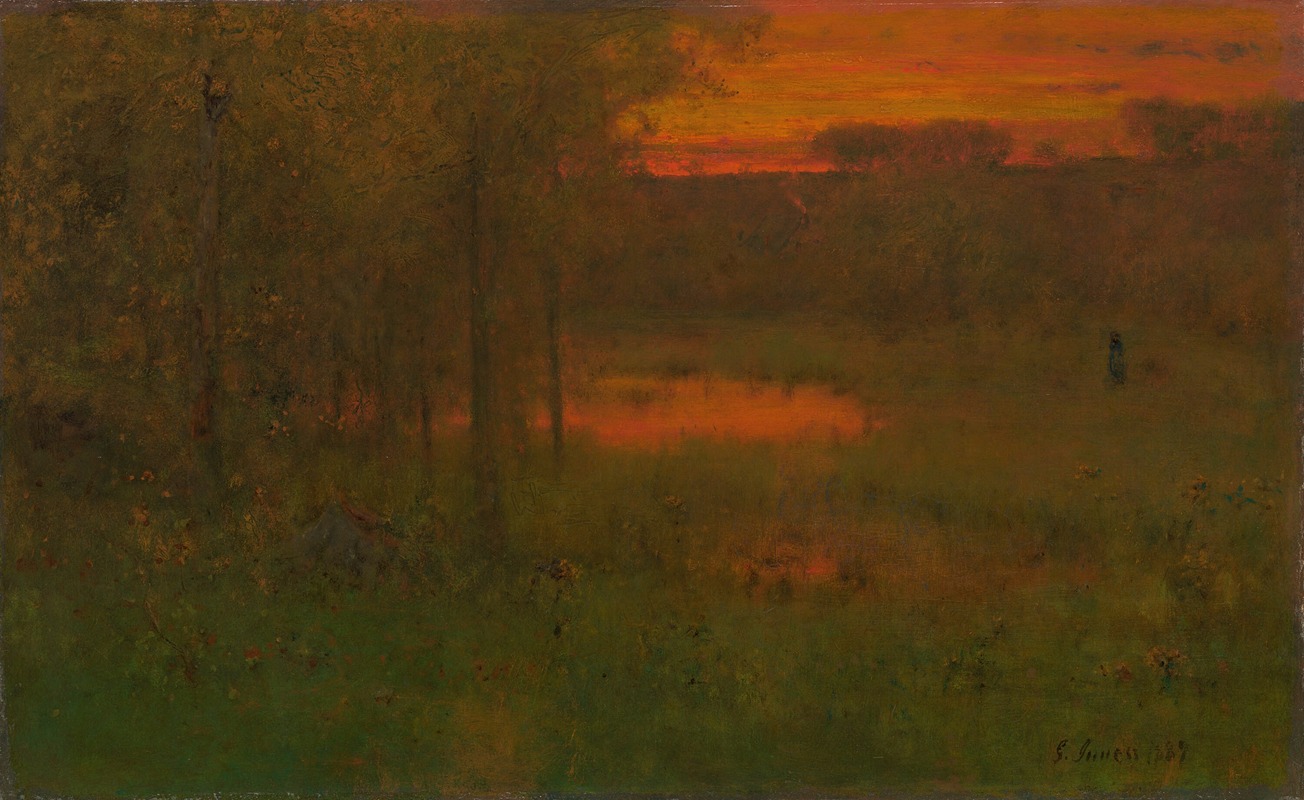
Landscape, Sunset
George Inness
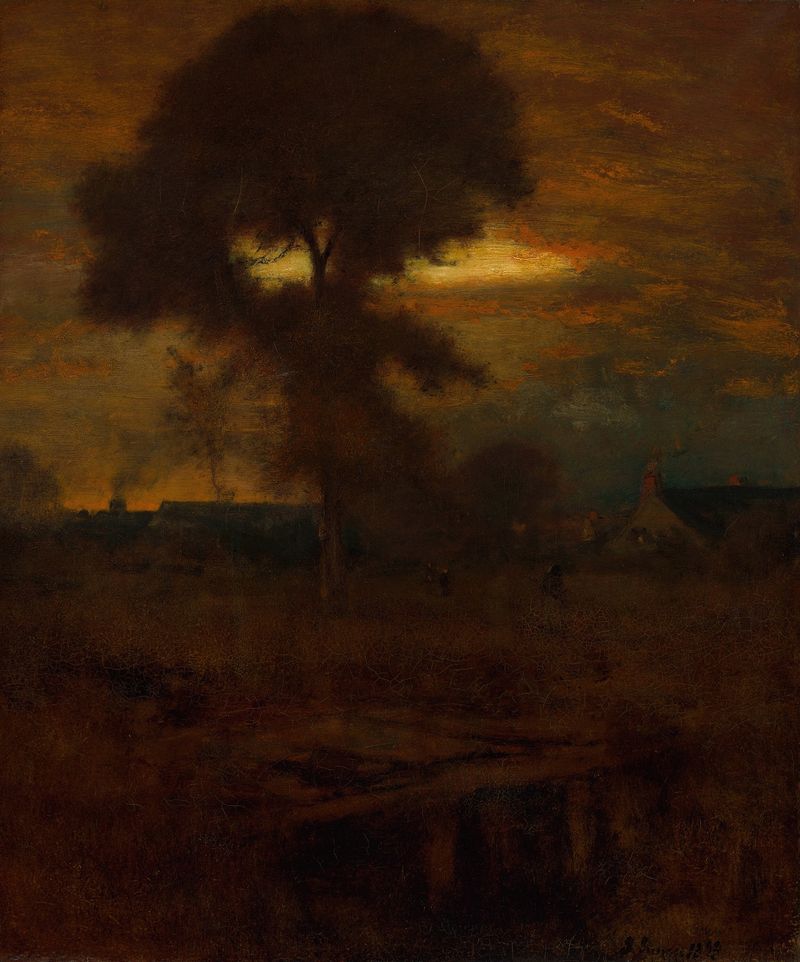
Afterglow
George Inness
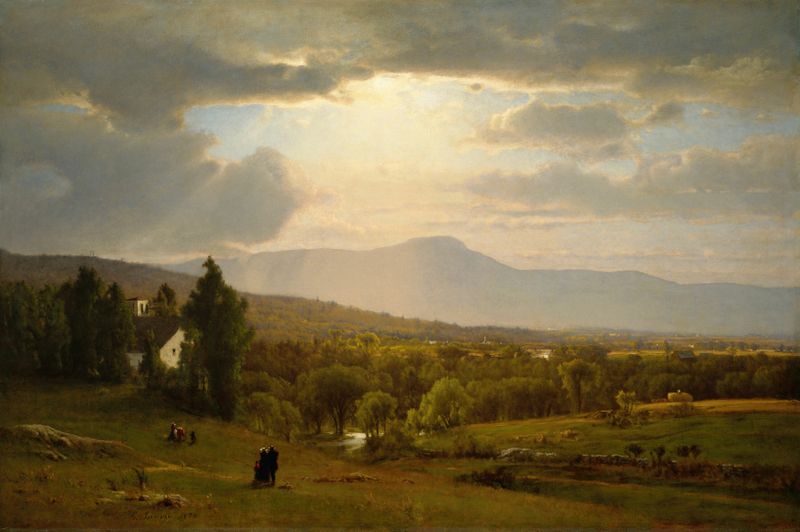
Catskill Mountains
George Inness





