
Beerenpflückende Kinder im Wald, eingeschlafen — History & Facts
The most intriguing aspect of Beerenpflückende Kinder im Wald, eingeschlafen is that, despite its gentle subject, it has been frequently misattributed to other German genre painters of the 19th century, a testament to both its popularity and the ambiguity surrounding its origins. The painting’s authorship by Felix Schlesinger has been established through careful comparison with signed works, yet its exact date and circumstances remain elusive. This uncertainty has not diminished its appeal; rather, it has made the painting a frequent subject of reproduction in prints and postcards, especially in late 19th-century Germany.
Such widespread reproduction speaks to the work’s resonance with audiences, who found in it a nostalgic vision of rural childhood. At the heart of the scene, two children—meant to be gathering berries—have succumbed to sleep amidst the dappled shade of a quiet forest. Their baskets, still half-filled with fruit, rest beside them, while the filtered sunlight plays across their peaceful faces and tousled hair. The painting captures a moment of innocence and vulnerability, inviting viewers to imagine the children’s world of simple joys and gentle fatigue.
The careful rendering of the forest floor, with its scattered leaves and wildflowers, roots the scene in a specific, lovingly observed natural setting. Unlike the moralizing tone found in works by Carl Spitzweg, who often depicted children in similar rural environments, Schlesinger chooses to emphasize the serenity of childhood rather than its lessons. As with many of Felix Schlesinger’s works, the precise provenance of Beerenpflückende Kinder im Wald, eingeschlafen is difficult to trace, reflecting the broader challenges of cataloguing 19th-century German genre painting. It is likely that the painting was created for the burgeoning middle-class art market, which favored sentimental and picturesque domestic scenes.
Today, the painting is known primarily through auction records and reproductions, rather than a permanent museum collection. Within Schlesinger’s oeuvre, it stands as a representative example of his focus on childhood and everyday life, themes that made his work especially popular in his own time. The painting’s enduring charm lies in its ability to capture a fleeting, universal moment, even as its own history remains partly hidden.
More Artworks by Felix Schlesinger

Fleißige Helfer in der Küche
Felix Schlesinger

Die Zeitungslektüre
Felix Schlesinger
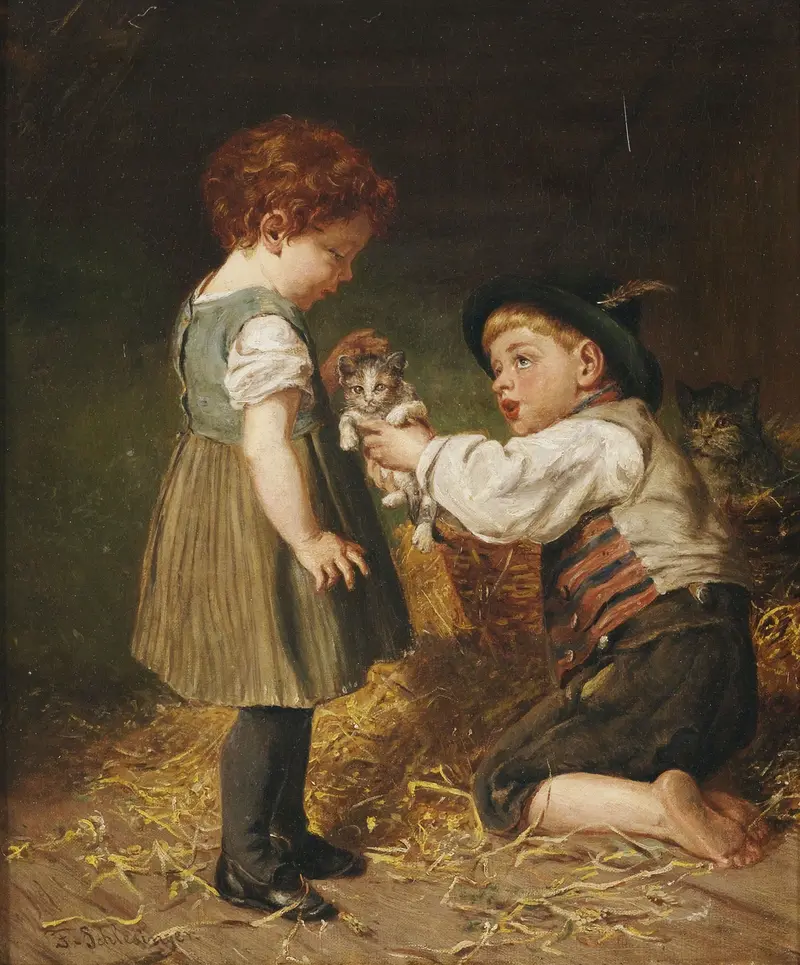
Zwei Kinder mit Kätzchen im Stall
Felix Schlesinger
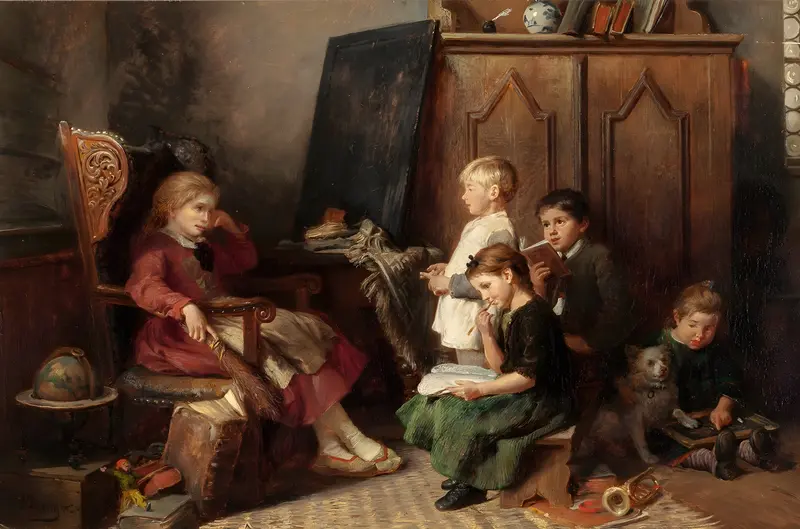
Children Reading
Felix Schlesinger
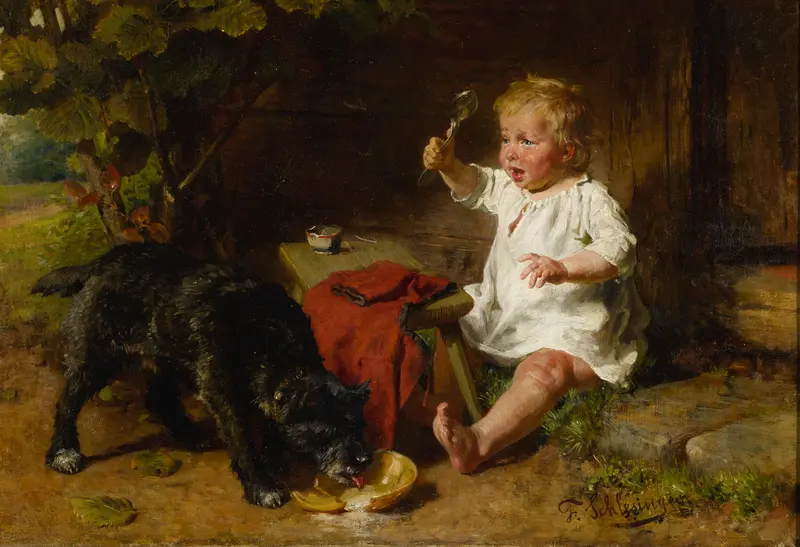
A Shared Meal
Felix Schlesinger
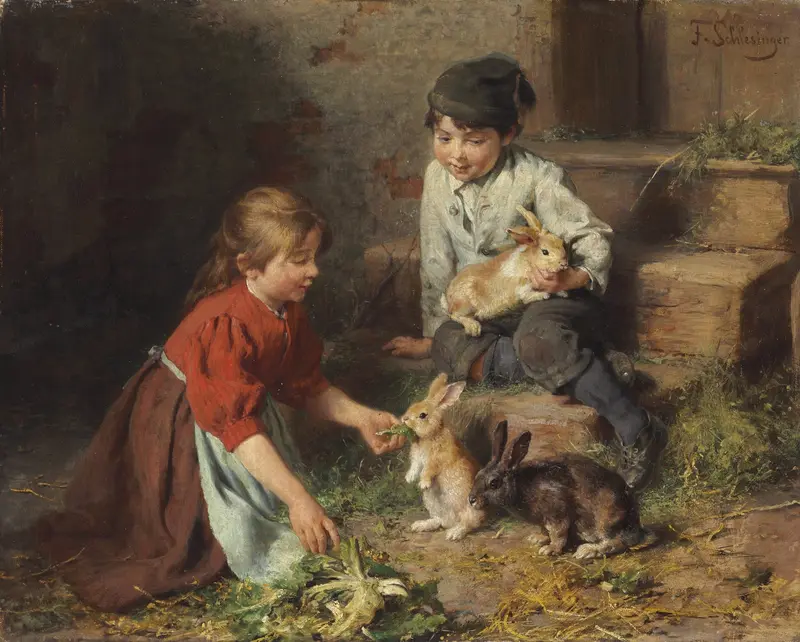
Fütterung Der Kaninchen
Felix Schlesinger
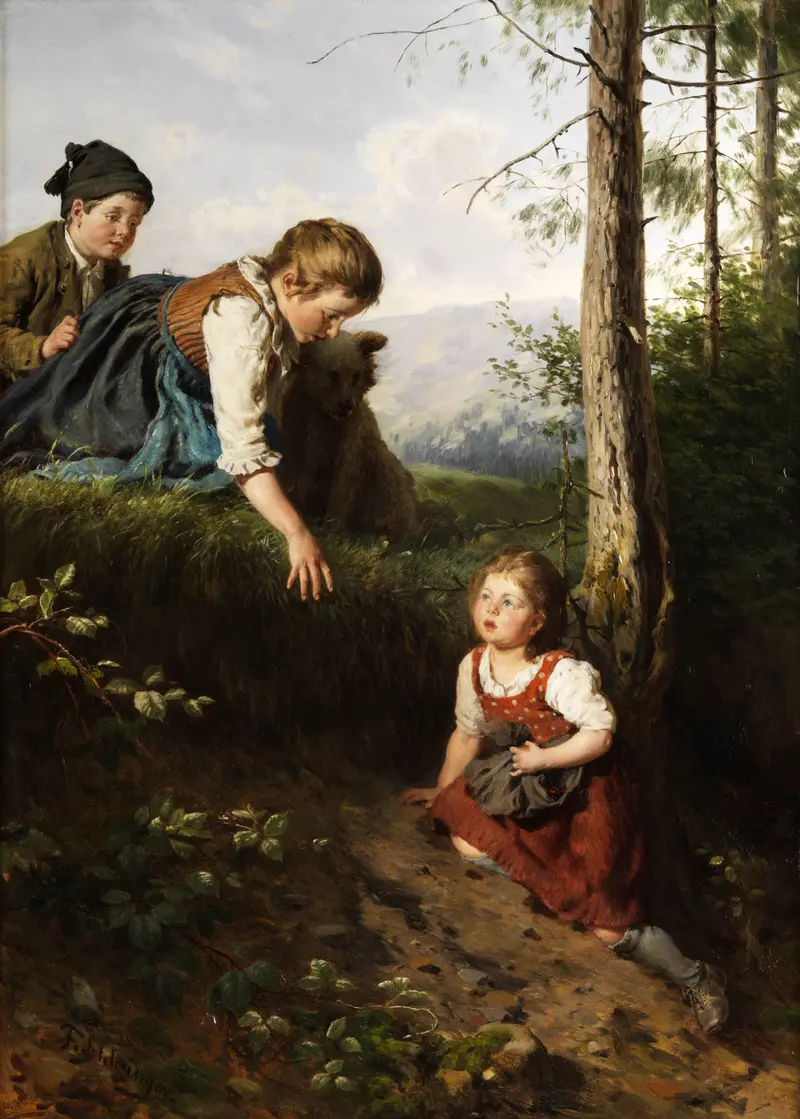
Drei Kinder im Wald beim Beerenpflücken
Felix Schlesinger
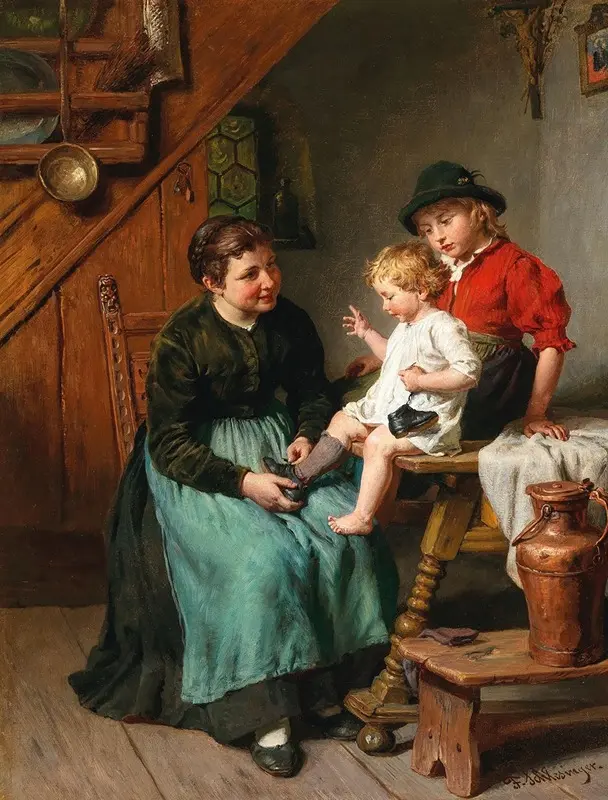
The First Shoe
Felix Schlesinger
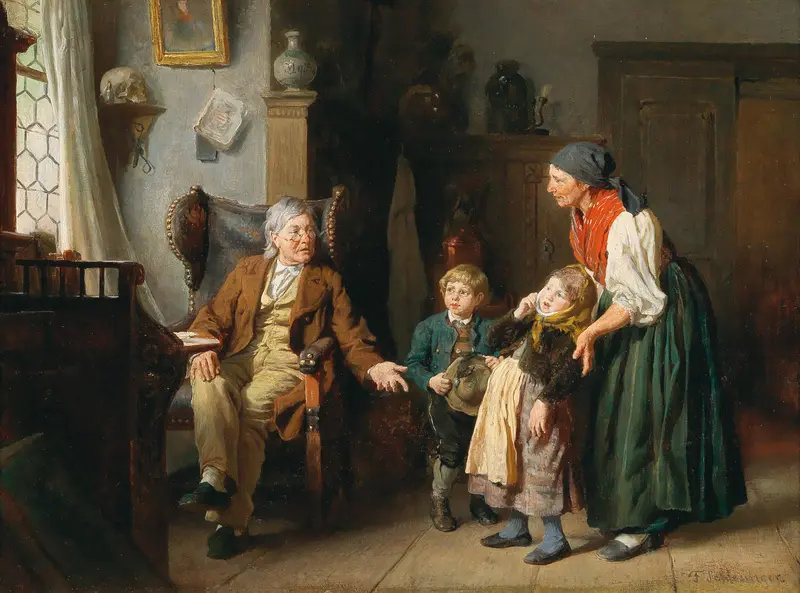
The village doctor
Felix Schlesinger
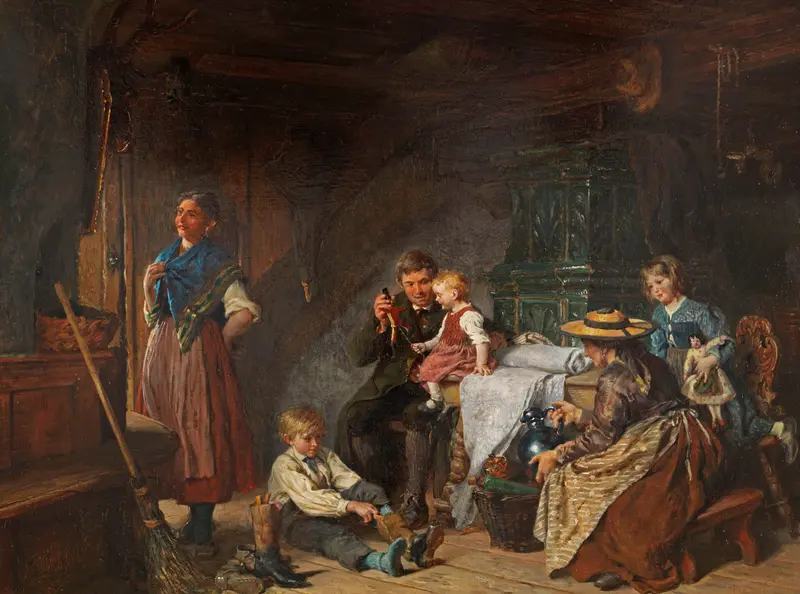
Familienszene
Felix Schlesinger
More Genre Scene Art

Banquet of the Officers of the St George Civic Guard
Frans Hals

Rembrandt and Saskia in the Scene of the Prodigal Son
Rembrandt van Rijn

Bal du moulin de la Galette
Pierre-Auguste Renoir

Quadrille at the Moulin Rouge
Henri de Toulouse-Lautrec

A Burial at Ornans
Gustave Courbet

When Will You Marry?
Paul Gauguin